

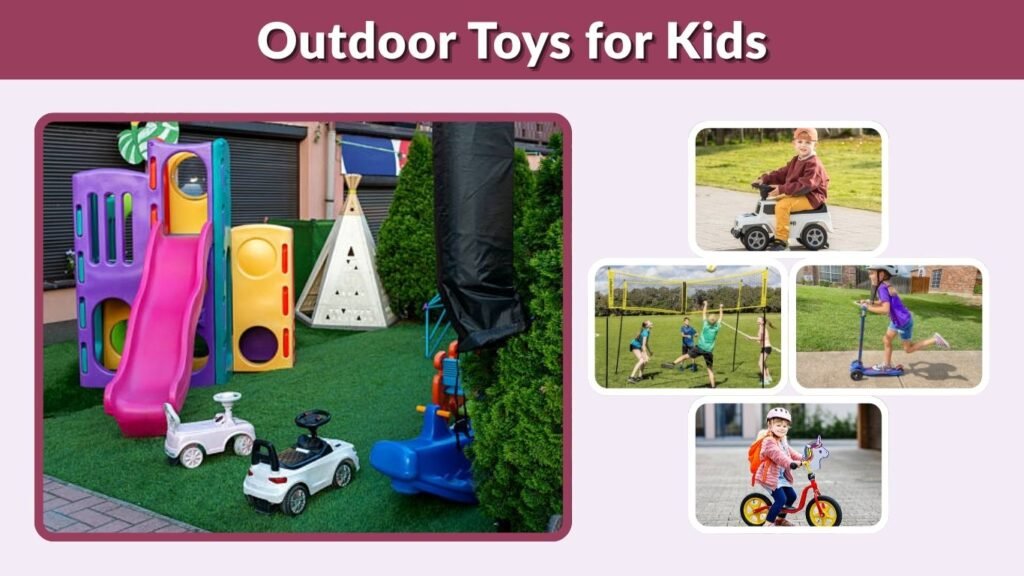
Outdoor toys for kids make playtime more active, creative, and enjoyable while encouraging children to spend less time indoors. From ride-on toys and water tables to sports sets, climbing equipment, and backyard games, there are many options for different ages and interests. The best outdoor toys support movement, imagination, coordination, and social play while remaining safe and age-appropriate. This guide explains popular types of outdoor toys, how to choose them, safety considerations, storage tips, and fun ideas for toddlers and older children.
Why Outdoor Toys for Kids Are Important
Outdoor play gives children opportunities to move freely, explore their surroundings, and develop useful physical and social skills. Toys designed for outdoor use can make backyard, park, and playground time more engaging. They also encourage children to practice balance, coordination, problem-solving, creativity, and teamwork through activities that feel like play rather than structured exercise.
Encourage Physical Activity
Outdoor toys can help children stay active through running, climbing, jumping, throwing, pedaling, and balancing.
Popular active-play options include:
- Scooters
- Bicycles
- Jump ropes
- Trampolines
- Climbing toys
- Sports balls
- Balance bikes
- Ride-on vehicles
These toys can make daily physical activity more enjoyable.
Support Social Development
Many outdoor toys work well for siblings, friends, or family play.
Games involving balls, targets, races, or teamwork can teach children how to take turns, communicate, share equipment, and solve small disagreements during play.
Improve Creativity
Not every outdoor toy needs strict rules.
Sandboxes, water tables, gardening sets, mud kitchens, and playhouses allow children to create their own games and stories. Open-ended outdoor toys can provide different play experiences every day.
Best Types of Outdoor Toys for Kids
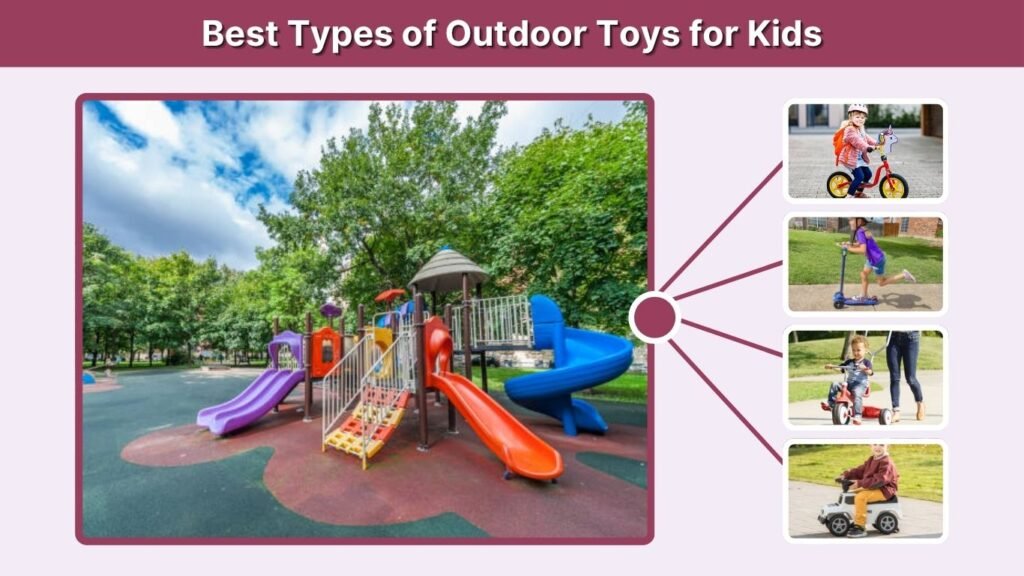
The best outdoor toys depend on a child’s age, available space, interests, and activity level. Some children enjoy fast-moving ride-on toys, while others prefer imaginative play or water activities. Choosing several different toy types can create a balanced outdoor play area where children can switch between physical, creative, and social activities.
Ride-On Toys
Ride-on toys are popular because they combine movement with adventure.
Common choices include:
- Balance bikes
- Pedal cars
- Scooters
- Tricycles
- Wagons
- Kids’ bicycles
- Push cars
These toys can help develop balance, coordination, and confidence.
Water Toys
Water toys can make warm-weather play especially exciting.
Options include splash pads, water tables, sprinklers, reusable water balloons, small pools, and water blasters.
Always supervise children closely around water, even when only a small amount is present.
Sports and Backyard Games
Sports toys encourage movement and can involve the whole family.
Basketball hoops, soccer goals, baseball sets, flying discs, bowling games, and ring-toss sets are suitable for many backyard spaces.
Outdoor Toys for Toddlers
Toddlers benefit from outdoor toys that are simple, sturdy, easy to control, and suitable for their developing coordination. At this age, toys should encourage basic movement, sensory exploration, and imaginative play without requiring complicated rules. Adult supervision remains important, especially when toddlers are using ride-on toys, climbing equipment, sand, or water.
Push and Ride-On Toys
Low-to-the-ground ride-on toys are useful for toddlers learning balance and movement.
Push cars, small tricycles, and beginner balance bikes can help young children develop leg strength and coordination.
Choose products designed specifically for the child’s age and size.
Sand and Water Play
Sand and water toys are especially effective for sensory play.
Useful items include:
- Buckets
- Shovels
- Sand molds
- Watering cans
- Water wheels
- Small boats
- Scoops and cups
These simple toys can encourage experimentation and imaginative play.
Small Playhouses
Outdoor playhouses give toddlers a space for pretend cooking, shopping, gardening, or family games.
They can also become useful settings for role-playing activities as children grow.
Outdoor Toys for Older Kids
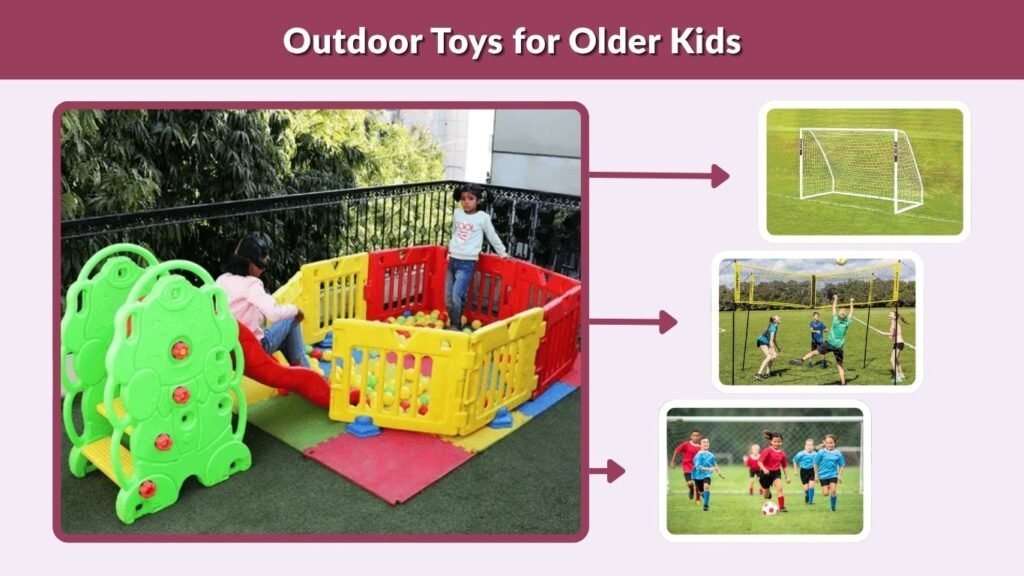
Older children often prefer outdoor toys that provide more challenge, speed, competition, or skill development. At this stage, toys that can be used in different ways may remain interesting for longer. Sports equipment, obstacle-course items, advanced ride-on toys, and backyard games can encourage children to stay active while building confidence and coordination.
Sports Equipment
Sports equipment can help older children practice specific skills.
Useful options include:
- Soccer goals
- Basketball hoops
- Baseball gloves
- Badminton sets
- Volleyball nets
- Footballs
- Tennis equipment
These toys can be used individually or with friends.
Outdoor Adventure Toys
Adventure-style toys provide a greater physical challenge.
Climbing domes, slacklines, obstacle-course kits, zip lines, and larger swing sets can create an exciting backyard activity area.
Installation should always follow the manufacturer’s safety instructions.
Target and Toss Games
Games such as cornhole, ring toss, ladder toss, and target throwing are easy to set up and can be played by different age groups.
They are especially useful for family gatherings and outdoor parties.
How to Choose the Best Outdoor Toys for Kids
Choosing the right outdoor toy involves more than selecting something colorful or entertaining. Parents should consider the child’s age, development, interests, available space, durability requirements, and safety. A well-chosen toy should be enjoyable enough to encourage repeated use while being appropriate for the environment where it will be stored and played with regularly.
Check Age Recommendations
Always check the manufacturer’s recommended age range.
Age recommendations may reflect:
- Toy dimensions
- Small-part risks
- Weight limits
- Required coordination
- Physical difficulty
- Safety features
A toy designed for older children may not be safe for toddlers.
Match the Toy to Available Space
Measure the area before purchasing large outdoor toys.
Swings, climbing structures, trampolines, slides, and sports equipment may require additional clearance around them for safe use.
Consider Durability
Outdoor toys are exposed to sunlight, rain, dirt, and temperature changes.
Look for weather-resistant materials, sturdy construction, and replaceable parts when possible.
Safety Tips for Outdoor Toys
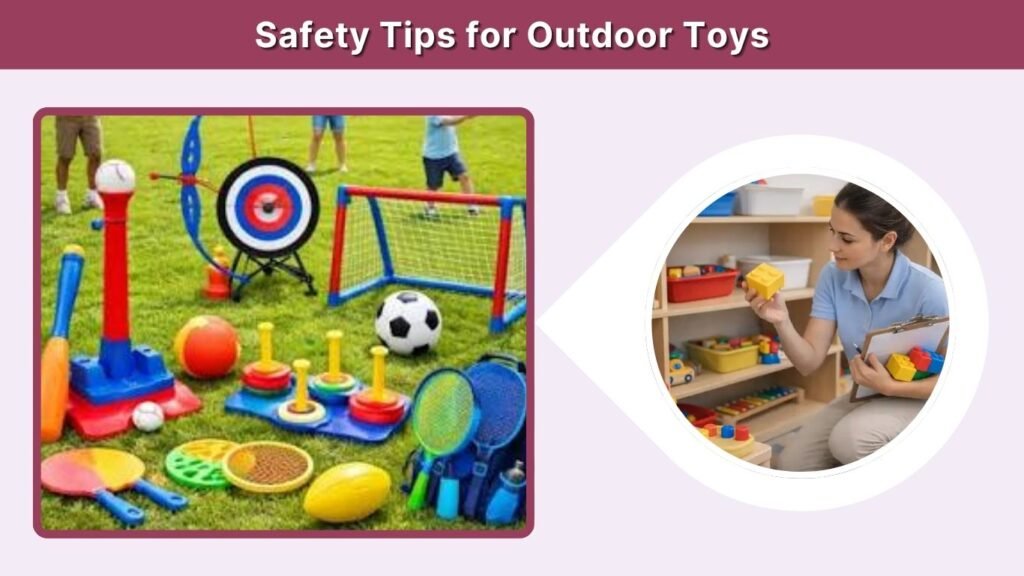
Outdoor toys can provide hours of entertainment, but safety should remain part of every play setup. Proper supervision, age-appropriate equipment, suitable surfaces, and regular inspections can reduce avoidable risks. Larger items such as swings, slides, trampolines, and climbing equipment also need correct installation and enough surrounding space for children to move safely.
Inspect Toys Regularly
Check outdoor toys for loose, cracked, rusty, or broken components.
Pay particular attention to:
- Bolts and screws
- Wheels
- Handles
- Ropes
- Chains
- Plastic cracks
- Sharp edges
Repair or replace damaged equipment before children continue using it.
Use Protective Gear
Helmets and other protective equipment may be appropriate for bicycles, scooters, skates, and similar ride-on toys.
Make sure protective gear fits properly and is designed for the activity being performed.
Supervise Water and Climbing Play
Children should be supervised around water toys, trampolines, swings, climbing structures, and other equipment where falls or accidents may occur.
How to Store Outdoor Toys
Proper storage can extend the life of outdoor toys and keep the play area safer and more organized. Small toys can easily become damaged, lost, or create tripping hazards when left around the yard. Larger equipment may also benefit from weather protection. Creating a simple storage routine makes it easier for children to find their toys and put them away after playtime.
Use Outdoor Storage Containers
Weather-resistant storage boxes are useful for balls, water toys, sand tools, and smaller games.
Choose containers with ventilation when storing items that may be wet.
Clean Toys Before Storage
Remove mud, sand, grass, and water before putting toys away.
Allow wet toys to dry thoroughly to reduce odors and mildew.
Store Seasonal Toys Separately
Water toys may not be needed during colder months, while some sports toys are used only seasonally.
Rotating toys can free up space and make older toys feel more interesting when they are brought out again.
How Outdoor Toys Support Child Development
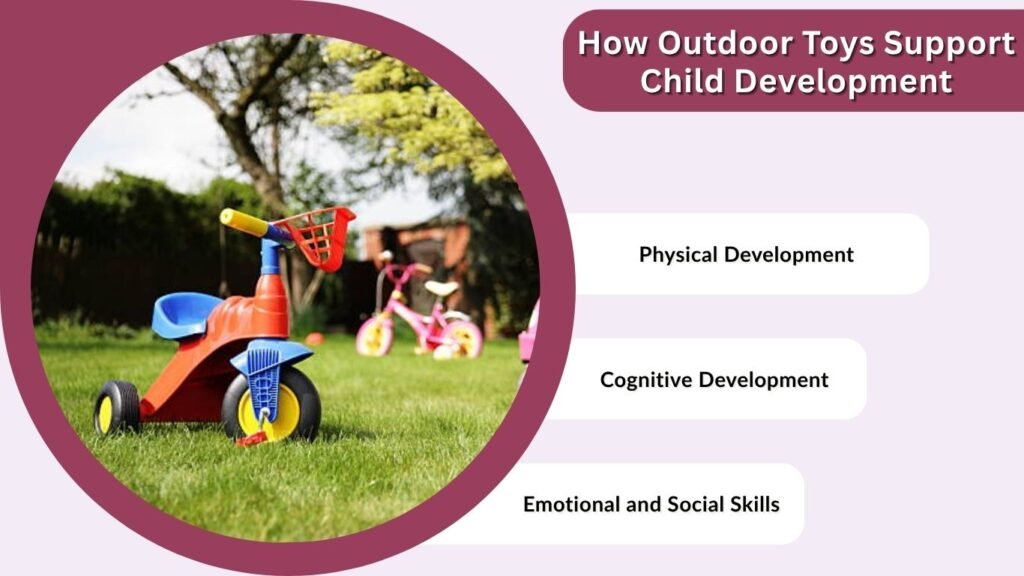
Outdoor toys are valuable because they combine entertainment with opportunities for learning and development. Physical toys can improve strength and coordination, while imaginative toys encourage creativity and communication. Even simple games can teach patience, planning, and problem-solving. When children have access to different forms of outdoor play, they can explore activities that match their interests and abilities.
Physical Development
Running, climbing, pedaling, throwing, and balancing can help children improve gross motor skills.
Regular movement can also support body awareness and coordination.
Cognitive Development
Outdoor play often involves decision-making.
Children may need to plan routes, solve obstacles, estimate distances, build structures, or create rules for their games.
Emotional and Social Skills
Playing outdoors with others gives children opportunities to practice cooperation, patience, communication, and independence.
These skills can develop naturally through shared play experiences.
FAQs
1. What Are the Best Outdoor Toys for Kids?
The best outdoor toys include bikes, scooters, sports sets, climbing toys, water tables, sandboxes, playhouses, and backyard games. The right choice depends on the child’s age, interests, available space, and skill level.
2. What Outdoor Toys Are Best for Toddlers?
Good outdoor toys for toddlers include push cars, small ride-on toys, sand toys, water tables, beginner slides, playhouses, and age-appropriate balance bikes.
3. How Do I Choose Safe Outdoor Toys?
Choose toys that match the child’s age and size, follow manufacturer weight limits, inspect materials and construction, and make sure larger toys are installed on appropriate surfaces with enough clearance.
4. How Can I Encourage Kids to Play Outside More?
Provide outdoor toys that match their interests, create a comfortable play area, involve family members in games, rotate toys occasionally, and offer a mix of active and imaginative play options.
5. How Should Outdoor Toys Be Stored?
Small outdoor toys can be stored in weather-resistant boxes, sheds, or covered containers. Clean and dry toys before storage, and protect large equipment from severe weather when possible.
