
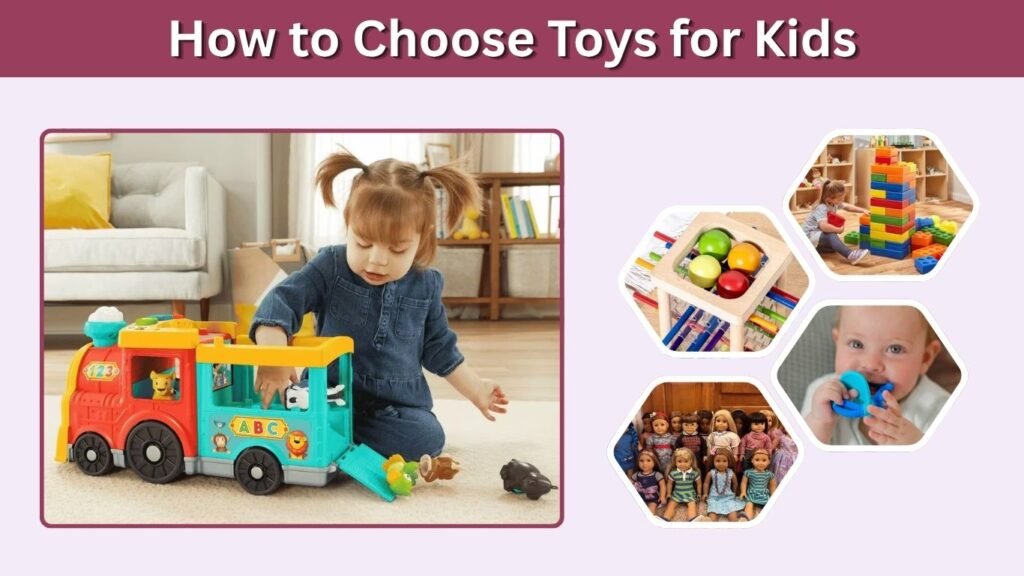
Choosing the right toy can be challenging when stores and online marketplaces offer thousands of options. The best toys are not simply the most colorful, expensive, or popular—they should suit a child’s age, interests, abilities, and developmental needs. Parents should also consider safety, durability, educational value, and how often the toy is likely to be used. If you are wondering how to choose toys for kids, this buying guide explains the most important factors to consider before selecting toys for babies, toddlers, preschoolers, and older children.
What to Consider When Choosing Toys for Kids
Choosing a good toy starts with understanding the child rather than focusing only on the product. Age recommendations, interests, developmental abilities, available space, and safety should all influence your decision. A well-selected toy can provide months or even years of entertainment while encouraging children to explore, create, solve problems, and develop important physical and social skills.
Choose Toys Suitable for the Child’s Age
Age suitability should be one of the first things you check. Most children’s toys include a recommended age range that reflects both developmental difficulty and possible safety concerns.
For example, toys for babies usually feature larger pieces and simple sensory activities, while toys for older children may include detailed components, complicated instructions, or small parts.
Always consider:
- Recommended age range
- Size of toy pieces
- Difficulty level
- Physical skills required
- Child’s current abilities
- Need for adult supervision
An age-appropriate toy is generally easier for children to enjoy without becoming bored or frustrated.
Think About the Child’s Interests
Children are more likely to play regularly with toys connected to things they already enjoy.
A child fascinated by vehicles may enjoy toy cars, tracks, or construction vehicles. Children interested in animals might prefer animal figures, farm sets, or wildlife-themed puzzles.
Rather than choosing toys only because they are popular, pay attention to what captures the child’s attention during everyday play.
Look for Long-Term Play Value
Before choosing a toy, consider how many different ways it can be used. Some toys have only one function and may lose their appeal quickly.
Open-ended toys usually provide better long-term play possibilities because children can use them differently as their imagination and skills develop.
Best Toys to Choose by Age Group
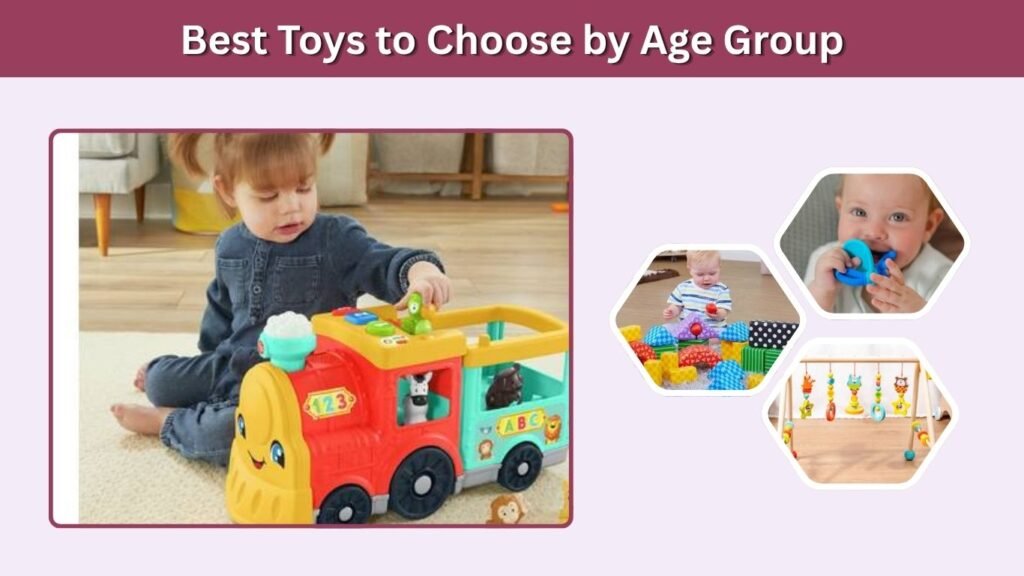
Different stages of childhood require different types of play. Babies benefit from sensory exploration, toddlers enjoy movement and simple problem-solving, while preschool and school-age children often prefer more complex creative or interactive activities. Choosing toys according to developmental stage makes it easier to find products that are both enjoyable and useful.
Best Toys for Babies
Baby toys should be simple, easy to hold, and made from materials appropriate for infants. Sensory toys can help babies explore different textures, sounds, movements, and colors.
Popular options include:
- Soft rattles
- Baby activity gyms
- Teething toys
- Soft blocks
- Stacking rings
- Sensory balls
- Baby-safe mirrors
- Musical toys
Washable toys can be particularly practical because babies frequently place objects in their mouths.
Avoid toys containing loose components or pieces that could present choking risks.
Best Toys for Toddlers
Toddlers are usually active and increasingly interested in exploring how things work. Toys that involve stacking, sorting, pushing, pulling, building, or pretend play can help keep them engaged.
Useful toddler toys include:
- Large building blocks
- Shape sorters
- Push-and-pull toys
- Toy vehicles
- Simple puzzles
- Play kitchens
- Large art supplies
- Ride-on toys
Durability matters at this stage because toddler toys can experience frequent drops, bumps, and rough handling.
Best Toys for Preschoolers
Preschool-age children often have stronger imaginations and better coordination. They may enjoy pretending, building, drawing, solving puzzles, and playing simple games with other children.
Good options include:
- Building sets
- Pretend-play kits
- Dolls and figures
- Dress-up sets
- Art and craft supplies
- Educational games
- Outdoor toys
- Beginner board games
Products that encourage both independent and cooperative play can provide particularly good versatility.
Best Toys for School-Age Kids
School-age children often have clear hobbies and preferences. Their toys can become more challenging as concentration, coordination, and problem-solving abilities improve.
Consider:
- STEM kits
- Construction sets
- Strategy games
- Advanced puzzles
- Craft kits
- Sports equipment
- Remote-control toys
- Musical instruments
- Science experiment kits
At this age, involving children in the selection process can help identify toys they are genuinely likely to use.
How to Choose Safe Toys for Children
Toy safety should always be a priority, regardless of price or popularity. Parents should examine the recommended age, construction quality, materials, batteries, magnets, cords, and removable pieces before giving a toy to a child. Regular inspections are also useful because toys can develop damaged or loose components after extended use.
Check the Recommended Age
Age labels can provide useful guidance about whether a product is appropriate for a particular child.
They may reflect concerns involving:
- Choking hazards
- Small components
- Required coordination
- Complexity
- Strength requirements
- Supervision needs
Do not choose toys intended for significantly older children simply because they appear more advanced or educational.
Inspect Small Parts
Small toy components can present serious risks to young children, especially babies and toddlers who explore objects with their mouths.
Look carefully at wheels, buttons, eyes on stuffed toys, game pieces, batteries, decorative components, and other detachable parts.
Homes with children of different ages also require extra attention because toys belonging to older siblings may contain smaller pieces.
Check Construction Quality
A toy does not necessarily need to be expensive to be well made. Look for secure joints, sturdy materials, smooth surfaces, and properly attached components.
Avoid toys with:
- Sharp edges
- Easily broken plastic
- Exposed screws
- Loose magnets
- Accessible batteries
- Long unsafe cords
- Poorly attached small pieces
Button and coin battery compartments should be securely closed so children cannot easily access them.
Choose Toys That Support Learning and Development
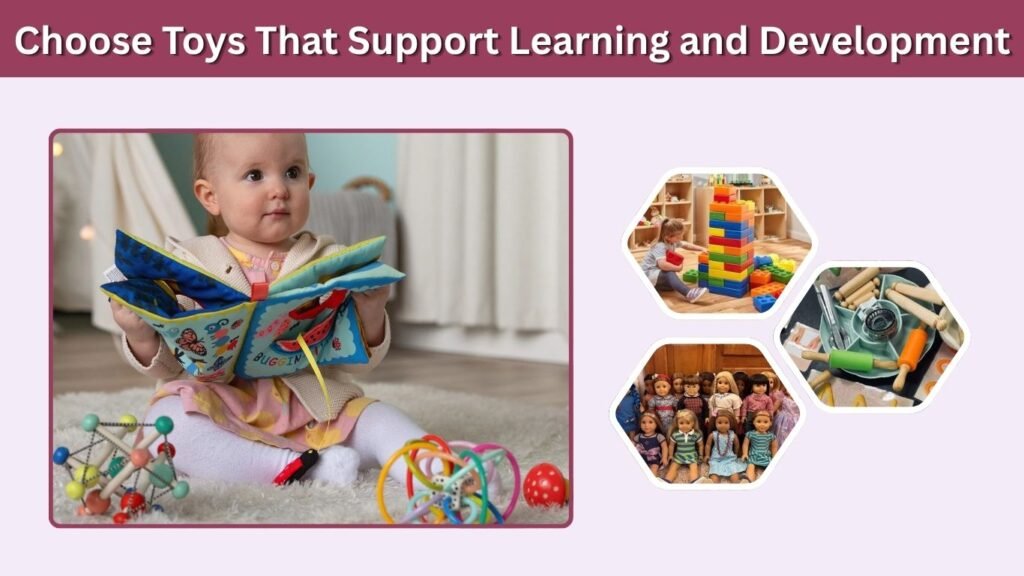
Many parents search for the best educational toys for kids, but educational value can come from much more than electronic learning products. Traditional building sets, puzzles, art supplies, pretend-play toys, and outdoor equipment can teach valuable skills naturally. The key is choosing toys that require active participation rather than simply entertaining the child automatically.
Toys for Problem-Solving Skills
Puzzles and construction toys require children to experiment, think, and make decisions.
Good examples include building blocks, matching games, maze toys, sorting activities, and age-appropriate strategy games.
A useful problem-solving toy should be challenging enough to maintain attention without making the child feel constantly frustrated.
Toys for Creativity and Imagination
Creative toys allow children to decide what happens next.
Examples include:
- Building blocks
- Play dough
- Drawing supplies
- Craft kits
- Dolls
- Action figures
- Play kitchens
- Dress-up sets
These toys can be used repeatedly because children can create different stories, designs, and situations every time they play.
Toys for Physical Development
Active toys encourage movement and can help develop balance, coordination, strength, and motor skills.
Balls, scooters, balance bikes, jump ropes, outdoor games, and age-appropriate sports equipment are common choices.
Parents should match active toys with the child’s abilities and provide any recommended protective equipment.
Toys for Social Development
Board games, pretend-play sets, building activities, and multiplayer toys can encourage children to interact with others.
Playing together can help children practice communication, cooperation, patience, sharing, and taking turns.
Educational Toys vs Regular Toys
The word “educational” appears on many toy packages, but it does not automatically mean one product provides greater developmental value than another. Children learn from many forms of play. A simple box of building blocks may promote creativity and spatial reasoning just as effectively as a complicated electronic learning system, depending on how the child interacts with it.
When Educational Toys Are Useful
Educational toys can be useful when they match a child’s interests and developmental level.
Products may focus on areas such as:
- Alphabet recognition
- Numbers and counting
- Science
- Coding
- Matching
- Memory
- Geography
- Problem-solving
The best educational toys usually encourage children to participate actively rather than simply press buttons and watch a response.
Do Not Ignore Traditional Toys
Traditional toys often have excellent play value.
Blocks teach balance and spatial awareness. Puzzles require concentration. Dolls and figures encourage storytelling. Art materials develop creativity and fine motor control.
Instead of choosing between educational and traditional toys, parents can create a balanced toy collection containing both.
How to Find Toys With the Best Value for Money
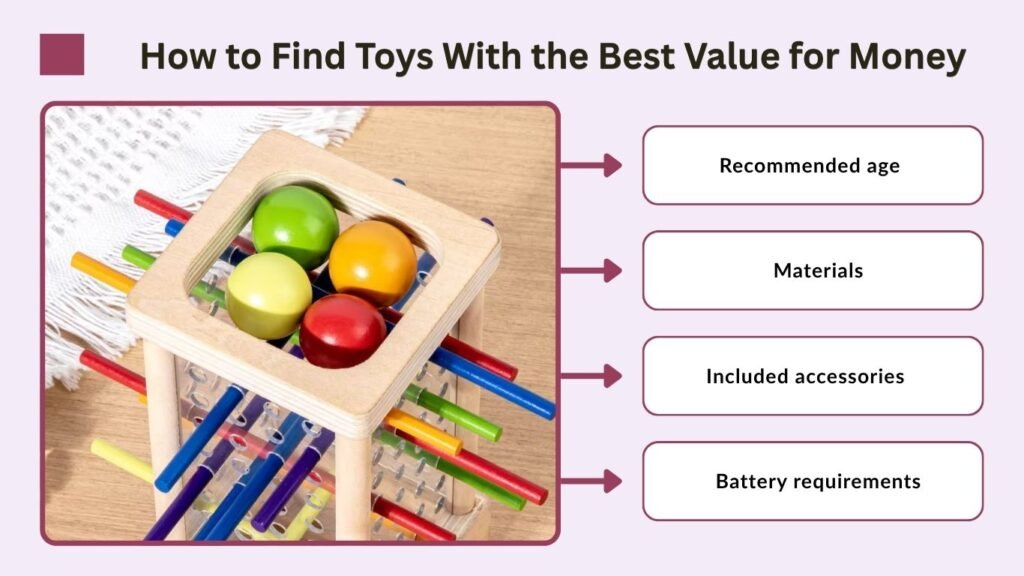
Price alone does not determine whether a toy offers good value. A relatively inexpensive toy that children use every week may provide better value than an expensive electronic toy they stop using after several days. Consider durability, versatility, accessories, replacement costs, and expected frequency of use before comparing different products.
Compare Features Before Choosing
When comparing similar toys, look beyond appearance.
Consider:
- Recommended age
- Materials
- Included accessories
- Number of activities
- Storage requirements
- Battery requirements
- Indoor or outdoor use
- Ease of cleaning
- Replacement parts
- Warranty where applicable
These details can make a major difference in everyday usability.
Consider Cost Per Use
A toy that remains interesting for several years can provide excellent value even if its initial cost is higher.
Building sets, bikes, art supplies, play kitchens, and quality pretend-play toys may continue providing entertainment as children’s abilities develop.
By comparison, novelty toys may be exciting initially but sometimes have limited repeat-play possibilities.
Read Product Details Carefully
When shopping online, carefully review the product description, dimensions, materials, included pieces, and recommended age.
Photos can sometimes make products appear larger than they really are, so checking measurements is particularly important when choosing playhouses, ride-on toys, dollhouses, tables, and outdoor equipment.
Choose Open-Ended Toys for Longer Play
Open-ended toys are useful because they do not tell children exactly how they must play. Instead, children decide what to build, create, imagine, or explore. These toys may remain interesting longer because their purpose changes with the child’s imagination and developmental abilities.
Examples of Open-Ended Toys
Popular choices include:
- Building blocks
- Magnetic building sets
- Animal figures
- Dolls
- Toy vehicles
- Art supplies
- Play dough
- Wooden construction toys
- Dress-up clothing
- Pretend-play accessories
A single construction set, for example, could become a house, bridge, vehicle, castle, or imaginary city depending on the child’s ideas.
Why Repeat Play Matters
Repeat play is one of the best indicators of a toy’s potential value.
Children can develop new skills when they return to the same activity and gradually experiment with more complicated ideas. Toys that support multiple levels of difficulty can therefore stay useful longer.
Practical Buying Tips for Parents
Parents should think about where, how, and how often a toy will be used before making a final choice. Storage space, noise, batteries, cleaning, assembly, and replacement pieces can all affect whether a product remains convenient after the excitement of opening it has disappeared.
Consider Your Available Space
Large toys may look appealing online but can quickly overwhelm small rooms.
Before selecting large products such as play kitchens, dollhouses, indoor slides, activity tables, or ride-on vehicles, check their assembled dimensions.
Consider where the toy will be stored when it is not being used.
Check Battery Requirements
Electronic toys can require frequent battery replacements.
Before choosing one, check whether:
- Batteries are included
- Batteries are replaceable
- Rechargeable batteries can be used
- A charging cable is provided
- The battery compartment is secure
Ongoing battery costs can affect the overall value of inexpensive electronic toys.
Choose Easy-to-Clean Toys
Washable surfaces are particularly helpful for toys used by babies and toddlers.
Look for materials that can be wiped clean easily. Stuffed toys may be more convenient when machine washing is permitted according to the manufacturer’s care instructions.
Common Toy-Buying Mistakes to Avoid
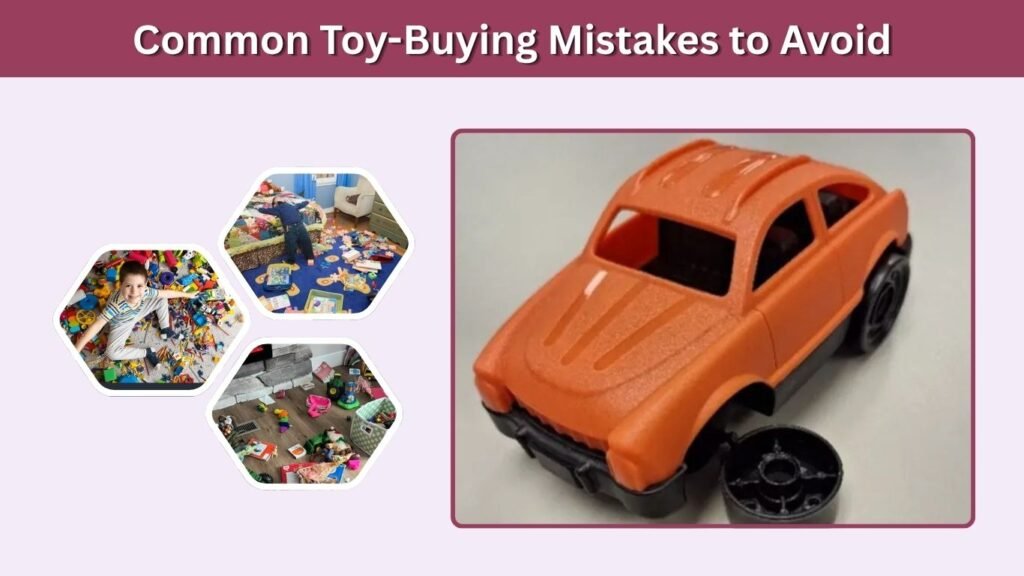
Parents sometimes choose toys based primarily on advertising, appearance, or trends. While popular products can certainly be enjoyable, they are not automatically the right choice for every child. Looking at safety, usability, interests, and long-term value can help prevent toys from quickly ending up unused in a storage box.
Buying Toys That Are Too Advanced
Parents may select advanced toys hoping children will grow into them.
However, if a toy is too difficult, children may become frustrated and avoid it altogether. More importantly, products designed for older children may include smaller components or features unsuitable for younger users.
Choosing Toys Only Because They Are Trending
Trendy toys can generate excitement, but popularity can disappear quickly.
Ask whether the child would still enjoy the product without the character, brand, or online trend associated with it.
Combining popular toys with classic play options can create a more useful collection.
Buying Too Many Similar Toys
Having several toys that perform almost identical functions may provide limited additional value.
Instead, consider creating variety with toys supporting different activities such as:
- Creative play
- Physical activity
- Construction
- Pretend play
- Problem-solving
- Social play
This provides children with more ways to explore their interests.
FAQs
1. What should I look for when buying toys for kids?
Look at the recommended age, safety features, materials, durability, developmental value, child’s interests, available space, and expected frequency of use. Toys that support several types of play often provide better long-term value.
2. What are the best toys for child development?
Building blocks, puzzles, art supplies, pretend-play toys, books, outdoor toys, STEM kits, and age-appropriate games can support different areas of development. The best option depends on the child’s age and abilities.
3. Are expensive toys better than cheaper toys?
Not necessarily. Price does not guarantee better play value. A simple, durable toy that a child uses frequently may provide better value than an expensive product with limited activities.
4. How do I choose an age-appropriate toy?
Start with the manufacturer’s recommended age and then consider the child’s abilities, interests, coordination, and experience. Always check for small parts and other safety concerns, particularly for children under three.
5. What toys keep kids interested the longest?
Open-ended toys such as building sets, art materials, dolls, figures, pretend-play accessories, puzzles, and outdoor toys often provide strong repeat-play value because children can use them in different ways as they grow.
