
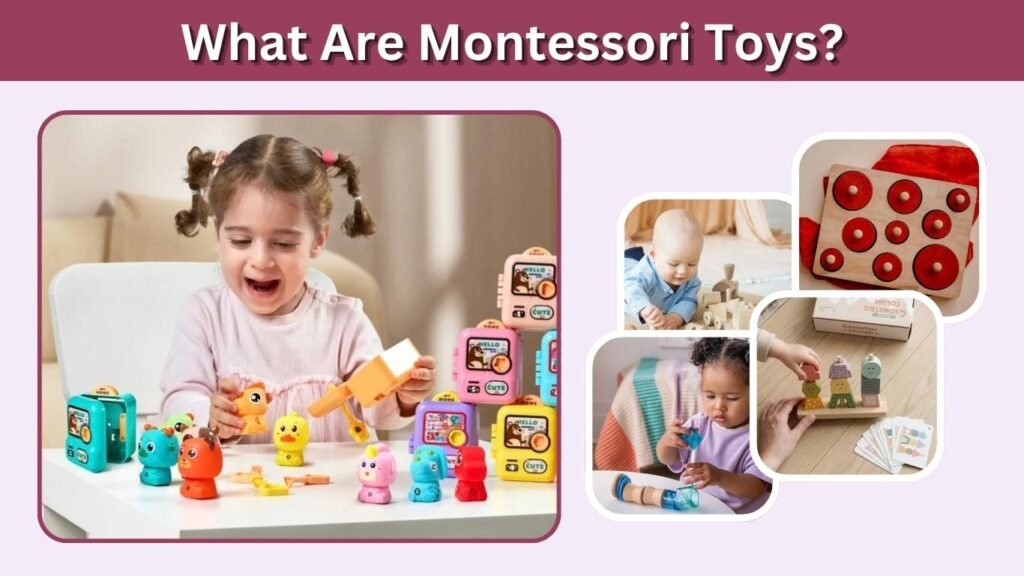
What are Montessori toys? Montessori toys are simple, purposeful play materials designed to encourage children to explore, practice real-life skills, solve problems, and learn independently. They are inspired by the educational principles developed by Dr. Maria Montessori, although not every product marketed as “Montessori” is an official Montessori classroom material. These toys often focus on one skill at a time and may use natural materials, realistic designs, and hands-on activities. Understanding their features can help parents choose developmentally appropriate toys for babies, toddlers, and preschoolers.
What Are Montessori Toys?
Montessori toys are play materials that support independence, concentration, coordination, sensory exploration, and practical learning. Traditional Montessori education uses carefully designed learning materials rather than conventional toys, so the phrase Montessori toys often refers to Montessori-inspired products used at home. The best examples are usually simple, engaging, and matched to a child’s developmental stage.
Montessori Toys Meaning
The basic Montessori toys meaning is straightforward: these are toys or learning materials that encourage children to learn through active exploration rather than passive entertainment.
Instead of pressing a button and watching a toy perform, a child usually has to manipulate, sort, stack, match, build, open, close, or arrange something.
This gives children more control over their play and allows them to discover how objects work through repetition and experimentation.
Are All Montessori Toys Official Montessori Materials?
No. Many products advertised as Montessori toys are better described as Montessori-inspired toys.
Authentic Montessori classrooms use specific educational materials developed around the Montessori method. Commercial toys may borrow similar principles without being official classroom materials.
Parents should therefore evaluate how a toy works rather than relying only on a “Montessori” label.
What Makes a Toy Montessori?
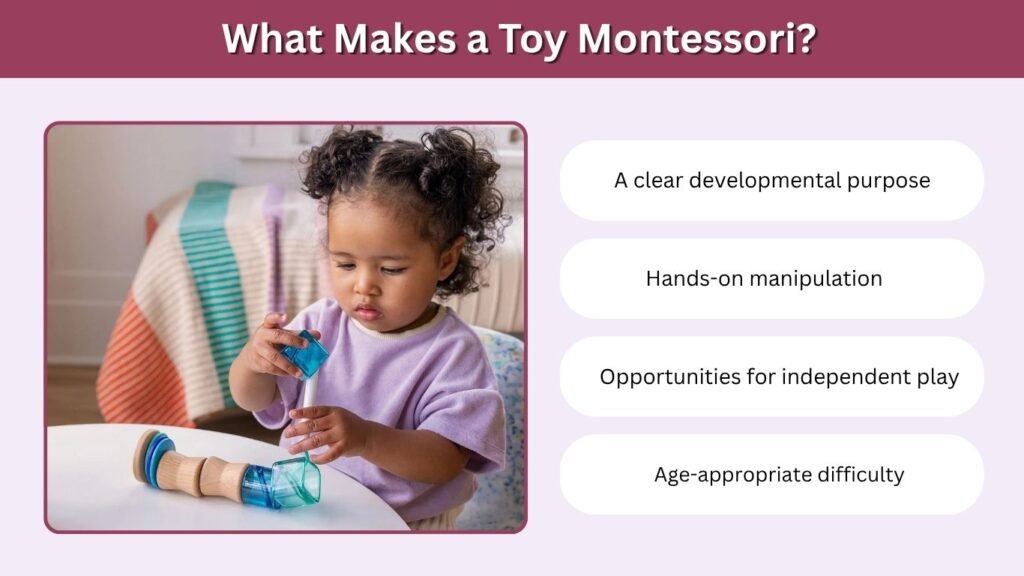
A Montessori-style toy usually has a clear purpose and allows a child to work with it independently. It should encourage active participation rather than simply entertaining the child. Many effective Montessori-inspired toys also provide natural feedback, meaning children can often recognize and correct mistakes without an adult immediately telling them what went wrong.
Common Features of Montessori-Style Toys
Typical characteristics include:
- A simple design without unnecessary distractions
- A clear developmental purpose
- Hands-on manipulation
- Opportunities for independent play
- Limited or no electronic effects
- Realistic shapes or images
- Activities focused on one main skill
- Durable materials
- Age-appropriate difficulty
- Opportunities for repetition
Not every toy needs every feature to support Montessori-style learning.
Focus on One Skill at a Time
Many Montessori educational toys isolate a particular concept.
For example, a shape sorter focuses primarily on matching shapes, while a stacking activity develops coordination and size awareness.
Reducing unnecessary features can make it easier for children to concentrate on the task and understand what they are learning.
Child-Led Play
Montessori-inspired play gives children opportunities to choose activities and explore them at their own pace.
Adults can demonstrate how an activity works, but children are generally encouraged to practice independently rather than being constantly directed.
This can help build confidence and persistence.
Benefits of Montessori Toys
The benefits of Montessori toys come from the way children interact with them. Instead of relying on flashing lights, sounds, or automatic movement, many Montessori-style activities require concentration and physical involvement. Different materials support different developmental skills, so choosing toys according to a child’s abilities is more important than simply buying products with Montessori branding.
Skills Montessori Toys May Support
Depending on the activity, Montessori-style toys may help children practice:
- Fine motor coordination
- Hand-eye coordination
- Problem-solving
- Concentration
- Sorting and matching
- Early mathematics
- Language development
- Sensory exploration
- Practical life skills
- Independent decision-making
A single toy does not need to teach all of these skills.
Encouraging Independence
Independence is an important Montessori principle.
A well-chosen activity should be challenging enough to remain interesting but manageable enough that children can participate without constant adult intervention.
Simple puzzles, object-matching activities, dressing frames, and practical household tools designed for children can all encourage independent practice.
Supporting Concentration
Open-ended or purposeful activities can allow children to repeat a task many times.
Repetition is valuable because children often develop coordination and understanding gradually. An activity that appears simple to an adult may provide meaningful practice for a young child.
Are Montessori Toys Always Wooden?
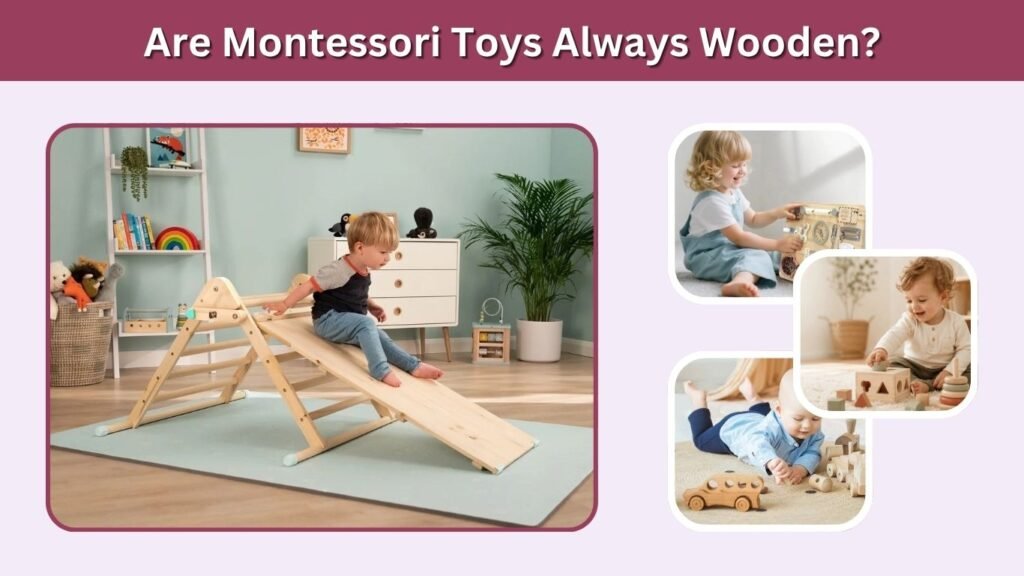
Wooden toys are strongly associated with Montessori-style play, but Montessori toys do not have to be wooden. The material matters less than the purpose, simplicity, safety, and developmental value of the activity. Wood is common because it is durable, tactile, and visually simple, which fits well with many Montessori principles.
Why Wooden Montessori Toys Are Popular
Wooden Montessori toys are often valued because they provide:
- Natural textures
- Durable construction
- Simple appearance
- Pleasant weight
- Less visual clutter
- Long-term usability
Wood can make an activity feel substantial and realistic, but plastic, fabric, metal, and other materials can also be appropriate.
Material Is Not the Main Requirement
A brightly colored plastic activity can still support Montessori-style learning if it is purposeful and encourages independent exploration.
Likewise, a wooden toy is not automatically Montessori simply because it is made from natural materials.
Look first at what the child actually does with the toy.
Montessori Toys for Babies and Infants
Montessori toys for babies tend to be simple because very young children are still developing basic sensory and motor abilities. Babies benefit from safe objects they can look at, reach for, grasp, move, and explore. Toys should always match the child’s developmental stage and meet appropriate safety standards.
Montessori Toys for 0–6 Months
Useful activities may include:
- High-contrast visual cards
- Simple hanging mobiles
- Lightweight grasping toys
- Soft sensory objects
- Baby-safe mirrors
At this stage, visual tracking, reaching, and grasping are important forms of exploration.
Montessori Toys for 6–12 Months
As babies become more mobile and coordinated, activities can become slightly more complex.
Object-permanence boxes, stacking cups, simple balls, posting activities, and appropriately sized shape toys may provide useful practice.
Always avoid small parts or objects that could create a choking hazard.
Montessori Toys for Toddlers
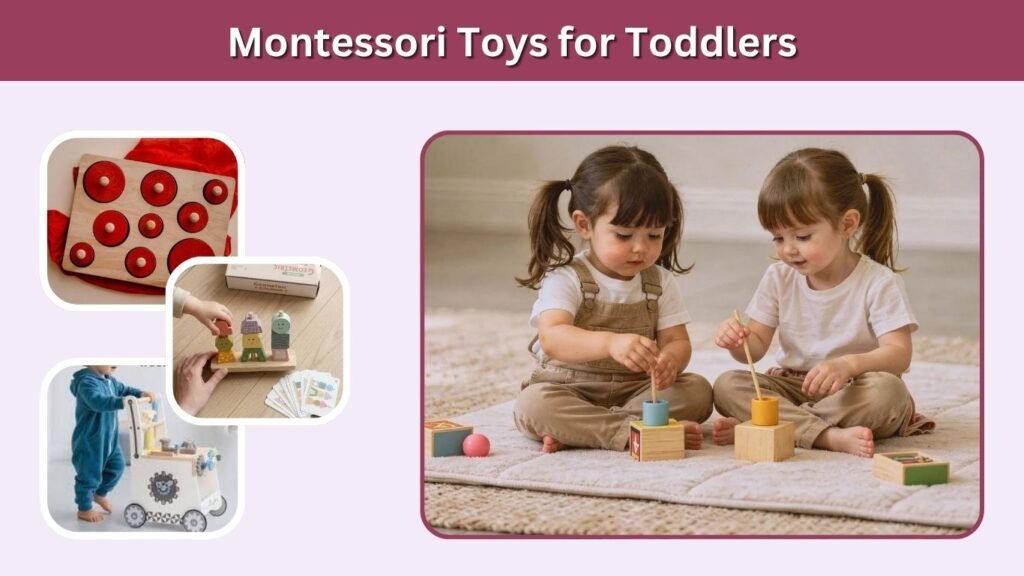
Montessori toys for toddlers usually focus on practical skills, problem-solving, movement, and coordination. Toddlers often enjoy activities that involve putting objects in containers, stacking, sorting, carrying, pouring, opening, closing, or imitating everyday tasks.
Montessori Toys for 1-Year-Olds
Good activities for many one-year-olds include:
- Simple stacking toys
- Large knob puzzles
- Object permanence activities
- Large shape sorters
- Posting toys
- Push-and-pull toys
- Simple musical instruments
The best choice depends on the child’s current abilities rather than age alone.
Montessori Toys for 2-Year-Olds
By age two, many children can manage more complex activities involving matching, building, pretend practical work, and simple sequences.
Large puzzles, sorting activities, threading toys, child-sized cleaning tools, simple blocks, and practical life activities may be suitable.
Montessori Toys for Preschoolers
Montessori preschool activities can introduce more advanced matching, counting, sequencing, building, language, and practical life skills. Preschool-aged children often enjoy activities that have a clear real-world purpose because they are increasingly interested in doing tasks they see adults performing.
Learning Through Practical Activities
Child-sized practical tools can sometimes be more valuable than conventional toys.
Activities might include pouring water, transferring objects with tongs, arranging flowers, cleaning a small table, preparing simple foods, or caring for plants.
These activities combine coordination with independence and everyday responsibility.
Building and Problem-Solving Toys
Simple blocks, construction materials, puzzles, sorting sets, and pattern activities can encourage logical thinking.
The key is to provide enough challenge to maintain interest without making the activity unnecessarily complicated.
How to Choose Montessori Toys
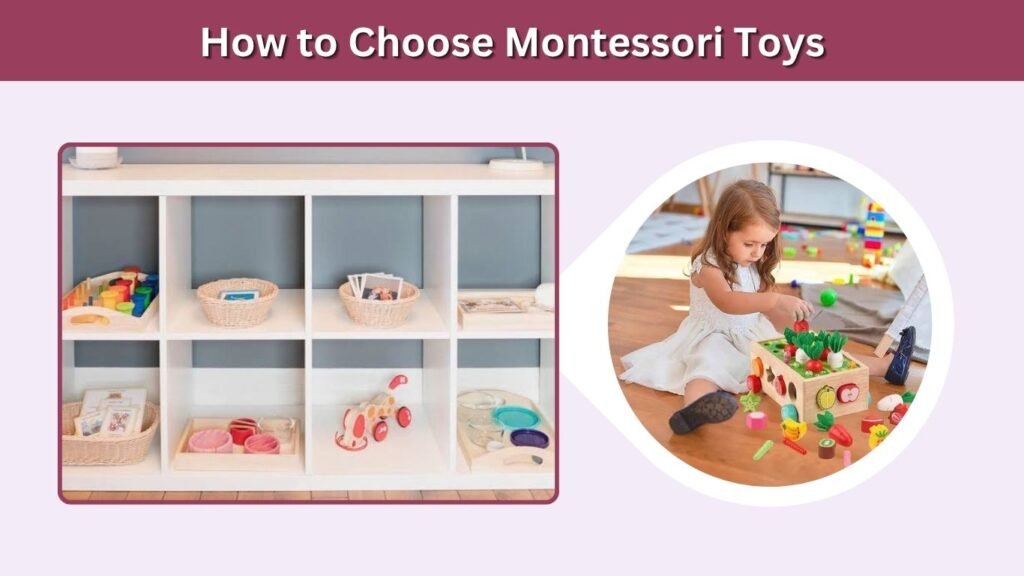
The keyword how to choose Montessori toys has strong search interest because parents often face hundreds of products carrying similar labels. Instead of judging a toy by branding alone, consider whether it fits the child’s present development, has a clear purpose, and allows meaningful hands-on participation.
What to Look For
Before choosing a toy, consider:
- Is it appropriate for the child’s age and abilities?
- Does the child actively control the activity?
- Does it focus on a clear skill?
- Can it be used without constant adult assistance?
- Is the design simple rather than overstimulating?
- Is it durable enough for repeated use?
- Does it meet relevant safety requirements?
- Are all parts appropriate for the child’s age?
A smaller collection of carefully chosen toys can often be more useful than an overcrowded playroom.
Avoid Buying Only by Age Labels
Montessori toys by age can be useful as a starting point, but children develop at different rates.
Observe what your child can currently do. A toy should ideally be slightly challenging without being so difficult that the child immediately becomes frustrated.
Montessori Toys vs Regular Toys
There is no strict line separating every Montessori toy from every conventional toy. Many ordinary toys can support Montessori principles if they encourage concentration, independence, creativity, or real-world skills. The main difference usually involves how the toy is designed and how the child interacts with it.
Active vs Passive Entertainment
A toy that flashes, sings, and performs most of the activity itself may encourage more passive play.
In comparison, blocks, puzzles, sorting activities, or practical tools require the child to manipulate objects and make decisions.
This active participation is one reason many parents prefer Montessori learning toys.
FAQs
1. What is a Montessori toy?
A Montessori toy is a toy or learning material designed to encourage hands-on exploration, independence, concentration, and skill development. Many commercial Montessori toys are Montessori-inspired rather than official classroom materials.
2. What makes a toy Montessori?
A Montessori-style toy usually has a clear purpose, simple design, age-appropriate challenge, and opportunities for independent hands-on learning. It often minimizes unnecessary electronic features and distractions.
3. Are Montessori toys only made of wood?
No. Wood is popular because it is durable and tactile, but Montessori-inspired toys can also be made from fabric, metal, plastic, and other safe materials.
4. Are Montessori toys good for toddlers?
They can be very useful for toddlers when appropriately selected. Sorting, stacking, simple puzzles, practical life activities, and fine-motor toys can support developing coordination and independence.
5. How do I choose Montessori toys by age?
Use age recommendations as a general guide, then consider the child’s actual developmental abilities. Choose activities that are safe, purposeful, and challenging enough to encourage learning without causing excessive frustration.
