

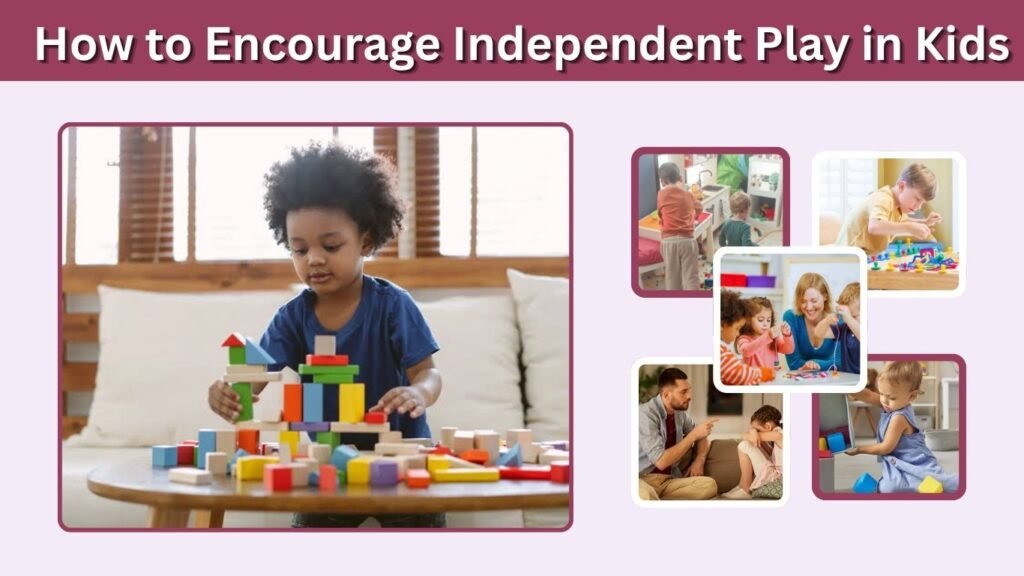
Independent play is an important part of childhood that allows children to explore their interests, build confidence, and develop problem-solving skills. However, many parents find it challenging to encourage toddlers and preschoolers to play without constant attention or entertainment. The good news is that independent play can develop gradually through simple routines, age-appropriate activities, and a supportive environment. Children do not need expensive toys or complicated playrooms to enjoy time on their own. This guide explains how to encourage independent play while supporting creativity, emotional development, and healthy independence.
What Is Independent Play?
Independent play is when children engage in activities without continuous adult direction or participation. They choose how to use toys, explore materials, and create their own experiences. This does not mean leaving young children unattended. Parents can remain nearby while allowing children to control their activities. Independent play gradually develops as children become more comfortable exploring their surroundings.
Independent Play vs. Solitary Play
Independent play describes the ability to participate in activities without constant assistance or direction.
Solitary play is a social play category in which a child plays alone rather than interacting with peers. A child can enjoy independent play while a caregiver remains nearby.
12 Ways to Encourage Independent Play
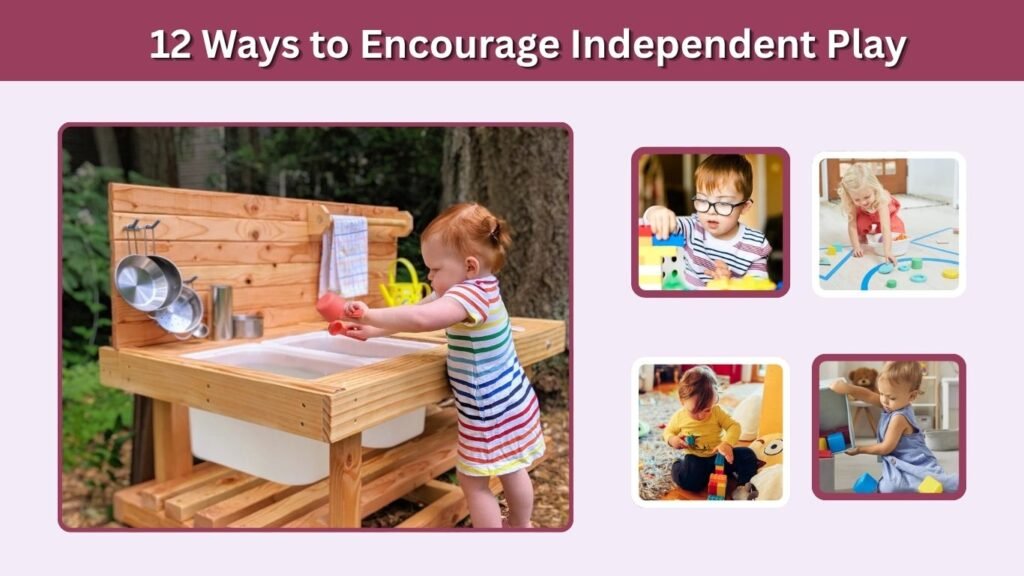
Helping children become comfortable with independent play requires patience and consistency. Some children naturally enjoy playing alone, while others prefer frequent adult interaction. Begin with simple activities, follow your child’s interests, and gradually increase opportunities for self-directed exploration. These practical strategies can make independent play a positive and enjoyable part of everyday family life.
1. Start With Short Independent Play Sessions
Begin with a few minutes of independent play while staying close to your child.
Choose an activity they already enjoy, such as stacking blocks or exploring toy animals. Gradually extend playtime as their comfort and interest increase.
Avoid expecting toddlers to remain occupied for long periods immediately.
2. Create a Safe and Comfortable Play Space
Designate a child-friendly area where toys and materials are easy to reach.
Use low shelves, soft flooring, and age-appropriate furniture. Remove choking hazards, unstable objects, accessible cords, and other dangers.
A familiar, supervised environment makes children more comfortable exploring independently.
3. Offer Open-Ended Toys
Open-ended toys allow children to create their own activities without following complicated instructions.
Blocks, dolls, toy animals, and construction materials can inspire different experiences each day.
Choose toys appropriate for your child’s developmental stage rather than relying entirely on electronic entertainment.
4. Spend Quality Time Together First
Some children play more comfortably after receiving focused attention from their caregivers.
Spend a short period reading, building, or playing together before transitioning into independent activity.
Explain that you will remain nearby while they continue playing. This creates a reassuring transition rather than an abrupt separation.
Creating a Daily Independent Play Routine
A predictable routine can help children understand when independent play happens and what to expect. Instead of treating it as a requirement, incorporate it naturally into everyday activities. Consistency provides familiarity, while flexibility allows children to respond to changing moods, energy levels, and interests. The goal is enjoyable self-directed play, not achieving a strict time target.
5. Establish a Consistent Playtime Schedule
Choose a regular period when your child is rested, comfortable, and interested in playing.
For example, independent play may fit naturally after breakfast or a shared activity.
Keeping the routine predictable helps children recognize playtime as a normal part of the day.
6. Rotate Toys to Maintain Interest
Children may lose interest when too many toys are available simultaneously.
Store some toys and periodically introduce different options. Familiar toys can feel exciting again after spending time out of sight.
Rotating materials also reduces clutter and makes choosing an activity easier.
7. Let Children Choose Their Activities
Allow children to select toys and decide how they want to play.
A toddler might prefer stacking cups, while a preschooler may create stories using dolls or figurines.
Giving children reasonable choices encourages ownership of their play experiences and supports independent decision-making.
Building Confidence Through Independent Play
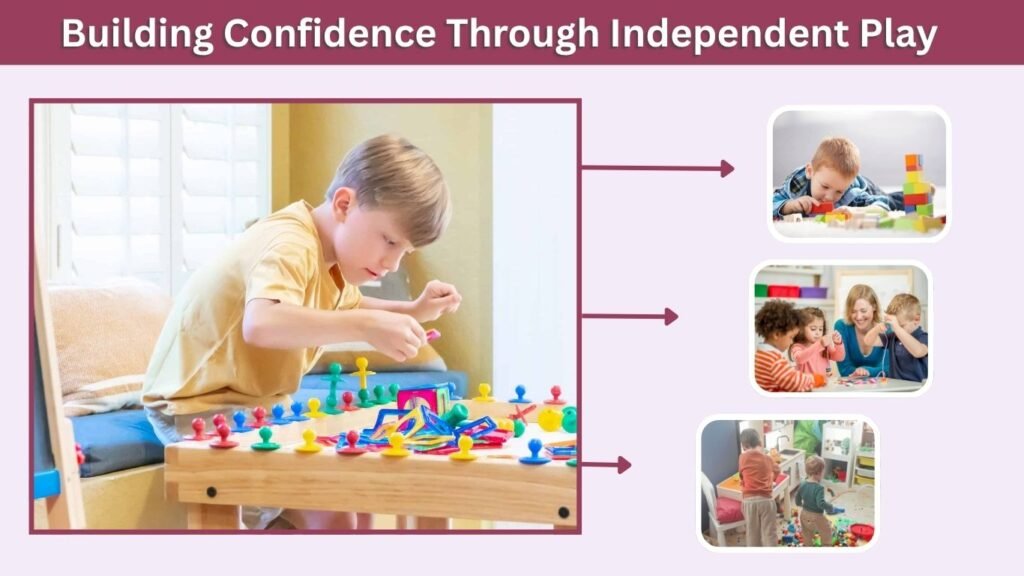
Confidence develops when children have opportunities to explore, make choices, and experience manageable challenges. During independent play, they may experiment with different ideas without immediately seeking adult assistance. Supportive caregivers can encourage this process by observing, responding when needed, and allowing children to work through simple problems. Independence should develop alongside emotional security, not through forced separation.
8. Avoid Interrupting Focused Play
When your child is deeply engaged in an activity, allow them to continue without unnecessary interruptions.
Frequent instructions or praise can sometimes shift their attention away from exploration.
Observe quietly and respond when your child seeks interaction, assistance, or reassurance.
9. Encourage Simple Problem-Solving
If your child struggles to complete a puzzle or construct a tower, allow a brief opportunity to experiment.
You can offer a gentle hint rather than completing the activity immediately.
Age-appropriate challenges help children practice persistence, creativity, and flexible thinking.
10. Stay Nearby Without Directing Everything
Young children often feel more secure when caregivers remain within sight or hearing.
You might fold laundry, read, or complete another nearby task while your child plays.
Remain responsive and maintain appropriate supervision. Independent play should never replace necessary adult care.
Independent Play Activities for Toddlers and Preschoolers
Choosing the right activities makes independent play easier and more enjoyable. Children are more likely to remain engaged when materials match their interests and developmental abilities. Simple, familiar activities often work better than complicated toys requiring adult assistance. Providing a small selection of safe play materials allows children to explore freely while developing imagination and practical skills.
11. Introduce Simple Independent Play Activities
- Building blocks: Encourage stacking, sorting, and imaginative construction.
- Pretend kitchen: Allow children to create imaginary meals.
- Toy animals: Inspire storytelling and make-believe adventures.
- Chunky puzzles: Support observation and problem-solving.
- Picture books: Encourage independent exploration of illustrations.
- Drawing: Offer age-appropriate crayons and paper with supervision.
12. Encourage Creative Pretend Play
Pretend play provides opportunities for children to develop stories and explore familiar situations independently.
A child might organize a pretend grocery store or care for stuffed animals.
Provide a few simple props and allow children to create their own narratives without controlling every detail.
How Long Should Kids Play Independently?
The amount of time children spend playing independently varies with age, temperament, experience, and developmental abilities. Some children remain engaged for several minutes, while others continue a favorite activity much longer. Rather than expecting a fixed duration, focus on gradually developing comfort and enjoyment. Short, successful experiences are generally more helpful than forcing children to continue when distressed.
Independent Play for Toddlers
Toddlers may initially manage only a few minutes of self-directed play.
Begin with familiar activities and gradually increase opportunities as appropriate. Stay nearby, provide reassurance, and avoid expecting prolonged concentration.
Independent Play for Preschoolers
Preschoolers may enjoy longer periods of independent play, particularly with imaginative activities.
Construction toys, pretend kitchens, drawing, and storytelling materials can support continued engagement. Follow the child’s attention and interests instead of enforcing rigid time limits.
What If Your Child Refuses Independent Play?
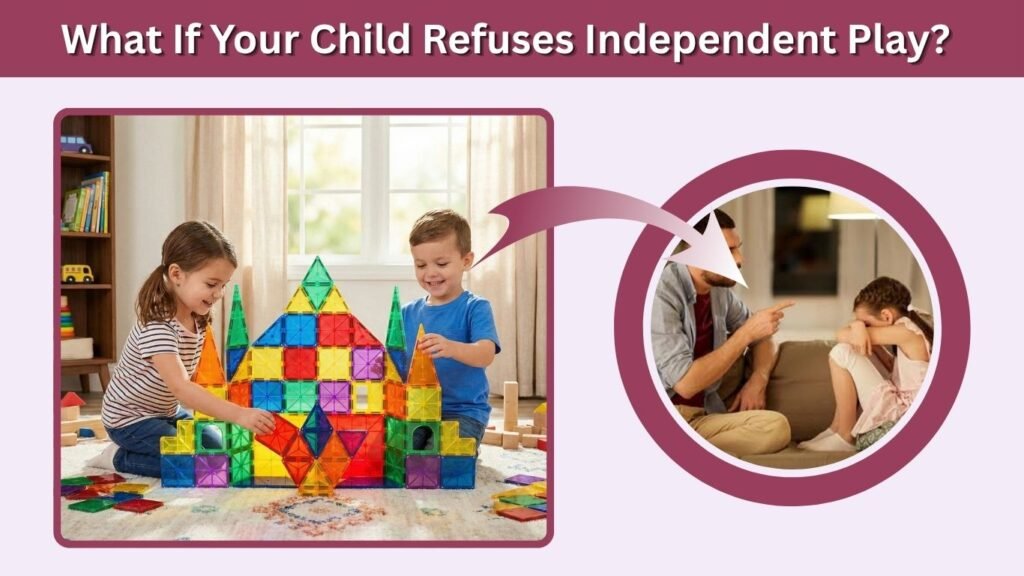
Some children prefer frequent social interaction or feel uncomfortable when caregivers step away. This is developmentally understandable, especially during periods of separation anxiety or unfamiliar routines. Independent play should never become a punishment or a test of obedience. Patient encouragement, familiar surroundings, and small transitions can help children become comfortable with self-directed activities.
Start With Connection and Reassurance
Spend time playing together before encouraging your child to continue independently.
Remain nearby and explain what you are doing. If your child becomes distressed, reconnect rather than insisting they continue alone.
Avoid Forcing Independent Play
Every child develops at a different pace.
Respect individual needs, including differences in temperament and development. If difficulties are persistent and accompanied by broader developmental concerns, consult your child’s pediatrician.
Benefits of Independent Play for Child Development
Independent play provides opportunities for children to practice valuable developmental skills while exploring activities they enjoy. Self-directed play can support creativity, flexible thinking, persistence, and confidence. It also complements shared family play and social interactions with other children. A balanced approach allows children to benefit from independent exploration without sacrificing meaningful relationships and adult engagement.
Supports Creativity and Problem-Solving
When children direct their activities, they decide what to build, imagine, or explore.
These opportunities encourage creative expression and allow children to practice finding solutions to manageable challenges.
Encourages Confidence and Decision-Making
Choosing toys, creating stories, and completing activities can provide children with a growing sense of independence.
Supportive feedback and consistent opportunities to make choices help strengthen confidence over time.
FAQs
1. At What Age Should Children Start Independent Play?
Babies can begin exploring toys independently for brief periods while closely supervised. More recognizable independent play develops during toddlerhood and continues through the preschool years.
2. How Do I Get My Toddler to Play Independently?
Start with a familiar activity, spend time playing together first, and gradually step back while remaining nearby. Keep expectations short and age-appropriate.
3. How Long Should a 2-Year-Old Play Independently?
Some 2-year-olds may focus independently for approximately five minutes, while others play for shorter or longer periods. There is no universal requirement.
4. What Toys Are Best for Independent Play?
Blocks, dolls, toy animals, simple puzzles, pretend-play materials, and age-appropriate art supplies are useful choices because children can explore them in different ways.
5. Is Independent Play Better Than Playing With Parents?
Neither is universally better. Independent play offers opportunities for self-directed exploration, while playing with caregivers supports communication, relationships, and shared learning. Children benefit from both.
