


Play is an essential part of childhood, helping children explore their surroundings, develop social skills, and understand the world around them. As children grow, their play behaviors often change from simple movements and independent activities to more interactive games with others. These patterns are commonly described through the six stages of play identified by sociologist Mildred Parten. Each stage offers opportunities for learning, communication, and emotional development. This guide explains the six stages of play in child development, their typical ages, real-life examples, and ways parents can support healthy play experiences.
What Are the Stages of Play in Child Development?
The stages of play describe different ways children participate in activities alone or alongside other people. Sociologist Mildred Parten identified six categories of social participation during childhood play. These categories help parents and educators understand how children’s interactions change with experience and development. However, children may use several forms of play at the same age.
Parten’s Six Stages of Play
| Stage | Common Age Association | Main Behavior |
|---|---|---|
| Unoccupied play | Infancy | Exploring movements and surroundings |
| Solitary play | Infancy and toddlerhood | Playing independently |
| Onlooker play | Toddlerhood | Watching other children play |
| Parallel play | Around 2–3 years | Playing beside other children |
| Associative play | Around 3–4 years | Interacting without a shared goal |
| Cooperative play | Around 4–5 years | Playing together toward a shared goal |
These age associations are broad examples, not diagnostic milestones. Children may revisit every category throughout childhood.
1. Unoccupied Play
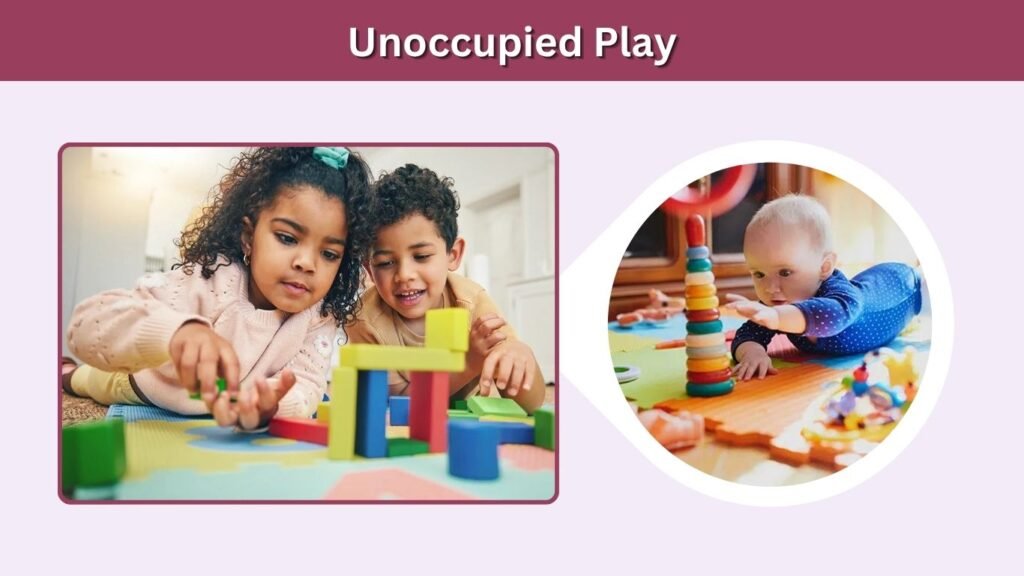
Unoccupied play describes early exploratory behavior without an obvious organized activity. It is commonly associated with infancy, when babies begin discovering their bodies and surroundings. Although movements may appear random, they provide opportunities for sensory exploration and developing motor control. This type of activity reflects children’s natural curiosity and growing awareness of the environment.
Examples of Unoccupied Play
- A baby kicks their legs while lying on a safe play mat.
- An infant moves their arms while watching nearby objects.
- A baby turns their head toward interesting sounds.
Benefits of Unoccupied Play
Unoccupied exploration supports early movement, sensory awareness, and curiosity.
Caregivers can provide supervised floor time, age-appropriate sensory experiences, and opportunities for babies to move freely in safe environments.
2. Solitary Play
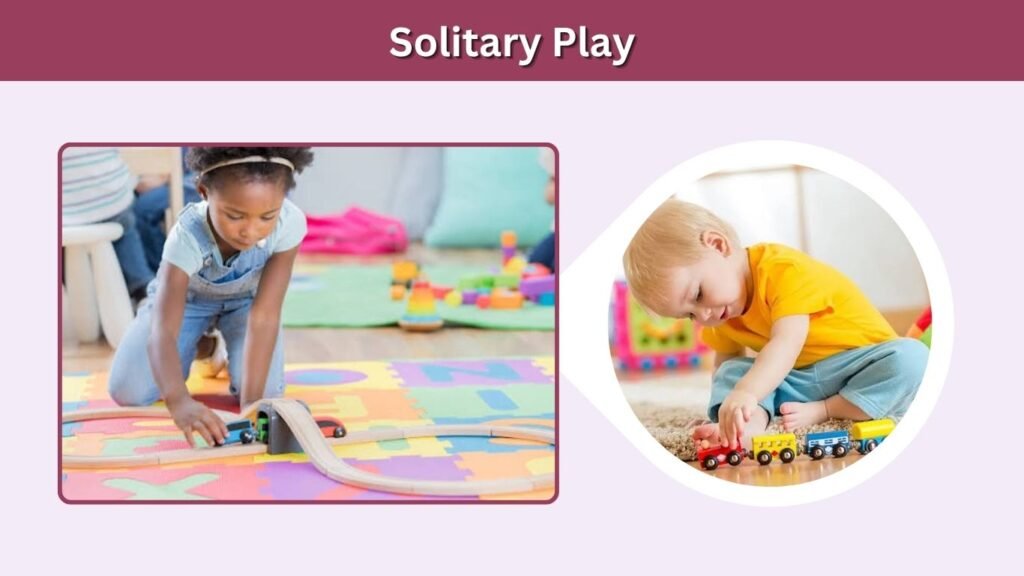
Solitary play occurs when children focus on activities independently rather than interacting with other children. It is common during infancy and toddlerhood, but children of all ages may enjoy independent play. Building blocks, picture books, and pretend activities can encourage concentration and exploration. Playing alone is a normal and valuable experience, not necessarily a sign of social difficulty.
Examples of Solitary Play
- A toddler stacks blocks independently.
- A child explores a picture book alone.
- A preschooler completes a simple puzzle without help.
Benefits of Solitary Play
Independent activities encourage concentration, imagination, and personal decision-making.
Parents can support solitary play by offering developmentally appropriate materials and allowing children time to explore without constant direction.
3. Onlooker Play
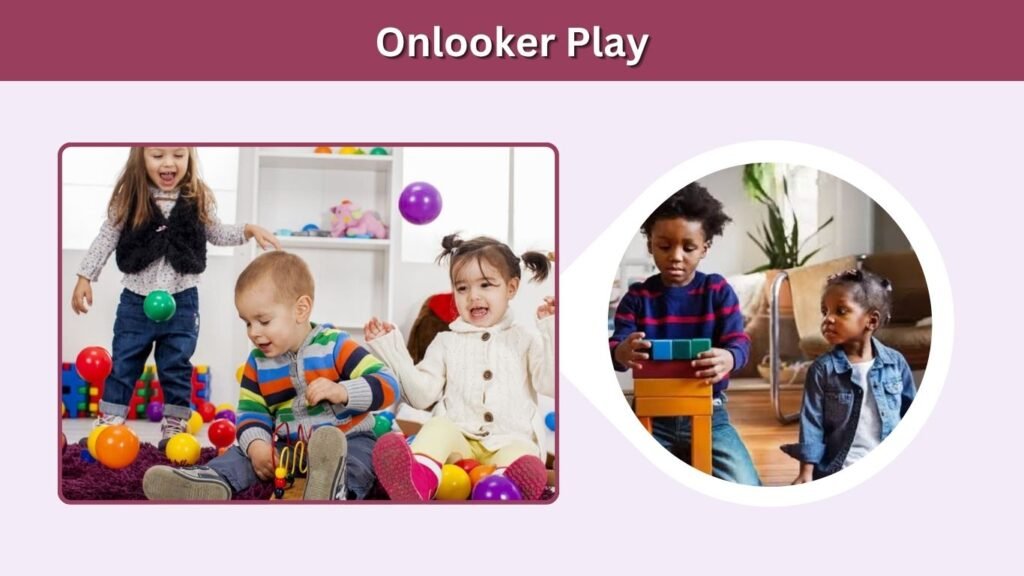
Onlooker play happens when a child watches others playing without directly joining their activity. The observing child may appear curious, ask questions, or comment on what others are doing. This behavior is commonly seen among toddlers and young preschoolers. Watching peers allows children to become familiar with social activities while remaining at a comfortable distance.
Examples of Onlooker Play
A toddler may stand near a group of children building a tower and watch their actions.
Another child might observe a playground game without participating. They may eventually join the activity, but participation is not necessary for the experience to be meaningful.
Benefits of Onlooker Play
Watching others provides opportunities to learn new movements, social behaviors, and play ideas.
Parents should avoid pressuring children to join unfamiliar activities immediately. Gentle encouragement and reassurance can help build confidence.
4. Parallel Play
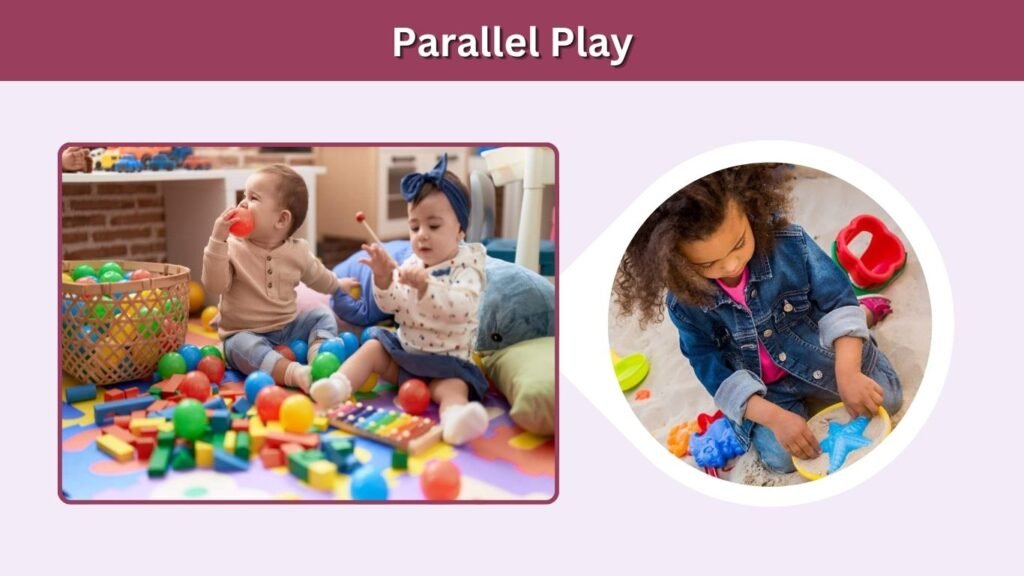
Parallel play occurs when children participate in separate activities while remaining physically close to one another. It is especially noticeable around ages two to three. Children may use similar toys, copy nearby actions, or watch each other without organizing a shared activity. Although direct interaction is limited, parallel play provides opportunities for social familiarity and observational learning.
Examples of Parallel Play
- Two toddlers build separate towers beside each other.
- Children draw individual pictures at the same table.
- Two preschoolers play independently with toy cars.
Benefits of Parallel Play
Parallel play helps children become comfortable around peers while maintaining independence.
It can encourage imitation, social awareness, and early communication. Offering similar toys may reduce conflicts while children develop turn-taking and sharing skills.
5. Associative Play
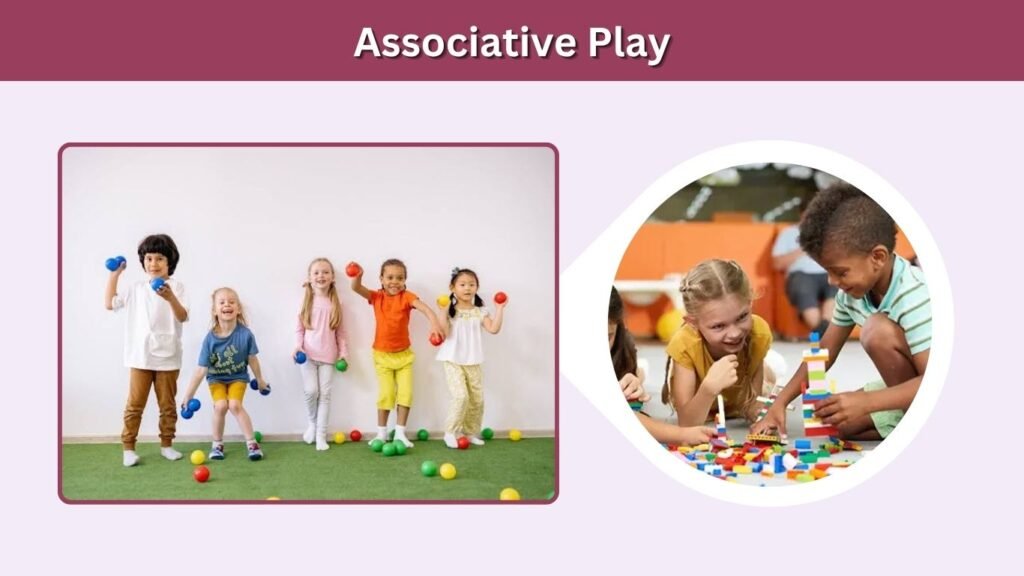
Associative play involves children interacting during activities without following a fully organized shared plan. Children may exchange toys, talk about their ideas, or join similar activities while pursuing individual goals. This type of play becomes more common during the preschool years as communication and social interest develop. It provides opportunities to practice flexible interactions with peers.
Examples of Associative Play
Several children might share toy kitchen accessories while preparing different pretend meals.
They may talk, exchange utensils, or imitate one another without coordinating a single cooking activity.
Benefits of Associative Play
Associative play supports communication, sharing, negotiation, and social confidence.
Adults can encourage these experiences by providing open-ended toys and allowing children to communicate their own ideas.
6. Cooperative Play
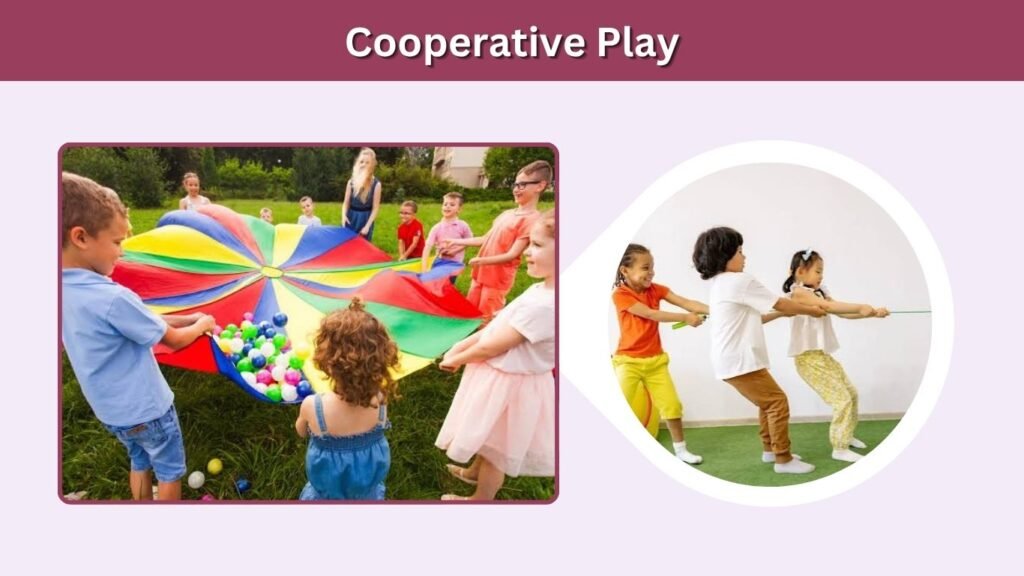
Cooperative play occurs when children organize activities around a shared purpose. They may assign roles, establish rules, solve problems together, or coordinate actions to reach a common goal. This behavior becomes increasingly common during the preschool years, particularly as language and social skills develop. Cooperative activities provide valuable opportunities for teamwork, communication, and emotional understanding.
Examples of Cooperative Play
- Children work together to build one large block tower.
- Preschoolers organize a pretend grocery store.
- A group participates in a simple team game.
Benefits of Cooperative Play
Cooperative play encourages collaboration, problem-solving, and shared decision-making.
Children practice taking turns, responding to others, and working through disagreements. Adults can support these skills by modeling respectful communication.
Why Are the Stages of Play Important?
Understanding the stages of play helps parents recognize different forms of social learning. Children do not need to participate in group games constantly to develop important skills. Independent exploration, observing others, and cooperative activities all offer meaningful experiences. Recognizing these differences encourages realistic expectations and allows adults to support development without unnecessarily directing every activity.
Skills Children Develop Through Play
- Communication: Expressing thoughts, needs, and emotions.
- Social awareness: Observing and understanding other people.
- Problem-solving: Exploring ideas and overcoming challenges.
- Creativity: Developing imaginative stories and activities.
- Emotional regulation: Learning to manage frustration and excitement.
- Physical coordination: Improving movement and motor skills.
Do Children Follow the Stages in Order?
Not necessarily. Parten’s categories describe patterns of social participation rather than a strict developmental sequence.
A five-year-old may enjoy cooperative games and still choose solitary or parallel play. This flexibility is normal and reflects individual preferences and circumstances.
How Parents Can Encourage Healthy Play Development
Children benefit from regular opportunities to explore toys, interact with peers, and make independent choices. Parents can create supportive environments without forcing social participation. Age-appropriate materials, unstructured playtime, and positive adult interactions help children explore different play experiences. The goal is to make play enjoyable while respecting each child’s interests, abilities, and developmental readiness.
Encourage Play Through Everyday Activities
Provide blocks, puzzles, dolls, pretend-play accessories, art materials, and outdoor exploration opportunities.
Arrange occasional playdates and allow children to observe or participate at their preferred pace. Model kindness, cooperation, and turn-taking during shared activities.
When Should Parents Seek Developmental Guidance?
Children develop communication and social skills at different rates.
If you notice persistent concerns involving communication, social interaction, loss of previously acquired skills, or other developmental milestones, discuss them with a pediatrician. A single preferred play style does not establish a diagnosis.
FAQs
1. What Are the Six Stages of Play?
The six stages are unoccupied, solitary, onlooker, parallel, associative, and cooperative play. They describe different patterns of children’s social participation.
2. Who Developed the Six Stages of Play?
Sociologist Mildred Parten developed the classification through observations of young children’s play during the early twentieth century.
3. At What Age Does Parallel Play Occur?
Parallel play is especially common around ages two to three, although children may enjoy it earlier or later.
4. What Is the Difference Between Associative and Cooperative Play?
Associative play involves interaction without an organized shared goal. Cooperative play involves coordinating activities toward a common purpose.
5. Is Solitary Play Normal for Preschoolers?
Yes. Preschoolers may enjoy independent play alongside social activities. Solitary play remains a valuable form of exploration throughout childhood.
