
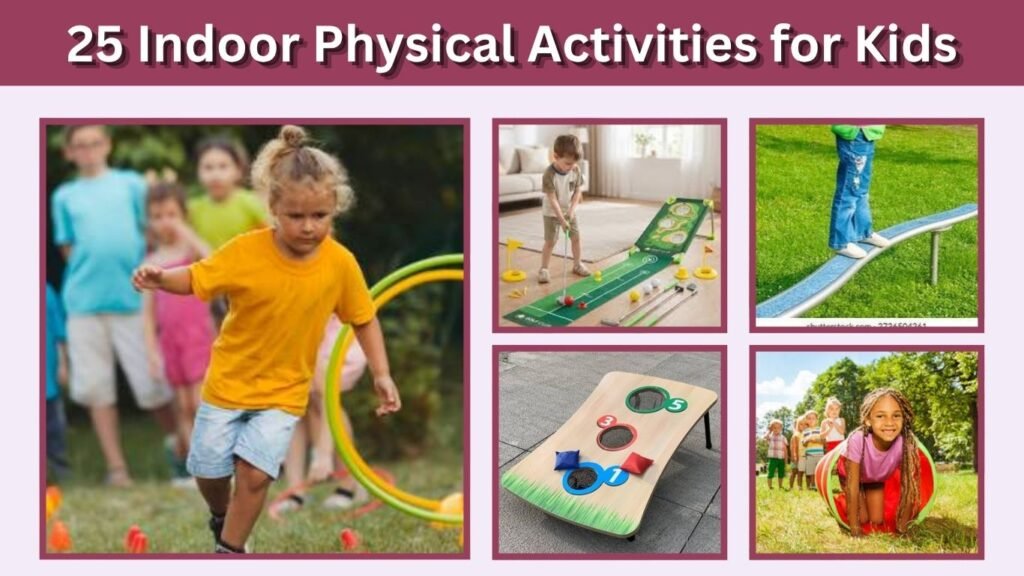
Are your kids bouncing off the walls with energy while stuck indoors? Keeping children active at home doesn’t have to be stressful or complicated! With a little creativity, you can turn any room into an exciting play space. From obstacle courses and dance challenges to interactive fitness games, these 25 fun indoor physical activities for kids will keep them moving, entertained, and happy all day.
1. Indoor Obstacle Course
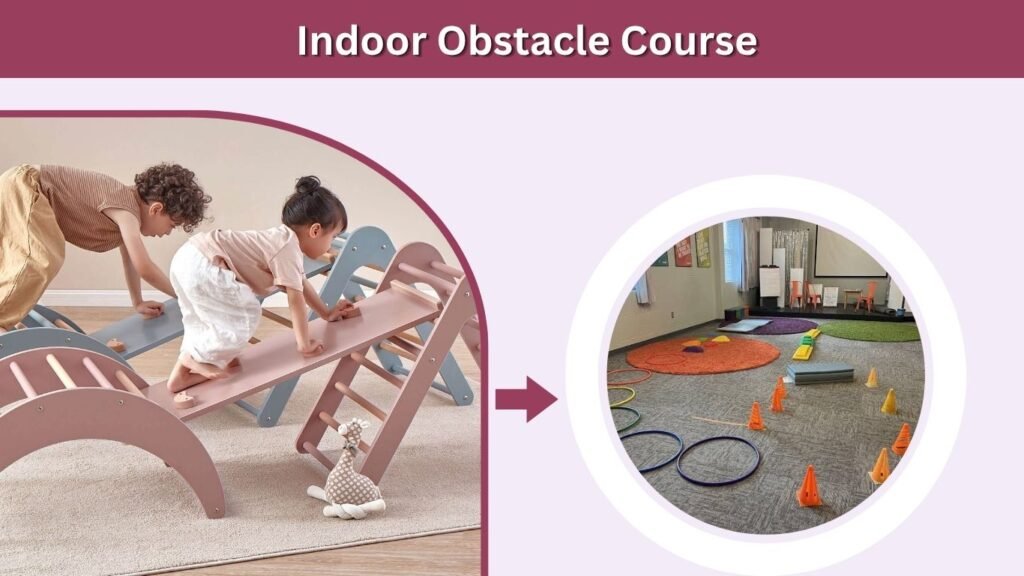
An indoor obstacle course is a fun and energetic physical activity that encourages kids to move, jump, crawl, and balance while exploring different challenges. This activity transforms an ordinary living room or playroom into an exciting adventure using simple household items. It helps children develop coordination, balance, agility, and problem-solving skills while keeping them physically active, especially during rainy days or when outdoor play isn’t possible.
Materials Needed
- Soft Pillows and Cushions: Create safe obstacles for stepping over or moving around.
- Hula Hoops: Use hoops to create designated jumping or stepping zones.
- Painter’s Tape: Mark pathways, starting points, and balance lines on the floor.
- Cardboard Boxes: Create lightweight tunnels or obstacles for crawling through.
- Small Cones or Soft Toys: Arrange objects for zigzag running or walking challenges.
- Soft Floor Mats: Provide cushioning for crawling, balancing, and other movement activities.
How to Play Indoor Obstacle Course
Start by choosing a spacious indoor area and removing sharp objects, slippery rugs, and breakable decorations. Arrange pillows, hoops, and soft toys into a simple obstacle course. Ask children to step over cushions, crawl through tunnels, follow taped lines, and weave around obstacles until they reach the finish line. Demonstrate each movement before starting. For older kids, introduce different movement patterns or a timer to make the challenge more exciting without encouraging unsafe speeds.
Physical and Developmental Benefits
Indoor obstacle courses encourage whole-body movement while improving balance, flexibility, and coordination. Crawling helps strengthen the arms and core, while stepping and jumping activities develop lower-body strength. Following a sequence of obstacles also supports concentration, spatial awareness, and motor planning. Children can practice listening to instructions and making quick decisions while enjoying active play. Completing different challenges may also build confidence and encourage independent problem-solving.
2. Balloon Volleyball
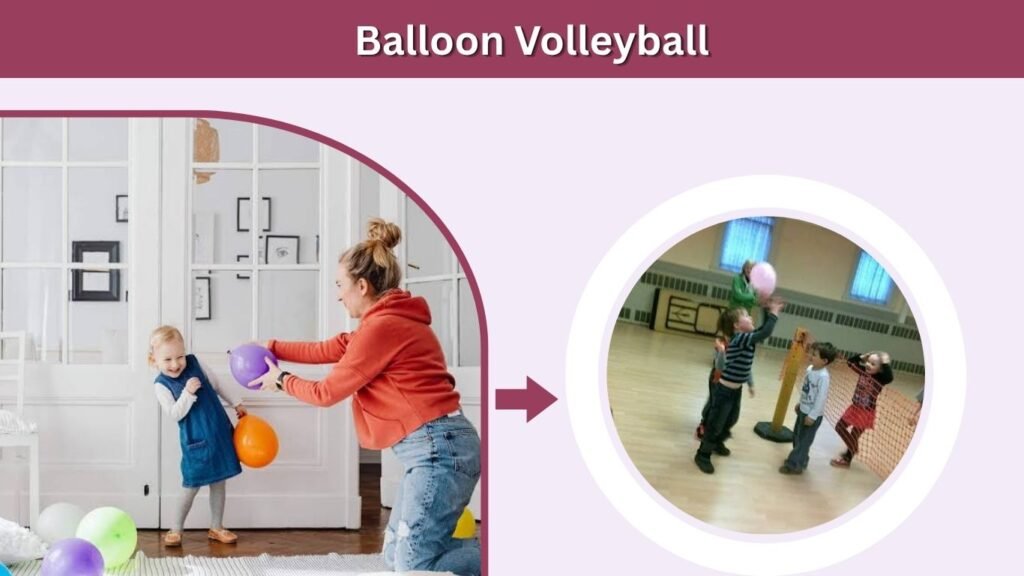
Balloon volleyball is a fun and exciting indoor physical activity that encourages kids to move, stretch, jump, and improve their hand-eye coordination. Unlike traditional volleyball, this game uses a lightweight balloon that moves slowly through the air, making it easier for younger children to participate. It is an excellent activity for rainy days, family playtime, or indoor gatherings, helping kids stay active while developing teamwork and movement skills.
Materials Needed
- Colorful Balloons: Use large, lightweight balloons that are easy for children to hit and follow.
- Soft Rope or Ribbon: Create a simple dividing line between two playing areas.
- Painter’s Tape: Mark boundaries and divide the playing space into two sections.
- Open Floor Space: Choose a spacious room with enough room for safe movement.
- Soft Floor Mats: Place non-slip mats in suitable areas to provide comfortable playing surfaces.
- Lightweight Net: Use an optional portable net designed for indoor children’s activities.
How to Play Balloon Volleyball
Start by clearing a spacious indoor area of sharp furniture, breakable decorations, and other obstacles. Divide the playing space into two sections using painter’s tape or a low, clearly visible net. Divide the children into teams or let two players compete against each other. Toss a balloon into the air and encourage players to gently hit it across the dividing line without letting it touch the floor. Award a point whenever the opposing team cannot return the balloon. For younger children, allow multiple touches before sending it back across the playing area.
Physical and Developmental Benefits
Balloon volleyball encourages children to stretch their arms, move their feet, and coordinate body movements while tracking a floating balloon. Repeated reaching and gentle hitting can help develop hand-eye coordination, balance, and spatial awareness. The game also supports concentration, reaction time, and basic motor skills. When played in teams, children practice communication, cooperation, and turn-taking. Its slower pace makes balloon volleyball accessible to children with different movement abilities while encouraging enjoyable physical activity.
3. Indoor Treasure Hunt
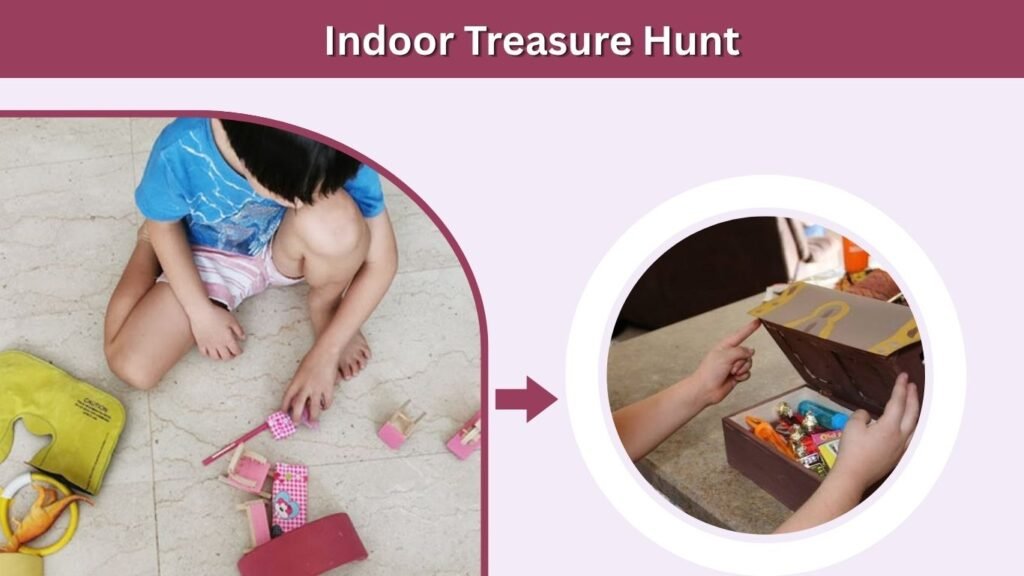
An indoor treasure hunt is an adventurous physical activity that combines movement, exploration, and problem-solving to keep kids active and entertained. Children search different areas of the house for hidden objects by following clues, completing movement challenges, and discovering exciting surprises. This activity encourages walking, bending, reaching, and crawling while developing observation and thinking skills. It is particularly enjoyable during rainy afternoons, birthday celebrations, and family activity sessions.
Materials Needed
- Small Toys or Treasures: Hide colorful toys, stickers, or other age-appropriate rewards around the playing area.
- Clue Cards: Prepare simple written instructions, pictures, or riddles that guide children toward hidden objects.
- Treasure Basket: Provide a small container for collecting discovered items.
- Painter’s Tape: Mark designated searching areas or create movement paths between clues.
- Colorful Paper: Make treasure maps, directional arrows, or decorative signs.
- Soft Obstacles: Include cushions, tunnels, or floor markers for simple physical challenges.
How to Play Indoor Treasure Hunt
Begin by selecting several safe hiding places throughout the house, such as behind cushions, beside bookshelves, or underneath accessible tables. Hide small treasures and prepare clues that lead children from one location to another. Give each child a starting clue and encourage them to follow the instructions while searching for hidden objects. Add physical challenges between clues, such as performing five jumping jacks, walking like a penguin, or crawling through a cardboard tunnel. The activity ends when children discover the final treasure or collect all the hidden items.
Physical and Developmental Benefits
Indoor treasure hunts encourage children to remain physically active through walking, squatting, bending, and reaching while searching for hidden objects. These movements can support coordination, balance, and general motor development. Following clues also strengthens observation, memory, attention, and problem-solving abilities. When children participate in groups, they practice teamwork, communication, and sharing responsibilities. Completing challenges and discovering treasures can improve confidence and provide a sense of accomplishment while making indoor exercise feel like an exciting adventure.
4. Freeze Dance
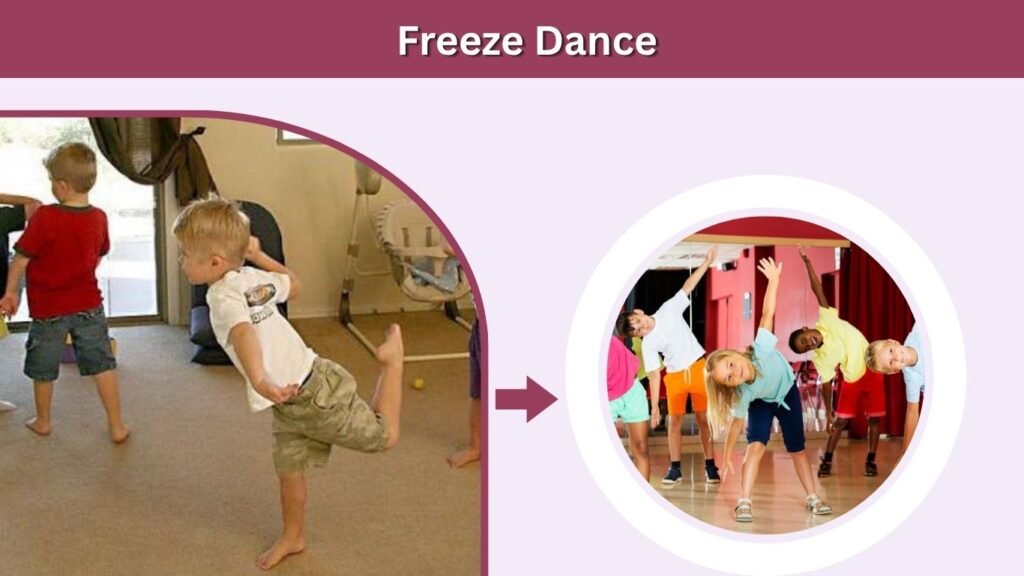
Freeze dance is a fun and energetic indoor physical activity that combines music, dancing, and quick reactions to keep kids moving and entertained. Children dance freely while music plays and must immediately freeze when it stops. This simple game encourages creativity, balance, coordination, and listening skills while providing an enjoyable way to exercise indoors. It is perfect for rainy days, birthday parties, classroom activities, and family entertainment.
Materials Needed
- Music Player: Use a smartphone, tablet, or speaker to play energetic, kid-friendly music.
- Fun Music Playlist: Select upbeat songs that encourage dancing and movement.
- Open Floor Space: Choose a spacious indoor area where children can move comfortably.
- Soft Floor Mats: Use non-slip mats when appropriate to create a comfortable playing surface.
- Colorful Dance Decorations: Add balloons, streamers, or decorative lights outside the movement area to create an exciting atmosphere.
- Pause and Play Controls: Keep the music controls easily accessible for stopping and restarting songs.
How to Play Freeze Dance
Start by clearing a safe indoor space and asking children to spread out with enough room for movement. Play an upbeat song and encourage everyone to dance, jump gently, spin carefully, or perform creative movements. Stop the music unexpectedly and instruct children to freeze immediately in their current positions. Anyone who moves after the music stops can complete a playful challenge, such as making a funny face or striking a superhero pose, instead of being eliminated. Restart the music and continue playing for several rounds.
Physical and Developmental Benefits
Freeze dance encourages whole-body movement while helping children develop coordination, balance, and body awareness. Dancing promotes physical activity and allows kids to practice different movement patterns. Stopping suddenly when the music pauses helps develop listening skills, attention, and impulse control. The game also supports creativity and self-expression as children invent their own dance moves. Participating with friends or family encourages social interaction, confidence, and cooperation in a playful environment.
5. Animal Walk Races
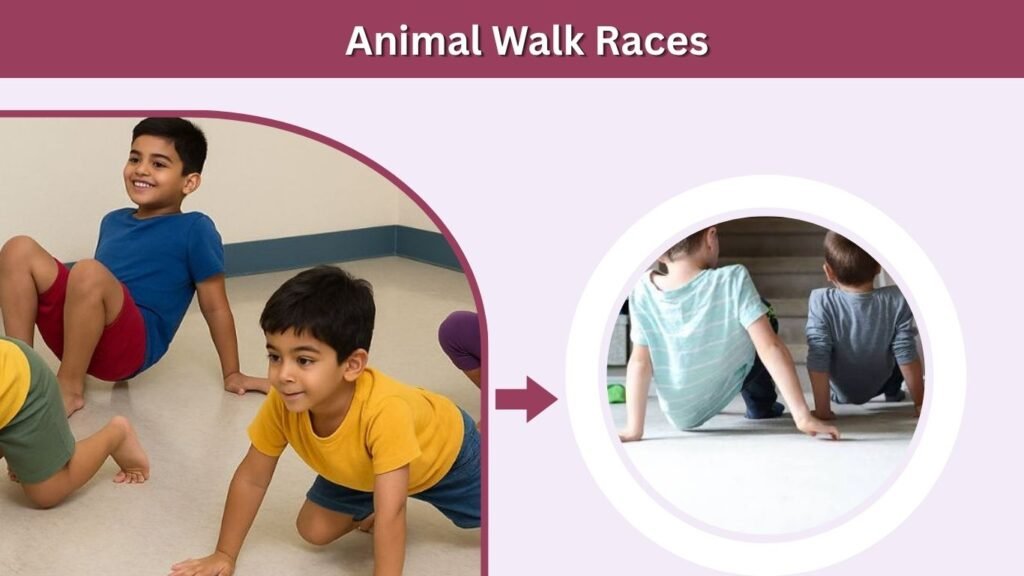
Animal walk races are an exciting indoor physical activity that encourages kids to imitate different animal movements while exploring creative ways to exercise. Children can crawl like bears, hop like frogs, waddle like ducks, or walk sideways like crabs as they move toward a finish line. This playful activity helps develop balance, coordination, flexibility, and muscular strength while allowing children to use their imagination. It is ideal for indoor playtime, group activities, and energetic family games.
Materials Needed
- Painter’s Tape: Mark starting lines, finishing points, and individual racing lanes on the floor.
- Animal Picture Cards: Prepare pictures of bears, frogs, crabs, ducks, and other animals for movement inspiration.
- Soft Floor Mats: Provide non-slip mats for comfortable crawling and floor-based movements.
- Open Playing Area: Select a spacious room with enough space for safe movement.
- Small Cones or Markers: Use lightweight objects to identify racing boundaries and turning points.
- Music Player: Play cheerful background music to make the activity more entertaining.
How to Play Animal Walk Races
Begin by creating a short racing track using painter’s tape or small floor markers. Show children animal picture cards and demonstrate how to imitate each movement safely. For a bear walk, children move forward on their hands and feet, while a frog jump involves bending the knees and making small forward hops. A crab walk requires moving with hands and feet on the floor while facing upward. Ask children to choose an animal and travel toward the finish line using the matching movement. Change animals between rounds to keep the activity interesting.
Physical and Developmental Benefits
Animal walk races encourage children to use different muscle groups while practicing coordination and balance. Bear walks and crab walks engage the arms, shoulders, and core, while frog jumps help develop leg strength and controlled jumping skills. Duck walks and other movement variations can challenge flexibility and body awareness. Following animal movement instructions also supports concentration, motor planning, and listening skills. Participating in friendly races encourages confidence, creativity, and social interaction while making physical exercise enjoyable.
6. Indoor Hopscotch
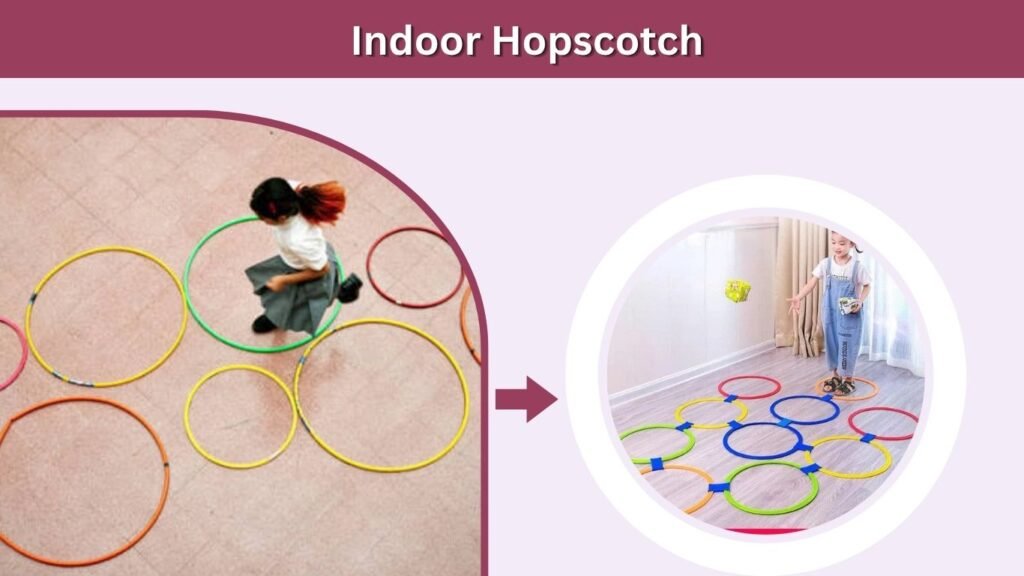
Indoor hopscotch is a fun and energetic physical activity that encourages kids to jump, balance, and coordinate their movements while playing indoors. This classic playground game can easily be adapted for living rooms, playrooms, or classrooms using simple household materials. It helps children develop balance, coordination, concentration, and number recognition while keeping them physically active. Indoor hopscotch is particularly enjoyable during rainy days or when outdoor play is limited.
Materials Needed
- Painter’s Tape: Create numbered hopscotch squares directly on a suitable indoor floor.
- Number Cards: Use colorful paper or printed numbers to identify each square.
- Soft Bean Bags: Provide lightweight markers that children can safely toss onto the playing area.
- Non-Slip Floor Mats: Use secure, flat mats where appropriate to create a comfortable playing surface.
- Open Floor Space: Choose a spacious room with enough room for hopping and balancing.
- Colorful Decorations: Add removable floor markers or playful designs to make the activity more attractive.
How to Play Indoor Hopscotch
Start by creating a traditional hopscotch pattern on the floor using painter’s tape. Number the squares from one to ten and explain the basic rules to the children. Ask each player to toss a soft bean bag onto the first square and hop through the remaining squares without stepping on the marked space. Children should land on one foot in single squares and use both feet in side-by-side squares. After reaching the end, they turn around, return through the pattern, and collect the bean bag while maintaining their balance. Continue the game by moving the marker to the next numbered square.
Physical and Developmental Benefits
Indoor hopscotch encourages children to practice jumping, hopping, and balancing, which can help improve lower-body strength and coordination. Moving between numbered squares supports spatial awareness, body control, and motor planning. The game also introduces basic counting and number recognition in an interactive environment. Remembering the rules and following the correct sequence encourages concentration and problem-solving. Playing with friends or siblings provides opportunities to practice patience, turn-taking, and positive social interaction while enjoying physical exercise.
7. Simon Says Movement Game
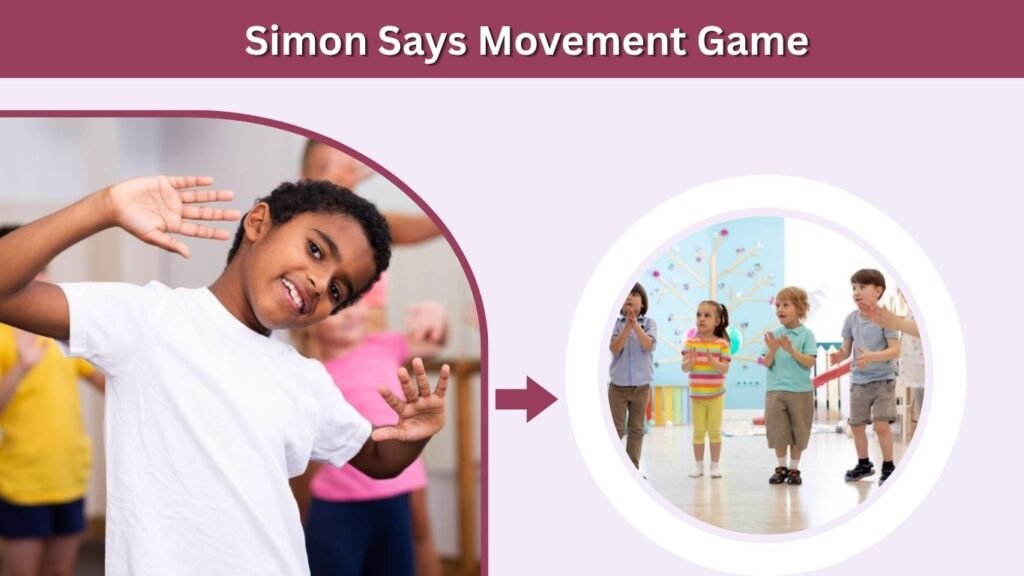
Simon Says is an entertaining indoor physical activity that combines movement, listening, and quick thinking to keep children active and engaged. In this classic game, kids follow physical instructions only when the leader begins with the words “Simon says.” The activity encourages jumping, stretching, balancing, and creative body movements while developing concentration and self-control. It is ideal for indoor playtime, classroom activities, birthday parties, and family gatherings.
Materials Needed
- Open Playing Space: Select a comfortable indoor area where children can move without bumping into furniture.
- Movement Instruction Cards: Prepare cards featuring actions such as jumping, stretching, spinning, and balancing.
- Music Player: Use optional background music to create a lively playing atmosphere.
- Soft Floor Mats: Provide non-slip mats for movements that involve sitting, kneeling, or stretching.
- Colorful Action Pictures: Include visual instructions to help younger children understand different movements.
- Small Timer: Use a timer to organize short playing rounds and activity breaks.
How to Play Simon Says Movement Game
Begin by choosing one person to act as Simon while the other children stand in a safe playing area. Simon gives movement instructions such as “Simon says jump three times,” “Simon says touch your toes,” or “Simon says stand on one foot.” Children should follow the instructions only when they begin with “Simon says.” If the leader gives a command without those words, participants must remain still. Anyone who follows an incorrect command can complete a playful challenge or simply continue into the next round. Switch leaders regularly so everyone has an opportunity to give instructions.
Physical and Developmental Benefits
Simon Says encourages children to perform a variety of body movements that support coordination, flexibility, balance, and general physical activity. Actions such as jumping, squatting, stretching, and marching engage different muscle groups while helping children practice motor control. Listening carefully before responding strengthens attention, memory, and impulse control. The game also encourages children to recognize instructions, make quick decisions, and coordinate their actions. Group participation promotes communication, confidence, and cooperation while making movement-based learning enjoyable.
8. Pillow Jumping Challenge
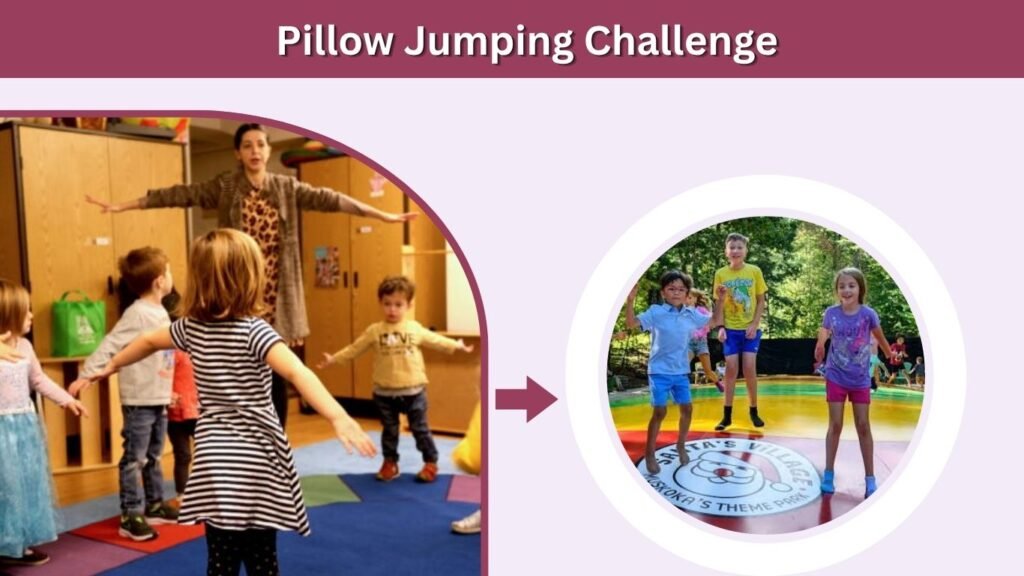
The pillow jumping challenge is a fun and energetic indoor physical activity that encourages kids to jump, balance, and coordinate their movements while exploring a playful obstacle course. This activity uses soft pillows, floor cushions, and simple household materials to create exciting jumping challenges. It helps children develop lower-body strength, balance, spatial awareness, and confidence while providing an enjoyable way to stay physically active during rainy days or indoor playtime.
Materials Needed
- Soft Floor Cushions: Use firm, non-slip floor cushions to create safe jumping or stepping stations.
- Non-Slip Exercise Mats: Place mats on the floor to provide a stable and comfortable landing surface.
- Painter’s Tape: Mark starting points, finishing lines, and designated jumping areas.
- Small Floor Markers: Use colorful markers to indicate different movement challenges.
- Open Playing Space: Choose a spacious room with enough space for safe jumping and movement.
- Music Player: Play cheerful background music to make the activity more exciting and engaging.
How to Play Pillow Jumping Challenge
Start by clearing a spacious indoor area and placing several low, stable floor cushions along a designated pathway. Arrange them close enough for children to step or make small, controlled jumps between stations. Mark the starting and finishing points using painter’s tape. Ask children to move from one cushion station to another without stepping outside the designated pathway. Younger children can step between cushions, while older kids can practice gentle two-footed jumps between stable floor markers. Introduce simple movement challenges, such as pausing to balance or completing a small turn before continuing.
Physical and Developmental Benefits
The pillow jumping challenge encourages lower-body movement while helping children develop balance, coordination, and body control. Gentle jumping and stepping activities engage the leg muscles and support gross motor skill development. Moving between designated stations improves spatial awareness and encourages children to judge distances carefully. Following movement instructions also supports concentration, motor planning, and problem-solving skills. Completing each challenge can build confidence and provide a sense of accomplishment while making indoor physical activity enjoyable.
9. Indoor Bowling
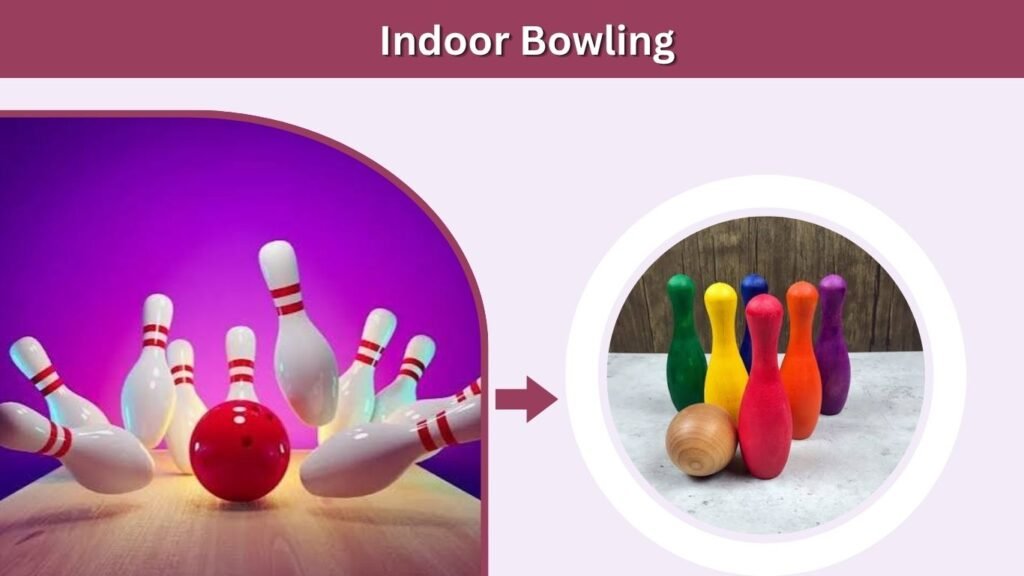
Indoor bowling is an exciting and easy-to-organize physical activity that encourages kids to roll, aim, bend, and move while enjoying friendly competition. This game transforms a hallway, living room, or playroom into a miniature bowling alley using lightweight balls and homemade pins. It helps children develop hand-eye coordination, balance, concentration, and basic counting skills while keeping them entertained. Indoor bowling is suitable for family playtime, classroom activities, and rainy-day entertainment.
Materials Needed
- Lightweight Bowling Ball: Use a soft foam ball or small rubber ball suitable for indoor play.
- Plastic Bowling Pins: Choose lightweight toy bowling pins or empty plastic bottles as homemade alternatives.
- Painter’s Tape: Mark the bowling lane, starting position, and boundaries on the floor.
- Open Floor Space: Select a hallway or spacious room with a smooth, unobstructed playing surface.
- Scorecards and Pencils: Prepare simple score sheets to record the number of fallen pins.
- Soft Floor Mat: Place a non-slip mat behind the pins when needed to reduce noise and prevent objects from rolling too far.
How to Play Indoor Bowling
Begin by arranging six to ten lightweight bowling pins in a triangular formation at one end of the playing area. Use painter’s tape to mark a starting line several feet away, adjusting the distance according to children’s ages and abilities. Ask each child to stand behind the line and roll a soft ball toward the pins. Count how many pins fall after each attempt and record the score if desired. Allow players two rolls per turn before resetting the pins. Continue for several rounds and encourage children to practice aiming and controlling the ball rather than throwing it forcefully.
Physical and Developmental Benefits
Indoor bowling encourages children to practice controlled arm movements, bending, balancing, and coordinated stepping. Rolling the ball toward a target helps develop hand-eye coordination, accuracy, and spatial awareness. Picking up and resetting lightweight pins provides additional movement opportunities. The game also introduces basic mathematical concepts through counting fallen pins and comparing scores. Waiting for turns supports patience, communication, and social skills. Repeated practice can improve concentration and movement control while providing a fun and accessible indoor physical activity.
10. Musical Chairs
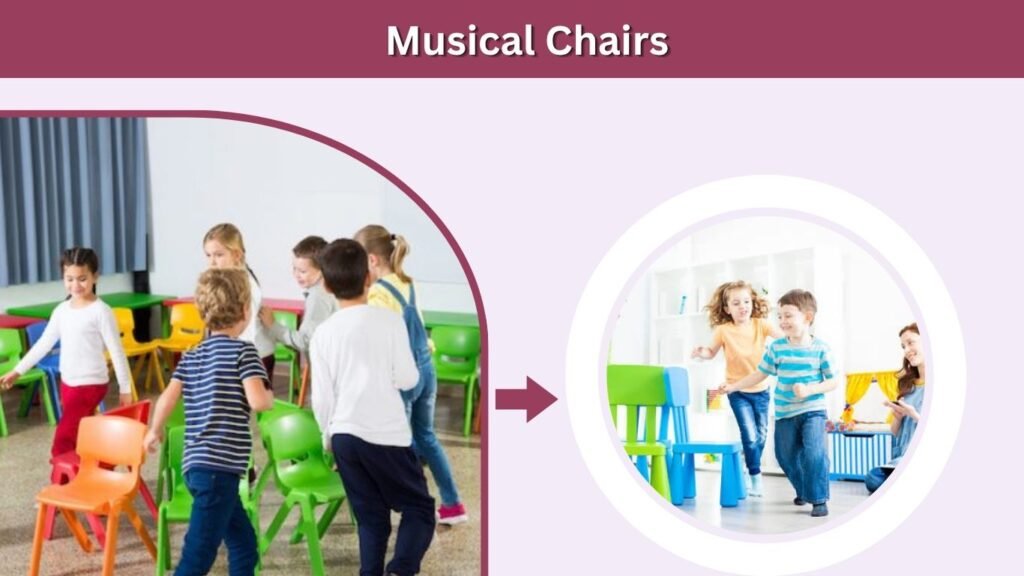
Musical chairs is a fun and energetic indoor physical activity that combines movement, music, and quick reactions to keep kids active and entertained. Children walk, dance, or march around a circle of chairs while music plays and quickly find a seat when it stops. This classic game helps develop coordination, balance, listening skills, and concentration while encouraging friendly social interaction. It is perfect for birthday parties, classroom activities, family gatherings, and rainy-day entertainment.
Materials Needed
- Sturdy Chairs: Use stable, child-sized chairs without wheels or sharp edges for comfortable seating.
- Music Player: Play cheerful, kid-friendly songs using a smartphone, tablet, or speaker.
- Open Floor Space: Choose a spacious indoor area where children can move safely around the chairs.
- Non-Slip Flooring: Select a clean, dry playing surface to reduce slipping during movement.
- Colorful Floor Markers: Use optional markers to define the walking path around the chairs.
- Small Timer: Keep track of playing rounds and provide short breaks when necessary.
How to Play Musical Chairs
Start by arranging chairs in a circle with the seats facing outward, using one fewer chair than the number of players. Ask children to walk or dance around the chairs while the music plays. When the music stops, everyone must find an available seat. The child who does not find a chair can become the music controller or complete a fun movement challenge before the next round. Remove one chair after each round and continue until one player remains. For younger children, keep enough chairs for everyone and focus on listening and finding a seat without elimination.
Physical and Developmental Benefits
Musical chairs encourages children to walk, march, dance, and change directions while practicing balance and coordination. Responding quickly when the music stops helps develop reaction time, listening skills, and body awareness. The game also supports concentration and impulse control as children learn to follow changing musical cues. Participating in group play encourages turn-taking, communication, and cooperation. Moving to different rhythms allows children to explore creative movements while enjoying an entertaining indoor physical activity.
11. Yoga for Kids
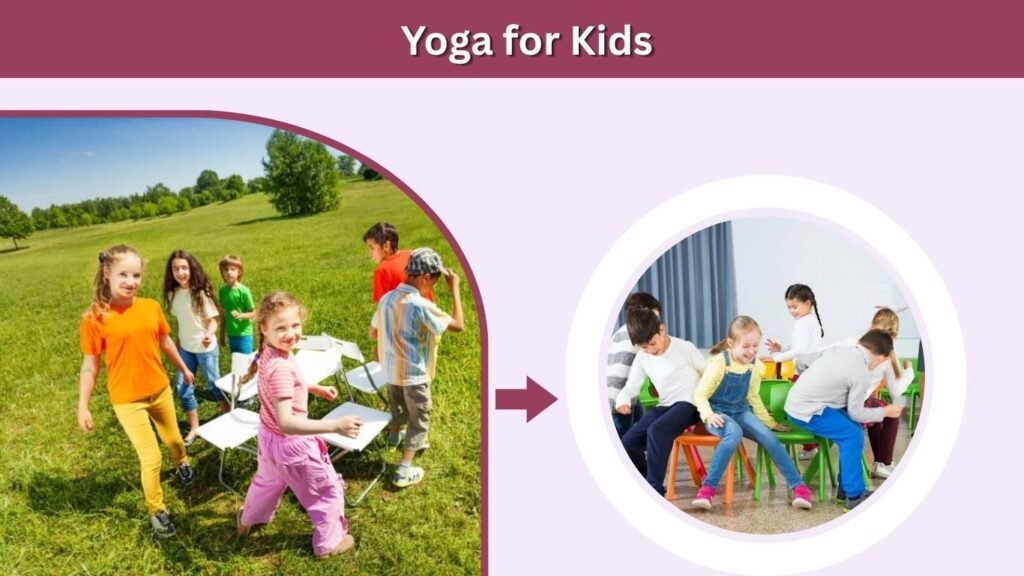
Yoga for kids is a gentle and engaging indoor physical activity that combines stretching, balance, controlled movements, and breathing exercises. This activity introduces children to simple yoga poses through imaginative games and playful storytelling. Whether practiced in a living room, bedroom, or classroom, yoga provides an enjoyable way to develop flexibility, coordination, body awareness, and relaxation skills. It is especially suitable for quiet indoor playtime, morning movement routines, and calming activities before bedtime.
Materials Needed
- Non-Slip Yoga Mats: Provide comfortable, stable surfaces for stretching and balancing exercises.
- Comfortable Clothing: Choose flexible clothing that allows children to move freely.
- Yoga Pose Cards: Use colorful pictures showing simple child-friendly yoga positions.
- Open Floor Space: Select a quiet indoor area with sufficient room for stretching and movement.
- Soft Background Music: Play optional calming music to create a peaceful atmosphere.
- Small Cushions: Provide support for seated breathing exercises and gentle relaxation activities.
How to Play Yoga for Kids
Begin by placing yoga mats on a clean, spacious floor and asking children to stand comfortably. Introduce simple poses such as Mountain Pose, Tree Pose, Cat-Cow Pose, Butterfly Pose, and Child’s Pose. Demonstrate each position slowly and encourage children to follow at their own pace. Turn the session into an imaginative adventure by asking kids to pretend they are tall trees, stretching cats, or flying butterflies. Hold each comfortable pose briefly and encourage natural, relaxed breathing. Finish with a gentle stretching exercise or a short relaxation session.
Physical and Developmental Benefits
Yoga encourages children to practice balance, flexibility, posture, and controlled body movements. Simple standing poses help develop stability and coordination, while gentle stretching activities support comfortable movement through different positions. Following pose instructions can improve concentration, body awareness, and motor planning. Breathing exercises may also help children practice calming techniques and manage everyday stress. Imaginative yoga activities encourage creativity and confidence while allowing children to explore movement in a relaxed, noncompetitive environment.
12. Indoor Scavenger Hunt
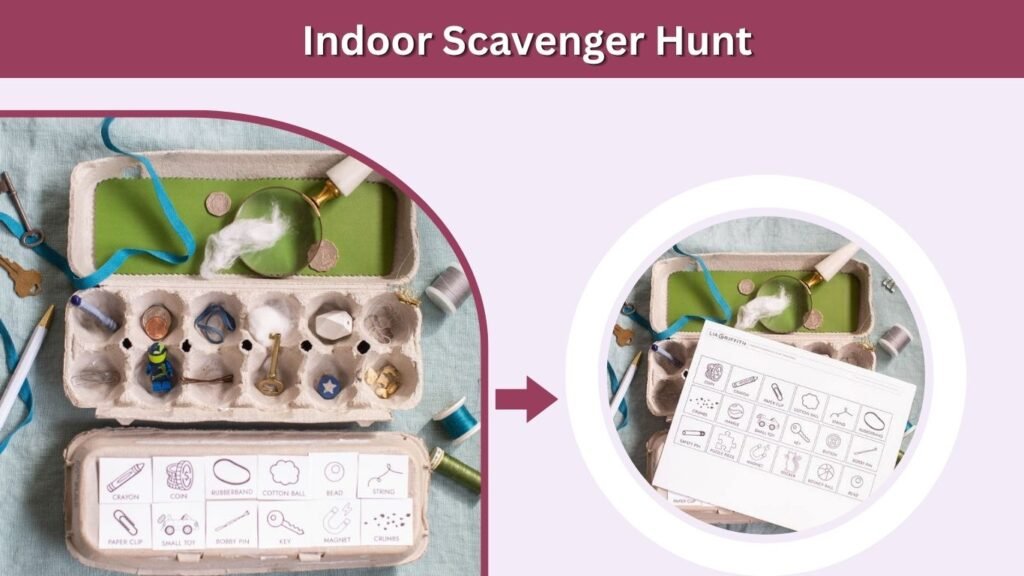
An indoor scavenger hunt is an exciting physical activity that encourages kids to explore, move, and discover hidden objects around the house. This interactive game combines walking, bending, reaching, and searching with observation and problem-solving challenges. Whether played individually or in teams, an indoor scavenger hunt transforms ordinary household spaces into adventurous playgrounds. It is perfect for rainy days, family gatherings, classroom activities, and keeping children physically active while having fun.
Materials Needed
- Scavenger Hunt Checklist: Prepare a list of household objects, colors, shapes, or pictures for children to find.
- Colorful Picture Cards: Use visual clues to help younger children identify different objects.
- Small Collection Basket: Provide a lightweight basket or container for gathering safe items.
- Painter’s Tape: Mark designated searching areas and movement pathways around the room.
- Timer: Use an optional timer to create short, exciting searching challenges.
- Small Rewards: Prepare stickers, certificates, or simple prizes to celebrate participation.
How to Play Indoor Scavenger Hunt
Start by creating a list of common household objects, such as a red toy, a soft pillow, a round object, or a favorite book. Choose safe searching areas and explain the boundaries before beginning. Give each child a checklist and encourage them to explore the designated rooms while looking for matching items. Add simple physical challenges, such as walking like a bear between stations, performing five jumping jacks, or balancing on one foot after finding an object. Children can collect lightweight items or simply mark discoveries on their lists. The game finishes when participants complete their checklists.
Physical and Developmental Benefits
Indoor scavenger hunts encourage children to walk, bend, squat, reach, and move between different locations. These movements help develop coordination, balance, and spatial awareness while promoting physical activity. Searching for objects supports visual recognition, attention, memory, and problem-solving abilities. Following a checklist also encourages organization and independent thinking. When children work in teams, they practice communication, cooperation, and sharing responsibilities. Completing the hunt provides a sense of accomplishment and helps build confidence through enjoyable movement-based learning.
13. Dance Party Challenge
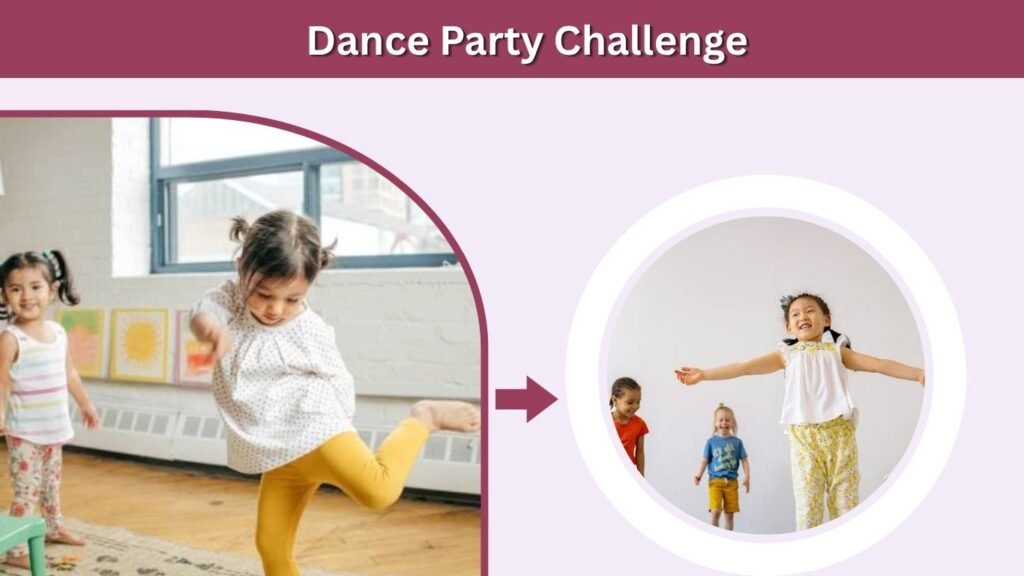
A dance party challenge is a lively and entertaining indoor physical activity that encourages kids to move, jump, stretch, and express themselves through music. This activity transforms a living room or playroom into an exciting dance floor where children can explore different movements and rhythms. It promotes coordination, balance, creativity, and physical activity while providing opportunities for social interaction. Dance party challenges are ideal for rainy afternoons, birthday celebrations, and energetic family playtime.
Materials Needed
- Music Player: Use a smartphone, tablet, or speaker to play energetic, child-friendly songs.
- Upbeat Music Playlist: Select different musical styles and rhythms to encourage creative dancing.
- Open Dance Floor: Clear a spacious indoor area so children can move freely and comfortably.
- Colorful Dance Accessories: Provide lightweight scarves, ribbons, or soft props for creative movement.
- Non-Slip Flooring: Choose a clean, stable surface suitable for dancing and gentle jumping.
- Timer: Use a timer to organize short dance rounds and movement challenges.
How to Play Dance Party Challenge
Begin by selecting an open indoor space and removing furniture or objects that could cause accidents. Play an upbeat song and encourage children to dance freely using their favorite movements. Introduce different challenges during each round, such as dancing like a robot, moving like an animal, or following a simple dance routine. Ask children to copy movements demonstrated by a leader or invent their own dance steps. Change the music tempo to encourage slow, controlled movements and faster, energetic dancing. Allow children to take turns leading the group and finish with a gentle cool-down dance.
Physical and Developmental Benefits
Dance party challenges encourage full-body movement while helping children develop balance, coordination, rhythm, and body awareness. Repeated dancing, stepping, and gentle jumping engage different muscle groups and support cardiovascular activity. Learning simple dance sequences can improve memory, concentration, and motor planning. Creative movements also encourage imagination, self-expression, and confidence. Participating with siblings or friends helps children practice teamwork, communication, and cooperation. Dance activities provide an enjoyable way to combine exercise with entertainment without requiring specialized equipment.
14. Crab Walk Race
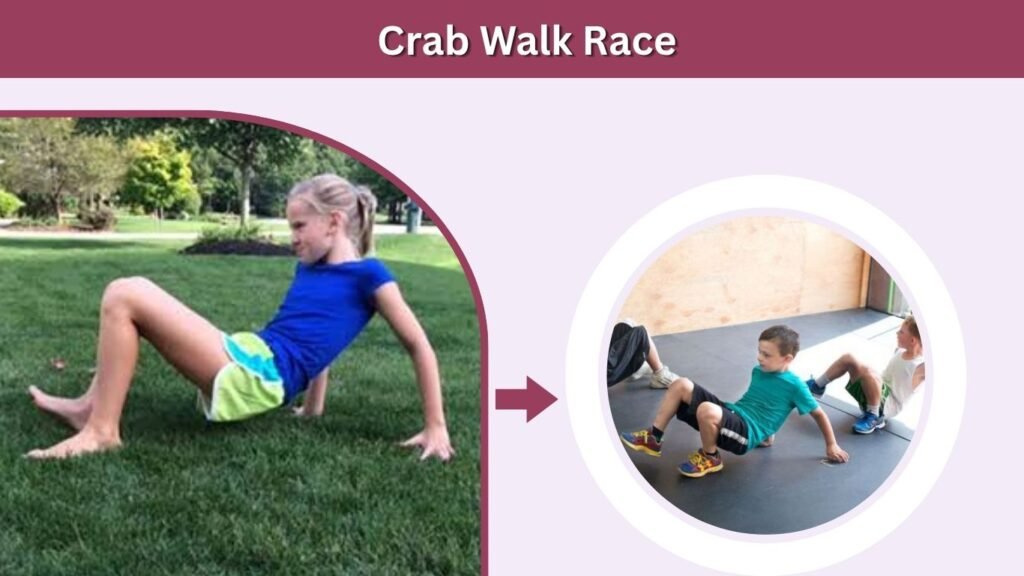
A crab walk race is a fun and energetic indoor physical activity that encourages kids to strengthen their muscles while practicing balance and coordination. In this game, children move across the floor using their hands and feet while keeping their stomachs facing upward, just like walking crabs. This playful challenge promotes upper-body strength, core stability, and body awareness while keeping children entertained. It is perfect for rainy days, family fitness activities, and indoor group games.
Materials Needed
- Soft Exercise Mats: Use non-slip mats to provide a comfortable surface for hands and feet during movement.
- Painter’s Tape: Mark starting lines, finishing points, and individual racing lanes.
- Open Floor Space: Choose a spacious room with enough space for safe crawling and movement.
- Colorful Floor Markers: Place lightweight markers along the track to guide children toward the finish line.
- Animal Picture Cards: Use crab pictures or ocean-themed illustrations to make the activity more engaging.
- Music Player: Play cheerful background music to create an exciting racing atmosphere.
How to Play Crab Walk Race
Begin by clearing a spacious indoor area and marking a short racing track using painter’s tape. Demonstrate the crab walk by sitting on the floor with your knees bent, feet flat, and hands placed behind your body. Lift your hips slightly off the ground and move forward using your hands and feet. Ask children to practice this position before starting the race. Once everyone feels comfortable, have participants move toward the finish line using crab-walking movements. Introduce short racing rounds, allowing children to rest between attempts. For younger kids, focus on completing the movement rather than racing quickly.
Physical and Developmental Benefits
Crab walking engages the arms, shoulders, core, and leg muscles, helping children practice whole-body coordination and muscular endurance. Supporting body weight through the hands and feet encourages upper-body strength and stability. Moving backward or sideways challenges balance, spatial awareness, and motor planning. The activity also helps children develop concentration as they coordinate multiple body movements simultaneously. Participating in friendly races supports confidence, persistence, and social interaction while providing an enjoyable way to stay physically active indoors.
15. Balloon Keep-Up Game
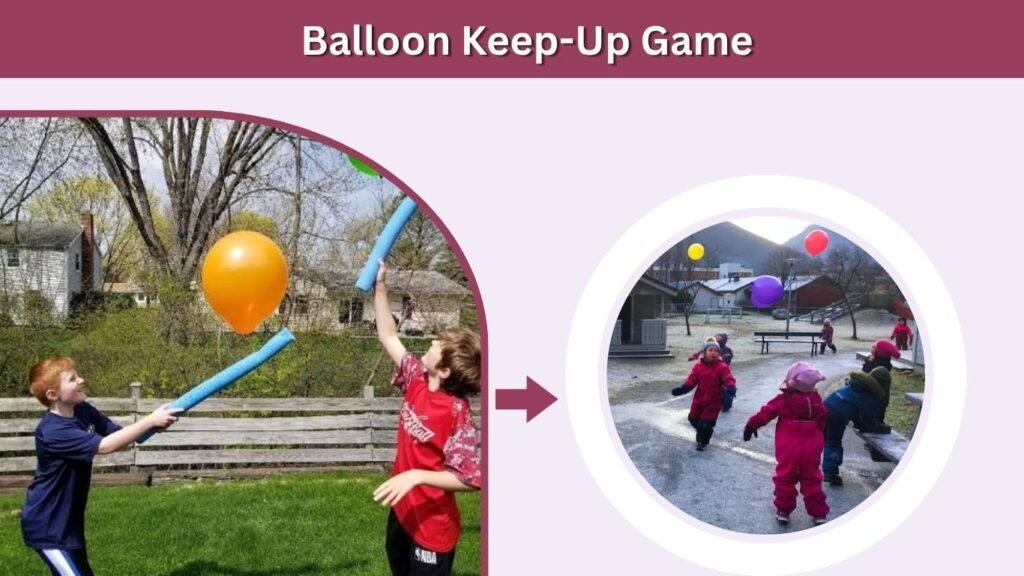
The balloon keep-up game is a simple and entertaining indoor physical activity that encourages kids to move, reach, stretch, and improve their hand-eye coordination. The goal is to keep a lightweight balloon floating in the air without letting it touch the floor. This exciting game requires minimal equipment and can be played individually or with friends. It is particularly suitable for indoor playtime, birthday parties, and rainy afternoons when children need an enjoyable way to stay active.
Materials Needed
- Lightweight Balloons: Choose colorful balloons that are large enough for children to see and gently tap.
- Open Playing Area: Select a spacious room with enough space for comfortable movement.
- Painter’s Tape: Mark designated playing boundaries or individual activity zones.
- Soft Floor Mats: Use non-slip mats where appropriate to create a comfortable playing surface.
- Music Player: Play upbeat songs to create a lively atmosphere during the activity.
- Timer: Use a timer to organize short playing rounds and simple movement challenges.
How to Play Balloon Keep-Up Game
Start by clearing the playing area of sharp furniture, breakable objects, and other obstacles. Give each child a balloon and demonstrate how to gently tap it upward using their hands. Ask participants to keep their balloons floating without allowing them to touch the floor. Children can move around the designated space while reaching and stretching to follow the balloon. Introduce simple challenges, such as keeping the balloon in the air for ten consecutive taps or using alternating hands. For group play, allow children to work together to keep one balloon floating for as long as possible.
Physical and Developmental Benefits
The balloon keep-up game encourages children to practice reaching, stepping, stretching, and coordinated arm movements. Tracking a floating balloon helps develop hand-eye coordination, visual attention, and reaction time. Moving in different directions supports balance, spatial awareness, and body control. Repeatedly tapping the balloon also encourages concentration and motor planning. Group activities provide opportunities for cooperation, communication, and turn-taking. Because the balloon moves slowly, children can practice movement skills at a manageable pace while enjoying playful physical activity.
16. Indoor Basketball
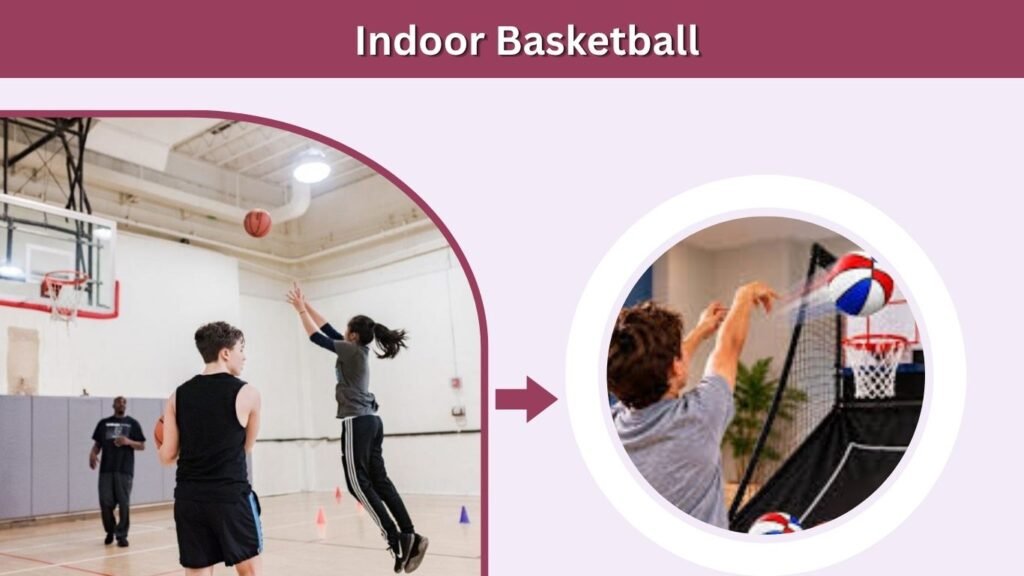
Indoor basketball is an exciting physical activity that encourages kids to practice throwing, aiming, jumping, and moving while having fun at home. This activity uses a small basketball hoop and a lightweight ball to create a safe, child-friendly version of the popular sport. Whether played individually or with siblings and friends, indoor basketball helps develop hand-eye coordination, balance, concentration, and motor skills while keeping children active during rainy days or indoor playtime.
Materials Needed
- Mini Basketball Hoop: Use a child-friendly hoop with an adjustable height or a secure door-mounted design.
- Soft Basketball: Choose a lightweight foam or soft rubber ball suitable for indoor activities.
- Painter’s Tape: Mark shooting lines, playing boundaries, and different scoring zones.
- Open Floor Space: Select a spacious room with enough room for comfortable shooting and movement.
- Small Scoreboard: Use paper or a whiteboard to record successful baskets and points.
- Non-Slip Floor Mats: Provide a stable playing surface to reduce slipping during movement.
How to Play Indoor Basketball
Begin by installing a mini basketball hoop at a suitable height and clearing the surrounding area of breakable objects. Mark a shooting line using painter’s tape and give each child a soft basketball. Ask participants to stand behind the line and aim for the basket. Allow children to take turns making shots and collecting points for successful attempts. Introduce different shooting positions to make the activity more challenging. For younger kids, move the shooting line closer to the hoop, while older children can practice passing, controlled dribbling, and shooting from different distances.
Physical and Developmental Benefits
Indoor basketball encourages children to develop hand-eye coordination, balance, and controlled body movements. Throwing and catching activities engage the arms, shoulders, and upper-body muscles, while controlled dribbling supports coordination and concentration. Aiming for the basket helps improve visual tracking, spatial awareness, and motor planning. The game also introduces basic counting and scoring skills. When children play together, they practice cooperation, communication, patience, and turn-taking while enjoying an engaging physical activity.
17. Follow the Leader
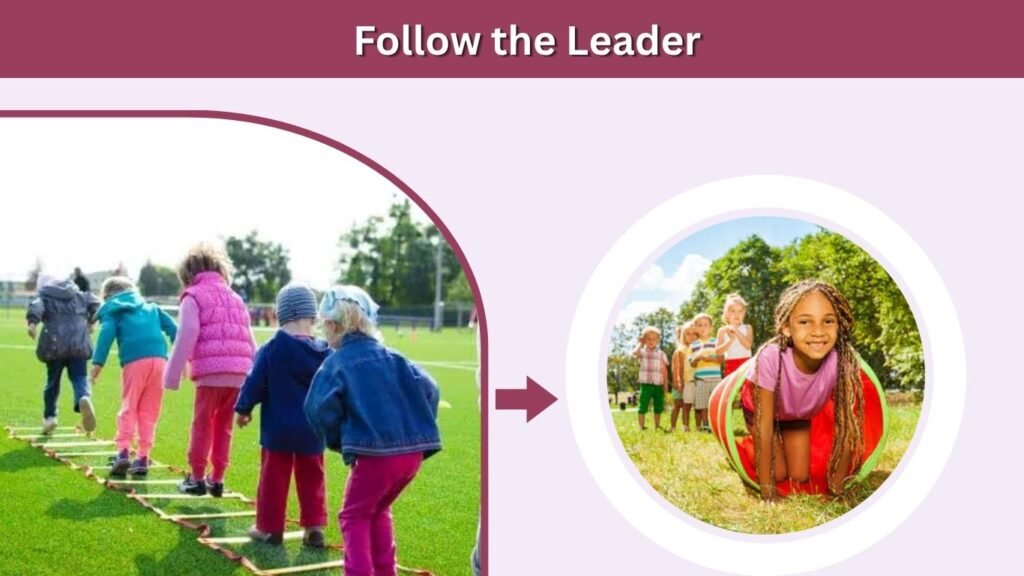
Follow the Leader is a fun and interactive indoor physical activity that encourages kids to copy different movements while improving coordination, balance, and concentration. In this classic game, one child or adult becomes the leader and performs actions that everyone else must imitate. From marching and stretching to hopping and dancing, the activity offers endless opportunities for creative movement. It is perfect for indoor playtime, classroom activities, family gatherings, and rainy-day entertainment.
Materials Needed
- Open Playing Space: Choose a spacious room where children can move comfortably without obstacles.
- Movement Activity Cards: Prepare cards featuring actions such as marching, hopping, stretching, and balancing.
- Music Player: Play cheerful background music to encourage energetic movement.
- Painter’s Tape: Mark pathways or designated movement areas on the floor.
- Soft Floor Mats: Provide non-slip mats for activities involving sitting, kneeling, or gentle stretching.
- Colorful Props: Use lightweight scarves, ribbons, or soft toys to make movement challenges more entertaining.
How to Play Follow the Leader
Start by selecting one child or adult to become the leader while the other participants stand behind them. The leader begins performing simple movements, such as marching in place, stretching their arms, walking sideways, or hopping gently. Everyone else must copy the same movements while following the leader around the designated playing area. After a short period, choose a new leader so every child gets an opportunity to create movements. Introduce different movement challenges and encourage participants to use their imagination while maintaining a safe distance from one another.
Physical and Developmental Benefits
Follow the Leader encourages children to practice various movements that support balance, coordination, flexibility, and body awareness. Copying actions helps develop motor planning, visual attention, and listening skills. Marching, hopping, stretching, and controlled movement patterns engage different muscle groups while encouraging general physical activity. The game also supports memory and concentration as children follow changing instructions. Taking turns as the leader promotes confidence, communication, creativity, and leadership skills while helping children learn cooperation through group play.
18. Balance Beam Walking
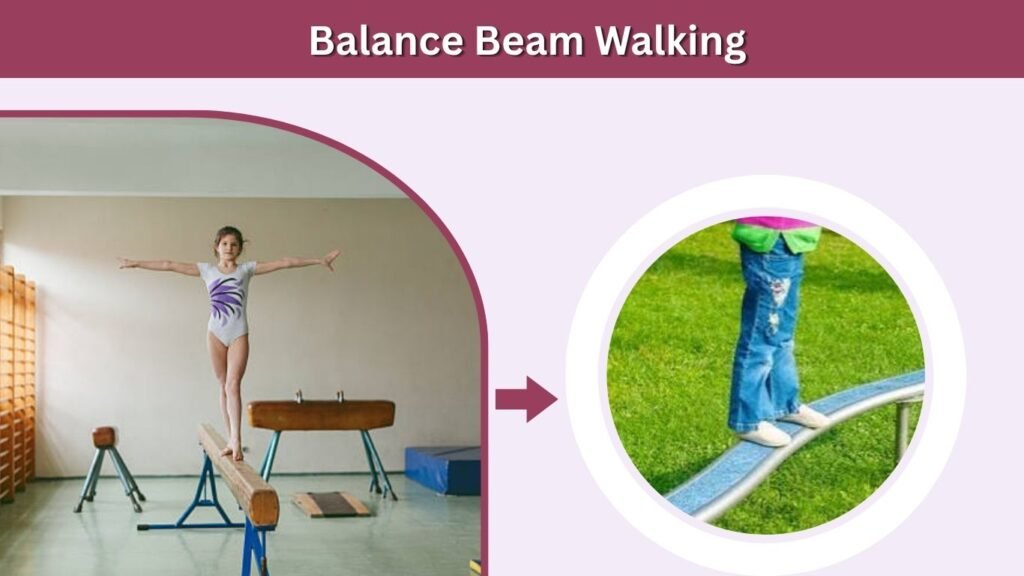
Balance beam walking is an enjoyable indoor physical activity that helps kids practice balance, coordination, and controlled movements through simple walking challenges. Instead of using an elevated gymnastics beam, this activity creates a safe balance pathway on the floor using painter’s tape or other flat markers. Children follow straight, curved, or zigzag lines while maintaining steady movements. It is an excellent activity for developing body awareness, concentration, and confidence during indoor playtime.
Materials Needed
- Painter’s Tape: Create straight, curved, or zigzag balance lines directly on a suitable floor.
- Non-Slip Floor Mats: Provide a stable surface for comfortable movement and additional floor-based activities.
- Colorful Floor Markers: Use flat markers to indicate starting points, turning areas, and finishing lines.
- Small Bean Bags: Include lightweight bean bags for optional balancing challenges.
- Open Playing Area: Select a spacious room free from furniture, sharp objects, and obstacles.
- Movement Challenge Cards: Prepare simple instructions such as walking slowly, taking side steps, or pausing to balance.
How to Play Balance Beam Walking
Begin by placing a long strip of painter’s tape on the floor to represent a balance beam. Ask children to stand at the starting point and walk carefully along the line while keeping their feet close to the marked pathway. Encourage them to extend their arms slightly for balance and move at a comfortable pace. Once they become confident, introduce curved lines, zigzag patterns, and gentle sideways steps. Older children can try carrying a lightweight bean bag or pausing briefly on one foot. Allow each participant to repeat the course and practice different movement patterns.
Physical and Developmental Benefits
Balance beam walking helps children develop balance, posture, coordination, and lower-body control. Following a narrow floor pathway encourages controlled stepping and strengthens awareness of foot placement. Changing directions and maintaining steady movements support spatial awareness and motor planning. The activity also promotes concentration, patience, and the ability to follow instructions. Repeated practice can help children become more confident with balancing tasks and everyday movements. Because the pathway remains at floor level, children can explore these skills without the additional risks associated with elevated balance beams.
19. Indoor Hula Hoop Challenge
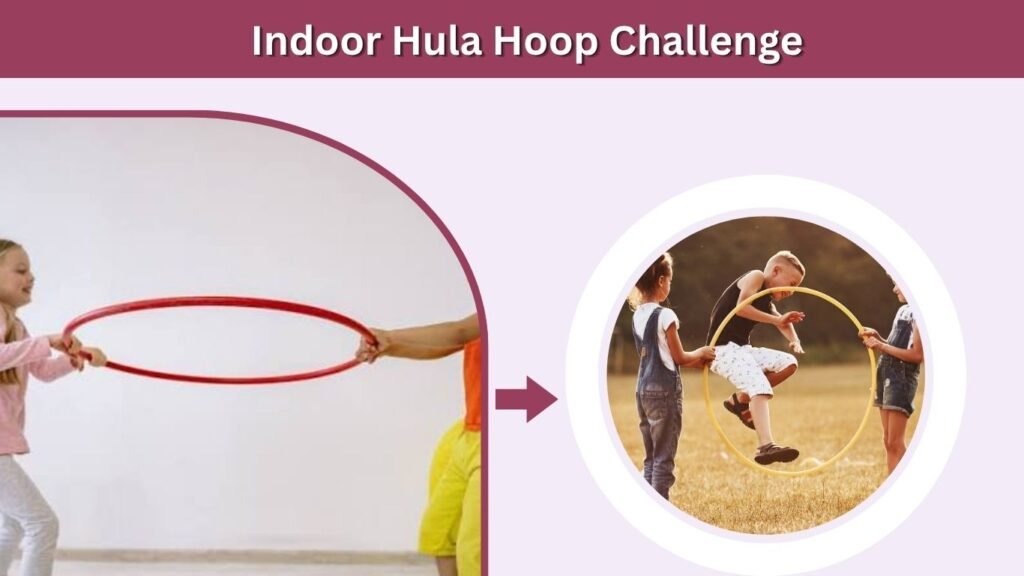
The indoor hula hoop challenge is a fun and energetic physical activity that encourages kids to move their bodies while improving balance, coordination, and flexibility. This activity uses lightweight hula hoops to create exciting movement games, spinning challenges, and interactive exercises. Whether children practice waist hooping, step through hoops, or participate in creative movement games, hula hoop activities offer an enjoyable way to stay active indoors while developing important motor skills.
Materials Needed
- Lightweight Hula Hoops: Choose child-sized hoops made from smooth, lightweight plastic for comfortable movement.
- Open Floor Space: Select a spacious indoor area with enough room for safe hoop movements.
- Non-Slip Floor Mats: Provide a stable surface for stepping, balancing, and movement activities.
- Painter’s Tape: Mark designated activity zones and starting positions on the floor.
- Music Player: Play cheerful, upbeat songs to encourage rhythmic movement.
- Small Timer: Use a timer to organize short hooping challenges and activity rounds.
How to Play Indoor Hula Hoop Challenge
Begin by clearing a spacious indoor area and giving each child a lightweight hula hoop. Demonstrate basic waist hooping by placing the hoop around the waist, giving it a gentle spin, and moving the hips to keep it rotating. Allow children to practice at their own pace without focusing on how long they can maintain the movement. Introduce additional challenges, such as rolling a hoop toward a target, stepping in and out of hoops placed flat on the floor, or moving around designated hoop stations. Rotate activities to maintain excitement and encourage different movement patterns.
Physical and Developmental Benefits
Indoor hula hoop challenges encourage whole-body movement while helping children develop coordination, balance, and body awareness. Waist hooping engages the core and hip muscles, while stepping and reaching activities support lower-body coordination and flexibility. Following movement patterns encourages motor planning, concentration, and spatial awareness. Repeated practice can also improve rhythm and controlled body movements. Participating in group challenges supports confidence, patience, and social interaction while making indoor exercise enjoyable and entertaining.
20. Jumping Jack Challenge
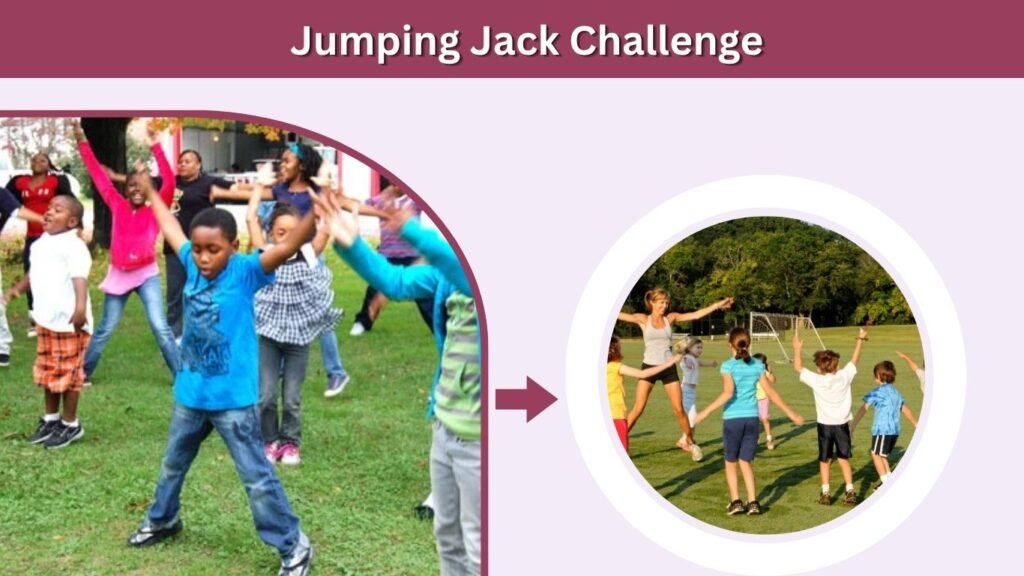
The jumping jack challenge is a simple and energetic indoor physical activity that encourages kids to move their arms and legs while improving coordination and physical fitness. This classic exercise requires no special equipment and can easily be performed in a living room, playroom, or classroom. By turning jumping jacks into an interactive game, children can enjoy active movement while developing rhythm, endurance, and body control during indoor playtime.
Materials Needed
- Open Exercise Space: Choose a spacious indoor area where children can safely extend their arms and legs.
- Non-Slip Exercise Mats: Use stable mats to provide a comfortable surface for movement.
- Music Player: Play energetic, child-friendly music to make the exercise more enjoyable.
- Small Timer: Organize short exercise intervals and rest periods.
- Counting Cards: Prepare colorful number cards to introduce counting challenges.
- Activity Chart: Use a simple chart to track completed movement rounds and celebrate participation.
How to Play Jumping Jack Challenge
Start by asking children to stand with their feet together and arms resting beside their bodies. Demonstrate a basic jumping jack by gently jumping the feet apart while raising the arms overhead, then returning to the starting position. Encourage children to perform the movement slowly until they understand the coordination. Begin with five jumping jacks and gradually increase the number according to their comfort and abilities. Introduce different rounds, such as counting challenges, music-based jumping jacks, or cooperative group exercises. Younger children can perform step-out jacks instead of jumping.
Physical and Developmental Benefits
Jumping jacks encourage cardiovascular activity while engaging the arms, legs, shoulders, and core muscles. Repeating coordinated arm and leg movements supports balance, rhythm, and gross motor development. The activity also helps children practice body awareness and controlled movement patterns. Counting repetitions introduces simple mathematical skills, while following exercise instructions encourages concentration and listening. Completing achievable challenges can build confidence and persistence. When performed at an appropriate intensity, jumping jacks provide a convenient way to incorporate energetic movement into children’s daily routines.
21. Floor Is Lava Game
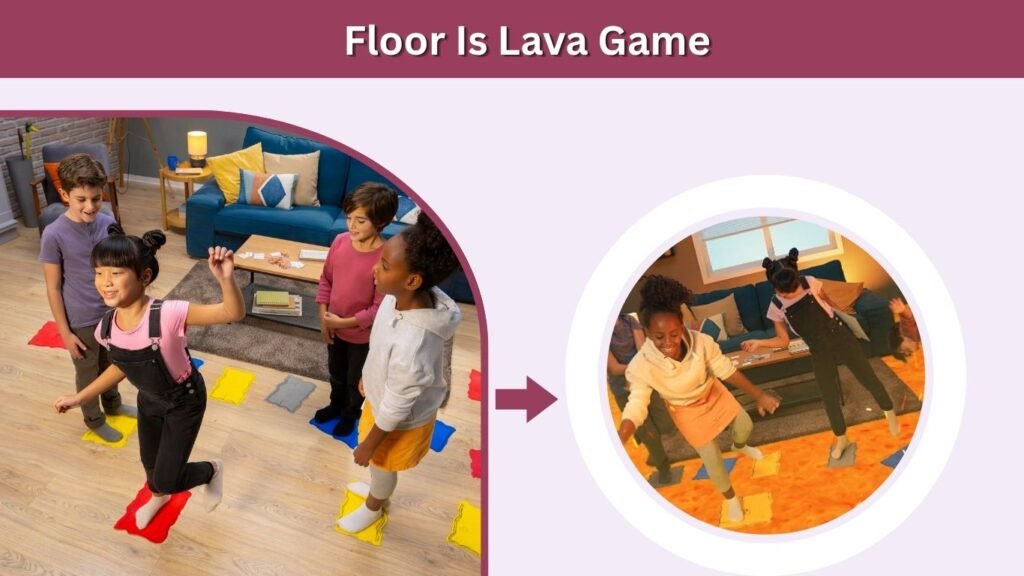
The Floor Is Lava game is an exciting indoor physical activity that transforms an ordinary room into an imaginative adventure filled with movement challenges. Children pretend the floor is covered with hot lava and must travel between designated safe zones without touching it. This playful game encourages stepping, balancing, stretching, and creative problem-solving while keeping kids physically active. It is perfect for rainy afternoons, family game nights, and energetic indoor playtime.
Materials Needed
- Non-Slip Floor Markers: Use flat, colorful markers to create designated safe zones around the playing area.
- Painter’s Tape: Mark imaginary lava boundaries and movement pathways on the floor.
- Stable Exercise Mats: Provide secure floor-level surfaces for stepping and balancing activities.
- Colorful Paper Signs: Create pretend volcanoes, lava rivers, and adventure checkpoints.
- Open Floor Space: Choose a spacious room with enough room for comfortable movement.
- Small Timer: Use an optional timer to organize short adventure rounds and movement challenges.
How to Play Floor Is Lava Game
Begin by clearing the playing area of obstacles and creating several safe zones using flat, non-slip floor markers. Explain that the surrounding floor represents imaginary lava and children must travel between marked locations without stepping outside the designated areas. Ask participants to move carefully from one zone to another using controlled steps or small jumps where appropriate. Introduce simple challenges, such as collecting pretend treasure or reaching a rescue station. Change the arrangement between rounds to create new adventures. For younger children, position safe zones close together so they can step comfortably without jumping.
Physical and Developmental Benefits
The Floor Is Lava game encourages children to practice balance, coordination, and controlled movement while navigating imaginary obstacles. Stepping between safe zones supports lower-body strength and spatial awareness. Planning routes and choosing where to move next can improve problem-solving, concentration, and motor planning. The imaginative setting also encourages creativity and decision-making. When children work together to complete challenges, they practice teamwork, communication, and cooperation. This combination of physical movement and imaginative play makes the activity enjoyable while supporting important developmental skills.
22. Indoor Bean Bag Toss
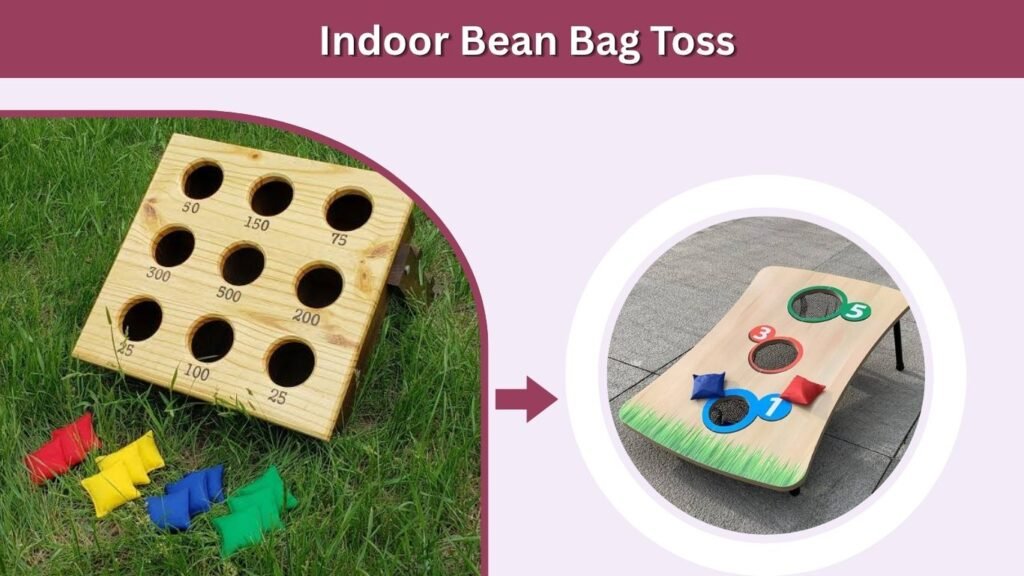
Indoor bean bag toss is a fun and engaging physical activity that encourages kids to practice throwing, aiming, and coordinating their movements while playing indoors. This simple game uses soft bean bags and designated targets to create exciting challenges suitable for different age groups. Whether played individually or with friends, bean bag toss helps develop hand-eye coordination, balance, concentration, and motor skills while keeping children entertained during rainy days or family playtime.
Materials Needed
- Soft Bean Bags: Choose lightweight, child-friendly bean bags that are comfortable to hold and throw.
- Plastic Buckets or Baskets: Use small containers as targets for different throwing challenges.
- Painter’s Tape: Mark throwing lines and designated playing boundaries on the floor.
- Colorful Target Markers: Assign different colors or numbers to targets for additional excitement.
- Open Floor Space: Select a spacious indoor area with enough room for safe throwing activities.
- Scorecards: Prepare simple scoring sheets to record successful throws and track progress.
How to Play Indoor Bean Bag Toss
Begin by arranging several buckets or baskets at different distances from a marked throwing line. Give each child a few soft bean bags and explain how to toss them gently toward the targets. Ask participants to stand behind the line and aim for a specific container. Award points for successful throws and allow children to take turns completing several rounds. For younger kids, place targets closer to the starting position, while older children can try throwing from greater distances. Introduce different challenges, such as tossing with alternating hands or aiming for numbered baskets.
Physical and Developmental Benefits
Indoor bean bag toss encourages children to practice controlled arm movements, hand-eye coordination, and balance. Repeated throwing activities engage the arms and shoulders while supporting fine and gross motor development. Aiming for different targets helps improve concentration, spatial awareness, and motor planning. The game also introduces basic counting and number recognition through simple scoring activities. When played in groups, children practice patience, communication, cooperation, and turn-taking. Completing throwing challenges can build confidence and encourage persistence while making physical activity enjoyable.
23. Bear Crawl Challenge
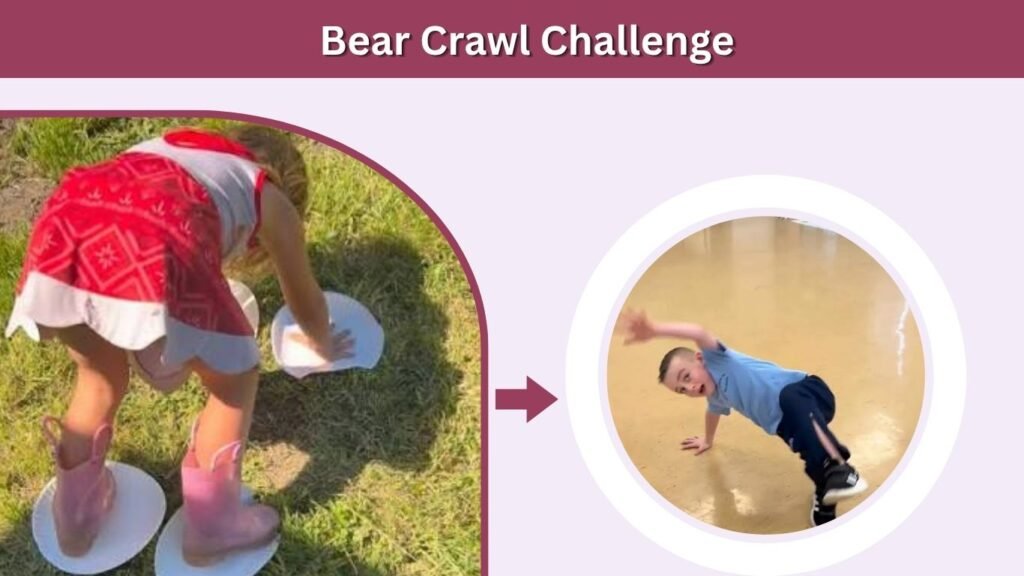
The bear crawl challenge is an exciting indoor physical activity that encourages kids to move on their hands and feet while strengthening different muscle groups. This playful exercise imitates the movement of a walking bear and helps children develop coordination, balance, and body awareness. Whether incorporated into an obstacle course or played as a friendly challenge, bear crawling provides an entertaining way to practice whole-body movement while staying active indoors.
Materials Needed
- Non-Slip Exercise Mats: Provide a stable and comfortable surface for hands and feet during crawling.
- Painter’s Tape: Mark starting lines, finishing points, and movement pathways.
- Soft Floor Markers: Use lightweight markers to indicate turns and designated crawling areas.
- Animal Picture Cards: Display bear illustrations to introduce the activity and encourage imaginative play.
- Open Playing Space: Select a spacious room with enough room for safe movement.
- Small Timer: Use an optional timer to organize short crawling rounds and rest breaks.
How to Play Bear Crawl Challenge
Start by clearing an open indoor area and marking a short crawling pathway with painter’s tape. Demonstrate the bear crawl by placing hands and feet on the floor, lifting the knees slightly, and moving forward using alternating arms and legs. Encourage children to keep their movements slow and controlled while maintaining a comfortable body position. Ask participants to crawl from the starting point to the finish line and return after a short rest. Introduce simple challenges, such as crawling around floor markers or following a curved pathway. Younger children can practice shorter distances or use hands-and-knees crawling instead.
Physical and Developmental Benefits
Bear crawling engages the shoulders, arms, core, and leg muscles while encouraging coordinated movement throughout the body. Supporting body weight through the hands and feet helps develop upper-body strength and stability. Alternating arm and leg movements supports coordination, balance, and motor planning. The activity also encourages spatial awareness as children navigate different pathways and obstacles. Following instructions and completing short challenges can improve concentration and confidence. Bear crawling provides an enjoyable way to introduce bodyweight movement through imaginative indoor play.
24. Indoor Mini Golf
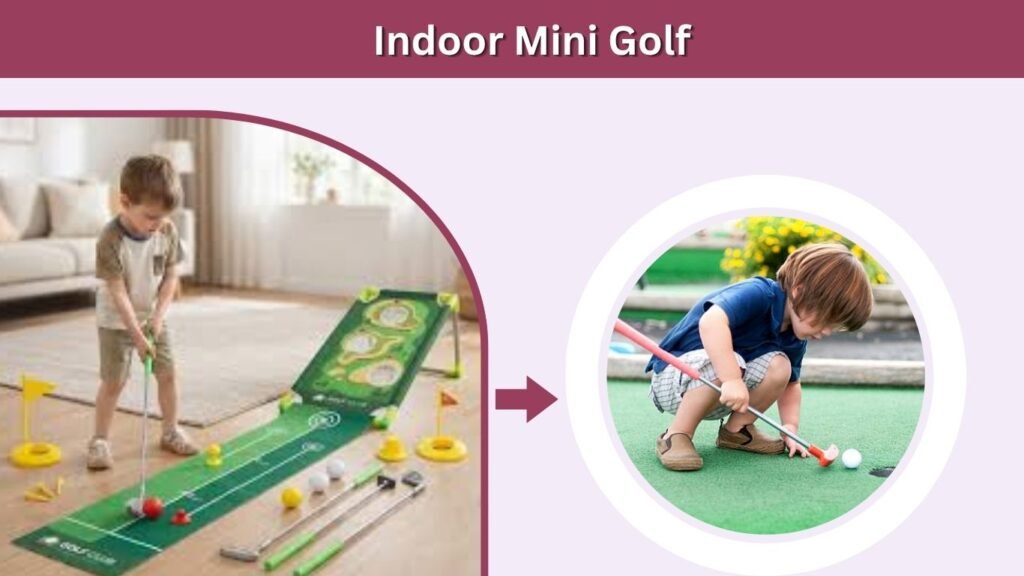
Indoor mini golf is a creative and entertaining physical activity that encourages kids to practice aiming, coordination, and controlled movements while playing at home. This activity transforms a living room or playroom into a miniature golf course using lightweight equipment and simple household obstacles. Children can enjoy putting balls toward different targets while developing concentration, balance, and problem-solving skills. Indoor mini golf is ideal for family game nights, rainy afternoons, and interactive group activities.
Materials Needed
- Child-Friendly Golf Clubs: Use lightweight plastic putters designed for indoor children’s activities.
- Soft Golf Balls: Choose foam or other lightweight balls suitable for indoor play.
- Plastic Cups or Small Targets: Use containers or marked circles as miniature golf holes.
- Painter’s Tape: Create putting lines, course boundaries, and starting positions.
- Cardboard Obstacles: Build lightweight tunnels, ramps, or curved pathways for additional challenges.
- Open Floor Space: Select a spacious room with enough room for safe putting movements.
How to Play Indoor Mini Golf
Begin by creating several miniature golf holes throughout a designated indoor playing area. Place plastic cups on their sides or use flat target circles to represent golf holes. Arrange cardboard tunnels, small obstacles, and curved pathways to create different levels of difficulty. Give each child a lightweight putter and a soft ball, then demonstrate how to gently strike the ball toward a target. Ask players to take turns completing each hole using as few strokes as possible. Record the number of attempts if desired, and adjust course difficulty according to children’s ages and abilities.
Physical and Developmental Benefits
Indoor mini golf encourages children to practice controlled arm movements, balance, and hand-eye coordination. Aiming and gently striking a ball supports motor planning, visual tracking, and spatial awareness. Moving between holes provides opportunities for walking, bending, and changing body positions. The game also introduces basic counting and simple problem-solving as children consider how to guide the ball around obstacles. Playing with others encourages patience, communication, and turn-taking. Completing different courses can build confidence while making movement-based learning enjoyable.
25. Stretching and Fitness Games
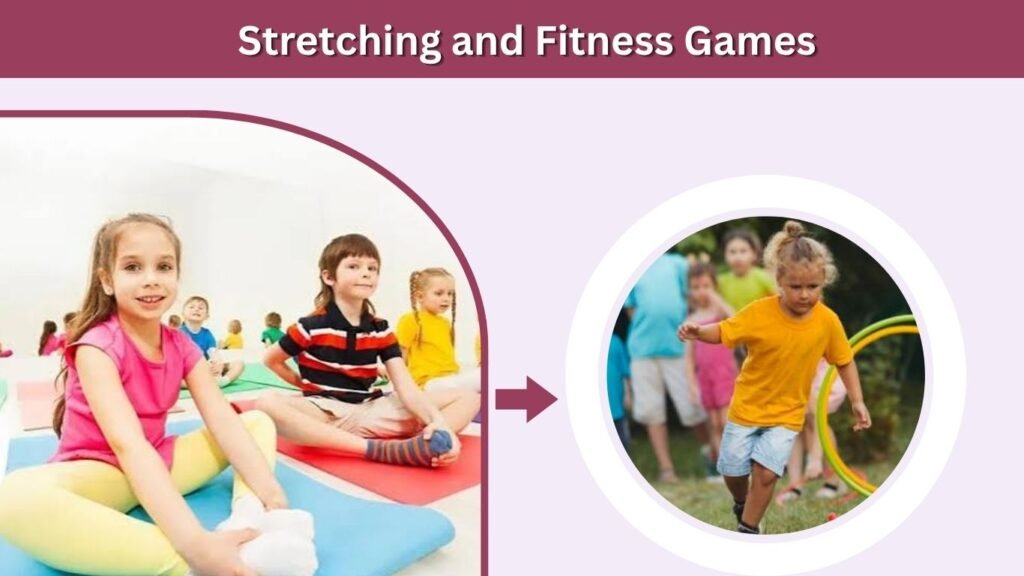
Stretching and fitness games are enjoyable indoor physical activities that combine gentle exercises, creative movements, and playful challenges to keep kids active and engaged. These games introduce children to simple stretches, balancing exercises, and movement routines in an entertaining environment. Whether used as a morning warm-up, classroom movement break, or family fitness session, stretching games encourage flexibility, coordination, body awareness, and healthy movement habits without requiring expensive equipment.
Materials Needed
- Non-Slip Exercise Mats: Provide comfortable surfaces for stretching, balancing, and gentle floor exercises.
- Movement Activity Cards: Prepare cards featuring stretches, animal poses, marching, and simple fitness challenges.
- Music Player: Use energetic or calming music to create different exercise routines.
- Small Timer: Organize short activity intervals and comfortable rest periods.
- Colorful Floor Markers: Mark designated exercise stations and movement pathways.
- Open Exercise Space: Choose a spacious room where children can stretch and move without obstacles.
How to Play Stretching and Fitness Games
Begin by gathering children in a safe indoor space and introducing simple movements such as arm circles, gentle side stretches, marching in place, and shoulder rolls. Demonstrate each exercise and encourage participants to follow at their own pace. Create different fitness stations featuring balancing challenges, animal-inspired stretches, and simple movement games. Ask children to rotate between stations after completing a short activity. Introduce playful instructions such as stretching like a tall giraffe, curling like a sleepy cat, or balancing like a flamingo. Finish with gentle movements and relaxed breathing.
Physical and Developmental Benefits
Stretching and fitness games encourage children to practice flexibility, balance, coordination, and controlled body movements. Gentle stretching supports comfortable movement through different positions, while marching and balancing activities engage various muscle groups. Following movement sequences helps develop concentration, motor planning, and body awareness. These activities also introduce children to simple exercise routines and encourage positive attitudes toward physical activity. Participating in group fitness games supports communication, confidence, and cooperation while helping children develop enjoyable movement habits.
FAQs
1. What Are the Best Indoor Physical Activities for Kids?
Some of the best indoor physical activities for kids include obstacle courses, freeze dance, balloon volleyball, indoor hopscotch, and animal walk races. These activities encourage movement, improve coordination, and keep children entertained without requiring expensive equipment. Choose games based on your child’s age, interests, and available space to make indoor playtime enjoyable and engaging.
2. How Can I Keep My Kids Physically Active Indoors?
You can keep kids physically active indoors by organizing movement games, dance parties, fitness challenges, and simple obstacle courses. Encourage activities such as jumping jacks, yoga, scavenger hunts, and indoor basketball. Create a daily play routine with different activities to prevent boredom. Using music, colorful props, and imaginative challenges can make exercise feel like an exciting adventure rather than a chore.
3. What Indoor Physical Activities Are Suitable for Toddlers?
Toddlers can enjoy simple indoor activities such as animal walks, gentle dancing, floor-level obstacle courses, and Follow the Leader. These games help develop balance, coordination, and basic motor skills. Choose age-appropriate activities that involve walking, crawling, stretching, and controlled movements. Always provide close adult supervision, avoid small choking hazards, and keep the playing area free from sharp furniture and slippery surfaces.
4. How Much Physical Activity Do Kids Need Every Day?
Children aged 6–17 should get at least 60 minutes of moderate-to-vigorous physical activity daily. Children aged 3–5 should be physically active throughout the day, with around three hours of varied activity as a useful target. Younger toddlers also need frequent opportunities for active play. Indoor activities such as dancing, jumping, obstacle courses, and movement games can help children meet their daily activity needs.
5. How Can I Make Indoor Exercise Fun for Kids?
Make indoor exercise exciting by turning physical activities into games, adventures, and friendly challenges. Introduce themes such as superhero training, jungle exploration, or treasure hunting to encourage imagination. Use upbeat music, colorful equipment, and simple rewards to maintain enthusiasm. Allow children to choose their favorite activities and invite siblings or friends to participate. Focus on fun, creativity, and participation rather than strict exercise routines or competition.
