

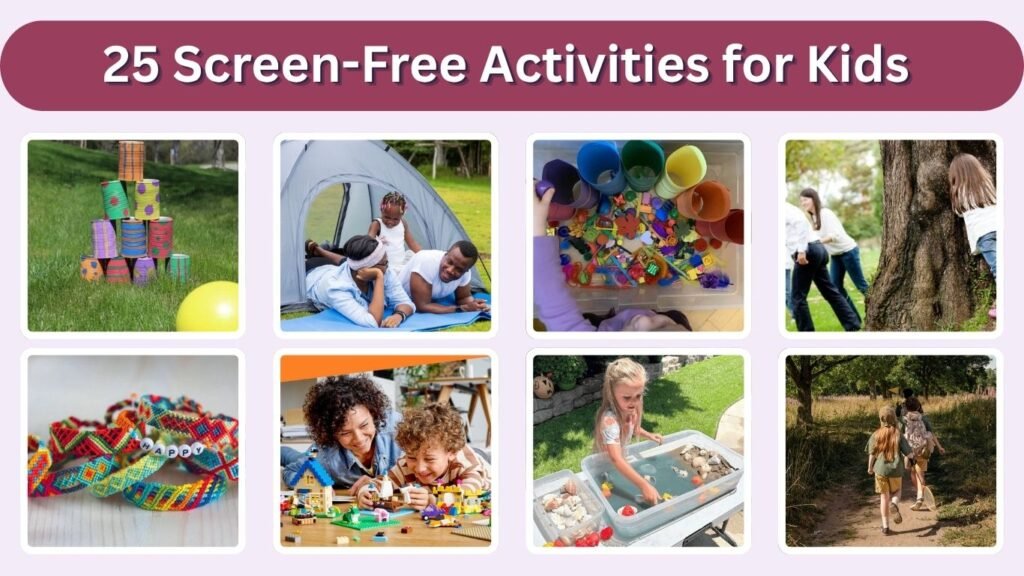
Tired of seeing your kids glued to screens all day? Keeping children entertained without phones, tablets, or television can be easier than you think! From creative arts and crafts to exciting outdoor adventures and hands-on learning games, these 25 fun screen-free activities for kids will spark imagination, encourage physical movement, and build essential skills while making everyday playtime more enjoyable and meaningful.
1. Indoor Treasure Hunt
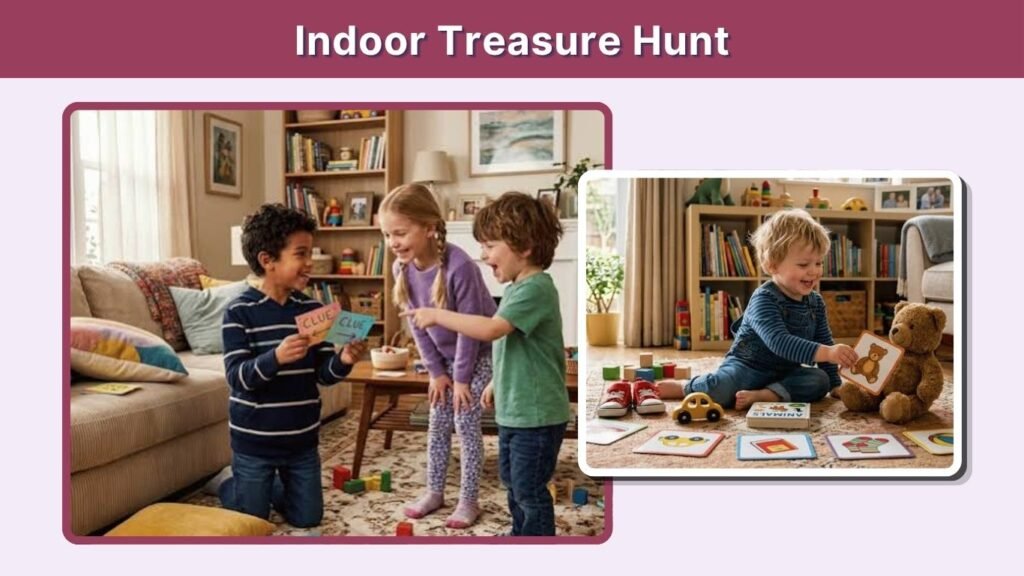
An indoor treasure hunt is an exciting screen-free activity that encourages kids to explore, solve clues, and discover hidden surprises around the house. This interactive game combines creativity, problem-solving, and physical movement to keep children entertained without electronic devices. Whether you organize a pirate adventure, mystery challenge, or simple object hunt, an indoor treasure hunt provides an enjoyable opportunity for children to use their imagination while developing important thinking and observation skills.
Materials Needed
- Small Toys or Treasures: Use stickers, miniature toys, or other age-appropriate rewards as hidden surprises.
- Clue Cards: Prepare colorful cards with simple riddles, pictures, or instructions.
- Treasure Basket: Provide a small container for collecting discovered objects.
- Paper and Markers: Create treasure maps, directional arrows, and decorative signs.
- Painter’s Tape: Mark designated pathways or special treasure-hunting zones.
- Decorative Props: Include cardboard boxes, pretend pirate coins, or themed decorations to create an adventurous atmosphere.
How to Play Indoor Treasure Hunt
Start by choosing several safe hiding places around your home, such as behind cushions, beneath accessible tables, or beside bookshelves. Hide small treasures and prepare clues that guide children from one location to another. Give each child a starting clue and encourage them to follow the instructions while searching for hidden objects. For younger kids, use picture clues or simple directions, while older children can solve riddles and puzzles. The adventure ends when participants discover the final treasure or complete the entire collection.
Educational and Developmental Benefits
Indoor treasure hunts help children develop problem-solving, observation, memory, and critical-thinking skills. Following clues encourages logical reasoning and concentration, while searching different locations promotes spatial awareness and physical movement. Children also practice reading comprehension when interpreting written instructions. Group treasure hunts provide opportunities for teamwork, communication, and cooperation. Successfully solving clues and discovering hidden rewards can build confidence, encourage independent thinking, and create a sense of accomplishment without relying on screens for entertainment.
2. Arts and Crafts Projects
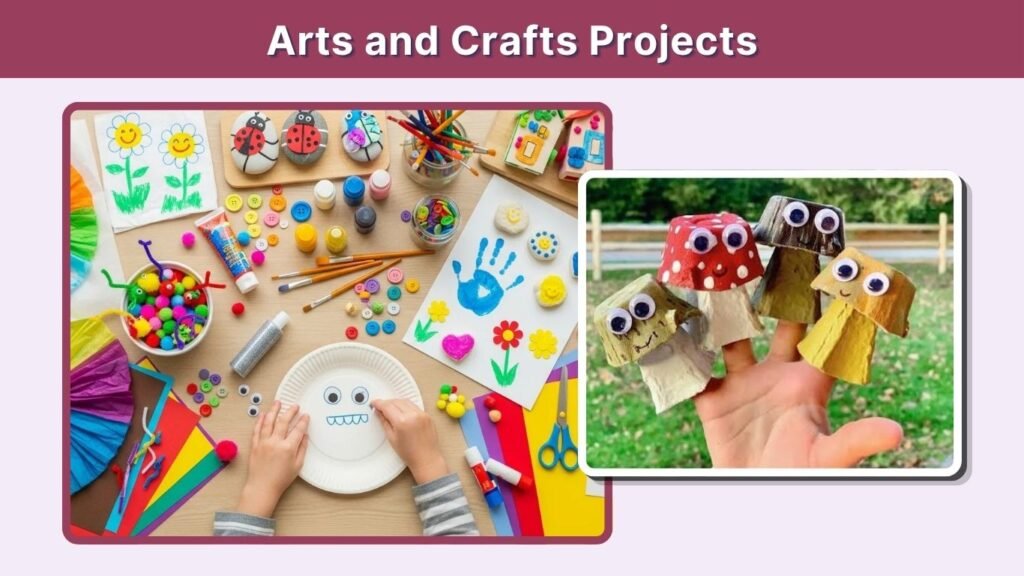
Arts and crafts projects are creative screen-free activities that encourage kids to explore their imagination while making colorful and personalized creations. These activities involve cutting, folding, painting, gluing, and decorating various materials to produce unique artwork. Whether children enjoy making paper animals, greeting cards, or decorative crafts, arts and crafts provide an entertaining way to develop creativity, concentration, and fine motor skills while spending meaningful time away from digital screens.
Materials Needed
- Colorful Construction Paper: Use different colors and textures for creating paper animals, flowers, and decorative designs.
- Child-Safe Scissors: Provide rounded-tip scissors suitable for children’s ages and abilities.
- Glue Sticks: Choose washable, non-toxic glue for attaching paper, fabric, and lightweight decorations.
- Crayons and Markers: Include colorful drawing tools for decorating handmade creations.
- Craft Materials: Collect cardboard, yarn, felt, stickers, and other age-appropriate supplies for creative projects.
- Protective Table Cover: Use a washable tablecloth or craft mat to protect furniture during activities.
How to Play Arts and Crafts Projects
Start by choosing a simple craft project based on your child’s interests and age. Set up a comfortable workspace with paper, crayons, glue, and other necessary materials. Demonstrate basic techniques, such as folding paper, cutting shapes, or attaching decorations, before allowing children to create their own designs. Younger kids can make colorful paper collages or decorate simple shapes, while older children can experiment with handmade greeting cards, paper flowers, and cardboard models. Encourage children to personalize their artwork using different colors, patterns, and materials.
Educational and Developmental Benefits
Arts and crafts activities help children develop fine motor skills, hand-eye coordination, and creative thinking. Cutting, drawing, folding, and gluing require controlled hand movements that support dexterity and precision. Planning a craft project encourages problem-solving, concentration, and decision-making. Children also learn to recognize colors, shapes, patterns, and different textures through hands-on exploration. Completing creative projects can build confidence and provide opportunities for self-expression. Group crafting activities encourage communication, cooperation, and sharing while offering a relaxing alternative to screen-based entertainment.
3. DIY Playdough Creations
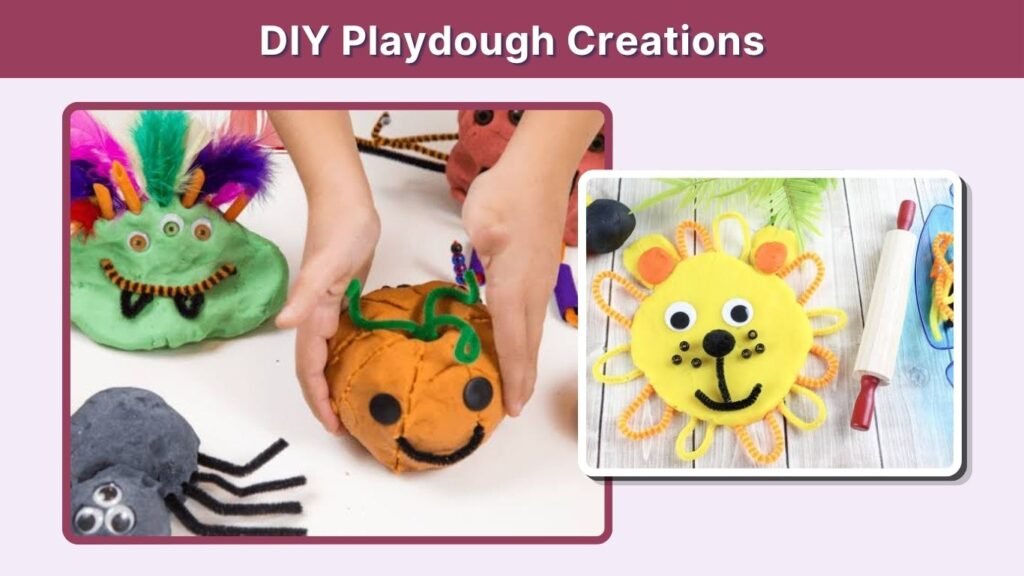
DIY playdough creations are engaging screen-free activities that allow kids to explore shapes, colors, and imaginative designs through hands-on play. Children can roll, squeeze, flatten, and mold soft dough into animals, pretend food, buildings, and other creative objects. This sensory activity provides an enjoyable opportunity to develop fine motor skills, concentration, and creativity. Whether using homemade or store-bought playdough, kids can spend hours experimenting with different shapes and imaginative projects.
Materials Needed
- Soft Playdough: Use age-appropriate, non-toxic playdough or a simple homemade dough mixture.
- Plastic Rolling Pins: Provide child-friendly rolling tools for flattening and shaping dough.
- Cookie Cutters: Choose colorful cutters featuring animals, stars, circles, and other interesting shapes.
- Plastic Modeling Tools: Include blunt, child-safe tools for creating patterns and detailed designs.
- Activity Mats: Use washable mats or trays to keep the play area clean and organized.
- Small Storage Containers: Store different dough colors separately to maintain freshness and prevent drying.
How to Play DIY Playdough Creations
Begin by setting up a clean table with playdough, rolling pins, cookie cutters, and simple modeling tools. Allow children to choose their favorite dough colors and explore different textures through squeezing, rolling, and flattening. Introduce creative challenges, such as making a pretend pizza, building a miniature garden, or creating different animal figures. Younger children can practice forming balls, snakes, and simple shapes, while older kids can experiment with more detailed sculptures. Encourage imaginative storytelling by asking children to describe the objects they create and invent stories around their designs.
Educational and Developmental Benefits
Playing with playdough helps children strengthen small hand muscles while improving fine motor control and hand-eye coordination. Rolling, pinching, and shaping dough support the movements used in drawing, writing, and handling everyday objects. Creating different figures encourages imagination, spatial awareness, and problem-solving skills. Children can also practice recognizing colors, comparing sizes, and identifying basic geometric shapes. Sensory exploration may promote concentration and relaxation while allowing kids to express their creativity through hands-on learning.
4. Backyard Nature Scavenger Hunt
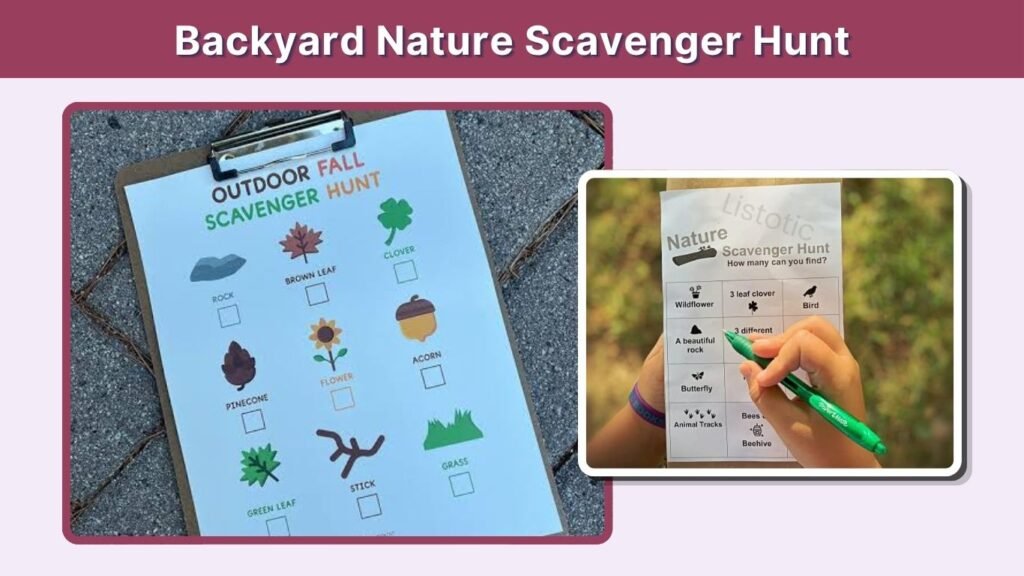
A backyard nature scavenger hunt is an exciting screen-free outdoor activity that encourages kids to explore their surroundings while discovering plants, insects, birds, and natural objects. This adventure combines observation, movement, and problem-solving to create an educational experience outside the house. Whether children search for colorful leaves, interesting rocks, or different flowers, a nature scavenger hunt provides an enjoyable way to develop curiosity, environmental awareness, and appreciation for the natural world.
Materials Needed
- Nature Scavenger Checklist: Prepare a list of leaves, flowers, rocks, feathers, and other natural objects for children to discover.
- Clipboard and Pencil: Provide a simple writing surface for marking completed discoveries.
- Small Magnifying Glass: Use a child-friendly magnifier to examine leaves, insects, and natural textures.
- Collection Basket: Include a lightweight basket for gathering permitted, safe, nonliving objects.
- Nature Picture Cards: Prepare colorful pictures to help younger children identify different discoveries.
- Comfortable Outdoor Clothing: Choose suitable shoes, hats, and weather-appropriate clothing for exploring the backyard.
How to Play Backyard Nature Scavenger Hunt
Start by creating a checklist of natural objects commonly found in your backyard, such as a green leaf, a smooth stone, a flowering plant, or a visiting bird. Explain the designated exploring area and give each child a checklist. Encourage participants to walk around the yard while carefully observing plants, insects, and other natural features. Children can mark discoveries, draw pictures, or collect safe fallen objects when appropriate. For older kids, introduce descriptive clues or ask them to identify different colors, shapes, and textures. The activity ends when participants complete their lists or discover a chosen number of items.
Educational and Developmental Benefits
Backyard nature scavenger hunts encourage children to develop observation, concentration, and classification skills through direct interaction with their environment. Searching for natural objects promotes walking, bending, and exploring while supporting physical activity. Identifying different plants, colors, and textures helps improve visual recognition and environmental awareness. Children also practice problem-solving and critical thinking when interpreting clues and locating objects. Participating with siblings or friends encourages teamwork, communication, and cooperation. Exploring nature can inspire curiosity about wildlife, plants, and seasonal changes while reducing reliance on digital entertainment.
5. Building Blocks Challenge
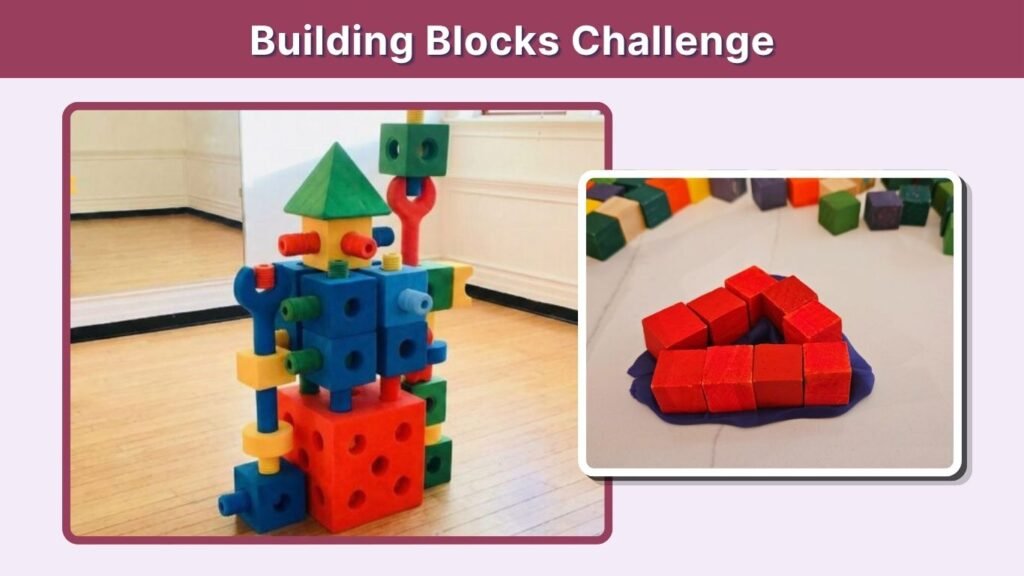
The building blocks challenge is a creative and educational screen-free activity that encourages kids to use their imagination while constructing different structures. Children can build towers, bridges, houses, castles, and imaginative cities using colorful blocks. This hands-on activity combines problem-solving, planning, and creativity while developing important motor skills. Whether played individually or with siblings and friends, building blocks provide an entertaining way to explore construction, balance, and design without electronic devices.
Materials Needed
- Colorful Building Blocks: Choose wooden, plastic, or foam blocks suitable for your child’s age and abilities.
- Flat Building Surface: Use a sturdy table or clean floor area for constructing different structures.
- Building Challenge Cards: Prepare cards featuring towers, bridges, houses, and other construction ideas.
- Measuring Tape: Include a simple measuring tool for comparing the height and length of completed structures.
- Small Toy Figures: Add age-appropriate toy people or animals to encourage imaginative storytelling.
- Storage Containers: Provide baskets or boxes for organizing blocks after each activity.
How to Play Building Blocks Challenge
Start by placing building blocks on a flat surface and allowing children to explore different shapes and sizes. Introduce simple challenges, such as building the tallest tower, creating a bridge, or designing a miniature house. Younger children can practice stacking blocks and making basic structures, while older kids can experiment with complex buildings and creative designs. Encourage participants to plan their projects before construction and test whether their structures remain stable. For group activities, ask children to work together to build a small town or imaginative playground.
Educational and Developmental Benefits
Building blocks help children develop fine motor skills, hand-eye coordination, and spatial awareness through stacking and arranging different shapes. Creating stable structures encourages problem-solving, logical thinking, and basic engineering concepts. Children also practice recognizing shapes, comparing sizes, and understanding balance while experimenting with various designs. Building projects can improve patience, concentration, and persistence as kids adjust unsuccessful structures. Collaborative construction activities encourage communication, teamwork, and sharing while providing a creative alternative to screen-based entertainment.
6. Storytelling and Creative Writing
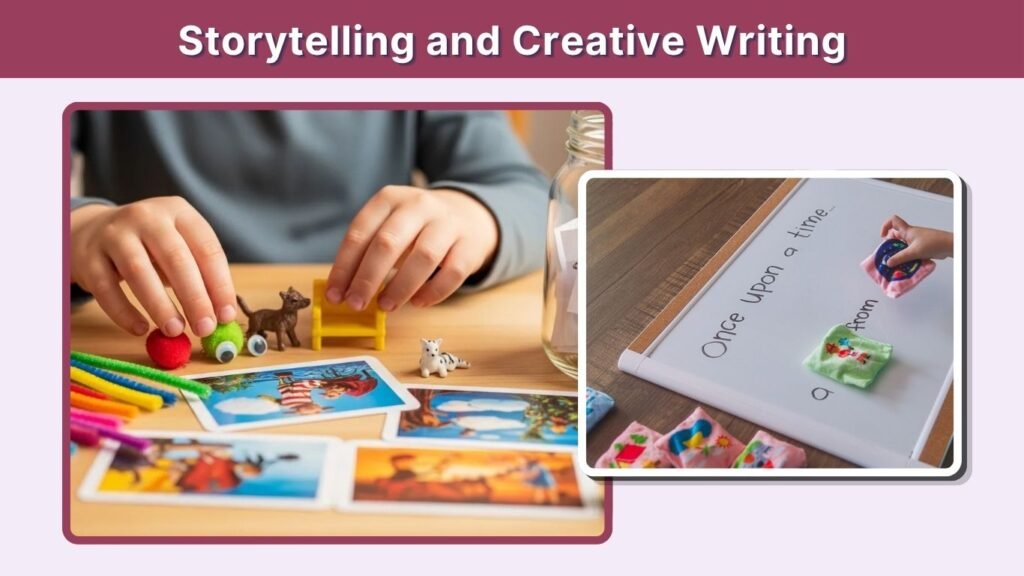
Storytelling and creative writing are engaging screen-free activities that encourage kids to explore their imagination while developing language and communication skills. Children can invent characters, create exciting adventures, and express original ideas through spoken stories or handwritten narratives. Whether they enjoy fairy tales, superhero adventures, or funny animal stories, creative storytelling offers endless entertainment. This activity helps strengthen vocabulary, imagination, concentration, and confidence while providing a meaningful alternative to digital entertainment.
Materials Needed
- Notebook or Writing Paper: Provide blank pages for writing stories, creating characters, and recording creative ideas.
- Pencils and Colorful Pens: Use comfortable writing tools for drafting and decorating stories.
- Story Prompt Cards: Prepare cards featuring interesting characters, locations, and imaginary situations.
- Picture Books: Include age-appropriate books for storytelling inspiration and creative discussion.
- Drawing Supplies: Provide crayons, markers, and colored pencils for illustrating original stories.
- Character Puppets: Use simple hand puppets or small toys to bring storytelling adventures to life.
How to Play Storytelling and Creative Writing
Begin by asking children to choose a character, setting, and interesting situation for their story. Offer simple prompts such as a dragon discovering a hidden garden or a superhero rescuing lost animals. Encourage younger children to tell their stories aloud while an adult writes down their ideas. Older kids can create short handwritten stories with a beginning, middle, and ending. Allow participants to draw illustrations or design imaginary book covers. For group activities, start a story with one sentence and ask each child to add another part until the adventure is complete.
Educational and Developmental Benefits
Storytelling and creative writing encourage language development, vocabulary growth, and imaginative thinking. Creating characters and storylines helps children practice organizing ideas, understanding sequences, and developing problem-solving skills. Writing stories supports handwriting, spelling, and sentence construction, while verbal storytelling improves communication and listening abilities. Children also explore emotions, relationships, and different perspectives through fictional characters. Sharing original stories can build confidence and self-expression. Group storytelling encourages cooperation, patience, and creativity while helping children develop a positive relationship with reading and writing.
7. Indoor Obstacle Course
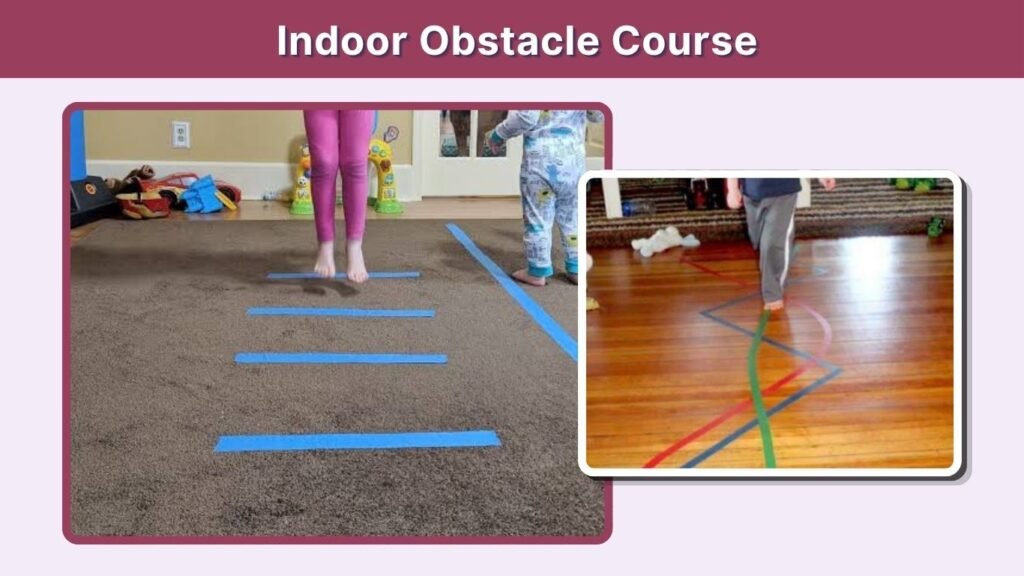
An indoor obstacle course is an energetic and entertaining screen-free activity that transforms an ordinary room into an exciting physical adventure. Children can crawl, balance, step, and navigate simple challenges using safe household materials. This activity encourages movement, coordination, creativity, and problem-solving while keeping kids engaged without electronic devices. Whether organized as a jungle expedition, superhero training mission, or playful fitness challenge, an indoor obstacle course offers an enjoyable way to stay active at home.
Materials Needed
- Soft Floor Cushions: Use stable cushions for low stepping obstacles or designated movement stations.
- Painter’s Tape: Create balance lines, pathways, starting points, and finishing areas.
- Hula Hoops: Place hoops flat on the floor for stepping and movement challenges.
- Cardboard Boxes: Use large, stable boxes to create simple crawling tunnels.
- Soft Toy Markers: Arrange lightweight toys to form zigzag pathways and activity stations.
- Non-Slip Exercise Mats: Provide comfortable surfaces for crawling, stretching, and floor-based movements.
How to Play Indoor Obstacle Course
Start by choosing a spacious room and removing sharp furniture, breakable decorations, and unnecessary obstacles. Arrange different activity stations using painter’s tape, floor cushions, hula hoops, and cardboard tunnels. Ask children to follow a designated pathway while completing simple challenges, such as stepping over low obstacles, crawling through tunnels, following balance lines, and moving around soft markers. Demonstrate each activity before starting and allow children to practice at their own pace. For older kids, introduce additional challenges or longer routes to maintain excitement.
Educational and Developmental Benefits
Indoor obstacle courses encourage children to develop balance, coordination, agility, and body awareness through varied physical movements. Crawling and controlled stepping engage different muscle groups while supporting gross motor development. Navigating obstacles helps improve spatial awareness, concentration, and motor planning. Children also practice following instructions and making decisions as they complete different challenges. Designing their own obstacle courses encourages creativity and problem-solving. Group activities provide opportunities for teamwork, communication, and cooperation while promoting healthy physical movement without screens.
8. Puzzle-Solving Challenge
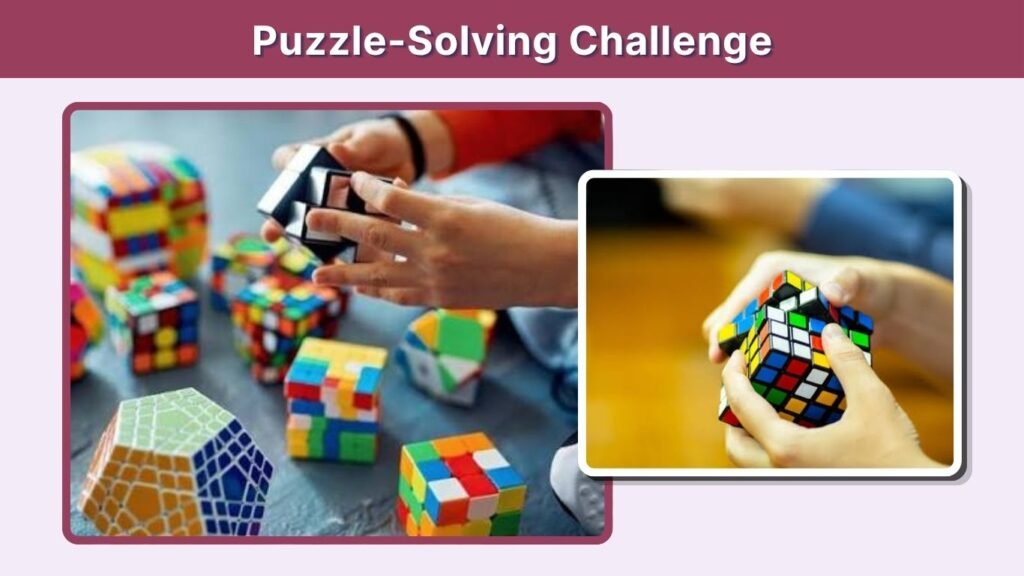
A puzzle-solving challenge is an entertaining screen-free activity that encourages kids to think creatively while developing concentration and problem-solving skills. Children can explore jigsaw puzzles, picture-matching games, word puzzles, and logic challenges using simple materials. Whether working independently or cooperating with friends, puzzle activities offer an enjoyable way to strengthen memory, patience, and logical thinking. They are perfect for rainy afternoons, quiet playtime, and family activities without electronic devices.
Materials Needed
- Jigsaw Puzzles: Choose age-appropriate puzzles featuring animals, landscapes, cartoons, or interesting patterns.
- Puzzle Challenge Cards: Prepare simple riddles, matching activities, and logic problems for different difficulty levels.
- Colorful Picture Cards: Use matching cards to create visual memory and recognition challenges.
- Puzzle Sorting Trays: Provide small containers for organizing puzzle pieces by color, shape, or pattern.
- Timer: Include an optional timer for friendly puzzle-solving challenges.
- Flat Playing Surface: Choose a sturdy table or clean floor area with enough room for arranging puzzle pieces.
How to Play Puzzle-Solving Challenge
Begin by selecting puzzles that match your child’s age, interests, and abilities. Spread the puzzle pieces across a table and encourage children to examine the colors, shapes, and patterns before starting. Younger kids can complete simple picture puzzles or matching games, while older children can solve larger jigsaw puzzles and logic challenges. Introduce different activities, such as sorting pieces by color, finding matching images, or completing sections of a puzzle together. For group play, divide children into teams and encourage them to cooperate while solving a shared puzzle.
Educational and Developmental Benefits
Puzzle-solving activities help children develop critical thinking, logical reasoning, and visual recognition skills. Matching shapes and arranging pieces support spatial awareness and hand-eye coordination. Completing puzzles requires concentration, patience, and memory as children identify patterns and determine where different pieces belong. These activities also encourage problem-solving and decision-making through hands-on exploration. Successfully completing a challenging puzzle can build confidence and persistence. Group puzzle activities promote teamwork, communication, and cooperation while offering an enjoyable alternative to digital entertainment.
9. DIY Science Experiments
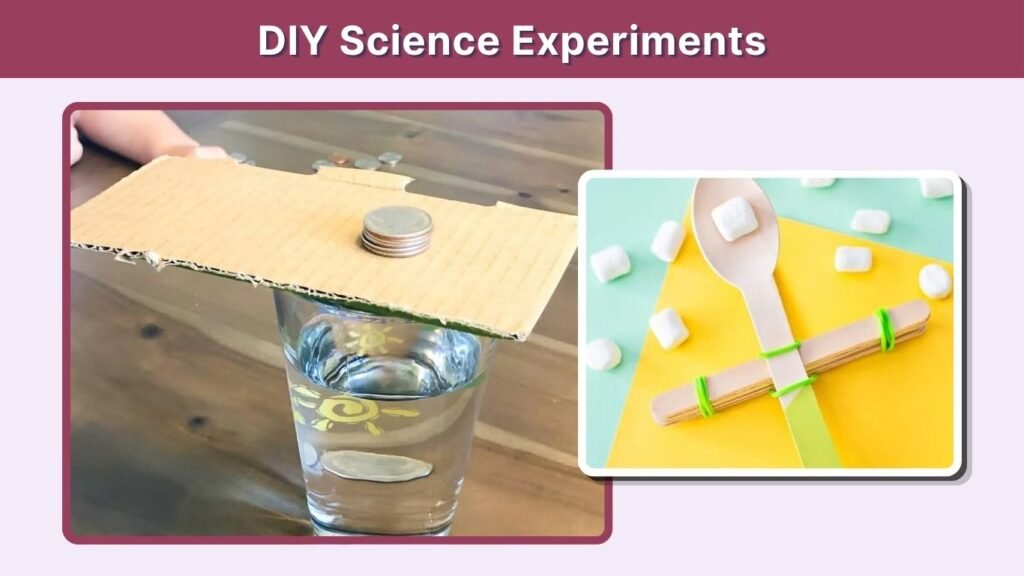
DIY science experiments are exciting screen-free activities that encourage kids to explore scientific concepts through hands-on discovery and observation. Using simple household materials, children can investigate colors, chemical reactions, floating objects, and other interesting phenomena. These experiments transform everyday activities into educational adventures while developing curiosity, problem-solving skills, and creative thinking. Whether conducted at the kitchen table or in a designated activity area, simple science projects provide an engaging way to learn without relying on electronic devices.
Materials Needed
- Baking Soda and Vinegar: Use small amounts to demonstrate a simple fizzing chemical reaction.
- Clear Plastic Cups: Provide transparent containers for observing liquids, colors, and other experiment results.
- Food Coloring: Add a few drops to water for exploring color mixing and visual changes.
- Measuring Spoons: Use child-friendly measuring tools to introduce basic measurement concepts.
- Paper Towels: Keep absorbent materials available for cleaning spills and conducting simple experiments.
- Safety Supplies: Include a washable table cover, protective eyewear when appropriate, and adult supervision.
How to Play DIY Science Experiments
Start by choosing a simple, age-appropriate experiment and preparing all necessary materials on a protected table. For a colorful fizzing experiment, place a small amount of baking soda in a clear container and add a few drops of food coloring. Slowly pour in a little vinegar and encourage children to observe the bubbling reaction. Ask questions about what they notice and why they think the reaction occurs. Introduce other simple activities, such as testing which household objects float or sink in water or mixing primary colors to create new shades. Allow children to describe or draw their observations.
Educational and Developmental Benefits
DIY science experiments encourage children to develop observation, curiosity, and critical-thinking skills through practical exploration. Following simple instructions supports concentration, sequencing, and problem-solving abilities. Measuring ingredients introduces basic mathematical concepts, while predicting experiment outcomes encourages logical reasoning. Children also practice comparing results, recognizing patterns, and asking questions about everyday phenomena. Hands-on experimentation can build confidence and develop a positive interest in scientific learning. Working with siblings or friends provides opportunities for teamwork, communication, and shared discovery without relying on screens.
10. Board Games and Card Games
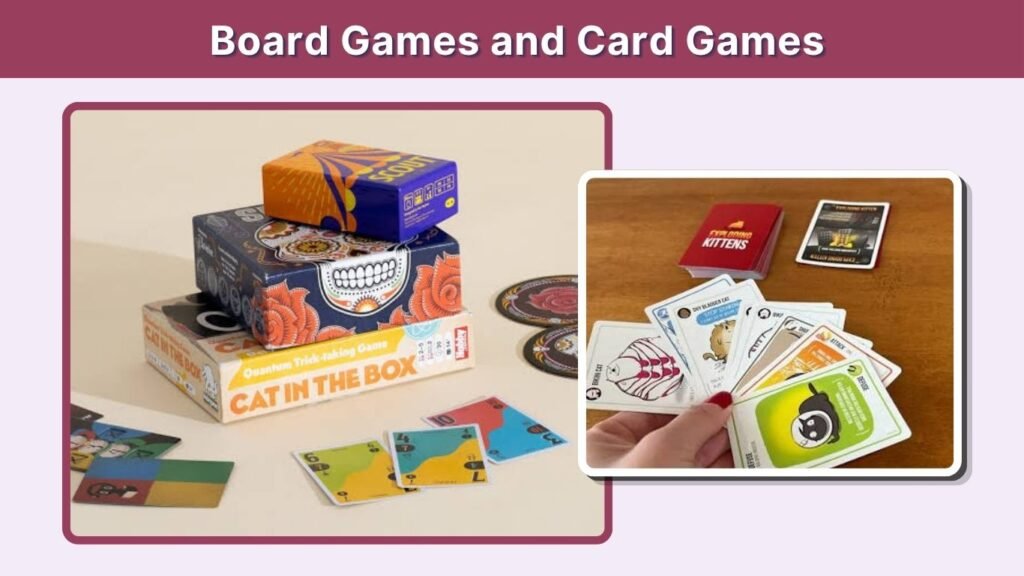
Board games and card games are enjoyable screen-free activities that bring kids together for friendly competition, teamwork, and interactive entertainment. These classic games encourage children to think strategically, follow rules, and communicate with others while having fun. From simple matching cards to exciting family board games, there are countless options suitable for different ages and interests. They are perfect for rainy afternoons, family game nights, and quiet indoor activities that encourage meaningful social interaction.
Materials Needed
- Age-Appropriate Board Games: Choose simple board games featuring counting, matching, strategy, or cooperative challenges.
- Playing Cards: Use colorful children’s card decks or standard cards for suitable games.
- Game Pieces and Dice: Prepare counters, tokens, and dice required for different board games.
- Comfortable Playing Table: Select a stable table or clean floor area for arranging game materials.
- Scorecards and Pencils: Use paper to record points, track progress, or organize simple tournaments.
- Storage Containers: Keep cards, dice, and game pieces organized between playing sessions.
How to Play Board Games and Card Games
Begin by choosing a game that matches the children’s ages, interests, and understanding of rules. Arrange the board, cards, and playing pieces on a comfortable surface. Explain the instructions clearly and demonstrate a sample turn before starting. Younger children can enjoy picture-matching games, simple counting boards, or cooperative activities, while older kids may prefer strategy games and more challenging card games. Encourage players to take turns, follow the rules, and communicate respectfully throughout the activity. For family playtime, rotate between different games to maintain excitement and provide a variety of learning experiences.
Educational and Developmental Benefits
Board games and card games encourage children to develop concentration, memory, logical thinking, and decision-making skills. Following rules and planning moves supports problem-solving and strategic reasoning. Counting spaces, recognizing numbers, and comparing cards can strengthen basic mathematical abilities. Games also provide opportunities to practice patience, turn-taking, and managing emotions when winning or losing. Playing with family members or friends encourages communication, cooperation, and social interaction. Regular game sessions can build confidence while creating positive shared experiences away from electronic screens.
11. Gardening for Kids
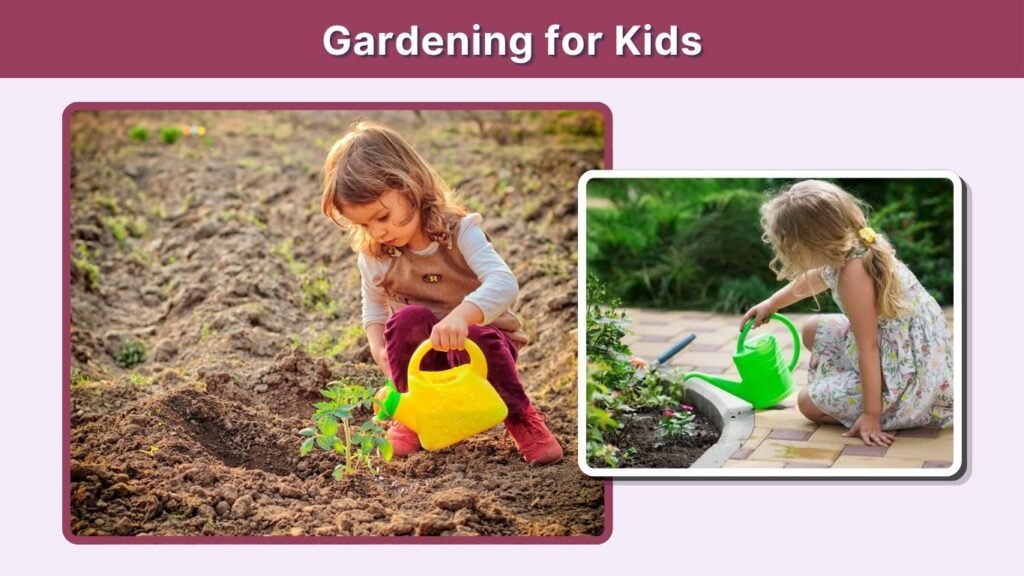
Gardening for kids is a fun and educational screen-free activity that encourages children to explore nature while learning how plants grow. From planting colorful flowers to growing vegetables and herbs, gardening provides endless opportunities for hands-on discovery. This activity helps children develop patience, responsibility, creativity, and an appreciation for the environment. Whether you have a spacious backyard or a small indoor garden, gardening offers an enjoyable way to spend time away from electronic devices.
Materials Needed
- Child-Sized Gardening Tools: Provide small shovels, watering cans, and hand trowels suitable for children.
- Plant Seeds or Seedlings: Choose easy-to-grow plants such as sunflowers, beans, basil, or marigolds.
- Planting Containers: Use small flower pots, raised garden beds, or recycled containers with drainage holes.
- Potting Soil: Select suitable gardening soil or potting mix for healthy plant growth.
- Gardening Gloves: Provide comfortable gloves to protect children’s hands during planting activities.
- Plant Labels: Use wooden sticks or colorful markers to identify different plants and track their growth.
How to Play Gardening for Kids
Start by choosing a suitable gardening area with adequate sunlight and easy access to water. Allow children to select their favorite seeds or seedlings and explain the basic steps of planting. Help them fill containers with potting soil, make small holes, and place seeds at the recommended depth. Cover the seeds gently and water the soil according to the plant’s needs. Encourage children to label their plants and observe changes as they grow. Create a simple gardening routine where kids check soil moisture, water plants when necessary, and remove weeds with adult guidance.
Educational and Developmental Benefits
Gardening helps children develop responsibility, patience, and observation skills as they care for living plants. Planting seeds and handling small gardening tools encourage fine motor development and hand-eye coordination. Watching seeds germinate introduces basic scientific concepts such as plant life cycles, sunlight, water, and soil nutrients. Children also practice problem-solving when identifying plant needs and recognizing changes in growth. Gardening encourages environmental awareness and an appreciation for nature. Working together in a garden promotes teamwork, communication, and confidence while providing meaningful screen-free entertainment.
12. Puppet Show Theater

Puppet show theater is a creative and entertaining screen-free activity that encourages kids to bring imaginative stories to life through handmade characters and performances. Children can create puppets, invent storylines, and organize exciting shows for family members or friends. This activity combines arts and crafts, storytelling, and dramatic play to develop communication, creativity, and confidence. Whether performed behind a cardboard theater or a simple table, puppet shows provide an enjoyable way to explore imagination without digital entertainment.
Materials Needed
- Hand Puppets or Sock Puppets: Use ready-made puppets or clean socks to create imaginative characters.
- Cardboard Box: Transform a large cardboard box into a miniature puppet theater.
- Colorful Construction Paper: Create puppet faces, costumes, scenery, and decorative theater elements.
- Glue and Child-Safe Scissors: Use washable glue and rounded-tip scissors for assembling craft materials.
- Markers and Crayons: Decorate puppets, backgrounds, and theater signs with colorful designs.
- Fabric Scraps: Include lightweight fabric pieces for curtains, costumes, and stage decorations.
How to Play Puppet Show Theater
Begin by helping children create a simple puppet theater using a cardboard box or a table covered with fabric. Allow them to design puppet characters using socks, paper bags, or craft materials. Encourage children to invent a story with a beginning, middle, and ending. They can choose characters such as animals, superheroes, princesses, or imaginary creatures. After preparing the puppets and scenery, ask participants to practice their dialogue and character movements. Invite family members to watch the performance and encourage children to take turns controlling puppets, narrating stories, and creating sound effects.
Educational and Developmental Benefits
Puppet theater encourages children to develop language, storytelling, and communication skills through imaginative performances. Creating characters and organizing storylines supports creativity, sequencing, and problem-solving abilities. Using hand puppets helps strengthen fine motor control and hand-eye coordination. Performing in front of others can build confidence and encourage expressive communication. Children also explore emotions, social situations, and different perspectives while acting through fictional characters. Group puppet shows encourage teamwork, cooperation, and listening skills, making the activity both entertaining and educational.
13. Cooking and Baking Together
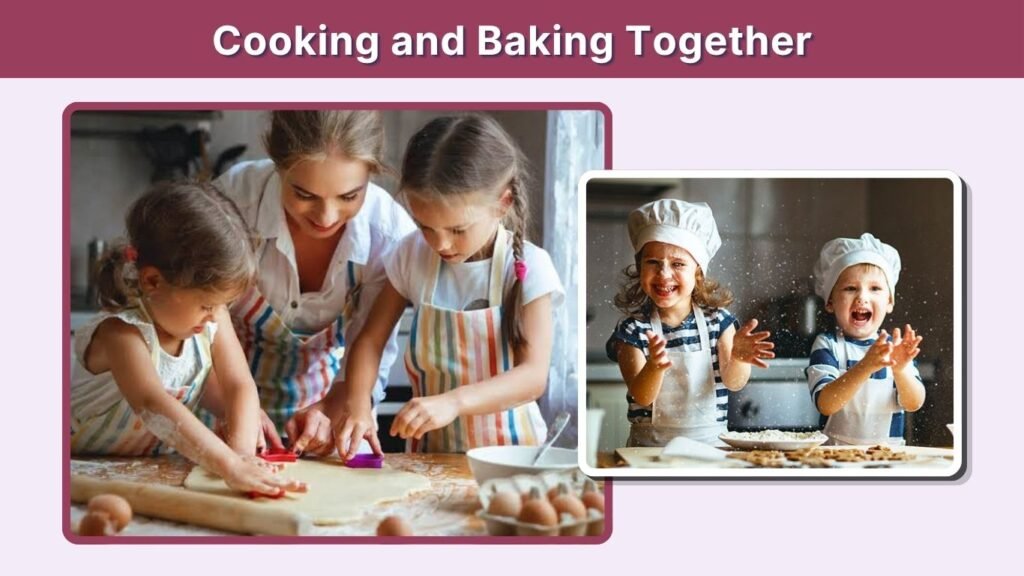
Cooking and baking together is a practical and enjoyable screen-free activity that encourages kids to explore food preparation while spending quality time with family. From mixing cookie dough to assembling colorful sandwiches, children can participate in simple kitchen tasks that match their ages and abilities. This hands-on activity combines creativity, basic mathematics, and everyday life skills while introducing healthy food choices. It also provides a wonderful opportunity for family bonding without relying on electronic entertainment.
Materials Needed
- Child-Friendly Cooking Utensils: Provide small mixing spoons, silicone spatulas, and lightweight measuring cups.
- Mixing Bowls: Use sturdy, nonbreakable bowls for combining ingredients.
- Simple Recipe Cards: Prepare easy-to-follow recipes with pictures or written instructions.
- Fresh Ingredients: Choose ingredients such as fruits, vegetables, flour, yogurt, and other recipe essentials.
- Child-Safe Aprons: Provide comfortable aprons to protect clothing during cooking activities.
- Baking Trays and Containers: Use appropriate kitchen equipment handled with adult assistance when necessary.
How to Play Cooking and Baking Together
Start by selecting a simple recipe that children can help prepare safely, such as fruit salad, homemade sandwiches, muffins, or no-bake snacks. Gather the ingredients and explain the preparation steps before beginning. Younger children can wash produce, stir mixtures, or arrange ingredients, while older kids can practice measuring, mixing, and following written recipes. Encourage children to participate in decorating finished food with colorful toppings or creative arrangements. Adults should handle sharp knives, hot ovens, stovetops, and other hazardous equipment. After preparing the food, invite everyone to enjoy the finished creation together and help clean the workspace.
Educational and Developmental Benefits
Cooking and baking help children develop practical life skills, independence, and confidence through hands-on participation. Measuring ingredients introduces basic mathematical concepts such as counting, quantities, fractions, and comparisons. Mixing, pouring, and arranging food support fine motor development and hand-eye coordination. Following recipes encourages concentration, sequencing, and problem-solving skills. Children also learn about ingredients, nutrition, hygiene, and food preparation techniques. Working together in the kitchen encourages teamwork, communication, and responsibility while creating positive family memories away from screens.
14. Origami Paper Folding
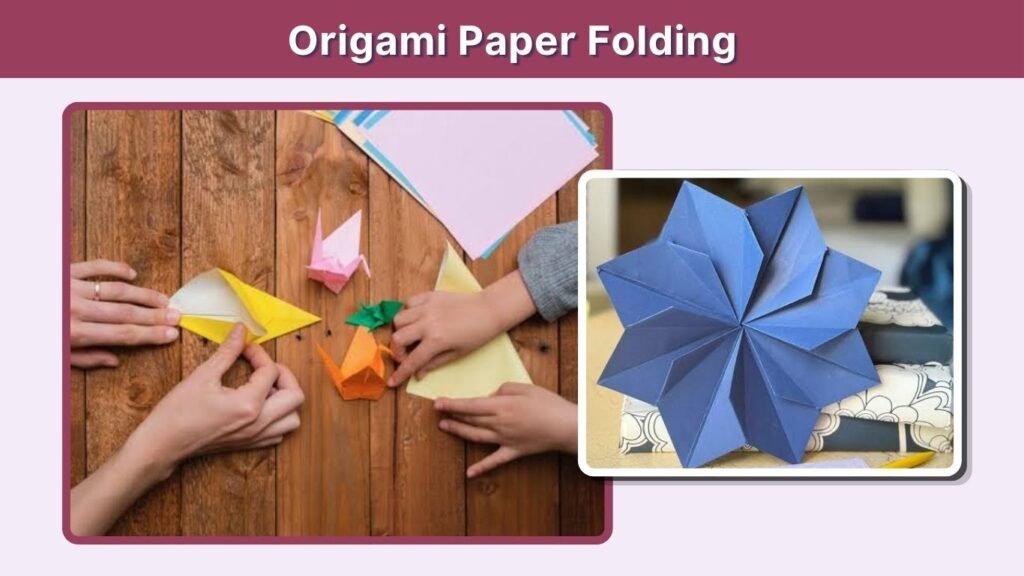
Origami paper folding is a creative and educational screen-free activity that encourages kids to transform simple sheets of paper into beautiful shapes, animals, and decorative objects. This traditional Japanese art introduces children to folding techniques while developing patience, concentration, and imagination. Whether they create paper birds, boats, flowers, or butterflies, origami provides an enjoyable hands-on experience that improves fine motor skills and keeps children entertained without electronic devices.
Materials Needed
- Colorful Origami Paper: Choose square sheets of lightweight paper in different colors and patterns.
- Printed Folding Instructions: Provide simple step-by-step diagrams suitable for children’s ages.
- Colored Pencils and Markers: Use drawing tools to decorate completed paper creations.
- Flat Working Surface: Select a clean table or desk for comfortable folding activities.
- Craft Paper: Include extra sheets for practicing different folding techniques.
- Storage Box: Keep completed origami creations organized and protected from damage.
How to Play Origami Paper Folding
Begin by selecting a simple origami design, such as a paper boat, dog face, or butterfly. Give each child a square sheet of paper and demonstrate the folding instructions slowly. Encourage them to follow each step carefully, matching corners and pressing folds gently to create neat shapes. Younger children can begin with designs that require only a few folds, while older kids can explore more detailed animals and decorative objects. Once the paper creations are complete, allow children to decorate them with colorful markers or arrange them into a handmade display.
Educational and Developmental Benefits
Origami helps children develop fine motor skills, hand-eye coordination, and spatial awareness through precise paper folding. Following instructions encourages concentration, sequencing, and logical thinking. Recognizing how flat paper transforms into different shapes introduces basic geometric concepts, including symmetry, angles, and patterns. Children also practice patience and problem-solving when correcting folds or attempting more challenging designs. Completing origami creations can build confidence and encourage independent learning. Group folding sessions provide opportunities for communication, cooperation, and sharing creative ideas.
15. Outdoor Nature Walk

An outdoor nature walk is a refreshing screen-free activity that encourages kids to explore the natural world while enjoying gentle physical movement. Children can discover colorful flowers, interesting insects, birds, trees, and seasonal changes during a simple walk through a park, garden, or neighborhood. This activity combines outdoor exploration with observation and learning, helping children develop curiosity, environmental awareness, and appreciation for nature while spending meaningful time away from electronic devices.
Materials Needed
- Comfortable Walking Shoes: Choose supportive shoes suitable for outdoor paths and different walking surfaces.
- Nature Observation Notebook: Provide a small notebook for recording interesting discoveries and observations.
- Colored Pencils: Allow children to sketch plants, animals, and natural objects they encounter.
- Child-Friendly Magnifying Glass: Use a lightweight magnifier to observe leaves, flowers, and small natural details.
- Reusable Water Bottle: Bring drinking water to keep children hydrated during outdoor exploration.
- Weather-Appropriate Clothing: Include hats, lightweight jackets, or sun protection depending on outdoor conditions.
How to Play Outdoor Nature Walk
Start by choosing a safe walking route through a nearby park, garden, or quiet neighborhood. Explain the planned route and encourage children to observe their surroundings while walking at a comfortable pace. Ask them to identify different colors, shapes, plants, and animal sounds along the way. Introduce simple observation challenges, such as spotting three different leaves, finding a flowering plant, or listening for bird calls. Allow children to stop occasionally to sketch interesting discoveries in their notebooks. Finish the walk by discussing their favorite observations and what they learned about nature.
Educational and Developmental Benefits
Outdoor nature walks encourage physical movement while helping children develop observation, concentration, and environmental awareness. Walking supports general fitness, balance, and coordination, while exploring different surroundings stimulates curiosity and discovery. Identifying plants, birds, and natural patterns introduces basic scientific concepts and classification skills. Children also practice communication and vocabulary development when describing their observations. Spending time outdoors may support relaxation and emotional well-being. Family nature walks provide opportunities for meaningful conversations, shared learning, and positive experiences without relying on digital entertainment.
16. DIY Musical Instruments
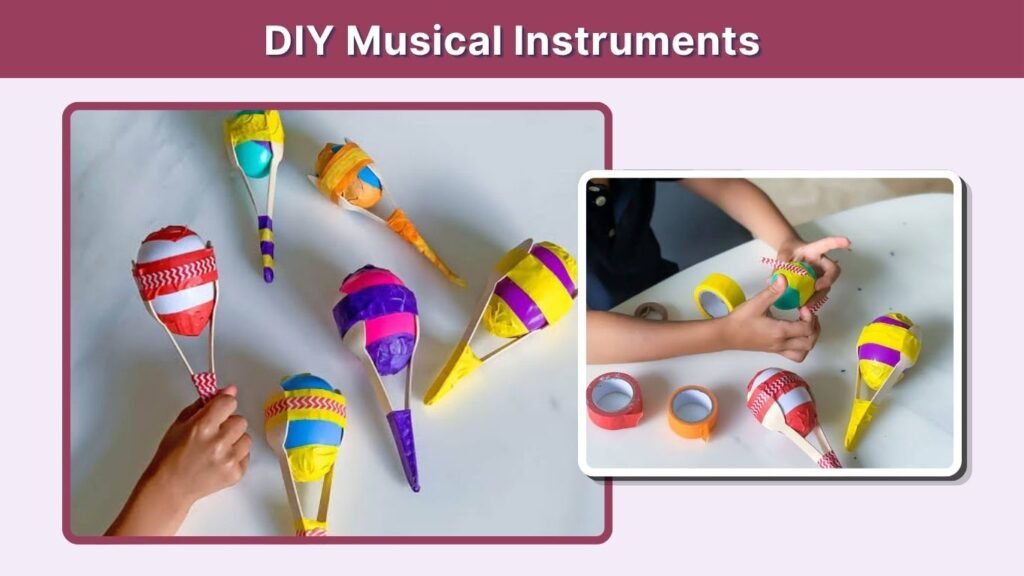
DIY musical instruments are exciting screen-free activities that encourage kids to explore rhythm, sound, and creativity using everyday household materials. Children can create homemade drums, shakers, and simple string instruments while learning how different objects produce sounds. This hands-on activity combines arts and crafts with musical exploration, providing an entertaining opportunity to develop listening skills, coordination, and imagination. Whether enjoyed individually or as a family music session, homemade instruments make learning playful and interactive.
Materials Needed
- Empty Plastic Containers: Use clean, sturdy containers with secure lids for creating homemade shakers.
- Cardboard Boxes and Tubes: Collect lightweight cardboard materials for building simple drums and sound-making instruments.
- Wooden Spoons: Use smooth wooden spoons as drumsticks for gentle tapping activities.
- Dried Beans or Rice: Include small amounts of filling for sealed shakers, handled only by adults.
- Colorful Construction Paper: Decorate instruments with bright colors, patterns, and creative designs.
- Washable Glue and Tape: Use child-safe craft supplies to assemble and decorate homemade instruments.
How to Play DIY Musical Instruments
Begin by choosing a simple musical instrument that children can make using household materials. For a homemade shaker, an adult can place a small amount of dried rice inside a sturdy plastic container and secure the lid permanently. Children can decorate the outside with colorful paper and stickers. To create a drum, use an empty, sturdy container and demonstrate how to tap it gently with a wooden spoon. Once the instruments are ready, encourage kids to experiment with different rhythms, tapping speeds, and sound patterns. Organize a small family band where everyone plays their handmade instrument together.
Educational and Developmental Benefits
Making DIY musical instruments encourages creativity, fine motor development, and hand-eye coordination through assembling and decorating different objects. Exploring sounds helps children recognize rhythm, volume, and musical patterns. Shaking, tapping, and playing instruments support controlled arm and hand movements while developing listening and concentration skills. Children also explore simple scientific concepts by discovering how vibrations produce sounds. Group music sessions encourage teamwork, communication, and cooperation. Creating their own instruments can build confidence and provide an enjoyable introduction to music without electronic devices.
17. Reading Adventure Time
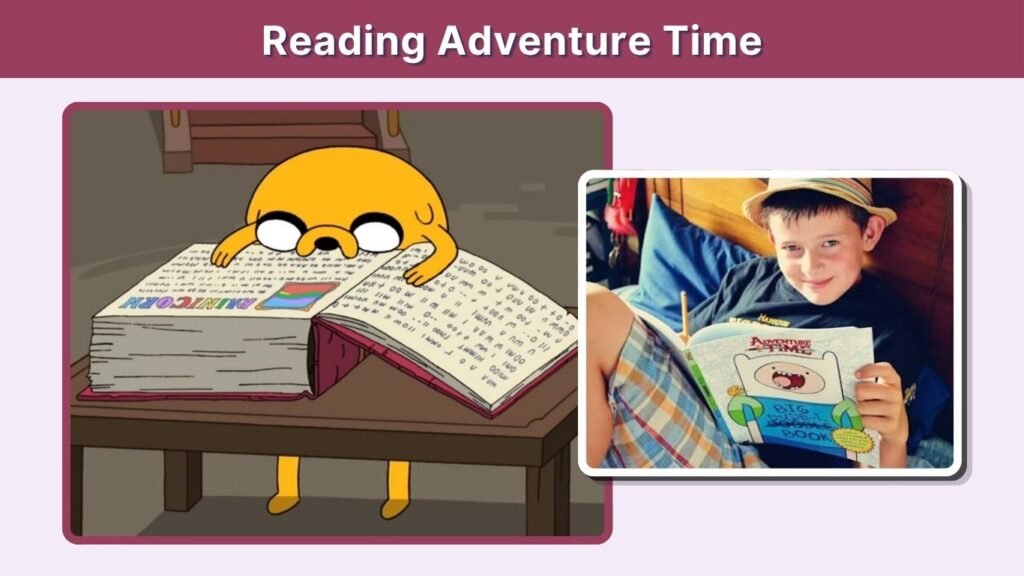
Reading adventure time is a relaxing and educational screen-free activity that encourages kids to explore exciting stories, discover new characters, and develop a love for books. Whether children enjoy fairy tales, animal adventures, mysteries, or imaginative fantasy worlds, reading offers endless opportunities for learning and entertainment. This activity helps strengthen vocabulary, concentration, imagination, and comprehension skills while creating meaningful moments away from digital screens.
Materials Needed
- Age-Appropriate Books: Choose picture books, storybooks, adventure novels, or educational books suitable for children’s reading abilities.
- Comfortable Reading Cushions: Provide soft pillows, bean bags, or a cozy reading chair for relaxation.
- Reading Corner: Create a quiet space with comfortable seating and adequate lighting.
- Bookmarks: Use colorful handmade bookmarks to help children remember their reading progress.
- Story Character Props: Include small toys, puppets, or stuffed animals to bring stories to life.
- Reading Journal: Provide a notebook for drawing favorite characters or writing short book summaries.
How to Play Reading Adventure Time
Start by creating a comfortable reading corner where children can sit and enjoy their favorite books. Allow each child to choose a story based on their interests and reading abilities. Younger children can explore picture books while an adult reads aloud, while older kids can enjoy independent reading sessions. Encourage children to imagine the characters, settings, and adventures described in the story. Pause occasionally to ask simple questions about what might happen next. After reading, invite children to draw their favorite scene, describe a character, or create an alternative ending to the story.
Educational and Developmental Benefits
Reading adventure time helps children develop vocabulary, language comprehension, and communication skills. Exploring different stories encourages imagination, creativity, and critical thinking. Following storylines strengthens memory, concentration, and sequencing abilities. Children also learn about emotions, relationships, and different perspectives through fictional characters. Reading regularly can support literacy development and encourage independent learning. Shared reading sessions provide opportunities for family bonding, conversation, and meaningful interaction while establishing positive habits that extend beyond screen-free entertainment.
18. Hide and Seek

Hide and seek is a classic screen-free activity that encourages kids to explore, move, and use their observation skills while enjoying playful adventures. This timeless game involves one child counting while others find suitable hiding places around a designated area. It combines physical movement, problem-solving, and excitement while promoting social interaction. Whether played indoors or in a safe backyard, hide and seek provides an entertaining way for children to stay active and engaged without electronic devices.
Materials Needed
- Safe Playing Area: Choose a spacious indoor room or enclosed backyard with clearly defined boundaries.
- Designated Counting Spot: Select an easy-to-recognize location where the seeker begins counting.
- Painter’s Tape: Use removable tape to mark playing boundaries or a designated home base.
- Soft Floor Mats: Provide comfortable surfaces in suitable indoor playing areas.
- Simple Rule Cards: Prepare basic instructions for younger children learning the game.
- Small Timer: Use an optional timer to organize short playing rounds.
How to Play Hide and Seek
Begin by selecting a safe playing area and explaining the boundaries to all participants. Choose one child to become the seeker while the others prepare to hide. The seeker closes their eyes and counts to an agreed number, such as twenty, while the remaining players find suitable hiding places. After counting, the seeker announces that the search is beginning and looks for the hidden participants. Children who are discovered can return to the starting point or wait in a designated area. Continue until everyone has been found, then choose a new seeker for the next round.
Educational and Developmental Benefits
Hide and seek encourages children to develop observation, concentration, and problem-solving skills while exploring their surroundings. Finding appropriate hiding places supports spatial awareness and planning abilities. Searching for other players encourages walking, controlled movement, and visual attention. Waiting quietly while hidden can help children practice patience and self-control. The game also supports communication, cooperation, and understanding basic rules. Taking turns as the seeker encourages confidence and social participation while providing an enjoyable opportunity for active screen-free play.
19. Painting and Drawing Challenge
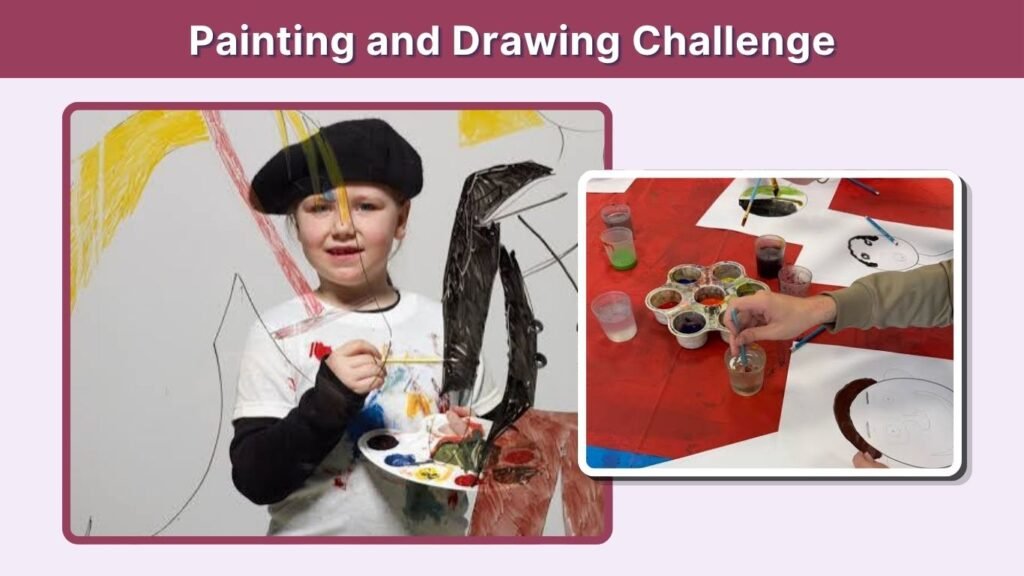
Painting and drawing challenges are creative screen-free activities that encourage kids to express their imagination through colorful artwork and original designs. Children can experiment with paints, crayons, pencils, and different drawing techniques while exploring shapes, patterns, and artistic ideas. Whether creating animal portraits, nature scenes, or imaginary characters, these activities provide enjoyable opportunities for self-expression. Painting and drawing also help develop fine motor skills, concentration, and creativity while offering a relaxing alternative to digital entertainment.
Materials Needed
- Drawing Paper: Provide blank sheets, sketchbooks, or large paper rolls for creative artwork.
- Washable Paints: Choose non-toxic, child-friendly paints in a variety of colors.
- Paintbrushes: Include brushes of different sizes for exploring various painting techniques.
- Crayons and Colored Pencils: Provide colorful drawing tools for sketching, outlining, and shading.
- Protective Table Cover: Use a washable tablecloth or craft mat to protect furniture.
- Water Containers and Cloths: Keep small containers of water and cleaning cloths available for rinsing brushes and wiping spills.
How to Play Painting and Drawing Challenge
Start by preparing a comfortable art station with paper, paints, brushes, and drawing supplies. Introduce a simple creative challenge, such as drawing a favorite animal, painting a colorful garden, or designing an imaginary creature. Allow children to choose their preferred materials and create artwork using their own ideas. Younger kids can explore finger painting with appropriate non-toxic paints or simple shape drawings, while older children can experiment with landscapes, portraits, and detailed illustrations. Introduce different rounds featuring specific themes, colors, or artistic techniques. Finish by inviting children to describe their artwork and display their creations.
Educational and Developmental Benefits
Painting and drawing help children develop fine motor control, hand-eye coordination, and visual perception through creative movements. Holding brushes, drawing lines, and coloring shapes support dexterity and precision. Artistic activities encourage imagination, problem-solving, and independent decision-making as children choose colors, subjects, and techniques. Exploring different materials also introduces concepts such as texture, shape, pattern, and color mixing. Completing artwork can build confidence and provide opportunities for emotional expression. Group art sessions encourage communication, cooperation, and appreciation for different creative styles while reducing dependence on screens.
20. Building a Blanket Fort
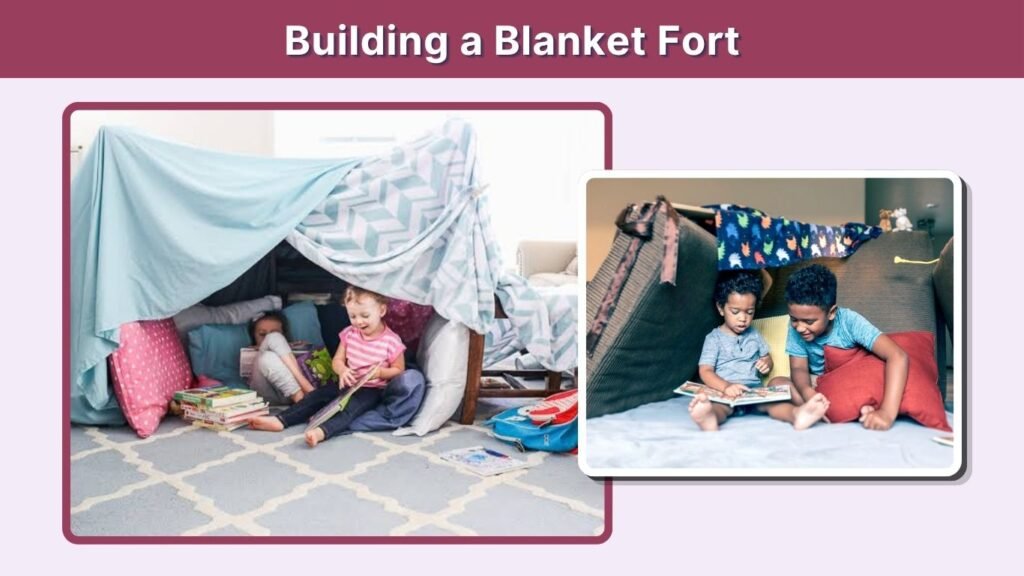
Building a blanket fort is a fun and imaginative screen-free activity that transforms an ordinary living room or bedroom into a cozy adventure space. Children can use blankets, pillows, cushions, and lightweight furniture to create secret hideouts, castles, or pretend camping shelters. This hands-on activity encourages creativity, teamwork, and problem-solving while providing an exciting environment for storytelling, reading, and imaginative play without electronic devices.
Materials Needed
- Soft Blankets and Bedsheets: Use lightweight blankets or sheets to create the walls and roof of the fort.
- Comfortable Pillows: Add soft pillows and cushions to make the interior cozy and inviting.
- Lightweight Chairs: Use stable chairs to support blankets and create a simple fort structure.
- Plastic Clips: Secure lightweight fabric to suitable supports without damaging furniture.
- Battery-Powered Lanterns: Provide safe lighting inside the fort without using candles or open flames.
- Stuffed Animals: Include favorite soft toys to encourage imaginative adventures and pretend play.
How to Play Building a Blanket Fort
Start by selecting a spacious indoor area and gathering blankets, pillows, and stable furniture. Arrange chairs a comfortable distance apart and drape lightweight sheets over them to create a simple roof. Secure the fabric carefully while leaving an easy entrance and enough ventilation. Encourage children to decorate the inside with cushions, stuffed animals, and battery-powered lights. Once the fort is complete, invite them to imagine different adventures, such as exploring a secret castle, camping in a forest, or discovering a hidden treasure. Children can also enjoy reading stories or playing pretend games inside their handmade hideout.
Educational and Developmental Benefits
Building a blanket fort encourages children to develop creativity, spatial awareness, and problem-solving skills. Planning the structure helps them understand basic concepts such as balance, support, and organization. Arranging blankets, cushions, and furniture supports coordination and motor planning. The activity also promotes imaginative thinking as children transform their fort into different pretend environments. Working together encourages communication, cooperation, and sharing responsibilities. Completing a fort can build confidence and independence while providing a comfortable space for screen-free storytelling, reading, and creative play.
21. DIY Sensory Bin Activities
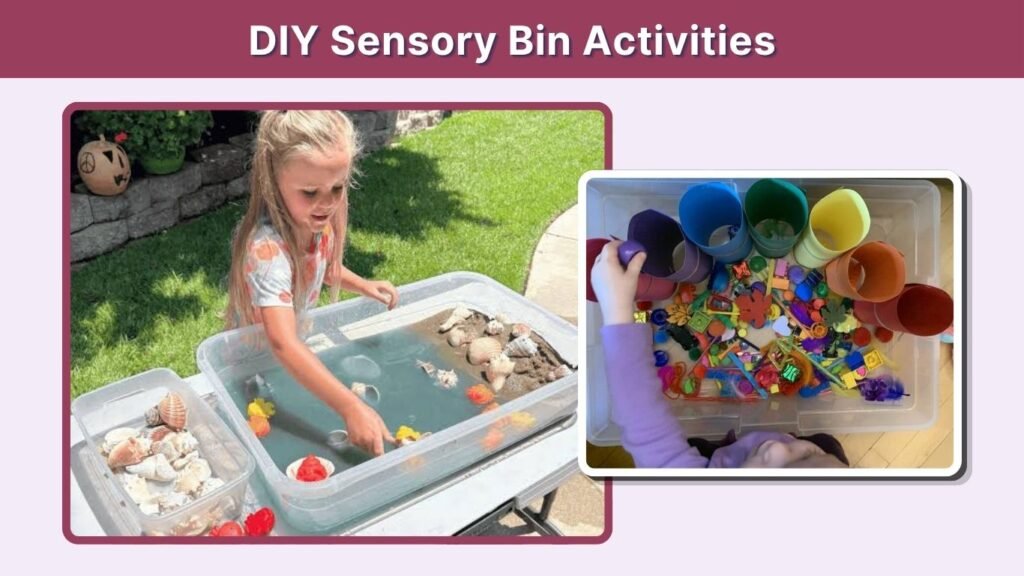
DIY sensory bin activities are engaging screen-free experiences that encourage kids to explore different textures, colors, shapes, and materials through hands-on play. Children can scoop, pour, sort, and arrange objects while discovering how different materials feel and move. These activities provide opportunities for creative exploration, concentration, and imaginative learning. Whether using water, large building blocks, or other age-appropriate sensory materials, sensory bins offer an entertaining way to develop important skills without electronic devices.
Materials Needed
- Large Plastic Container: Choose a shallow, sturdy bin with smooth edges for comfortable sensory exploration.
- Age-Appropriate Sensory Fillers: Use water, large fabric pieces, or oversized sensory toys suitable for children’s ages.
- Plastic Scoops and Cups: Provide lightweight measuring cups, spoons, and containers for scooping and pouring.
- Colorful Sorting Objects: Include large plastic shapes, toy animals, or other safe items for matching activities.
- Activity Mat: Place a washable, non-slip mat beneath the sensory bin to protect the floor.
- Small Storage Containers: Use additional containers for organizing materials and practicing sorting skills.
How to Play DIY Sensory Bin Activities
Begin by choosing a sensory theme and filling a shallow container with suitable materials. For a water-themed activity, add a small amount of water and include large plastic cups, floating toys, and scooping tools. Encourage children to pour water between containers, identify floating objects, and explore different movements. For a dry sensory activity, use oversized building blocks, soft fabric pieces, or other age-appropriate materials. Introduce simple challenges such as sorting objects by color, matching shapes, or transferring items between containers. Allow children to explore independently while providing appropriate supervision.
Educational and Developmental Benefits
Sensory bin activities help children develop fine motor skills, hand-eye coordination, and tactile awareness through touching, scooping, and sorting materials. Exploring different textures encourages curiosity and observation, while pouring and transferring objects support controlled hand movements. Sorting activities introduce early mathematical concepts such as counting, comparing sizes, and recognizing patterns. Sensory play also encourages problem-solving, concentration, and imaginative thinking. Participating with siblings or friends can support communication, cooperation, and sharing. Hands-on exploration provides meaningful opportunities for learning through play without relying on digital entertainment.
22. Backyard Camping Adventure

A backyard camping adventure is an exciting screen-free activity that allows kids to experience the fun of camping without traveling far from home. Children can set up a small tent, explore nature, tell stories, and enjoy outdoor games in a familiar environment. This activity combines imaginative play, practical skills, and outdoor exploration while encouraging family bonding. Whether organized during the afternoon or as an evening adventure, backyard camping creates memorable experiences away from digital screens.
Materials Needed
- Small Camping Tent: Use a lightweight, easy-to-assemble tent suitable for children and backyard conditions.
- Sleeping Bags or Blankets: Provide comfortable bedding for relaxing inside the tent.
- Battery-Powered Lanterns: Use safe, portable lighting for evening activities and storytelling.
- Camping Mats: Include soft sleeping mats or cushions for comfortable seating.
- Outdoor Snacks: Prepare simple snacks and drinking water for a backyard picnic.
- Nature Activity Cards: Create cards featuring outdoor observation challenges and camping games.
How to Play Backyard Camping Adventure
Start by choosing a flat, safe area in the backyard and helping children set up a small camping tent. Arrange sleeping mats, blankets, and pillows inside to create a comfortable camping space. Encourage kids to participate in simple camping tasks, such as organizing supplies, preparing snacks, and decorating their campsite. Introduce outdoor activities like nature observation, storytelling, and backyard scavenger hunts. As evening approaches, use battery-powered lanterns to create a cozy atmosphere. Gather everyone inside or near the tent for stories, imaginative adventures, and family conversations. For younger children, a daytime camping experience may be more suitable than staying outside overnight.
Educational and Developmental Benefits
Backyard camping encourages children to develop independence, responsibility, and practical problem-solving skills through simple outdoor activities. Helping organize camping equipment promotes planning and cooperation, while exploring the backyard supports observation and environmental awareness. Storytelling and pretend adventures encourage creativity, imagination, and communication. Participating in shared camping tasks helps children practice teamwork and decision-making. Spending time outdoors can also provide opportunities for physical movement and relaxation. Family camping experiences strengthen relationships and create positive memories while encouraging children to enjoy entertainment beyond electronic devices.
23. LEGO Building Challenge
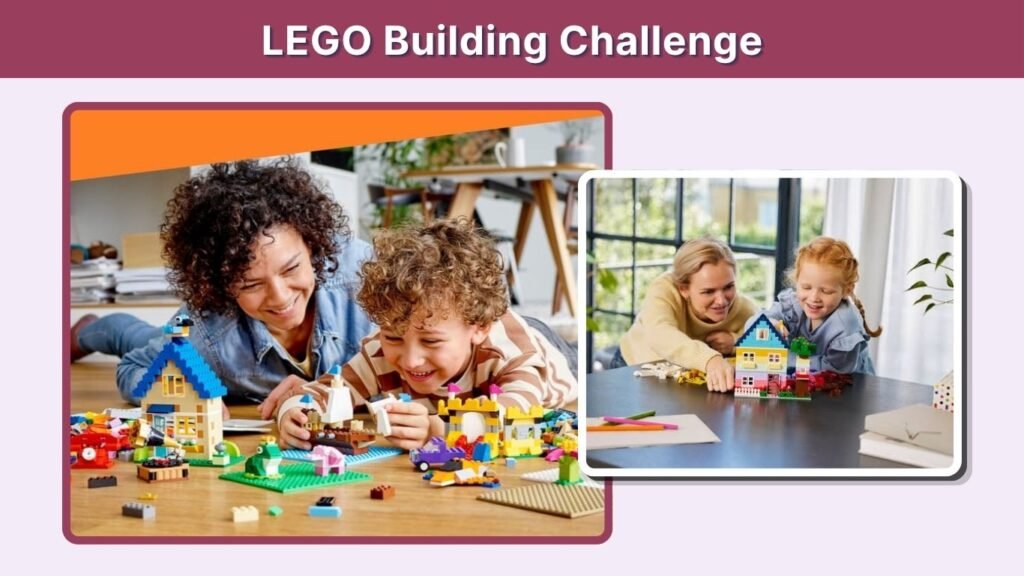
The LEGO building challenge is a creative and educational screen-free activity that encourages kids to use their imagination while constructing exciting structures with colorful bricks. Children can build houses, vehicles, robots, castles, and imaginative cities using different shapes and sizes. This hands-on activity develops problem-solving, concentration, and fine motor skills while providing endless entertainment. Whether played independently or with siblings and friends, LEGO building challenges offer a fun way to explore creativity without electronic devices.
Materials Needed
- LEGO Building Bricks: Provide colorful bricks in different shapes and sizes suitable for children’s ages.
- LEGO Baseplates: Use flat building platforms to create stable foundations for different structures.
- Building Challenge Cards: Prepare cards featuring houses, vehicles, bridges, animals, and other construction ideas.
- Storage Containers: Keep bricks organized by color, size, or shape for easier access.
- Flat Building Surface: Choose a sturdy table or clean floor area for comfortable construction.
- Small Toy Figures: Include compatible figures to encourage imaginative storytelling and creative play.
How to Play LEGO Building Challenge
Begin by arranging LEGO bricks on a clean playing surface and allowing children to explore the different pieces. Introduce simple building challenges, such as constructing the tallest tower, creating a miniature house, or designing an imaginary vehicle. Younger children can use larger, age-appropriate bricks to create basic structures, while older kids can experiment with detailed buildings and complex designs. Encourage participants to plan their creations before building and make adjustments whenever necessary. For group activities, ask children to work together to construct a colorful city, amusement park, or imaginary kingdom.
Educational and Developmental Benefits
LEGO building challenges encourage children to develop fine motor skills, hand-eye coordination, and spatial awareness through connecting and arranging bricks. Designing different structures supports logical thinking, creativity, and problem-solving abilities. Children also explore basic engineering concepts, including balance, symmetry, stability, and structural design. Sorting bricks introduces mathematical skills such as counting, comparing sizes, and recognizing patterns. Completing challenging builds can improve patience, concentration, and confidence. Collaborative building activities encourage teamwork, communication, and cooperation while providing meaningful screen-free entertainment.
24. Friendship Bracelet Making
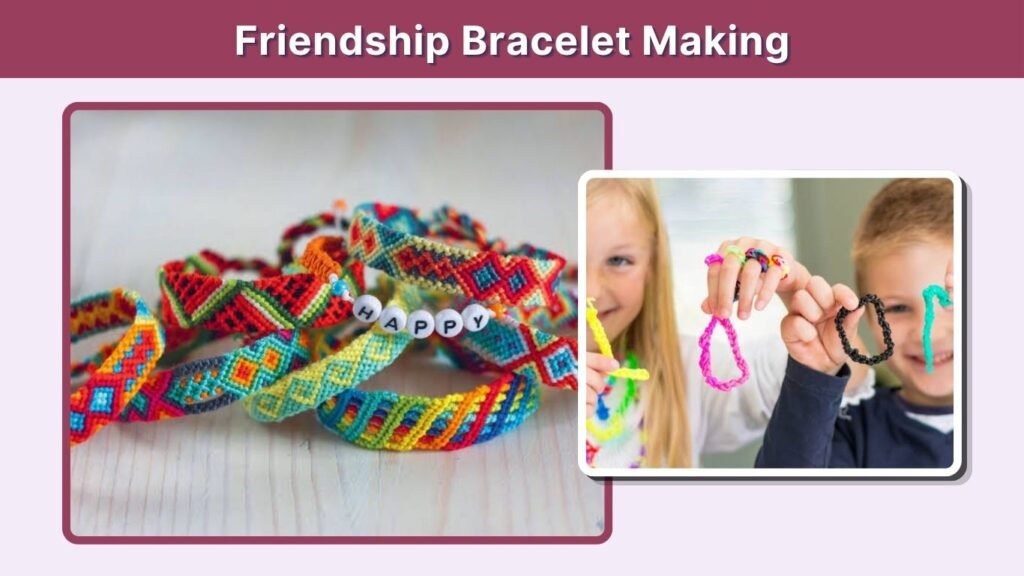
Friendship bracelet making is a fun and creative screen-free activity that encourages kids to design colorful accessories while developing patience and fine motor skills. Children can combine different thread colors, patterns, and simple knotting techniques to create personalized bracelets for themselves, friends, or family members. This hands-on craft provides opportunities for self-expression, concentration, and creativity. Whether enjoyed during playdates, birthday parties, or quiet afternoons, friendship bracelet making offers meaningful entertainment without electronic devices.
Materials Needed
- Colorful Embroidery Thread: Choose soft cotton threads in different colors for creating bracelet patterns.
- Child-Safe Scissors: Provide rounded-tip scissors for cutting thread to suitable lengths.
- Clipboard or Tape: Use a clipboard or removable tape to secure threads while knotting.
- Large Decorative Beads: Include optional age-appropriate beads for creating personalized bracelet designs.
- Pattern Cards: Prepare simple instructions featuring basic knots, braids, and colorful patterns.
- Small Storage Box: Keep threads, completed bracelets, and crafting accessories neatly organized.
How to Play Friendship Bracelet Making
Start by allowing children to select two or three embroidery thread colors for their bracelets. Cut the threads to suitable lengths and secure one end to a clipboard or flat surface using removable tape. Demonstrate a simple braiding technique by dividing the threads into three sections and crossing the outer strands toward the center. Younger children can begin with basic braids, while older kids can experiment with different knotting patterns and color combinations. Once the bracelet reaches the desired length, help children secure the ends with knots. Encourage them to exchange their handmade bracelets with friends or family members.
Educational and Developmental Benefits
Friendship bracelet making helps children develop fine motor control, hand-eye coordination, and finger dexterity through braiding and knotting movements. Following patterns encourages concentration, sequencing, and logical thinking. Selecting thread colors and designing combinations supports creativity and independent decision-making. Children also practice patience and persistence while completing detailed designs. Making bracelets for others can encourage kindness, generosity, and social connection. Group crafting sessions provide opportunities for communication, cooperation, and sharing ideas while creating meaningful handmade gifts without relying on electronic entertainment.
25. Homemade Bowling Game
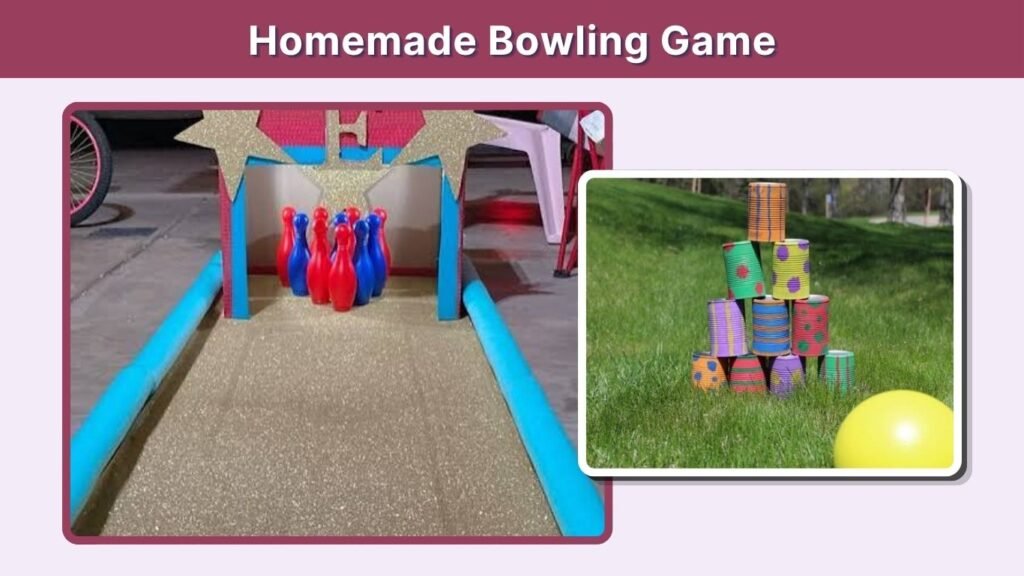
A homemade bowling game is an exciting screen-free activity that transforms ordinary household materials into a fun indoor bowling experience. Children can use lightweight balls and recycled plastic bottles to create their own bowling alley while practicing aiming, coordination, and movement skills. This simple DIY activity encourages creativity, friendly competition, and physical play without requiring expensive equipment. It is perfect for rainy days, family game nights, and entertaining kids at home.
Materials Needed
- Empty Plastic Bottles: Collect six to ten clean plastic bottles to use as homemade bowling pins.
- Soft Foam Ball: Choose a lightweight ball suitable for indoor rolling and target games.
- Painter’s Tape: Mark the bowling lane, starting line, and playing boundaries.
- Colorful Construction Paper: Decorate homemade pins with different colors, numbers, or patterns.
- Washable Markers: Use child-friendly markers to personalize the bowling pins.
- Scorecards and Pencils: Prepare simple scoring sheets to record successful attempts and points.
How to Play Homemade Bowling Game
Begin by cleaning several empty plastic bottles and arranging them in a triangular formation at one end of a spacious indoor area. Decorate the bottles with colorful paper or numbered labels to create attractive bowling pins. Use painter’s tape to mark a starting line several feet away from the pins. Give each child a soft ball and demonstrate how to roll it gently toward the targets. Allow players to take turns attempting to knock down as many pins as possible. After each round, reset the bottles and count the fallen pins. Adjust the throwing distance according to children’s ages and abilities.
Educational and Developmental Benefits
Homemade bowling encourages children to develop hand-eye coordination, balance, and controlled body movements through rolling and aiming activities. Targeting the pins supports spatial awareness, concentration, and motor planning. Setting up the bottles and collecting the ball provides additional opportunities for physical movement. Counting fallen pins introduces basic mathematical concepts, including numbers, addition, and comparison. Decorating the bowling equipment encourages creativity and fine motor development. Playing with siblings or friends promotes patience, communication, cooperation, and turn-taking while providing enjoyable screen-free entertainment.
FAQs
1. What Are Some Fun Screen-Free Activities for Kids at Home?
Fun screen-free activities for kids at home include building LEGO structures, making paper crafts, playing board games, creating blanket forts, and organizing indoor treasure hunts. These activities keep children entertained while encouraging creativity, problem-solving, and hands-on play without using electronic devices.
2. What Are the Best Screen-Free Activities for Kids on Rainy Days?
Indoor obstacle courses, puppet shows, DIY playdough, homemade bowling, and puzzle challenges are great screen-free activities for rainy days. These games require simple household materials and provide opportunities for active play, imaginative thinking, and family entertainment when outdoor activities aren’t possible.
3. What Screen-Free Activities Can Kids Do Independently?
Kids can independently enjoy age-appropriate activities such as drawing, coloring, reading, building blocks, origami, and simple puzzles. These activities encourage creativity and concentration without constant adult involvement. Choose safe materials and provide supervision appropriate to the child’s age and abilities.
4. What Are Some Budget-Friendly Screen-Free Activities for Kids?
Budget-friendly screen-free activities include paper folding, storytelling, backyard scavenger hunts, homemade bowling, and arts and crafts using recycled materials. Most require inexpensive supplies or everyday household items, making them easy to organize without purchasing special toys or equipment.
5. How Do You Make Screen-Free Activities More Exciting for Kids?
Make screen-free activities more exciting by introducing creative themes, playful challenges, and opportunities for children to make their own choices. Turn simple games into treasure hunts, building competitions, or imaginative adventures. Rotate activities regularly and encourage siblings or friends to participate.
