

Make early learning fun with these 15 educational activities for toddlers that encourage creativity, curiosity, and essential developmental skills. From color sorting and shape matching to sensory play, counting games, and storytelling, these simple activities help toddlers learn through hands-on exploration. Whether you’re a parent or caregiver, these engaging, age-appropriate learning ideas are easy to organize at home using everyday materials.
1. Color Sorting Activity
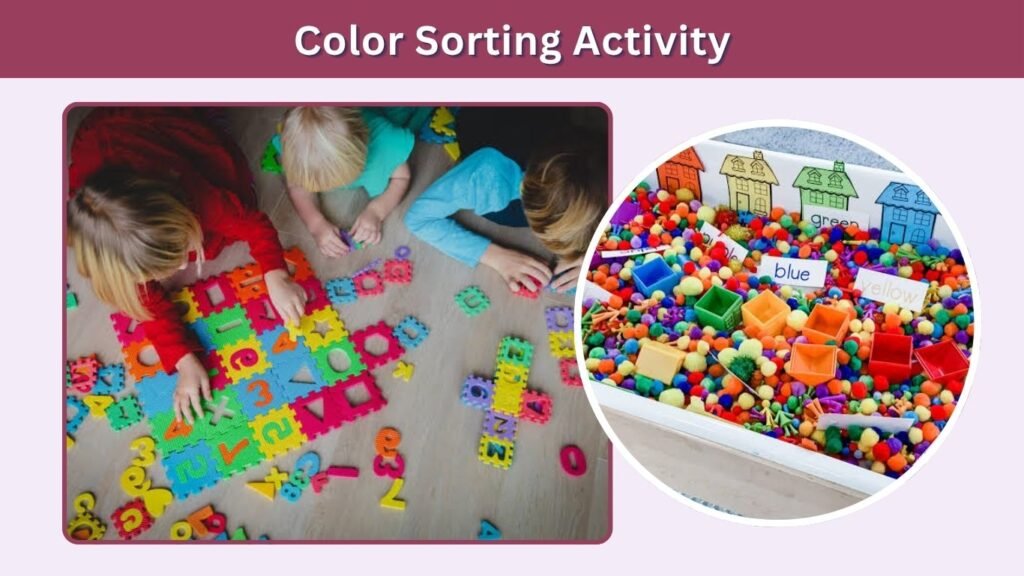
Color sorting is a fun and educational activity that helps toddlers recognize different colors while developing essential thinking and motor skills. This simple activity encourages children to identify, compare, and group objects based on their colors. Parents can use colorful building blocks, plastic cups, or everyday household items to create an engaging learning experience. Color sorting activities are suitable for toddlers who are beginning to recognize basic colors such as red, blue, yellow, and green. The activity can be easily organized at home with minimal preparation and provides opportunities for hands-on learning through play.
Materials Needed
- Colorful Building Blocks: Large blocks in red, blue, yellow, green, and other basic colors.
- Sorting Containers: Small baskets, bowls, or plastic cups for grouping objects.
- Colored Paper: Sheets of construction paper that match the selected colors.
- Activity Mat: A comfortable surface where toddlers can sit and play.
- Color Flashcards: Optional cards to help children identify and remember different colors.
How to Do the Color Sorting Activity
Start by placing several colorful objects on a table or play mat. Arrange matching colored bowls or sheets of paper in front of your toddler. Pick up one object, say its color aloud, and place it into the corresponding container.Encourage your toddler to select another object and match it with the correct color. Begin with two colors to keep the activity simple, then gradually introduce more colors as your child becomes comfortable.You can make the activity more exciting by asking your toddler to find objects of a particular color around the room. Celebrate their efforts and allow them to explore different combinations independently.
Learning and Development Benefits
Color sorting helps toddlers develop early cognitive skills by encouraging observation, comparison, and classification. As children identify and group similar colors, they strengthen their visual discrimination and problem-solving abilities.Picking up and placing objects into containers also improves fine motor skills and hand-eye coordination. Naming colors during play supports vocabulary development and helps toddlers connect spoken words with visual information.The activity encourages concentration, independent exploration, and confidence. Repeating the game with different materials can reinforce color recognition while keeping the learning experience enjoyable.
2. Shape Matching Game
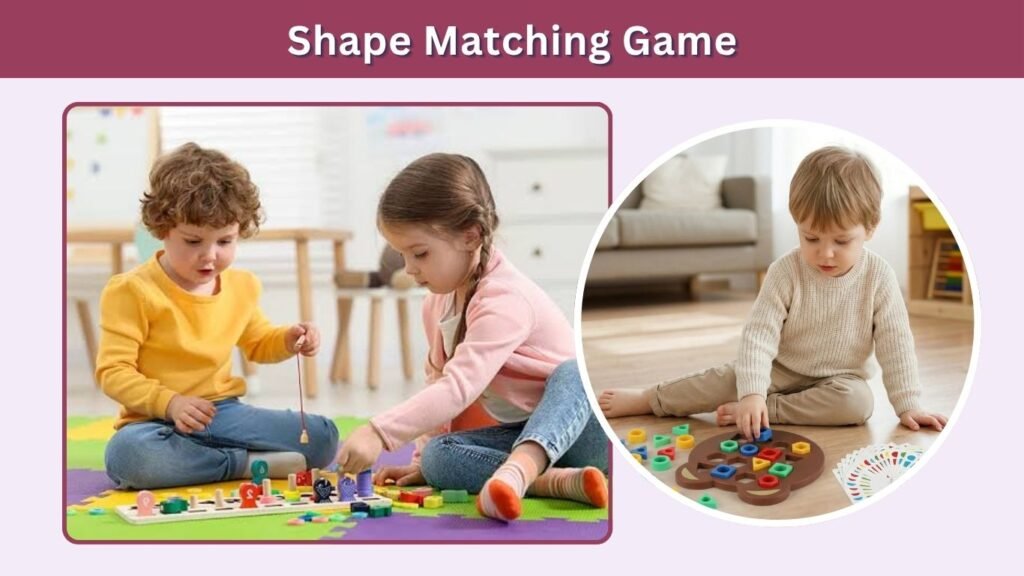
Shape matching is a simple educational activity that helps toddlers recognize basic shapes while improving their thinking and problem-solving skills. Children learn to identify circles, squares, triangles, and rectangles by matching colorful objects with their corresponding outlines. This hands-on activity encourages curiosity, observation, and independent exploration. Parents can organize the game using wooden shape blocks, colorful cards, or homemade cardboard shapes. It requires minimal preparation and can be adapted to suit different developmental stages. Shape matching is especially useful for introducing toddlers to early mathematical concepts through enjoyable, age-appropriate play.
Materials Needed
- Shape Blocks: Large wooden or plastic shapes, including circles, squares, triangles, and rectangles.
- Matching Board: A cardboard sheet featuring clearly drawn shape outlines.
- Colorful Paper: Construction paper for creating additional matching shapes.
- Shape Flashcards: Large picture cards showing different geometric shapes.
- Activity Mat: A clean, comfortable surface for playing and learning.
How to Play the Shape Matching Game
Start by placing two or three large shape blocks in front of your toddler. Introduce each shape by pointing to it and saying its name clearly. Show your child how to match a circle block with a circular outline on the board.Next, encourage your toddler to pick up another shape and find its matching outline. Give them enough time to explore different possibilities before offering assistance.Once your child becomes comfortable with basic shapes, gradually introduce more shapes and colors. You can also make the activity more interesting by asking them to identify similar shapes around the house, such as round plates or rectangular books.Keep the activity relaxed and enjoyable, allowing your toddler to learn through repetition and discovery.
Learning and Development Benefits
Shape matching supports early cognitive development by teaching toddlers to recognize similarities and differences between objects. It introduces basic geometry and strengthens classification, observation, and problem-solving skills.Picking up, rotating, and placing shape blocks improves fine motor control and hand-eye coordination. These movements help develop the coordination needed for everyday activities such as drawing, stacking, and handling objects.The activity also encourages language development as toddlers hear and practice the names of different shapes. Repeated matching exercises can improve concentration, visual memory, and confidence.Learning to identify familiar shapes also helps children understand their surroundings and builds a foundation for future mathematical learning.
3. Alphabet Recognition Activity

Alphabet recognition is an engaging educational activity that introduces toddlers to letters through colorful pictures, songs, and hands-on learning. This activity helps children become familiar with letter shapes and sounds while developing early language and literacy skills. Parents can use alphabet flashcards, large foam letters, picture books, or homemade letter cards to create an interactive learning experience. Younger toddlers can begin by exploring familiar letters, while older toddlers may enjoy identifying letters from their names. The main goal is to encourage curiosity about letters and language through playful activities rather than formal memorization.
Materials Needed
- Alphabet Flashcards: Large, colorful cards displaying uppercase letters.
- Foam Letters: Oversized, toddler-safe letters for touching and matching.
- Alphabet Chart: A colorful poster featuring letters and familiar pictures.
- Picture Books: Simple alphabet books with bright illustrations.
- Matching Board: A cardboard sheet displaying large printed letters.
- Activity Mat: A clean, comfortable area for learning and exploration.
How to Do the Alphabet Recognition Activity
Begin by selecting two or three familiar letters, such as A, B, and C. Show each letter to your toddler and say its name slowly. Connect the letter with a recognizable object, such as A for apple or B for ball.Place large foam letters on the activity mat and encourage your toddler to explore them. Demonstrate how to match a foam letter with the same letter on a flashcard or matching board.Invite your child to try matching letters independently. You can make the activity more enjoyable by singing alphabet songs, reading picture books, or identifying familiar letters around the home.For older toddlers, introduce the first letter of their name to make the experience more meaningful. Keep learning sessions short, interactive, and suitable for your child’s interests.
Learning and Development Benefits
Alphabet recognition introduces toddlers to early literacy concepts by helping them become familiar with printed letters. Recognizing letter shapes supports visual discrimination and prepares children for later reading and writing experiences.Handling large foam letters also improves fine motor skills and hand-eye coordination. Matching letters with cards encourages observation, concentration, and memory development.Listening to letter names and connecting them with familiar words supports vocabulary growth and language comprehension. Alphabet songs can further develop listening skills, rhythm awareness, and an interest in spoken sounds.Regular exposure to letters through playful activities can help children develop curiosity about books, words, and written language. These experiences create a positive foundation for future literacy learning.
4. Counting with Building Blocks

Counting with building blocks is a fun and interactive educational activity that introduces toddlers to basic numbers through hands-on play. This activity encourages children to count colorful blocks, build small towers, and explore simple number concepts while improving their coordination. Parents can use large wooden or plastic building blocks to create an engaging learning experience at home. Younger toddlers can begin by counting one to three blocks, while older toddlers may practice counting up to ten. The activity combines early mathematical learning with creativity, making it an excellent choice for developing number recognition, concentration, and problem-solving skills.
Materials Needed
- Building Blocks: Large, colorful wooden or plastic blocks suitable for toddlers.
- Number Flashcards: Cards displaying numbers from one to ten.
- Sorting Containers: Small baskets or bowls for organizing building blocks.
- Activity Mat: A clean, comfortable surface for building and counting.
- Counting Chart: A simple number chart for introducing basic numerical concepts.
How to Do the Counting with Building Blocks Activity
Start by placing a few colorful building blocks in front of your toddler. Pick up one block and say “one” clearly. Add another block and count “one, two” while pointing to each block.Encourage your toddler to stack the blocks into a small tower while counting each piece. Begin with two or three blocks and gradually increase the number as your child becomes more comfortable.You can also place number flashcards beside the blocks and demonstrate how to match a number with the correct quantity.For older toddlers, introduce simple challenges such as building a tower with five blocks or placing three blocks into a basket.Keep the activity playful and allow your child to explore the blocks independently while practicing basic counting skills.
Learning and Development Benefits
Counting with building blocks introduces toddlers to early mathematical concepts such as numbers, quantities, and simple counting sequences. Handling physical objects helps children begin understanding the relationship between spoken numbers and actual quantities.Stacking and arranging blocks also improves fine motor control, hand-eye coordination, and spatial awareness. Children develop problem-solving abilities as they experiment with balancing blocks and creating different structures.The activity encourages concentration, patience, and independent thinking. Listening to number names and repeating them during play supports language development and memory.Building towers can also stimulate creativity and imagination. Through repeated playful experiences, toddlers gradually develop confidence with numbers while strengthening important physical and cognitive skills.
5. Sensory Bin Exploration
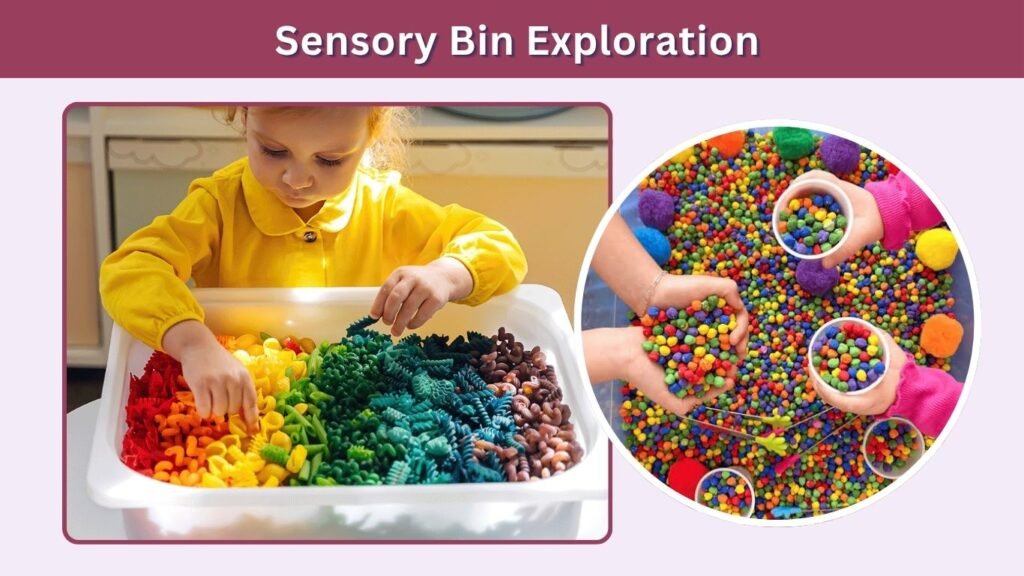
Sensory bin exploration is an engaging educational activity that encourages toddlers to discover different textures, shapes, colors, and objects through hands-on play. This activity involves filling a shallow container with safe sensory materials and allowing children to explore them using their hands and simple tools. Sensory bins help stimulate curiosity while supporting early learning and physical development. Parents can create different sensory experiences using water, large fabric pieces, soft sponges, or age-appropriate toys. The activity is easy to organize at home and can be adapted to suit different interests, making it an enjoyable way for toddlers to explore their surroundings.
Materials Needed
- Sensory Bin: A shallow, sturdy plastic container with smooth edges.
- Soft Sponges: Large, colorful sponges for squeezing and exploring textures.
- Fabric Pieces: Large pieces of soft cotton, felt, or other toddler-safe fabrics.
- Large Plastic Toys: Age-appropriate toys in different shapes and colors.
- Scoops and Cups: Large plastic cups or scooping tools for transferring objects.
- Activity Mat: A waterproof or washable mat to protect the playing surface.
How to Do the Sensory Bin Exploration Activity
Begin by placing a shallow sensory bin on a clean activity mat. Fill it with a selection of large, toddler-safe materials such as soft sponges, fabric pieces, and colorful plastic toys.Introduce the materials by touching them and describing their textures. For example, explain that a sponge feels soft or that a plastic toy has a smooth surface.Encourage your toddler to explore the objects using their hands. Allow them to squeeze sponges, move toys, and compare different textures.You can make the activity more interesting by asking simple questions such as “Which one is soft?” or “Can you find the blue toy?”For additional variety, introduce a small amount of water with appropriate supervision. Let your child experiment with floating toys or gently squeezing wet sponges.
Learning and Development Benefits
Sensory bin exploration helps toddlers develop sensory awareness by encouraging them to experience different textures, shapes, and materials. Touching and comparing objects supports observation, curiosity, and early cognitive development.Picking up, squeezing, and transferring materials strengthens fine motor skills and hand-eye coordination. These movements help children develop control over their hands and fingers.The activity also supports language development as toddlers hear descriptive words such as soft, rough, smooth, wet, and dry.Exploring unfamiliar materials encourages problem-solving, creativity, and independent discovery. Sensory play can also provide opportunities for practicing concentration, patience, and communication.Through repeated exploration, toddlers become more familiar with their surroundings while developing important early learning skills.
6. Animal Sounds Matching Game

Animal sounds matching is a fun and interactive educational activity that helps toddlers recognize different animals and identify the sounds they make. This activity encourages children to connect familiar animal pictures with sounds such as a cow mooing, a dog barking, or a cat meowing. Parents can use animal flashcards, picture books, or large toy animals to create an enjoyable learning experience. The game supports early language development, listening skills, and memory while introducing toddlers to the animal world. It requires minimal preparation and can be played at home with simple materials suitable for young children.
Materials Needed
- Animal Flashcards: Large, colorful cards featuring familiar animals such as cows, dogs, cats, and ducks.
- Toy Animals: Large, toddler-safe plastic or plush animals for hands-on exploration.
- Animal Picture Books: Books featuring clear illustrations of common animals.
- Sound Recordings: Optional recordings of animal sounds for interactive learning.
- Activity Mat: A clean, comfortable surface where toddlers can sit and play.
How to Play the Animal Sounds Matching Game
Begin by placing three or four animal flashcards or large toy animals in front of your toddler. Point to each animal, say its name, and demonstrate the sound it makes. For example, show a picture of a cow and say, “The cow says moo.”Next, make an animal sound without pointing to its picture. Encourage your toddler to identify the corresponding animal by touching the correct flashcard or picking up the matching toy.Start with familiar animals such as dogs, cats, cows, and ducks. Gradually introduce additional animals as your child becomes comfortable with the activity.You can make the game more entertaining by encouraging your toddler to imitate animal sounds. Reading animal picture books together or singing animal-themed songs can also reinforce learning through repetition.
Learning and Development Benefits
Animal sounds matching supports early language development by helping toddlers associate animal names with familiar sounds. Hearing, recognizing, and imitating these sounds encourages listening skills, speech development, and vocabulary growth.The activity strengthens memory and cognitive abilities as children connect auditory information with visual images. Identifying the correct animal also supports observation, attention, and early problem-solving skills.Handling toy animals and pointing to flashcards can improve hand-eye coordination and fine motor control.Imitating animal sounds encourages communication and playful interaction between toddlers and parents. Through repeated activities, children gradually become more confident in expressing themselves while developing curiosity about animals and their environments.
7. Finger Painting Activity
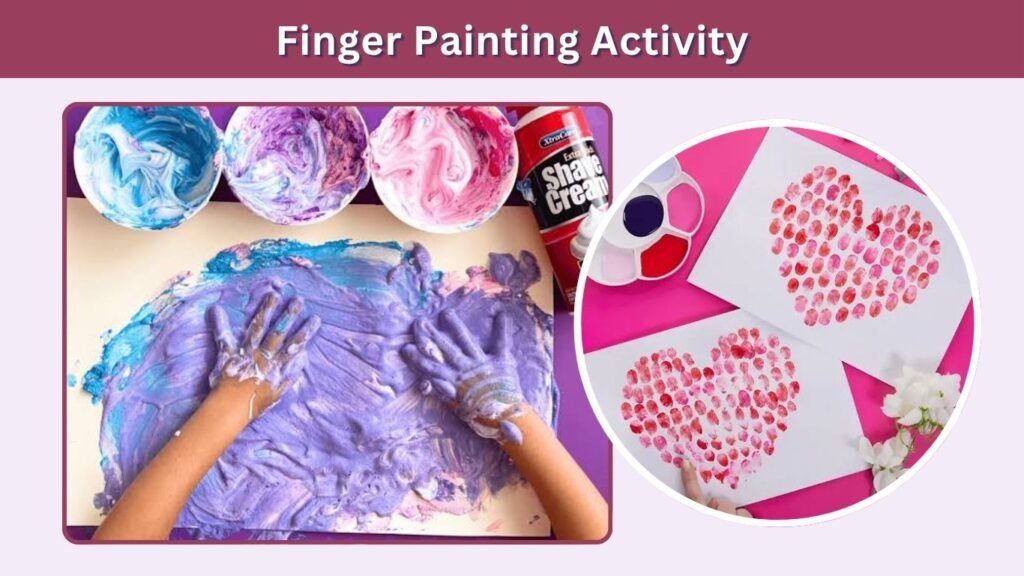
Finger painting is a creative educational activity that allows toddlers to explore colors, textures, and artistic expression using their hands. This hands-on activity encourages children to create colorful patterns, shapes, and pictures by spreading paint across paper with their fingers. Finger painting provides an enjoyable introduction to art while supporting sensory exploration and fine motor development. Parents can organize the activity using toddler-safe washable paints, large sheets of paper, and a protected work surface. Children can experiment freely with colors and movements without needing advanced drawing skills. The activity promotes creativity, curiosity, and confidence through playful artistic exploration.
Materials Needed
- Finger Paints: Washable, nontoxic, age-appropriate finger paints designed for toddlers.
- Large Paper Sheets: Thick drawing paper or large sheets of construction paper.
- Painting Tray: A shallow plastic tray for holding small amounts of paint.
- Protective Mat: A waterproof or washable mat to protect tables and floors.
- Painting Apron: An old shirt or child-sized apron to protect clothing.
- Cleaning Supplies: A damp cloth, warm water, and mild soap for cleaning hands afterward.
How to Do the Finger Painting Activity
Start by covering the activity table or floor with a washable protective mat. Place a large sheet of paper in front of your toddler and prepare small amounts of finger paint in a shallow tray.Introduce one or two colors and demonstrate how to dip a finger into the paint and make simple marks on the paper.Encourage your toddler to create dots, lines, circles, or handprints using their fingers. Allow them to explore the colors freely without expecting a particular picture or design.As your child becomes comfortable, introduce additional colors and demonstrate how mixing two colors can create a new shade.Talk about the colors and patterns your toddler creates to encourage language development. When the activity is finished, allow the artwork to dry and display it somewhere your child can see.
Learning and Development Benefits
Finger painting supports fine motor development by encouraging toddlers to move their fingers, hands, and wrists in different directions. These movements strengthen hand coordination and help prepare children for future drawing and writing activities.Exploring paint textures and colors stimulates sensory awareness while encouraging observation and curiosity. Mixing colors also introduces simple cause-and-effect relationships.The activity promotes creativity and imagination by allowing toddlers to experiment with different marks, patterns, and designs.Naming colors and describing artwork supports vocabulary development and communication skills. Finger painting also provides opportunities for independent decision-making, concentration, and self-expression.Completing a colorful painting can help toddlers develop confidence and a sense of accomplishment while enjoying a relaxed, creative learning experience.
8. Number Matching Game
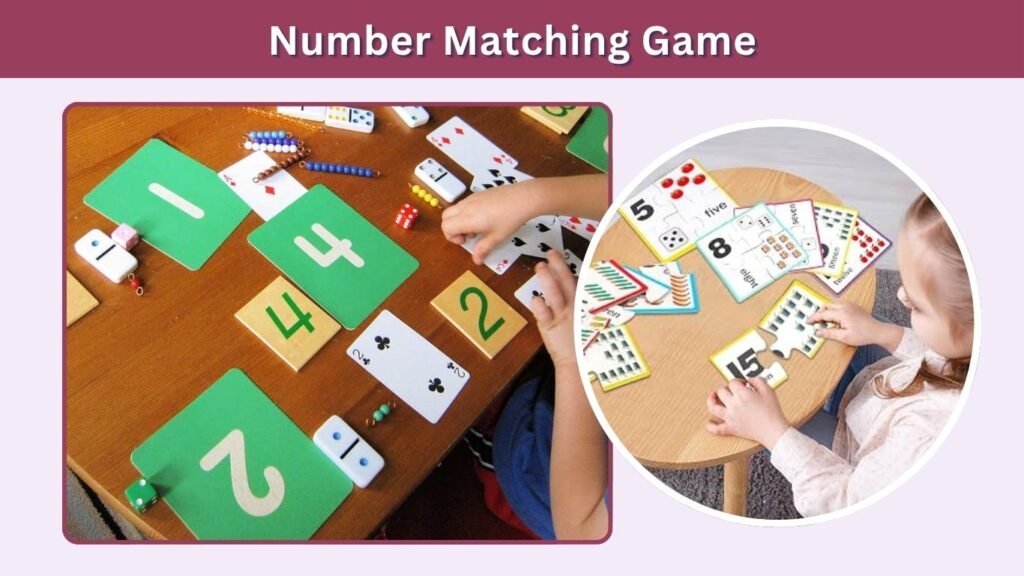
Number matching is a fun and educational activity that helps toddlers recognize numbers and understand basic counting concepts through hands-on play. This activity encourages children to match number cards with groups of objects, helping them connect numerical symbols with quantities. Parents can use colorful flashcards, large building blocks, or everyday household items to create an engaging learning experience. Younger toddlers can begin by matching numbers one through three, while older toddlers may gradually explore numbers up to ten. The activity requires minimal preparation and supports early mathematical thinking, observation, concentration, and problem-solving skills in an enjoyable way.
Materials Needed
- Number Flashcards: Large, colorful cards displaying numbers from one to ten.
- Counting Blocks: Large, toddler-safe building blocks for counting and matching.
- Matching Board: A cardboard sheet with printed numbers and corresponding pictures.
- Sorting Containers: Small baskets or plastic bowls for organizing counting objects.
- Colored Paper: Construction paper for creating additional number cards.
- Activity Mat: A clean, comfortable surface where toddlers can sit and play.
How to Play the Number Matching Game
Begin by placing two or three number flashcards on a table or activity mat. Introduce each number by pointing to it and saying its name clearly. Start with simple numbers such as one, two, and three.Next, place a few large building blocks beside the cards. Demonstrate how to match the number one with one block and the number two with two blocks. Count each block aloud while pointing to it.Encourage your toddler to select a number card and place the corresponding quantity of blocks beside it. Offer gentle assistance when necessary, but allow time for independent exploration.As your child becomes more confident, gradually introduce higher numbers. You can also use familiar household objects, such as large toy cars or soft balls, to make the activity more interesting.Keep the game short, playful, and appropriate for your toddler’s developmental level.
Learning and Development Benefits
Number matching introduces toddlers to basic mathematical concepts by helping them understand the relationship between numbers and quantities. Recognizing numerical symbols and connecting them with physical objects supports early counting and number awareness.The activity strengthens cognitive development by encouraging observation, comparison, memory, and problem-solving. Children begin recognizing differences between quantities while exploring simple mathematical relationships.Picking up and arranging blocks improves fine motor control and hand-eye coordination. These movements also support the physical skills needed for everyday tasks.Counting aloud encourages language development and helps toddlers become familiar with number words. Repeated activities can improve concentration, patience, and confidence while creating a positive foundation for future mathematical learning.
9. Puzzle Solving Activity

Puzzle solving is an engaging educational activity that helps toddlers develop problem-solving abilities, concentration, and hand-eye coordination. This activity encourages children to recognize shapes, colors, and familiar pictures while learning how individual pieces fit together. Simple wooden puzzles, large-piece jigsaw puzzles, and shape-insertion boards are excellent choices for young children. Parents can introduce puzzles featuring animals, vehicles, fruits, or everyday objects to make the learning experience more interesting. Puzzle activities are easy to organize at home and can be adapted to different developmental stages. They provide an enjoyable way for toddlers to practice observation, patience, and independent thinking.
Materials Needed
- Wooden Puzzles: Simple wooden puzzles with large, easy-to-grasp pieces.
- Shape Puzzle Board: A board featuring basic shapes such as circles, squares, and triangles.
- Picture Puzzles: Age-appropriate puzzles displaying animals, fruits, or vehicles.
- Puzzle Tray: A shallow tray for keeping puzzle pieces organized.
- Activity Mat: A clean, comfortable surface for puzzle activities.
- Storage Container: A small box or basket for storing puzzle pieces after play.
How to Do the Puzzle Solving Activity
Begin by selecting a simple puzzle with two or three large pieces. Place the puzzle board on a table or activity mat and remove the pieces so your toddler can clearly see the empty spaces.Introduce the puzzle by showing one piece and explaining how its shape matches a particular opening. Demonstrate how to position the piece correctly without forcing it into place.Encourage your toddler to choose another piece and find where it belongs. Allow them to rotate, examine, and experiment with the pieces independently.Offer gentle hints when needed, such as pointing to a matching picture or suggesting that they turn the piece around.As your child becomes more comfortable, introduce puzzles with additional pieces or more detailed illustrations.Celebrate each completed puzzle and encourage repeated attempts to build confidence and familiarity.
Learning and Development Benefits
Puzzle solving supports cognitive development by encouraging toddlers to examine shapes, recognize patterns, and understand how different pieces fit together. These experiences strengthen observation, logical thinking, and early problem-solving abilities.Handling and positioning puzzle pieces improves fine motor skills, finger control, and hand-eye coordination. Rotating pieces also helps develop spatial awareness and visual discrimination.The activity encourages concentration, patience, and persistence as children work toward completing a picture or matching shapes.Naming objects shown in puzzles supports vocabulary development and language comprehension. Animal, fruit, and vehicle puzzles can introduce new words and encourage conversations between parents and toddlers.Successfully completing a puzzle gives children a sense of accomplishment and helps build confidence in their growing abilities.
10. Color Mixing Experiment

Color mixing is a fun and creative educational activity that introduces toddlers to basic color concepts through hands-on exploration. This activity encourages children to combine different colors and observe how new shades appear. Parents can use washable paints, colored water, or other toddler-safe materials to create an engaging learning experience at home. Mixing primary colors such as red, blue, and yellow helps children understand simple cause-and-effect relationships while encouraging curiosity and experimentation. The activity requires minimal preparation and provides opportunities for sensory exploration, creativity, and early scientific thinking. It is an excellent way to make learning enjoyable through playful discovery.
Materials Needed
- Washable Paints: Nontoxic, toddler-safe paints in red, blue, and yellow.
- Mixing Containers: Small, lightweight plastic bowls or shallow trays for combining colors.
- Paintbrushes: Large, soft brushes designed for young children.
- White Paper: Thick drawing paper for testing different color combinations.
- Plastic Spoons: Large, toddler-safe spoons for mixing paints.
- Protective Mat: A waterproof or washable mat to protect the activity surface.
- Cleaning Supplies: A damp cloth and mild soap for cleaning hands afterward.
How to Do the Color Mixing Experiment
Begin by covering the activity area with a protective mat. Place small amounts of red, blue, and yellow washable paint into separate containers.Introduce each color by pointing to it and saying its name clearly. Demonstrate how to combine two colors, such as red and yellow, to create orange.Encourage your toddler to use a paintbrush or plastic spoon to mix two colors in a shallow container. Allow them to observe the changes and describe what they see.Try other combinations, such as blue and yellow to create green or red and blue to produce purple.Let your toddler experiment with different amounts of paint to discover lighter or darker variations. You can also provide white paper so your child can create colorful patterns using the newly mixed shades. Keep the activity relaxed and allow plenty of time for independent exploration.
Learning and Development Benefits
Color mixing introduces toddlers to early scientific concepts by demonstrating cause and effect. Children discover that combining different colors creates new results, encouraging curiosity, observation, and experimentation.The activity strengthens cognitive development as toddlers compare colors, recognize changes, and explore simple relationships between materials. Holding paintbrushes, stirring paints, and spreading colors across paper improve fine motor coordination and hand control. These movements support skills needed for drawing and other everyday activities.Naming colors and describing changes encourages language development and expands vocabulary.Color mixing also promotes creativity and imagination by allowing children to experiment without following strict instructions. Through repeated exploration, toddlers gradually develop confidence in making discoveries and expressing themselves through art.
11. Sorting Objects by Size

Sorting objects by size is a simple educational activity that helps toddlers understand differences between big, medium, and small objects. This hands-on game encourages children to observe, compare, and organize items according to their dimensions. Parents can use large building blocks, soft balls, stacking cups, or other toddler-safe household objects to create an enjoyable learning experience. Sorting by size introduces early mathematical concepts while strengthening observation, problem-solving, and fine motor skills. The activity is easy to organize at home and can be adapted to different developmental stages, making it suitable for toddlers who are beginning to recognize basic size relationships.
Materials Needed
- Building Blocks: Large, toddler-safe blocks in different sizes.
- Stacking Cups: Colorful plastic cups that gradually increase or decrease in size.
- Soft Balls: Lightweight balls of different sizes suitable for young children.
- Sorting Baskets: Plastic containers or baskets for organizing objects.
- Size Cards: Large picture cards showing big, medium, and small objects.
- Activity Mat: A comfortable surface where toddlers can sit and explore.
How to Do the Sorting Objects by Size Activity
Begin by placing several objects of different sizes on a table or activity mat. Choose items with clearly noticeable size differences to make the activity easier for younger toddlers.Pick up a large object and say, “This is big.” Then show a smaller object and explain, “This is small.”Place two sorting baskets in front of your toddler and demonstrate how to separate big and small objects.Encourage your child to choose another object and place it into the appropriate basket. Give them enough time to compare objects before offering assistance.Once your toddler becomes comfortable with two sizes, introduce medium-sized objects to make the game slightly more challenging.You can also use stacking cups to demonstrate how smaller objects fit inside larger ones.Repeat the activity using different materials to maintain interest and reinforce learning.
Learning and Development Benefits
Sorting objects by size introduces toddlers to early mathematical concepts such as comparison, classification, and measurement awareness. Children begin understanding that objects can be organized according to their physical characteristics.The activity develops observation and problem-solving skills as toddlers compare different objects and decide where they belong.Picking up, moving, and arranging items improves fine motor control and hand-eye coordination. Using stacking cups also supports spatial awareness and an understanding of how objects relate to one another.Naming sizes during play encourages vocabulary development and helps children understand descriptive words such as big, small, bigger, and smaller.Sorting activities also promote concentration, memory, and independent decision-making. Repeated practice helps toddlers become more confident in recognizing differences between everyday objects.
12. Letter Tracing Activity
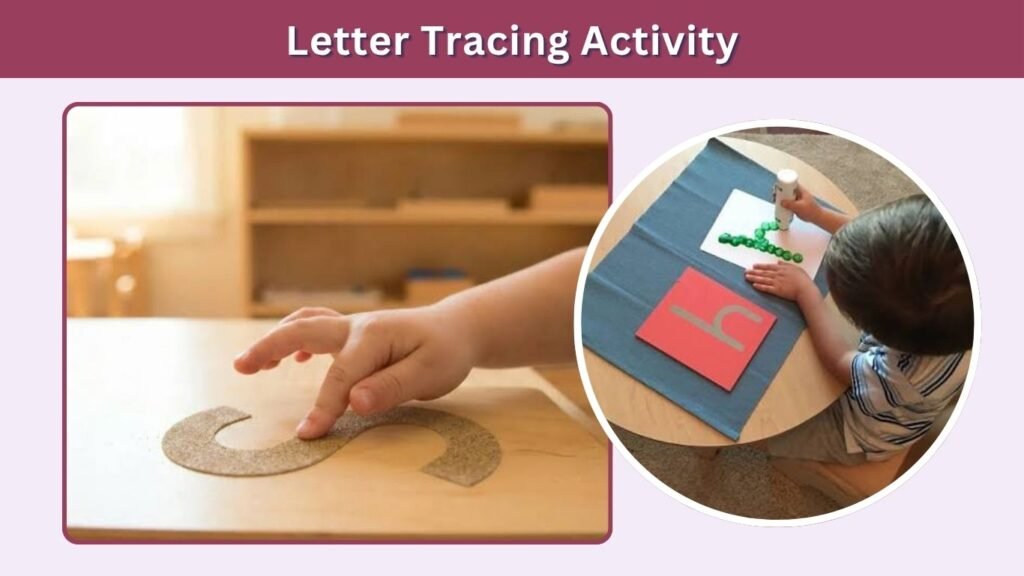
Letter tracing is a fun and educational activity that introduces toddlers to the shapes of alphabet letters while developing early writing skills. This hands-on activity encourages children to follow simple letter outlines using their fingers, crayons, or other age-appropriate materials. Parents can use large alphabet worksheets, colorful letter cards, or sensory tracing boards to create an engaging learning experience. Letter tracing is particularly suitable for older toddlers who are beginning to show interest in drawing and recognizing letters. The activity helps strengthen hand coordination, visual recognition, and concentration while introducing basic literacy concepts through enjoyable, playful exploration.
Materials Needed
- Alphabet Worksheets: Large printed letters with clear outlines for easy tracing.
- Jumbo Crayons: Thick, washable crayons designed for small hands.
- Letter Flashcards: Colorful cards featuring uppercase alphabet letters.
- Tracing Board: A reusable board displaying simple letter shapes.
- Drawing Paper: Large sheets of paper for practicing lines and letter shapes.
- Activity Mat: A clean, comfortable surface for drawing and tracing.
How to Do the Letter Tracing Activity
Begin by selecting one or two familiar letters, such as A or B. Place a large letter worksheet in front of your toddler and point to the letter while saying its name clearly.Demonstrate how to follow the letter outline using your finger. Move slowly along the lines so your child can observe the tracing motion.Encourage your toddler to trace the same letter using their index finger. Allow them to explore the shape several times before introducing a crayon.For older toddlers who are ready, provide a jumbo crayon and demonstrate how to follow the letter’s outline on paper.You can also introduce simple pre-writing movements, such as drawing straight lines, circles, and curves.Make the activity more enjoyable by connecting letters with familiar words, such as A for apple or B for ball.Keep practice sessions short and playful, allowing children to explore letter shapes without expecting accurate writing.
Learning and Development Benefits
Letter tracing introduces toddlers to early literacy concepts by helping them recognize letter shapes and become familiar with written symbols. Repeated exposure supports visual recognition and prepares children for future reading and writing activities.Following lines and curves helps develop fine motor control, hand-eye coordination, and finger movement. These skills are important for later pencil control and handwriting development.The activity also improves visual tracking, concentration, and spatial awareness as children follow different letter patterns.Naming letters and connecting them with familiar objects encourages vocabulary development and language comprehension.Tracing activities can also strengthen confidence and independence as toddlers gradually become more comfortable making marks and recognizing familiar letters. Playful repetition creates a positive foundation for future writing skills.
13. Nature Scavenger Hunt

A nature scavenger hunt is an exciting educational activity that encourages toddlers to explore the outdoors while discovering plants, animals, colors, and natural objects. This activity involves searching for familiar items such as leaves, flowers, trees, and rocks in a backyard, garden, or local park. Parents can prepare simple picture cards to help children identify objects during their exploration. Nature scavenger hunts encourage curiosity, observation, and physical movement while introducing toddlers to the natural environment. The activity requires minimal preparation and can be adapted to different seasons and outdoor locations, making it an enjoyable learning experience for young children.
Materials Needed
- Nature Picture Cards: Large cards displaying leaves, flowers, trees, rocks, and other familiar natural objects.
- Collection Basket: A lightweight basket for carrying safe, nonliving objects.
- Magnifying Glass: A large, child-safe magnifier for observing natural details.
- Comfortable Shoes: Suitable footwear for walking and outdoor exploration.
- Sun Protection: A hat, appropriate clothing, and sunscreen when needed.
- Activity Checklist: A simple picture-based list of objects to find during the hunt.
How to Do the Nature Scavenger Hunt
Begin by choosing a safe outdoor location, such as your backyard, a quiet garden, or a nearby park. Prepare a short picture checklist featuring three to five familiar natural objects.Show your toddler the pictures and explain that you will search for matching items together.Start with something easy to recognize, such as a green leaf or a tree. Point to the object and say its name clearly.Encourage your toddler to look around and find another item from the checklist. Allow them to point, observe, or describe what they discover.For safe, nonliving objects, such as fallen leaves, you can let your child place them in a collection basket.Make the activity more interesting by asking simple questions about colors, shapes, and textures.Celebrate each discovery and allow your toddler to explore at a comfortable pace.
Learning and Development Benefits
Nature scavenger hunts support cognitive development by encouraging toddlers to observe, identify, and compare objects in their surroundings. Searching for specific items strengthens visual discrimination, memory, and early problem-solving skills.Walking, bending, reaching, and exploring outdoor spaces help develop gross motor skills, balance, and coordination.The activity also supports language development as children learn the names of plants, animals, colors, and natural features.Observing different leaves, flowers, and insects encourages curiosity and introduces early scientific thinking.Spending time outdoors provides opportunities for sensory exploration and imaginative play. Nature scavenger hunts can also strengthen communication and cooperation between toddlers and caregivers while encouraging a positive interest in the natural world.
14. Storytelling with Picture Cards
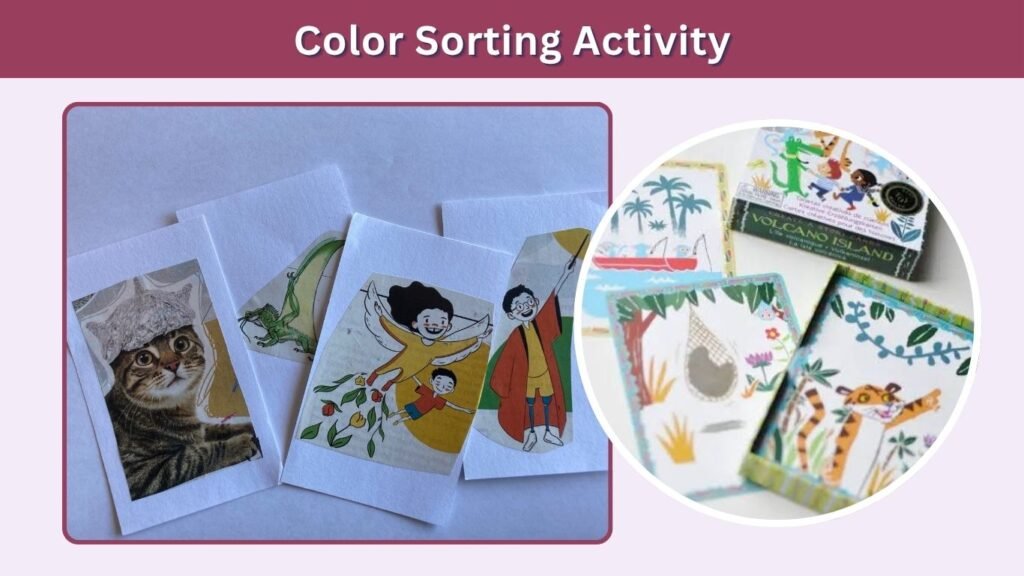
Storytelling with picture cards is a fun and educational activity that helps toddlers develop language, imagination, and communication skills. This activity encourages children to explore colorful pictures, identify familiar objects, and create simple stories with the help of parents or caregivers. Picture cards featuring animals, people, vehicles, and everyday activities can make storytelling more engaging and enjoyable. Younger toddlers can begin by naming objects, while older toddlers may enjoy arranging pictures into short story sequences. The activity requires minimal preparation and provides an excellent opportunity to strengthen vocabulary, memory, creativity, and early literacy skills through interactive play.
Materials Needed
- Picture Cards: Large, colorful cards featuring animals, people, vehicles, and familiar objects.
- Story Sequence Cards: Simple picture sets showing everyday activities in a logical order.
- Picture Books: Age-appropriate books with bright illustrations and simple stories.
- Storytelling Board: A cardboard board for arranging picture cards.
- Toy Characters: Large, toddler-safe animal figures or dolls for acting out stories.
- Activity Mat: A clean, comfortable surface where toddlers can sit and explore the cards.
How to Do the Storytelling with Picture Cards Activity
Begin by selecting three or four picture cards featuring familiar objects or characters. Place the cards in front of your toddler and introduce each picture by saying its name clearly.Choose one card and create a simple story around it. For example, show a picture of a dog and say, “The dog is playing in the garden.”Next, introduce another picture card and connect it to the story. You might show a ball and explain that the dog wants to play with it.Encourage your toddler to participate by pointing to pictures, naming objects, or making sounds related to the characters.
For older toddlers, arrange three picture cards in a sequence showing the beginning, middle, and end of a simple activity.Ask easy questions such as “What is the dog doing?” or “Where is the ball?”Allow your child to create their own ideas without expecting a perfectly organized story. Keep the activity playful, interactive, and enjoyable.
Learning and Development Benefits
Storytelling with picture cards supports early language development by encouraging toddlers to recognize familiar objects, learn new words, and practice communicating ideas. Listening to simple stories helps strengthen vocabulary, comprehension, and early literacy awareness.Arranging picture cards into sequences introduces basic concepts of order, cause and effect, and logical thinking. Children begin understanding that events can happen in a particular sequence.The activity also encourages imagination and creativity as toddlers explore different characters, settings, and situations.Pointing to pictures, handling cards, and arranging them on a board can improve fine motor control and hand-eye coordination.Storytelling also develops listening skills, attention, memory, and social interaction. Through repeated activities, toddlers become more confident expressing themselves while building a positive interest in books and stories.
15. Simple Pattern Recognition Game

A simple pattern recognition game is an engaging educational activity that introduces toddlers to basic sequences, repetition, and early mathematical thinking. This activity encourages children to observe and continue simple patterns using colorful blocks, shapes, pictures, or everyday objects. Parents can create easy sequences such as red-blue-red-blue or circle-square-circle-square to help toddlers recognize repeating arrangements. Younger toddlers may begin by copying two-object patterns, while older toddlers can experiment with more challenging combinations. The game requires minimal preparation and supports observation, memory, concentration, and problem-solving skills. It provides an enjoyable way for toddlers to explore early mathematical concepts through hands-on play.
Materials Needed
- Colorful Building Blocks: Large blocks in different colors for creating repeating patterns.
- Shape Cards: Cards featuring circles, squares, triangles, and other basic shapes.
- Pattern Board: A cardboard sheet for arranging objects in simple sequences.
- Color Flashcards: Large cards displaying different colors for visual matching.
- Sorting Containers: Small baskets or bowls for organizing pattern materials.
- Activity Mat: A clean, comfortable surface for playing and learning.
How to Play the Simple Pattern Recognition Game
Begin by placing two different colored blocks on a table or activity mat. Choose familiar colors, such as red and blue, to make the activity easier.Arrange the blocks in a simple repeating sequence: red, blue, red, blue. Point to each block and say its color aloud.Next, demonstrate how the pattern continues by adding another red block. Encourage your toddler to choose the next matching color.Allow your child to experiment with placing blocks in the correct order. If they make a mistake, gently demonstrate the repeating pattern again.Once your toddler becomes comfortable with color patterns, introduce shape patterns such as circle, square, circle, square.For older toddlers, try simple variations using three colors or different object sizes.You can also introduce patterns through everyday activities, such as clapping hands and tapping knees in a repeating sequence.Keep the game short and enjoyable, allowing children to learn through exploration and repetition.
Learning and Development Benefits
Pattern recognition introduces toddlers to early mathematical thinking by helping them understand repetition, sequence, and relationships between objects. Recognizing simple patterns supports observation, classification, and problem-solving skills.The activity strengthens cognitive development as children compare objects, identify similarities, and predict what comes next in a sequence.Picking up and arranging building blocks improves fine motor control, finger coordination, and hand-eye coordination.Naming colors, shapes, and sequences encourages vocabulary development and language comprehension.The game also supports concentration, visual memory, and independent thinking. As toddlers become familiar with repeating patterns, they develop confidence in recognizing order and making simple predictions.These early experiences provide a useful foundation for later mathematical concepts, including counting, sorting, and understanding sequences.
FAQs
1. What Are the Best Educational Activities for Toddlers?
The best educational activities for toddlers include color sorting, shape matching, counting with blocks, sensory play, simple puzzles, and picture storytelling. These activities encourage early learning while developing motor skills, creativity, language, and problem-solving abilities. Choose activities based on your toddler’s age, interests, and developmental stage.
2. How Long Should Educational Activities Last for Toddlers?
Educational activities for toddlers typically last around 5–15 minutes, depending on their age, interest, and attention span. Younger toddlers may prefer shorter sessions, while older toddlers might enjoy longer activities. Follow your child’s engagement level and allow breaks whenever necessary.
3. How Can I Make Learning Fun for My Toddler at Home?
You can make learning enjoyable by incorporating colorful toys, interactive games, songs, storytelling, and hands-on activities into everyday routines. Use familiar household objects to teach colors, shapes, and numbers. Encourage exploration, offer positive feedback, and avoid putting pressure on your toddler to achieve specific learning outcomes.
4. What Educational Activities Help Toddlers Develop Fine Motor Skills?
Activities such as building block towers, finger painting, shape matching, simple puzzles, and sorting large objects help develop fine motor skills. These activities encourage toddlers to grasp, hold, move, and manipulate objects while improving hand-eye coordination and finger control.
5. Are Educational Activities Important for Two-Year-Olds?
Yes, educational activities support the cognitive, physical, language, and social development of two-year-olds. Simple activities such as matching shapes, exploring sensory materials, listening to stories, and counting toys introduce early learning concepts. Play-based activities allow toddlers to develop essential skills naturally while building curiosity, confidence, and independence.
