

Dinosaur activities for kids are a fantastic way to combine creativity, learning, and hands-on fun. From exciting fossil digs and dinosaur egg experiments to colorful crafts and sensory games, these activities encourage children to explore the prehistoric world through imaginative play. They also help develop fine motor skills, problem-solving abilities, coordination, and scientific curiosity. Whether you’re planning a dinosaur-themed birthday party, classroom lesson, or fun afternoon at home, these 15 easy dinosaur activities will keep toddlers, preschoolers, and older kids entertained while learning new skills.
1. Dinosaur Fossil Dig

Dinosaur Fossil Dig is a fun, hands-on activity that allows kids to explore the exciting world of prehistoric creatures. Children can pretend to be paleontologists as they dig through sand or soil to discover hidden dinosaur bones and fossils. This activity encourages curiosity, improves fine motor skills, and introduces basic scientific exploration through interactive play.
Materials Needed
- Small plastic dinosaur bones or fossil toys
- Large container or sensory bin
- Play sand or clean soil
- Small plastic shovels and brushes
- Magnifying glass
- Small bucket for collecting fossils
How to Do the Activity
Start by filling a large container with play sand or clean soil. Hide several plastic dinosaur bones or fossil toys beneath the surface. Give children small shovels and brushes to carefully uncover the hidden treasures.
Encourage them to dig slowly, just like real paleontologists. Once they discover a fossil, they can use a magnifying glass to examine its shape and details.
Learning Benefits
Dinosaur fossil digging develops hand-eye coordination, patience, and problem-solving skills. It also encourages children to ask questions about dinosaurs, fossils, and prehistoric life while improving their observation abilities.
Safety Tips
Use age-appropriate toys and avoid small pieces that could cause choking. Always supervise younger children during digging activities. Choose clean, child-safe materials and encourage handwashing after play.
2. Dinosaur Egg Hatching Activity

Dinosaur Egg Hatching is an exciting science-based activity that allows kids to discover hidden dinosaurs inside homemade eggs. Children enjoy watching the eggs dissolve or break apart to reveal miniature dinosaur toys. This hands-on activity encourages curiosity, sensory exploration, and early scientific thinking while making learning about prehistoric animals entertaining.
Materials Needed
- Small plastic dinosaur toys
- Baking soda
- Water
- White vinegar
- Food coloring (optional)
- Mixing bowl and spoon
- Plastic tray or container
How to Do the Activity
Mix baking soda with a small amount of water until it forms a moldable paste. Wrap the mixture around small dinosaur toys to create egg shapes. Place the eggs in a safe area and allow them to dry completely.
Once dry, put the eggs on a tray and let children pour small amounts of vinegar over them. The eggs will begin fizzing and slowly reveal the hidden dinosaurs inside.
Learning Benefits
This activity introduces children to simple chemical reactions and encourages observation skills. Kids develop patience, problem-solving abilities, and curiosity as they watch the eggs change and discover the dinosaurs hidden inside.
Safety Tips
Always supervise children when using vinegar and baking soda. Use age-appropriate dinosaur toys and prevent children from tasting the materials. Keep the mixture away from their eyes and wash hands afterward.
3. Dinosaur Footprint Painting

Dinosaur Footprint Painting is a creative art activity that allows kids to make colorful dinosaur tracks using toy dinosaurs. Children can explore different footprint shapes while creating unique patterns on paper. This activity combines imaginative play with artistic expression, helping kids improve hand coordination, recognize patterns, and learn about dinosaur movement.
Materials Needed
- Plastic dinosaur toys with textured feet
- Washable, child-safe paints
- Large sheets of white paper
- Shallow paint trays
- Aprons or old clothes
- Wet wipes or cleaning cloths
How to Do the Activity
Place different paint colors into shallow trays and spread large sheets of paper across a flat surface. Let children dip the feet of their dinosaur toys into the paint.
Encourage them to press the dinosaurs onto the paper to create colorful footprints. They can experiment with different colors, walking patterns, and dinosaur sizes.
Once finished, allow the artwork to dry before displaying it.
Learning Benefits
Dinosaur footprint painting supports fine motor development, creativity, and color recognition. Children also practice identifying patterns, comparing footprint sizes, and understanding how animals leave tracks while moving across different surfaces.
Safety Tips
Use only washable, non-toxic paints suitable for children. Cover the activity area to prevent stains and slipping. Supervise younger kids to ensure they do not put painted toys or materials into their mouths.
4. DIY Dinosaur Sensory Bin

A DIY Dinosaur Sensory Bin is an interactive activity that lets kids explore a miniature prehistoric world using different textures and dinosaur toys. Children can dig, scoop, and create imaginary dinosaur habitats while developing sensory awareness. This activity encourages independent exploration, creative storytelling, and hands-on learning in a simple indoor play environment.
Materials Needed
- Large plastic sensory bin
- Kinetic sand or another age-appropriate sensory filler
- Plastic dinosaur figures
- Smooth, large decorative rocks
- Artificial plants
- Small scoops and cups
- Toy trees or dinosaur eggs
How to Do the Activity
Fill a large container with kinetic sand or another suitable sensory material. Arrange plastic dinosaurs, toy trees, rocks, and artificial plants to create a prehistoric landscape.
Allow children to explore the bin using their hands, scoops, and cups. Encourage them to build dinosaur nests, create pathways, and imagine different prehistoric environments.
You can also hide dinosaur figures beneath the sensory material for children to discover.
Learning Benefits
Dinosaur sensory bins improve tactile exploration, fine motor coordination, and imaginative thinking. Children practice sorting, counting, and identifying different dinosaurs while developing storytelling and communication skills through pretend play.
Safety Tips
Choose sensory fillers appropriate for your child’s age and abilities. Avoid small objects that may cause choking, especially for toddlers. Supervise playtime and clean the materials regularly to maintain a safe activity environment.
5. Dinosaur Playdough Fossils

Dinosaur Playdough Fossils is a simple educational activity where kids create dinosaur impressions using soft playdough and toy figures. Children can pretend to discover ancient fossils while learning how shapes and textures leave marks. This activity combines sensory play, creativity, and early science concepts, making it suitable for preschoolers and elementary-aged children.
Materials Needed
- Child-safe playdough
- Plastic dinosaur figures
- Toy dinosaur bones
- Rolling pin
- Plastic cookie cutters
- Flat activity tray
How to Do the Activity
Give each child a small portion of playdough and help them flatten it into a thick, smooth surface using a rolling pin.
Ask children to press dinosaur figures, feet, or toy bones gently into the playdough. Carefully remove the objects to reveal detailed impressions.
Encourage kids to compare different fossil shapes and create their own collection of prehistoric prints.
Learning Benefits
Making playdough fossils strengthens finger muscles, improves hand-eye coordination, and develops observation skills. Children also learn about shapes, textures, and the basic concept of fossil formation through creative experimentation.
Safety Tips
Use non-toxic, age-appropriate playdough and clean dinosaur toys. Avoid sharp tools or small accessories that may present choking hazards. Supervise younger children and remind them that playdough is not food.
6. Dinosaur Paper Plate Craft

Dinosaur Paper Plate Craft is an enjoyable art project that helps kids create colorful dinosaur models using ordinary paper plates. Children can design their favorite prehistoric creatures while practicing cutting, painting, and assembling different shapes. This creative activity encourages imagination, builds confidence, and introduces children to basic dinosaur body structures.
Materials Needed
- Paper plates
- Washable paints or crayons
- Child-safe scissors
- Non-toxic glue
- Colored construction paper
- Googly eyes or paper eyes
- Paintbrushes
How to Do the Activity
Start by painting or coloring a paper plate and allowing it to dry. Cut the plate in half to form the dinosaur’s body.
Use colored construction paper to create a long neck, tail, legs, and triangular spikes. Help children attach the pieces to the paper plate using glue.
Finally, add eyes and decorative details to complete the dinosaur craft.
Learning Benefits
This activity strengthens fine motor skills, creativity, and shape recognition. Children practice following instructions, combining materials, and identifying dinosaur features. It also encourages self-expression as kids choose colors and create their own dinosaur designs.
Safety Tips
Provide child-safe scissors and supervise cutting activities. Use non-toxic craft supplies and avoid small decorative pieces for younger children. Keep the workspace organized and allow glue and paint to dry completely before handling the finished crafts.
7. Dinosaur Scavenger Hunt

Dinosaur Scavenger Hunt is an exciting indoor or outdoor activity that encourages kids to search for hidden dinosaur toys and clues. Children become little explorers as they follow instructions, solve simple puzzles, and discover prehistoric treasures. This interactive game combines physical movement, problem-solving, and imaginative play, making it an excellent activity for preschoolers and elementary-aged children.
Materials Needed
- Small plastic dinosaur toys
- Dinosaur picture cards
- Paper clues or treasure maps
- Small baskets or buckets
- Dinosaur stickers or prizes
- Colorful markers
How to Do the Activity
Start by hiding dinosaur toys in different locations around your home, classroom, or backyard. Create simple picture clues that guide children toward each hidden dinosaur.
Give each child a basket to collect their discoveries. Encourage them to follow the clues and search carefully in different areas.
For younger children, use visual clues instead of written instructions. Older kids can solve dinosaur-themed riddles to find their next location.
Learning Benefits
Dinosaur scavenger hunts improve observation, memory, and problem-solving skills. Children also practice following directions, recognizing colors, and developing teamwork while exploring their surroundings.
Safety Tips
Choose safe hiding locations away from stairs, sharp objects, and electrical outlets. Use age-appropriate dinosaur toys and supervise younger children throughout the activity.
8. Dinosaur Ice Excavation
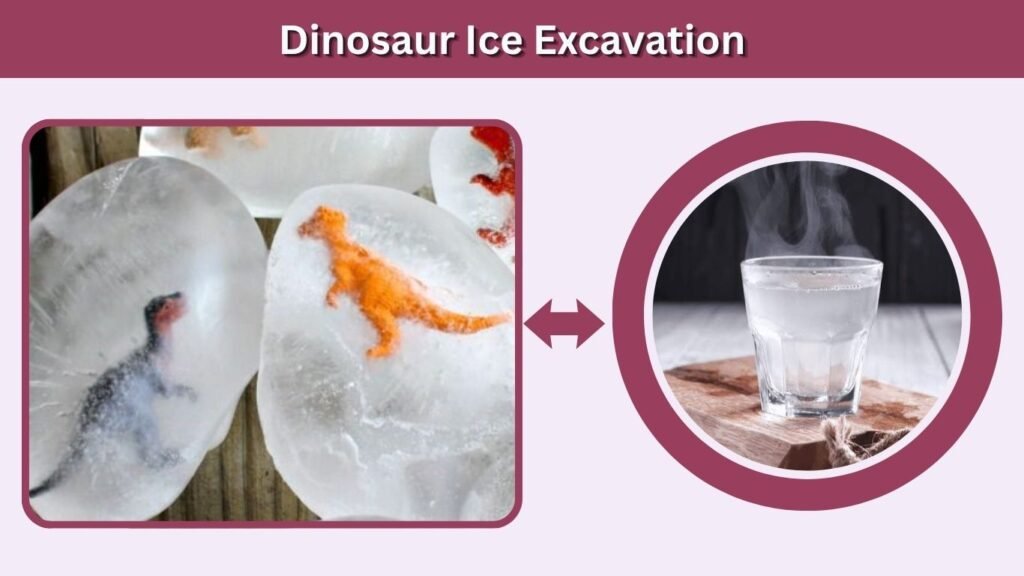
Dinosaur Ice Excavation is a fascinating science and sensory activity that allows kids to rescue frozen dinosaurs from blocks of ice. Children enjoy experimenting with different techniques to melt the ice and uncover hidden prehistoric creatures. This hands-on activity introduces basic scientific concepts while encouraging patience, curiosity, and problem-solving skills.
Materials Needed
- Small plastic dinosaur toys
- Freezer-safe containers
- Clean water
- Warm water
- Plastic spoons
- Child-safe squeeze bottles
- Large activity tray
How to Do the Activity
Place plastic dinosaur toys inside freezer-safe containers and fill them with water. Freeze the containers overnight until the water becomes solid.
Remove the frozen blocks and place them on a large activity tray. Give children squeeze bottles filled with warm water and plastic spoons to help release the dinosaurs.
Encourage kids to observe how the ice changes as warm water touches its surface.
Learning Benefits
This activity teaches children about freezing, melting, and changes in the state of water. It also develops fine motor coordination, observation skills, and scientific curiosity through hands-on experimentation.
Safety Tips
Avoid boiling water, sharp tools, and heavy objects when removing the ice. Supervise children closely and provide towels to prevent slippery surfaces. Use dinosaur toys large enough to avoid choking hazards.
9. Dinosaur Volcano Eruption

Dinosaur Volcano Eruption is an exciting science activity that combines prehistoric imaginative play with a simple chemical reaction. Children can create a miniature dinosaur landscape and watch a homemade volcano produce colorful, bubbling foam. This interactive experiment encourages scientific curiosity and helps kids understand basic reactions while exploring an imaginary prehistoric environment.
Materials Needed
- Small plastic dinosaurs
- Baking soda
- White vinegar
- Dish soap
- Red or orange food coloring
- Small plastic cup
- Large waterproof tray
- Modeling clay or playdough
How to Do the Activity
Place a small plastic cup in the center of a waterproof tray. Use modeling clay or playdough to build a volcano shape around the cup, leaving its opening uncovered.
Arrange dinosaur figures around the volcano to create a prehistoric scene.
Add baking soda, a little dish soap, and food coloring to the cup. Slowly pour vinegar into the mixture and watch the colorful foam bubble over the edges.
Learning Benefits
Dinosaur volcano experiments introduce children to simple chemical reactions and encourage observation. Kids develop prediction skills, scientific thinking, and curiosity while learning how different materials interact.
Safety Tips
Always supervise the experiment and use small quantities of ingredients. Prevent children from tasting the mixture or touching their eyes. Protect nearby surfaces and wash hands after the activity.
10. Dinosaur Footprint Matching Game

Dinosaur Footprint Matching Game is a fun educational activity that helps kids recognize shapes, sizes, and patterns through prehistoric-themed play. Children examine different dinosaur footprints and match them with corresponding dinosaur pictures or toy figures. This engaging game supports early learning while developing observation, concentration, and logical thinking skills.
Materials Needed
- Dinosaur picture cards
- Dinosaur footprint printables
- Plastic dinosaur figures
- Colored construction paper
- Child-safe scissors
- Glue sticks
- Markers or crayons
How to Do the Activity
Begin by drawing or printing several dinosaur footprints on pieces of construction paper. Create matching dinosaur cards with similar footprint designs.
Spread the footprint cards across a table or floor. Ask children to examine each footprint and find the dinosaur card with the matching shape.
You can make the game more challenging by introducing different footprint sizes or arranging cards facedown for a memory-matching activity.
Explain that these are simplified game designs rather than scientifically exact dinosaur tracks.
Learning Benefits
Footprint matching improves visual discrimination, concentration, and memory. Children develop early classification skills by comparing shapes and sizes. The activity also strengthens vocabulary and encourages discussions about how dinosaurs moved.
Safety Tips
Use large cards with smooth edges and avoid small pieces for younger children. Supervise cutting activities and choose non-toxic craft materials. Keep the playing area clear to prevent trips and falls.
11. Dinosaur Coloring Activity

Dinosaur Coloring Activity is a simple and creative way for kids to explore prehistoric animals through art. Children can color different dinosaur pictures while learning about their unique shapes, body features, and habitats. This relaxing activity encourages artistic expression, improves concentration, and helps children develop important fine motor skills through enjoyable, hands-on learning.
Materials Needed
- Printable dinosaur coloring pages
- Crayons or colored pencils
- Washable markers
- Large sheets of drawing paper
- Dinosaur picture books
- Stickers for decoration
How to Do the Activity
Start by providing children with dinosaur coloring pages featuring popular prehistoric animals such as Tyrannosaurus rex, Triceratops, and Stegosaurus.
Encourage kids to choose their favorite colors and decorate each dinosaur creatively. They can also draw trees, mountains, and prehistoric plants around their dinosaurs.
For an educational twist, discuss the dinosaur’s name, body features, and possible habitat while children color. Allow them to display their finished artwork.
Learning Benefits
Dinosaur coloring strengthens hand control, pencil grip, and hand-eye coordination. It also improves color recognition, creativity, and attention span. Children can build vocabulary and learn basic dinosaur facts while expressing their imagination.
Safety Tips
Choose washable, non-toxic coloring materials suitable for your child’s age. Avoid sharp pencils for very young children and supervise the use of small decorative stickers.
12. Dinosaur Skeleton Puzzle

Dinosaur Skeleton Puzzle is a fun educational activity that allows kids to explore dinosaur anatomy while developing problem-solving skills. Children assemble different dinosaur bone pieces to create complete prehistoric skeletons. This hands-on activity encourages curiosity, improves concentration, and introduces basic concepts of animal body structures through interactive learning and imaginative play.
Materials Needed
- Printable dinosaur skeleton templates
- Thick cardboard or construction paper
- Child-safe scissors
- Glue sticks
- Markers or crayons
- Large activity tray
How to Do the Activity
Start by printing or drawing a simple dinosaur skeleton on thick paper. Cut the skeleton into several large puzzle pieces, including the skull, backbone, ribs, legs, and tail.
Mix the pieces and place them on a flat surface. Encourage children to examine each bone shape and arrange the pieces to recreate the dinosaur skeleton.
For younger kids, provide a completed skeleton picture as a guide. Older children can solve the puzzle without assistance.
Learning Benefits
Dinosaur skeleton puzzles improve logical thinking, spatial awareness, and hand-eye coordination. Children also develop patience and observation skills while learning about dinosaur body structures. The activity encourages problem-solving and introduces basic paleontology concepts.
Safety Tips
Use large puzzle pieces with smooth edges to prevent injuries or choking. Supervise children when using scissors and glue. Choose durable, non-toxic materials suitable for their age.
13. Dinosaur Egg Rescue Game
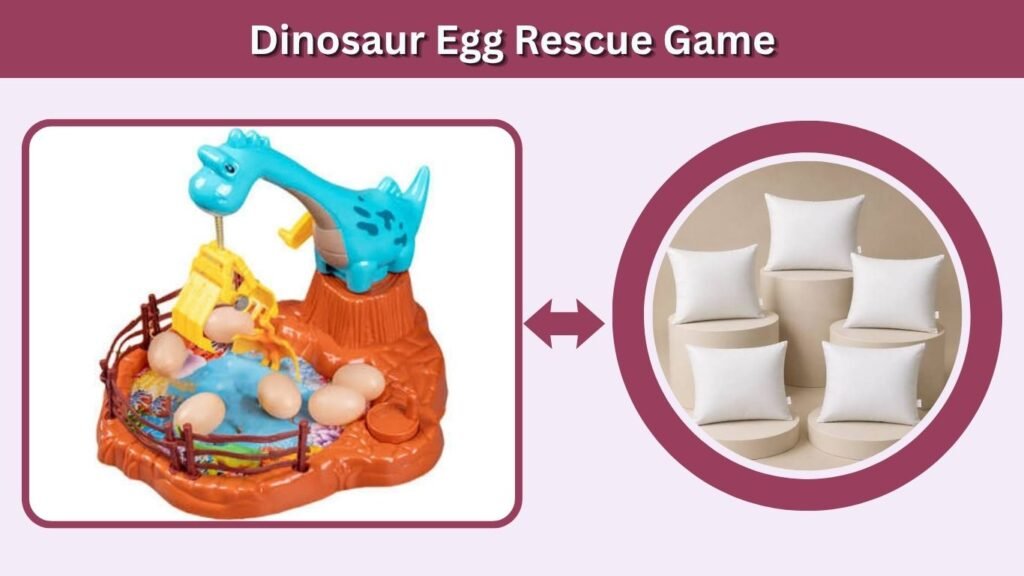
Dinosaur Egg Rescue Game is an exciting pretend-play activity that challenges kids to save dinosaur eggs from different obstacles. Children become prehistoric explorers as they carefully transport colorful dinosaur eggs to a safe nesting area. This interactive activity combines movement, coordination, and imaginative storytelling while helping young learners develop essential physical and cognitive skills.
Materials Needed
- Large plastic dinosaur eggs
- Small baskets or buckets
- Soft cushions
- Colorful floor markers
- Toy dinosaur figures
- Large cardboard nest
How to Do the Activity
Begin by placing plastic dinosaur eggs around a safe indoor or outdoor play area. Create a dinosaur nest using a cardboard box or basket.
Arrange soft cushions and floor markers to form a simple rescue path. Ask children to collect one dinosaur egg at a time and carry it carefully to the nest.
Encourage them to pretend they are protecting the eggs from imaginary prehistoric dangers.
For an extra challenge, let children balance an egg on a large spoon while walking slowly.
Learning Benefits
This activity develops balance, coordination, concentration, and gross motor skills. Children also practice following directions, working cooperatively, and solving simple movement challenges through imaginative play.
Safety Tips
Choose lightweight, shatterproof eggs without detachable small parts. Keep the activity area free from sharp objects and slippery surfaces. Supervise children and adjust obstacles according to their abilities.
14. Dinosaur Shadow Matching Activity

Dinosaur Shadow Matching Activity is an engaging educational game that helps kids identify dinosaur shapes and silhouettes. Children compare dinosaur pictures with matching shadow outlines while exploring the unique body features of prehistoric animals. This simple activity strengthens visual recognition, concentration, and early classification skills through playful learning.
Materials Needed
- Printable dinosaur picture cards
- Matching dinosaur shadow cards
- Colored construction paper
- Child-safe scissors
- Glue sticks
- Laminating sheets (optional)
- Large activity board
How to Do the Activity
Start by printing several dinosaur pictures and their matching black silhouettes. Choose dinosaurs with recognizable shapes, such as Triceratops, Stegosaurus, and Brachiosaurus.
Place the shadow cards on a table and mix the colorful dinosaur pictures separately.
Ask children to examine each dinosaur and find its matching shadow. Encourage them to compare features such as horns, tails, necks, and body shapes.
For older kids, increase the difficulty by adding more dinosaur silhouettes with similar body structures.
Learning Benefits
Dinosaur shadow matching improves visual discrimination, memory, and problem-solving abilities. Children develop shape recognition and observation skills while learning about different dinosaur body features. It also encourages concentration and independent thinking.
Safety Tips
Use large, sturdy picture cards with smooth edges. Supervise younger children during cutting and preparation. Avoid small detachable pieces and choose non-toxic craft supplies suitable for children.
15. Dinosaur Obstacle Course

Dinosaur Obstacle Course is an energetic physical activity that encourages kids to move like their favorite prehistoric creatures. Children can jump, crawl, balance, and stomp through a dinosaur-themed adventure using simple household materials. This exciting activity promotes physical fitness, coordination, and imaginative play while helping kids develop confidence and important gross motor skills.
Materials Needed
- Soft cushions and pillows
- Hula hoops
- Cones or floor markers
- Play tunnels
- Dinosaur picture cards
- Soft mats
- Small dinosaur toys
How to Do the Activity
Create a safe obstacle course using cushions, hoops, and floor markers. Arrange different stations where children perform dinosaur-inspired movements.
Ask kids to stomp like a Tyrannosaurus rex, crawl under a tunnel like a small dinosaur, and stretch their necks like a Brachiosaurus.
Children can jump between floor markers, walk along a taped balance path, and finish by collecting a dinosaur toy.
Allow them to repeat the course at their own pace.
Learning Benefits
Dinosaur obstacle courses strengthen balance, coordination, and gross motor development. Children also improve spatial awareness, listening skills, and body control while participating in imaginative physical challenges.
Safety Tips
Use soft, stable equipment and avoid obstacles that require climbing from heights. Keep enough space between stations and remove slippery objects. Supervise children and adapt movements to their age and physical abilities.
FAQs
1. What Are the Best Dinosaur Activities for Preschoolers?
The best dinosaur activities for preschoolers include fossil digging, dinosaur sensory bins, footprint painting, and playdough fossils. These activities encourage creativity, sensory exploration, and fine motor development. Choose simple, hands-on projects with age-appropriate materials and adult supervision.
2. How Can I Make Dinosaur Activities Educational?
You can make dinosaur activities educational by introducing basic facts about prehistoric animals during play. Encourage children to identify dinosaur names, compare sizes, recognize shapes, and ask questions. Fossil digging and skeleton puzzles also support observation and problem-solving skills.
3. What Dinosaur Activities Can Kids Do Indoors?
Kids can enjoy dinosaur coloring, paper plate crafts, shadow matching, skeleton puzzles, and sensory bins indoors. These activities require simple household materials and limited space. They are excellent options for rainy days, classroom projects, or creative playtime at home.
4. Are Dinosaur Activities Safe for Toddlers?
Dinosaur activities can be safe for toddlers when materials are age-appropriate and supervision is provided. Choose large dinosaur toys, non-toxic paints, and soft play materials. Avoid small objects, sharp tools, and choking hazards to create a safer learning environment.
5. What Age Is Best for Dinosaur Activities?
Dinosaur activities can suit children from toddlerhood through elementary school, depending on their developmental abilities. Younger children may enjoy simple coloring and supervised sensory play, while older kids can explore fossil excavation, science experiments, and more challenging dinosaur puzzles.
