
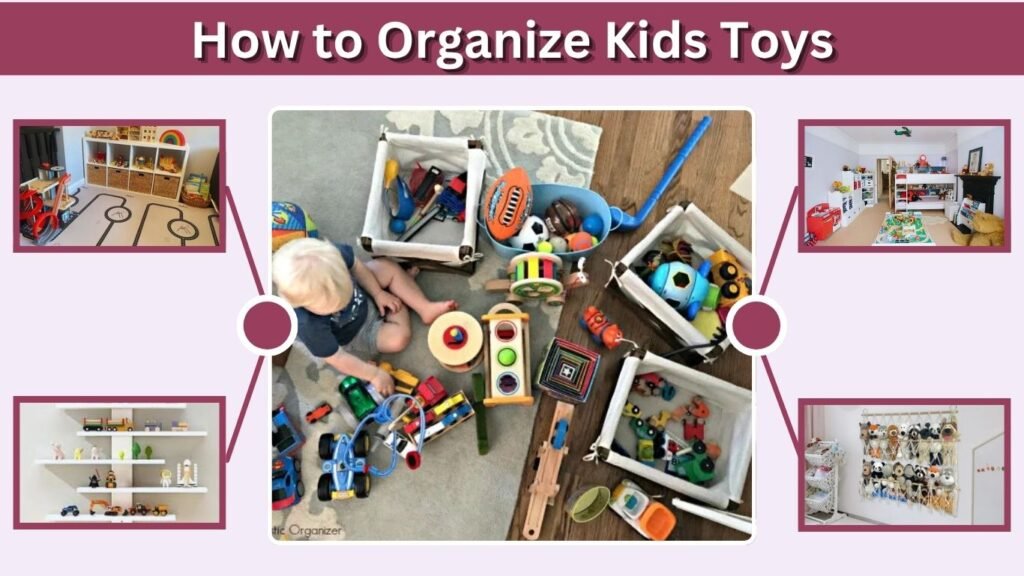
Learning how to organize kids toys can make your home cleaner, safer, and more comfortable for the entire family. Whether toys are scattered across the living room, overflowing from bedroom closets, or filling every storage basket, a simple organization system can make a big difference. The key is choosing practical storage solutions, reducing unnecessary clutter, and creating routines children can follow. With the right approach, you can organize kids’ toys in small spaces, bedrooms, playrooms, and shared family areas without spending too much money.
1. Start by Decluttering Kids Toys
Before organizing toys, remove unnecessary items to create more storage space. Many children accumulate toys they no longer use, including broken figures, incomplete puzzles, and forgotten playsets. Decluttering makes organizing easier and helps children focus on the toys they genuinely enjoy.
Sort Toys Into Categories
Start by gathering toys from different rooms and placing them in one area. Divide them into four categories:
- Keep: Favorite toys children regularly play with.
- Donate: Toys in good condition that are no longer needed.
- Recycle or discard: Broken or unsafe toys that cannot be repaired.
- Store: Seasonal toys or items worth saving for future use.
Involve Your Kids in Decluttering
Encourage children to participate in sorting their belongings. Ask which toys they enjoy and which ones they are ready to give away.
Avoid removing favorite toys without discussing the decision. Giving children some control over the process makes them more comfortable with maintaining an organized space.
2. Organize Toys by Type and Size
Grouping similar toys together is one of the easiest ways to maintain an organized play area. It helps children find their belongings without emptying multiple containers.
Create Separate Toy Categories
Consider organizing toys into these groups:
- Building blocks and construction sets
- Dolls, stuffed animals, and action figures
- Toy cars and transportation toys
- Puzzles and board games
- Arts and crafts supplies
- Educational toys and books
Use smaller containers for tiny accessories and larger baskets for bulky toys.
Keep Frequently Used Toys Accessible
Place favorite toys on lower shelves or in easy-to-reach bins. Store rarely used items higher up in secured storage areas that adults can access.
This arrangement encourages independent play while reducing unnecessary mess.
3. Use Clear Storage Bins for Small Toys
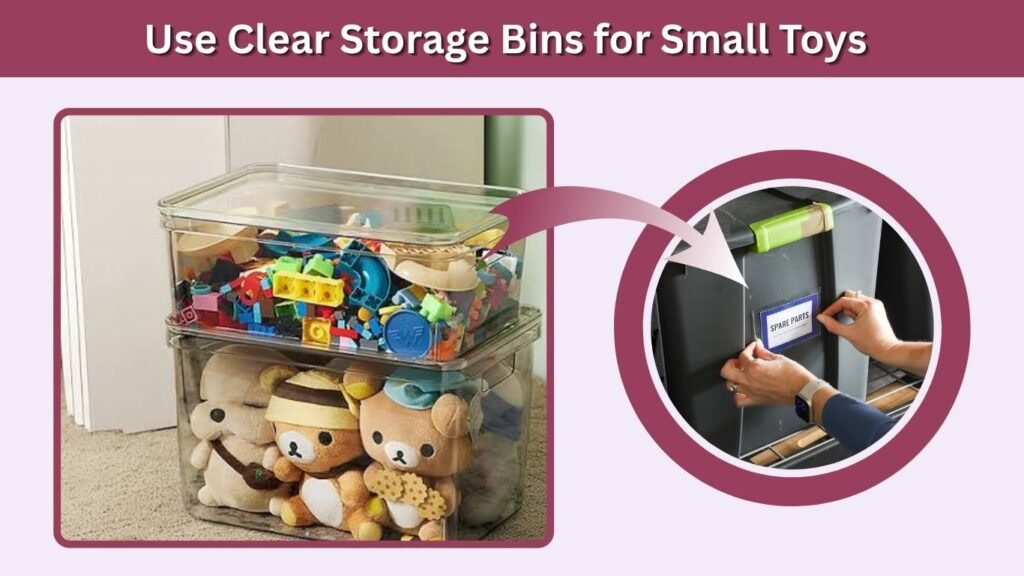
Clear storage bins are particularly useful when organizing small toys, action figures, building blocks, and miniature playsets. They allow children to identify contents without opening every container.
Choose lightweight, durable bins with smooth edges. Stackable containers can save space inside closets or on shelves.
Label Each Storage Container
Add simple labels to identify where toys belong. For younger children, use picture labels featuring cars, blocks, dolls, or animals.
Older children can use written labels to practice reading while organizing their belongings.
Avoid overfilling containers. Leaving extra space makes it easier for children to put toys away after playing.
4. Organize Kids Toys With Cube Storage
Cube storage units are practical solutions for bedrooms, playrooms, and living rooms. Their individual compartments allow you to separate different toy categories while maintaining an attractive appearance.
Choose Suitable Storage Cubes
Fabric bins, plastic baskets, and open compartments work well for different toys. For example, one cube can hold stuffed animals, while another stores construction blocks.
Choose sturdy, child-friendly units and anchor furniture to the wall according to the manufacturer’s instructions to prevent tipping.
Make Storage Easy for Children
Keep frequently used toys in lower compartments. Use the upper compartments for items that require adult supervision.
Avoid stacking heavy objects above children’s reach. A simple cube arrangement can make cleanup faster and more manageable.
5. Organize Kids Toys in Small Rooms

Small bedrooms require creative organization because floor space is limited. Instead of adding bulky furniture, focus on storage solutions that use available wall space and suitable furniture compartments.
Smart Storage Ideas for Small Spaces
- Under-bed storage: Use shallow containers for puzzles and seasonal toys.
- Wall shelves: Display books and lightweight toys securely.
- Hanging organizers: Store lightweight stuffed animals and accessories.
- Storage benches: Combine seating with enclosed storage.
- Narrow shelving: Utilize unused corners without blocking walkways.
Choose storage that does not interfere with doors, windows, or safe movement around the room.
6. How to Organize Kids Toys in the Living Room
Organizing kids toys in the living room can be challenging because the space serves multiple purposes. A dedicated toy storage area helps maintain a comfortable family environment without eliminating children’s play opportunities.
Create a Designated Play Corner
Choose one corner of the living room for children’s toys. Add a small rug, low shelving unit, or storage basket to establish a clear play area.
Keep frequently used toys nearby while storing extra items in another room.
Use Furniture With Hidden Storage
Ottomans, storage benches, and cabinets can help conceal toys when they are not being used.
Choose furniture with child-safe hinges and appropriate ventilation where required. Avoid heavy lids that could close unexpectedly.
Neutral-colored baskets can also blend naturally with living room decorations.
7. Organize Kids Toys in Bedroom Closets
Closets provide valuable storage space, particularly when children’s bedrooms contain too many toys. With proper planning, a closet can accommodate toys, clothing, books, and seasonal belongings.
Divide the Closet Into Storage Zones
Use different closet sections for specific purposes. Keep everyday toys on lower shelves and reserve higher shelves for less frequently used items.
Small baskets can organize action figures, puzzles, and accessories.
Combine Toy and Clothing Storage
If toys and clothes share the same closet, separate them using baskets or designated shelving sections. Drawer dividers can also help organize smaller belongings.
Avoid overcrowding the closet because tightly packed storage makes items difficult to access and encourages clutter.
8. Create a Toy Rotation System
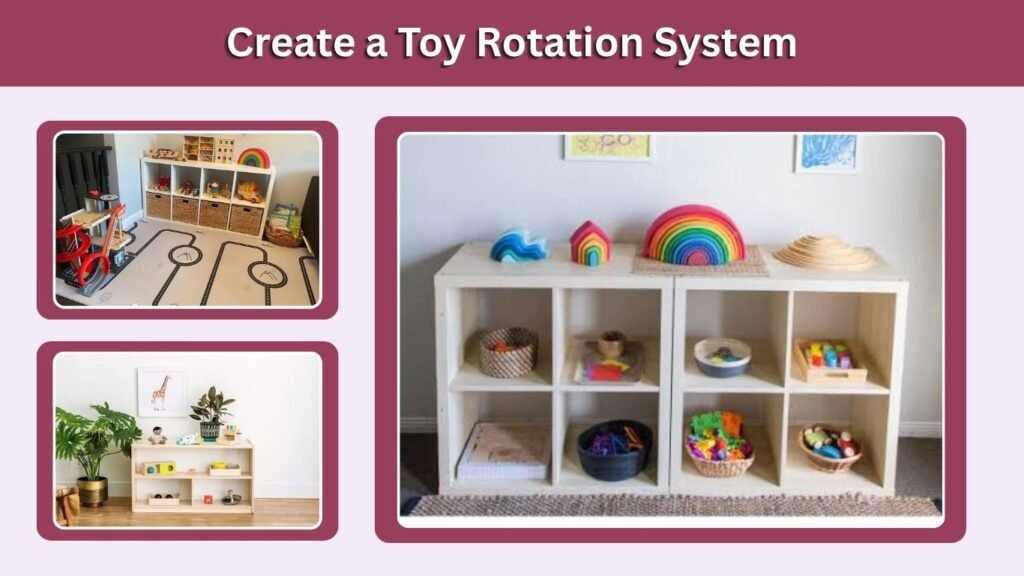
Toy rotation is an effective solution for families with too many toys and limited storage space. Instead of displaying every toy simultaneously, keep a smaller selection available and store the remaining toys elsewhere.
How Toy Rotation Works
Choose several toys from different categories and place them in accessible storage containers. Pack the remaining toys into labeled bins.
Exchange toys every few weeks or whenever children begin losing interest in the available selection.
Benefits of Rotating Toys
Toy rotation reduces visible clutter and makes cleanup more manageable. It may also encourage children to explore toys they previously overlooked.
There is no need to follow a strict rotation schedule. Adjust the selection according to your child’s interests and play habits.
9. Organize Kids Toys and Books Together
Books and toys often share the same bedroom or playroom. Organizing them in separate but nearby storage areas creates an inviting space for both reading and imaginative play.
Create a Reading and Play Area
Place a low bookshelf beside a comfortable floor cushion or child-sized chair. Keep favorite books within easy reach and organize toys in nearby baskets.
Front-facing book displays can help younger children recognize their favorite stories.
Avoid overcrowding bookshelves, and secure tall furniture to prevent tipping. A combined reading and play area encourages children to return books and toys to their designated places.
10. Keep Small Toys and Accessories Organized
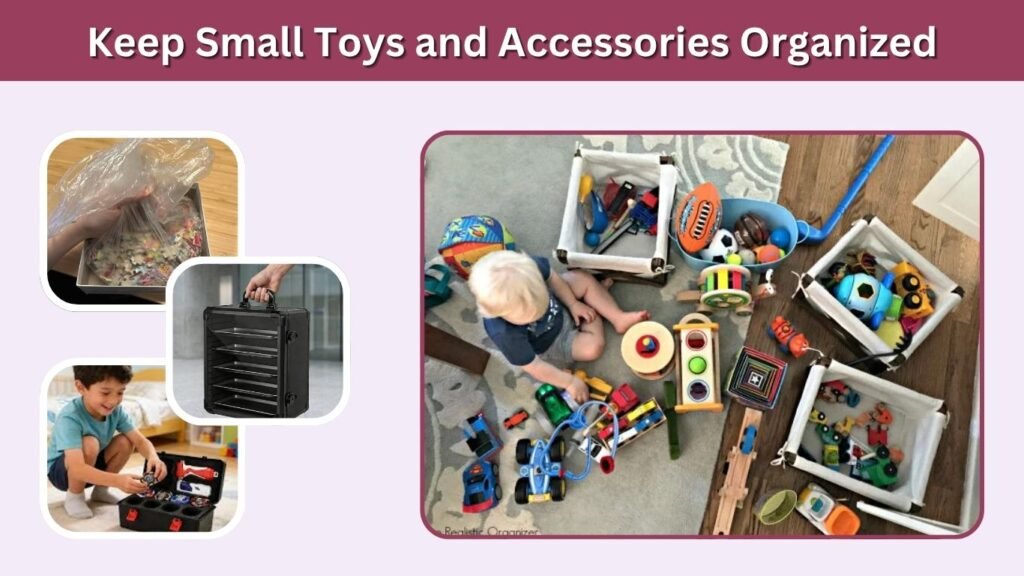
Small toys are easily lost because they often contain numerous pieces. Building blocks, miniature animals, doll accessories, and puzzle pieces require dedicated storage to remain organized.
Practical Small-Toy Storage Solutions
- Compartment organizers for miniature figures and accessories
- Small labeled containers for building blocks
- Resealable bags inside larger bins for puzzle pieces
- Divided drawers for craft supplies
- Portable storage cases for travel toys
Keep small parts away from children under three and from older children who still put objects in their mouths. Follow the manufacturer’s age recommendations and choking-hazard warnings.
11. Organize Outdoor Kids Toys
Outdoor toys can quickly clutter patios, garages, and backyards when they do not have designated storage areas.
Weather-resistant containers make it easier to protect toys from rain, dirt, and sunlight.
Choose Appropriate Outdoor Storage
Use ventilated, weather-resistant bins for balls, sand toys, and outdoor play accessories. Store bicycles, scooters, and ride-on toys in a designated area.
Clean and dry toys before placing them in storage to reduce moisture buildup.
Keep garden chemicals, sharp tools, and other hazardous materials completely separate from children’s belongings.
12. Organize Kids Toys on a Budget

Organizing toys does not require expensive furniture or custom-built storage systems. Many affordable household items can become practical organizers.
Budget-Friendly Organization Ideas
- Reuse sturdy cardboard boxes for lightweight toys.
- Repurpose clean plastic containers for small accessories.
- Use inexpensive laundry baskets for stuffed animals.
- Add picture labels using paper and tape.
- Reuse suitable shelves and baskets already available at home.
- Create simple drawer dividers from sturdy cardboard.
Choose containers without sharp edges, staples, or loose parts. Avoid plastic bags and other materials that may present suffocation hazards.
13. Teach Kids to Keep Toys Organized
An organization system works best when children understand how to use it. Simple instructions and consistent routines can help children develop age-appropriate cleanup habits.
Establish a Daily Cleanup Routine
Choose a regular cleanup time, such as before dinner or bedtime. Encourage children to return toys to their labeled storage containers.
Younger children may need direct assistance, while older children can gradually take more responsibility.
Make Cleanup Enjoyable
Turn organizing into a simple game by challenging children to sort toys by category or complete a short cleanup task.
Praise their effort rather than expecting perfect results. Consistency is more important than creating a completely spotless room every day.
14. Build a Simple DIY Kids Toy Organizer
A homemade toy organizer can be a practical option when ready-made storage furniture does not fit your space or budget.
Wooden shelves, repurposed crates, or existing cabinets can be adapted into storage systems.
Plan Your Organizer Carefully
Measure the available space before choosing materials. Make sure the organizer accommodates your child’s toys without blocking walkways. Use smooth surfaces, rounded edges, and sturdy construction. Secure freestanding units to the wall where appropriate.
Avoid unstable stacked crates, exposed screws, and heavy storage lids. When working with wood or power tools, adults should handle construction and installation.
15. Maintain an Organized Toy Room Long-Term

Keeping toys organized requires occasional maintenance rather than constant rearranging. Children develop new interests, receive gifts, and outgrow toys, so storage systems should adapt over time.
Review Toy Storage Regularly
Check storage bins every few months to identify broken toys, missing pieces, or items that are no longer used.
Reorganize containers when necessary and adjust labels as toy collections change.
Avoid Buying Unnecessary Storage Containers
Before purchasing additional storage furniture, determine whether the existing toy collection needs decluttering.
Too many containers can encourage families to keep unnecessary belongings. A smaller, well-organized collection is often easier to maintain than an overcrowded storage system.
FAQs
1. What is the easiest way to organize kids toys?
The easiest way to organize kids toys is to sort them into categories and store them in labeled baskets or bins. Keep frequently used toys accessible and remove unnecessary items regularly. Simple storage systems make cleanup easier for children.
2. How do you organize kids toys in a small space?
Use vertical shelving, under-bed containers, hanging organizers, and multifunctional furniture to maximize available space. Keep toys in designated areas and avoid overcrowding storage bins. A toy rotation system can also reduce clutter while maintaining a variety of play options.
3. How can I organize kids toys without spending money?
Reuse sturdy cardboard boxes, existing baskets, plastic containers, and empty shelves. Sort toys by category and create homemade labels using paper. Decluttering unused toys and rearranging available storage can improve organization without purchasing additional furniture or storage accessories.
4. How do you organize a kids room with too many toys?
Start by removing broken, unused, and outgrown toys. Organize the remaining items into categories and use labeled containers. Store some toys separately through a rotation system to reduce visible clutter while keeping the bedroom comfortable and easy to clean.
5. How do I get my kids to keep their toys organized?
Create a simple cleanup routine and provide clearly labeled storage containers. Encourage children to put toys away after playing and demonstrate where each item belongs. Keep expectations age-appropriate, offer positive encouragement, and make organizing part of everyday activities.
