


Imaginative play is an essential part of childhood development that allows children to explore their creativity, express emotions, and understand the world around them. Through pretend games, role-playing, and storytelling, kids develop important social, emotional, and cognitive skills while having fun. Whether pretending to be superheroes, running a toy kitchen, or creating imaginary adventures, children learn through their imagination. Understanding what imaginative play is, its benefits, and how to encourage it can help parents support healthy childhood development through everyday play experiences.
What Is Imaginative Play?
Imaginative play, also called pretend play or make-believe play, happens when children use their imagination to create fictional situations, characters, and experiences. They may pretend that everyday objects represent something else or act out different roles. This type of play encourages creative thinking, communication, and exploration without requiring expensive toys or structured activities.
Definition of Imaginative Play
Imaginative play is a form of creative activity where children pretend that something is different from reality. For example, a child might use a cardboard box as a spaceship or imagine a stuffed animal is a patient at a hospital.
These experiences allow children to experiment with ideas, practice social situations, and develop problem-solving abilities. Unlike structured games, imaginative play often has flexible rules created by the children themselves.
What Age Does Imaginative Play Start?
Imaginative play commonly begins around 18 to 24 months, although children develop at different rates. Toddlers may pretend to feed dolls, talk on toy phones, or imitate familiar household activities.
Between ages three and five, pretend play often becomes more complex. Preschoolers may create characters, invent stories, and cooperate with friends during imaginary adventures.
Older children may continue imaginative play through storytelling, building imaginary worlds, and creative games.
Benefits of Imaginative Play for Child Development

Imaginative play provides valuable opportunities for children to strengthen essential developmental skills. By creating imaginary situations, children practice thinking independently, communicating ideas, and understanding different perspectives. These activities also allow children to explore emotions and everyday challenges in a comfortable environment. Regular opportunities for pretend play can support learning while making childhood experiences enjoyable and engaging.
1. Encourages Creativity and Imagination
Pretend play allows children to explore unusual ideas and develop original stories. They can transform ordinary objects into imaginary tools, characters, or environments.
Creating fictional adventures encourages flexible thinking and helps children discover different ways to approach situations.
2. Develops Communication Skills
Children frequently use language to explain characters, describe situations, and organize pretend games. Role-playing encourages them to practice conversations and learn new vocabulary.
When children play together, they also practice listening, asking questions, and expressing their thoughts clearly.
3. Improves Social and Emotional Skills
Pretending to be different characters allows children to explore feelings and consider other people’s perspectives. Playing parents, teachers, or doctors can help them understand familiar social roles.
Group imaginative activities also create opportunities to practice cooperation, sharing, and negotiation.
4. Strengthens Problem-Solving Abilities
Imaginary adventures often involve challenges that children must solve creatively. They might build a bridge for toy cars or decide how to rescue a pretend animal.
These situations encourage planning, decision-making, and experimenting with different solutions.
5. Supports Cognitive Development
Pretend play involves remembering experiences, organizing ideas, and connecting imaginary situations with real-world knowledge.
Children also practice symbolic thinking when they use one object to represent another, an important ability that contributes to early learning.
10 Examples of Imaginative Play for Kids
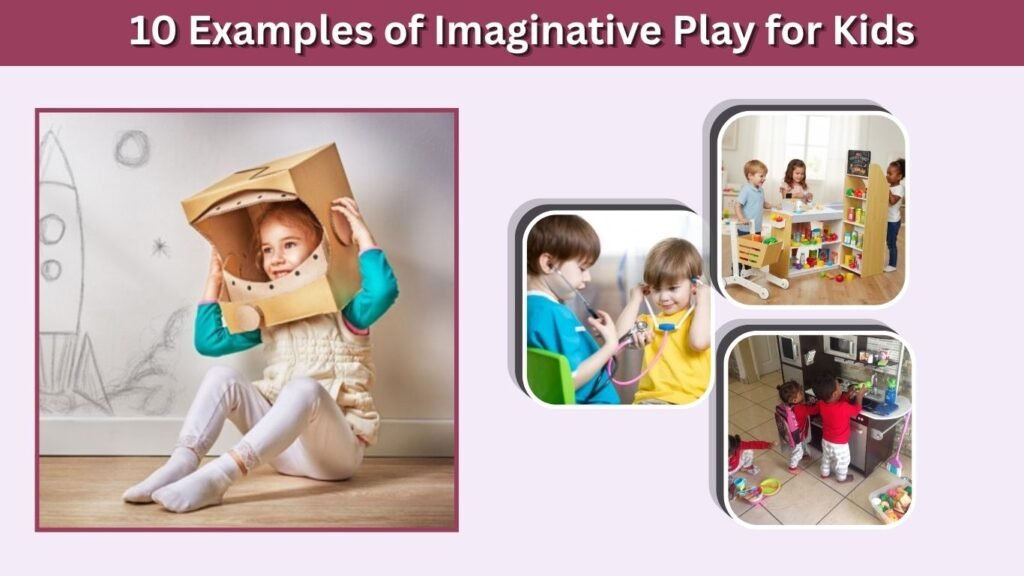
Imaginative play can happen almost anywhere, including bedrooms, classrooms, gardens, and playgrounds. Children frequently create pretend situations using simple toys or household objects. These activities do not require complicated instructions because children can develop their own characters and stories. The following examples demonstrate how everyday experiences can become exciting opportunities for creative exploration and learning.
1. Playing House
Children pretend to be parents, siblings, or other family members. They may prepare imaginary meals, care for dolls, or organize household activities.
2. Pretend Grocery Store
Kids arrange toys or household objects as products and pretend to be customers and shopkeepers. This activity encourages communication, counting, and cooperation.
3. Doctor and Patient Role-Play
Children use toy medical equipment to examine stuffed animals or family members. They practice caring behaviors and become familiar with healthcare situations.
4. Superhero Adventures
Kids invent superheroes with imaginary powers and create exciting rescue missions. These games encourage storytelling, movement, and creative problem-solving.
5. Playing Restaurant
Children pretend to prepare food, serve customers, and manage a restaurant. They practice taking turns and communicating through different roles.
6. Space Exploration
A cardboard box becomes a spaceship while children imagine visiting distant planets. This activity encourages curiosity, creativity, and adventurous storytelling.
7. Pirate Treasure Hunt
Children create treasure maps, hide imaginary valuables, and explore pretend islands. They practice following directions and solving simple challenges.
8. Pretend School
Kids take turns acting as teachers and students. They may teach stuffed animals, organize pretend lessons, or create classroom rules.
9. Animal Rescue Center
Children pretend to rescue injured animals and care for them. Stuffed toys become patients, encouraging nurturing behavior and empathy.
10. Building an Imaginary Castle
Using blocks, pillows, or cardboard, children construct castles and invent stories about their inhabitants. This combines creative thinking with hands-on construction.
Types of Imaginative Play
Imaginative play includes several activities that allow children to explore different experiences through creativity. Some involve pretending to perform familiar tasks, while others focus on fictional characters or imaginary worlds. Understanding these types can help parents recognize how children use imagination during everyday activities. Different forms of pretend play often overlap as children’s interests and abilities develop.
Symbolic Play
Symbolic play occurs when children use an object to represent something else. A wooden block might become a telephone, or a blanket might represent the ocean.
This type of play demonstrates developing symbolic thinking and helps children connect imagination with real-world experiences.
Role-Playing
Role-playing involves pretending to be another person or character. Children might act as firefighters, veterinarians, teachers, or fictional heroes.
By exploring different roles, children can practice communication and consider how others might think or behave.
Fantasy Play
Fantasy play involves imaginary worlds, magical creatures, and fictional adventures. Children may pretend to fly, explore enchanted forests, or communicate with dragons.
These experiences encourage original storytelling and creative expression without realistic limitations.
How to Encourage Imaginative Play at Home
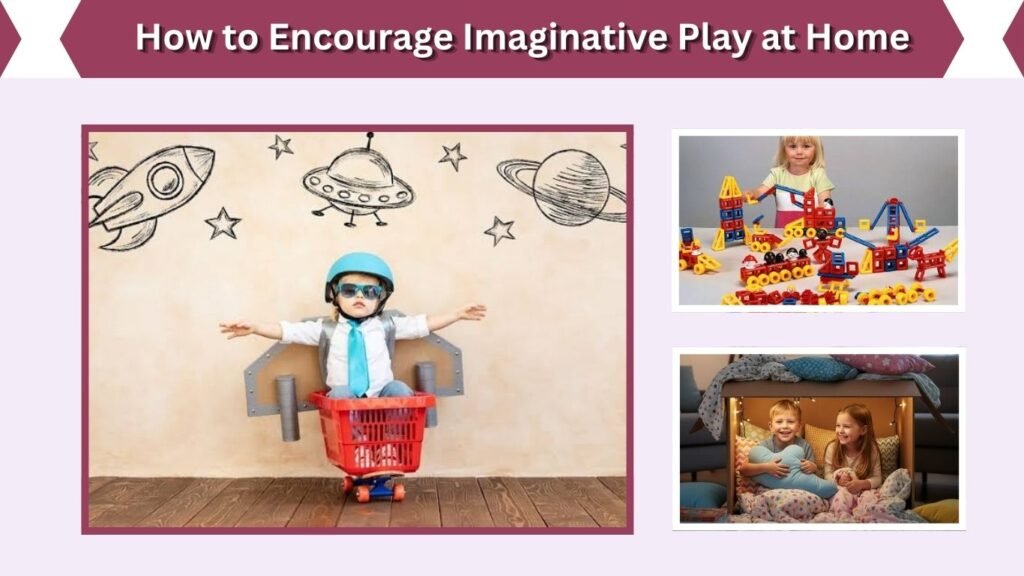
Parents and caregivers can encourage imaginative play by creating opportunities for children to explore their ideas freely. Expensive toys and carefully planned activities are unnecessary. Simple household materials, comfortable spaces, and supportive interactions can inspire creative experiences. Allowing children to guide their own games is especially valuable because it encourages independence, experimentation, and confidence in their imagination.
1. Provide Open-Ended Toys
Choose toys that children can use in different ways rather than those with only one specific purpose.
- Building blocks and construction toys
- Dolls and stuffed animals
- Play kitchens and toy food
- Dress-up clothes and accessories
- Toy vehicles and animal figures
2. Create a Pretend Play Space
Designate a comfortable area where children can invent stories and explore imaginary situations.
- Arrange accessible storage for toys.
- Provide pillows, blankets, and cardboard boxes.
- Include costumes or simple dress-up materials.
- Allow children to rearrange safe objects.
3. Participate in Pretend Games
Join children’s imaginary adventures while allowing them to lead the activity.
- Ask open-ended questions about their stories.
- Accept imaginary roles they assign.
- Encourage new characters and situations.
- Avoid controlling every part of the game.
4. Encourage Storytelling Activities
Stories can inspire children to create characters and imaginary adventures.
- Read picture books together.
- Ask children to invent alternative endings.
- Use puppets to create conversations.
- Encourage drawings of imaginary characters.
Imaginative Play vs. Creative Play
Imaginative play and creative play are closely connected, but they are not identical. Imaginative play primarily involves pretending, fictional scenarios, and symbolic thinking. Creative play is a broader category that includes painting, building, crafting, music, and other activities involving original expression. Understanding this distinction helps parents provide a balanced variety of activities that support different aspects of childhood development.
Key Differences Between Imaginative and Creative Play
Imaginative play focuses on make-believe experiences. For example, a child pretending to operate a spaceship is using imagination to create a fictional situation.
Creative play can involve producing something original without pretending. Drawing a picture, constructing a model, or experimenting with musical sounds are examples.
Both activities may overlap when children create costumes, build pretend environments, or illustrate fictional stories.
FAQs
1. Why Is Imaginative Play Important for Children?
Imaginative play helps children develop creativity, communication, emotional awareness, and problem-solving skills. Pretend situations allow them to experiment with ideas and explore different perspectives. It also provides opportunities for social interaction and independent learning through enjoyable activities that reflect their interests and experiences.
2. What Are Some Simple Imaginative Play Activities?
Simple imaginative play activities include pretending to cook, playing doctor, running a grocery store, creating superhero adventures, and building imaginary houses. Children can use household objects, stuffed animals, costumes, or cardboard boxes. These activities require little preparation and allow children to invent their own stories.
3. Is Imaginative Play Good for Toddlers?
Yes, imaginative play can support toddlers’ developing language, symbolic thinking, and social understanding. Simple activities such as feeding dolls, pretending to talk on a phone, or caring for stuffed animals are suitable starting points. Parents can encourage these experiences through playful interaction without forcing specific activities.
4. How Does Imaginative Play Help Social Development?
Imaginative play provides opportunities for children to practice cooperation, communication, and understanding different viewpoints. During group pretend games, children negotiate roles, share ideas, and respond to one another. These interactions can help develop social confidence and provide practice navigating everyday relationships.
5. Can Imaginative Play Improve Problem-Solving Skills?
Imaginative play can help children practice problem-solving by presenting fictional situations that require decisions and creative solutions. For example, children may figure out how to build a pretend bridge or rescue a toy animal. Such activities encourage experimentation, planning, and flexible thinking in an enjoyable setting.
