

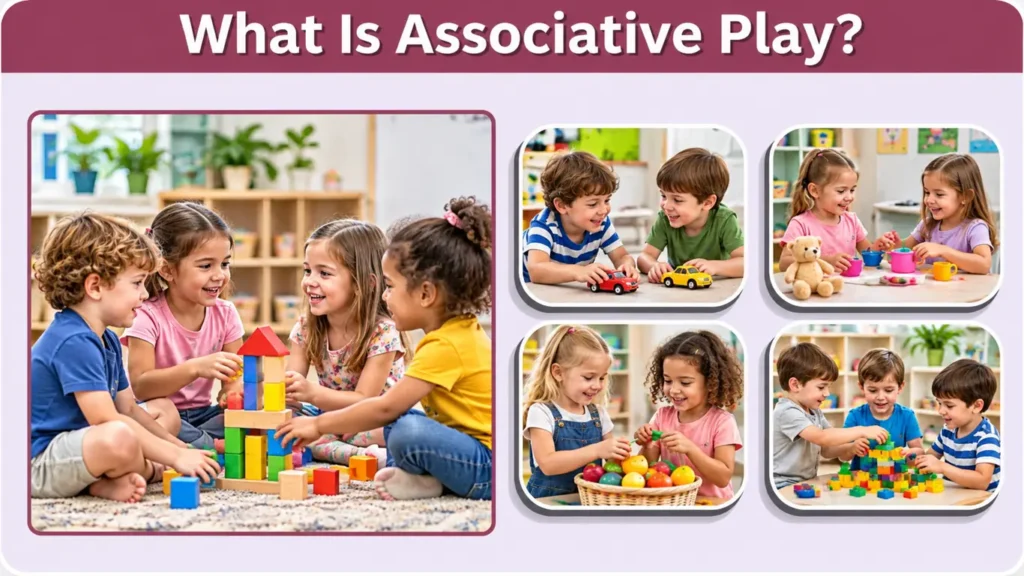
Associative play is an important stage of childhood development when children begin interacting with others during playtime. At this stage, children share toys, exchange ideas, and communicate while enjoying similar activities without working toward a common goal. It typically becomes noticeable between ages three and four, although children develop at different rates. Understanding associative play helps parents, teachers, and caregivers recognize how children build social skills, develop friendships, and practice communication. This guide explains associative play, its characteristics, developmental benefits, everyday examples, and practical ways to encourage healthy social interactions.
What Is Associative Play in Child Development?
Associative play is a form of social play in which children interact with one another while participating in similar activities. They may share toys, exchange materials, or discuss what they are doing without organizing their play around a common objective. This stage represents a transition toward more coordinated social interaction and helps children become comfortable communicating with peers while maintaining independence during their activities.
Definition of Associative Play
Associative play occurs when children participate in related activities and communicate with one another without following an organized group plan. They show interest in what other children are doing while continuing to pursue their individual interests.
For example, two children might sit together with building blocks and exchange pieces while creating separate structures. They talk about their buildings and observe each other’s progress, but neither child is responsible for completing a shared project.
At What Age Does Associative Play Begin?
Associative play commonly becomes noticeable around three to four years of age. However, the exact timing varies depending on each child’s language abilities, personality, developmental progress, and opportunities for social interaction.
Some children begin sharing toys and communicating with peers earlier, while others take longer to develop these behaviors. Children can also move between independent, parallel, and associative play depending on their environment and interests.
Key Characteristics of Associative Play
Associative play includes several recognizable behaviors that distinguish it from more independent forms of play. Children become increasingly interested in interacting with their peers while maintaining control over their individual activities. They begin sharing materials, exchanging ideas, and participating in spontaneous conversations. These characteristics demonstrate growing social awareness and help children develop the skills needed for more organized group activities.
Sharing Toys and Materials
Children participating in associative play often exchange toys and use common materials during activities. For example, children drawing together may share crayons while creating their own pictures.
Although sharing becomes more common, disagreements can still occur because young children are learning to manage possessions and emotions. These experiences provide opportunities to practice patience and communication.
Communicating During Play
Communication is one of the most noticeable characteristics of associative play. Children frequently describe their activities, ask questions, and respond to what other children are doing.
These conversations help expand vocabulary and strengthen listening skills. Children also become more confident expressing their ideas in social situations.
Playing Without a Shared Goal
Children interact during associative play without necessarily working toward the same result. They might use the same collection of toys while creating different stories or structures.
This independence distinguishes associative play from cooperative play, where children organize their activities around a common objective. Associative play allows children to experience social interaction without needing complicated rules or responsibilities.
Examples of Associative Play in Everyday Life
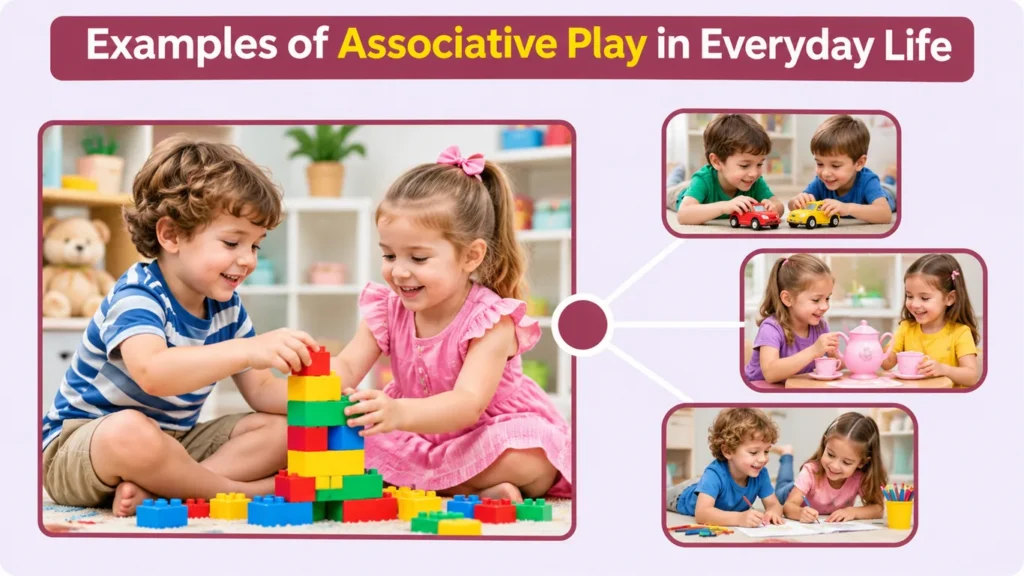
Associative play happens naturally in homes, preschools, playgrounds, and childcare centers. Children often demonstrate this behavior during familiar activities involving toys, art supplies, and imaginative play. Recognizing everyday examples helps adults understand how children develop social confidence through ordinary interactions. These experiences encourage communication and sharing while giving children enough independence to explore their individual interests.
Building Blocks Together
Two children sit on the floor with a collection of colorful building blocks. One child builds a tall tower while the other creates a small house using pieces from the same collection.
They exchange blocks, discuss colors, and observe each other’s creations without working on one shared structure. Their interaction demonstrates associative play because they communicate while maintaining separate goals.
Drawing and Coloring
Several children sit around a table with paper, crayons, and coloring pencils. Each child creates a different picture while sharing materials and talking about their drawings.
One child might ask another for a blue crayon or comment on a colorful picture. These spontaneous conversations and exchanges create opportunities for social development.
Playing in a Sandbox
Children gather around a sandbox and use buckets, shovels, and different molds. One child builds a sandcastle while another creates roads or fills containers with sand.
Although they pursue different activities, they exchange tools and discuss their creations. This type of interaction encourages sharing and communication without requiring a coordinated project.
Benefits of Associative Play for Children
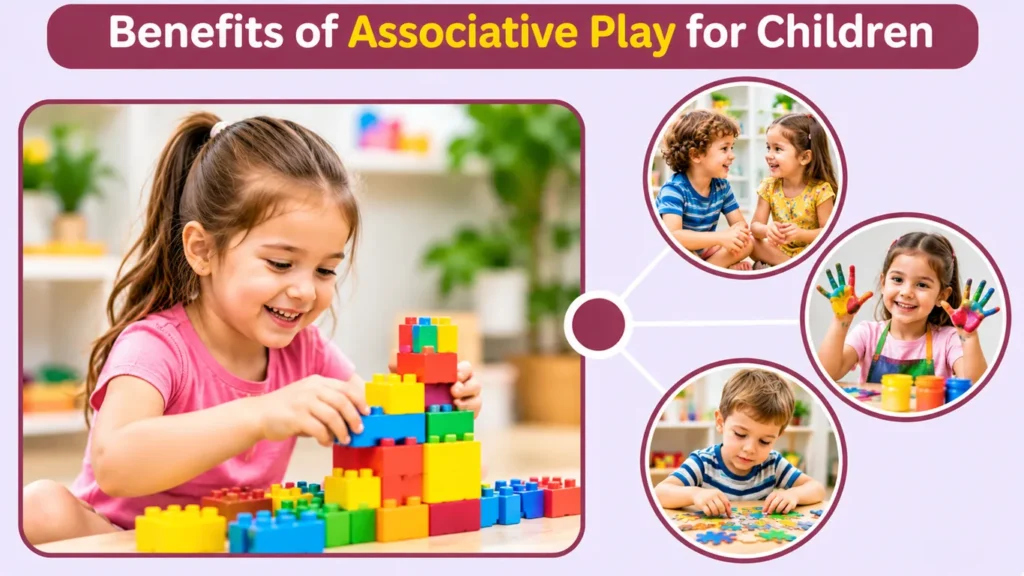
Associative play provides valuable opportunities for social, emotional, language, and cognitive development. Children learn through interactions with peers while exploring activities that interest them. Sharing materials, discussing ideas, and responding to other children help build essential interpersonal abilities. These experiences also encourage creativity and independence, providing a foundation for more complex social relationships and collaborative activities during later childhood.
Social Development
Associative play helps children become familiar with social interactions and practice appropriate behavior around peers. They learn that other children have different interests, preferences, and ideas.
Important social benefits include:
- Sharing skills: Children practice exchanging toys and materials.
- Friendship development: Regular interaction helps children form relationships.
- Listening abilities: Children become more attentive to other people’s words.
- Social confidence: Positive experiences make group environments more comfortable.
These skills gradually support participation in more organized group activities.
Emotional Development
Associative play provides opportunities for children to recognize and respond to different emotions. They may feel excitement when exchanging toys or frustration when another child wants the same object.
Through these experiences, children begin practicing patience, emotional regulation, and empathy. Supportive adult guidance can help them understand their feelings and respond appropriately during social disagreements.
Language and Communication Development
Children frequently use spoken language during associative play to describe activities and exchange ideas. They may ask questions, explain their creations, or imitate expressions used by their peers.
These conversations strengthen vocabulary, sentence formation, and listening abilities. Regular opportunities for communication can also help children feel more comfortable expressing themselves in different social environments.
Creativity and Problem-Solving
Associative play exposes children to different ideas and approaches to familiar activities. Watching another child build a bridge or create an imaginary story may inspire them to try something new.
Children also encounter small problems involving toys, materials, and personal preferences. Finding solutions through experimentation and conversation supports flexible thinking and creativity.
Associative Play vs. Other Stages of Play
Associative play is one of the categories of social play described by researcher Mildred Parten. Her observations helped explain differences in how young children interact during play activities. Although these categories are often presented as developmental stages, children do not necessarily follow a fixed sequence. A child may demonstrate several types of play during the same day depending on the activity and social environment.
Parallel Play vs. Associative Play
Parallel play occurs when children play near one another without much direct interaction. For example, two children may sit beside each other using separate sets of building blocks without exchanging materials or discussing their activities.
Associative play involves more communication and social engagement. Children share toys, exchange ideas, and respond to one another while continuing their individual activities.
Associative Play vs. Cooperative Play
Cooperative play occurs when children organize their activities around a shared purpose. They may work together to build a structure, create a pretend restaurant, or participate in a game with agreed rules.
Associative play is less structured because children interact without pursuing a common objective. Both forms of play help develop social abilities, but cooperative play involves greater coordination and shared decision-making.
How to Encourage Associative Play in Children
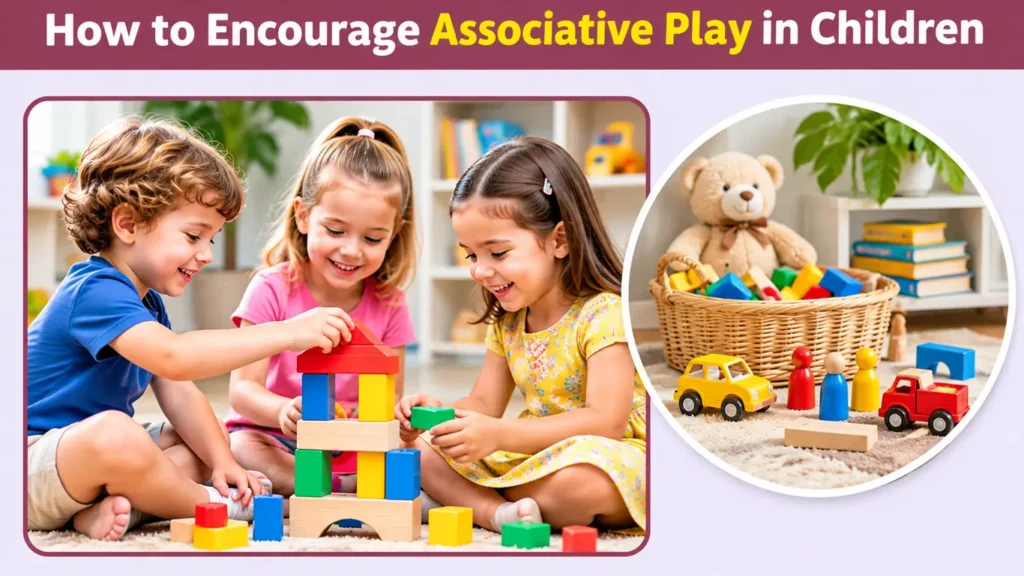
Parents and caregivers can encourage associative play by providing welcoming environments where children feel comfortable interacting with others. Activities should allow children to share resources, exchange ideas, and explore independently without unnecessary pressure. Simple materials and relaxed play opportunities are often sufficient. Adults can support positive communication while allowing children to develop social relationships naturally and at their own pace.
Provide Shared Play Materials
Offering toys and materials that several children can use encourages spontaneous interaction. Children are more likely to exchange ideas and communicate when they have access to interesting shared resources.
Helpful materials include:
- Building blocks and construction toys.
- Crayons, washable markers, and drawing paper.
- Toy cars, animals, and pretend kitchen sets.
- Sandbox tools, buckets, and colorful molds.
Choose age-appropriate materials and provide enough resources to reduce unnecessary conflicts. Shared activities should remain enjoyable rather than becoming constant competitions over toys.
Organize Small Playgroups
Small playgroups provide opportunities for children to interact in a comfortable environment. Activities such as drawing, building blocks, or pretend play allow them to communicate without following complicated instructions.
Children who are shy or unfamiliar with group settings may need time to observe before participating. Allowing gradual involvement helps create positive social experiences.
Encourage Positive Communication
Adults can model friendly language that children can use during playtime. Simple questions such as “What are you building?” or “Can I use that when you’re finished?” demonstrate respectful communication.
When disagreements occur, caregivers can help children express their feelings and consider possible solutions. This approach encourages communication without taking complete control of children’s interactions.
Common Challenges During Associative Play
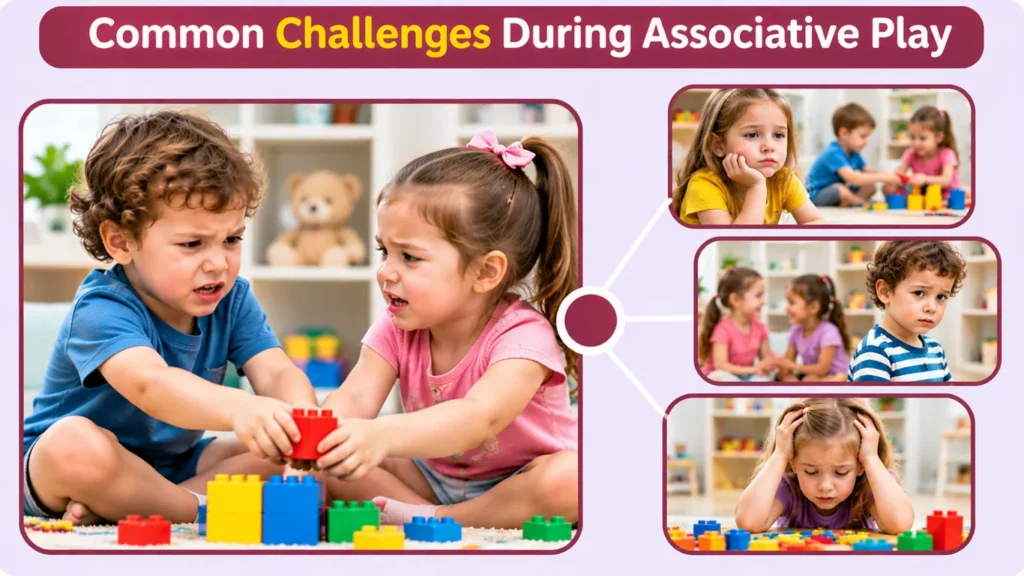
Associative play offers important developmental opportunities, but interactions are not always smooth. Young children are still learning how to share, manage emotions, and understand the preferences of others. Disagreements, hesitation, and changing interests are normal parts of early social development. Recognizing these challenges helps adults respond patiently while allowing children to gain confidence through everyday experiences.
Difficulty Sharing Toys
Some children may become upset when another child wants a favorite toy. This behavior is common because young children are still developing self-control and an understanding of other people’s needs.
Caregivers can provide duplicate materials when possible and introduce simple turn-taking routines. Encouraging communication rather than forcing immediate sharing can make playtime more positive.
Conflicts Between Children
Disagreements may happen when children want the same materials or have different ideas about an activity. These situations offer opportunities to practice expressing feelings and understanding other perspectives.
Adults should provide support when necessary while allowing children to participate in finding solutions. Gentle guidance helps them develop conflict-resolution skills over time.
Limited Interest in Group Activities
Some children prefer playing independently or observing others before joining an activity. This preference can reflect personality, familiarity with the environment, or temporary interests rather than a developmental concern.
Parents can offer relaxed opportunities for interaction without forcing participation. Persistent difficulties with communication or social responsiveness, especially alongside other developmental concerns, should be discussed with a pediatrician.
FAQs
1. What Is a Simple Example of Associative Play?
A simple example involves two children sharing building blocks while creating separate structures. They talk about their creations, exchange materials, and observe each other’s activities. Their interaction demonstrates associative play because they communicate without working toward one common goal.
2. What Age Is Associative Play Most Common?
Associative play commonly appears around ages three to four, although developmental timing varies between children. Some demonstrate social interaction earlier, while others need additional opportunities and experience. Individual differences in language development, personality, and social confidence can influence when associative play becomes noticeable.
3. Why Is Associative Play Important for Children?
Associative play supports communication, sharing, emotional awareness, and early friendship development. Children gain experience interacting with peers while maintaining independence during activities. These experiences help prepare them for more structured group play and strengthen essential social skills.
4. What Is the Difference Between Parallel and Associative Play?
Parallel play involves children playing near each other with limited direct interaction. Associative play includes sharing materials, exchanging ideas, and communicating during similar activities. The main difference is that associative play involves more active social engagement while children maintain separate goals.
5. How Can Parents Encourage Associative Play at Home?
Parents can encourage associative play by offering shared toys, organizing relaxed playdates, and modeling friendly communication. Activities such as coloring, building blocks, and pretend play provide natural opportunities for interaction. Children should have enough freedom to explore relationships at their own pace.
