


Unstructured play is a natural form of childhood activity that allows children to explore, create, and enjoy themselves without following strict rules or adult-directed instructions. During this type of play, children choose their activities, make decisions, and use their imagination freely. Unstructured play supports creativity, independence, problem-solving, and healthy physical development. It can happen indoors or outdoors using simple toys, everyday objects, or natural materials. Understanding unstructured play helps parents and caregivers provide meaningful opportunities for children to learn, develop confidence, and build essential life skills through enjoyable experiences.
What Is Unstructured Play in Child Development?
Unstructured play refers to child-led activities that do not follow predetermined rules, schedules, or specific learning objectives. Children decide what they want to do, how they want to play, and when to change activities. Unlike organized games or adult-directed lessons, unstructured play encourages imagination and independent exploration. It provides children with opportunities to learn naturally through curiosity, experimentation, and personal experiences.
Definition of Unstructured Play
Unstructured play is a form of free play in which children control their activities without constant adult direction. They can invent games, explore materials, create imaginary situations, or participate in spontaneous physical activities.
For example, a child might use cardboard boxes to build a pretend house or transform a blanket into a superhero cape. These activities have no required outcome, allowing children to explore their creativity and make independent decisions.
At What Age Does Unstructured Play Begin?
Unstructured play can begin during infancy through simple exploration of safe objects and surroundings. As children grow, their activities become more imaginative, interactive, and physically challenging.
Toddlers may enjoy stacking blocks or exploring different textures, while preschoolers often create imaginary stories and pretend games. School-age children can also benefit from free play through outdoor adventures, creative projects, and self-invented games.
Key Characteristics of Unstructured Play
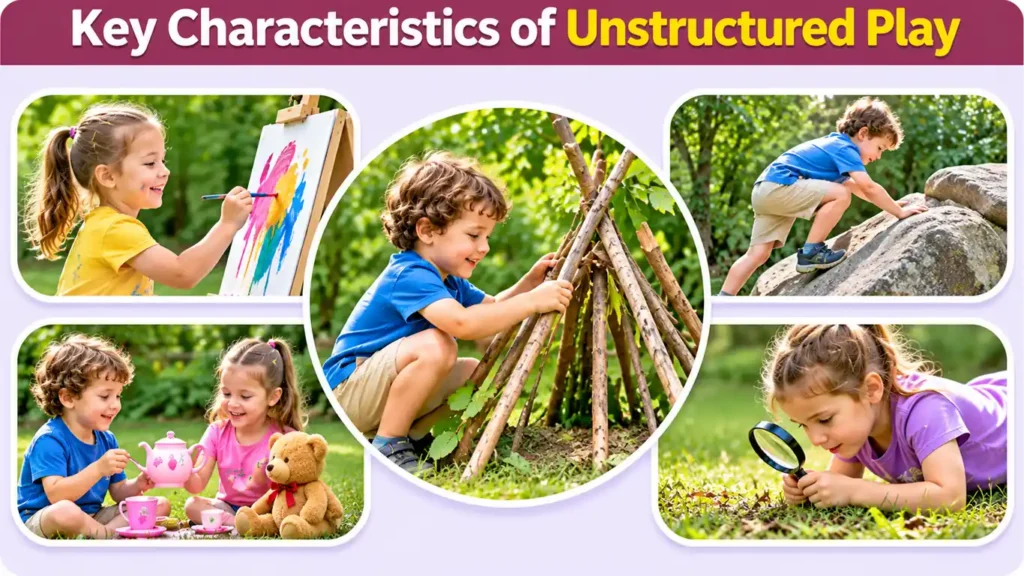
Unstructured play has several important characteristics that distinguish it from organized activities and adult-directed learning. Children have the freedom to make decisions, explore different possibilities, and change their activities based on personal interests. There are no strict instructions or predetermined outcomes. These characteristics help children become independent thinkers while encouraging curiosity, flexibility, and confidence in their abilities.
Child-Led Activities
Children take responsibility for deciding what activities they want to explore. They may choose to build something, invent a story, draw pictures, or play with familiar objects.
Adults can provide materials and supervise for safety, but they generally avoid controlling the activity. This freedom allows children to develop confidence in their own choices.
Freedom From Strict Rules
Unstructured play does not require children to follow externally imposed rules or complete specific tasks. They can experiment with different ideas and adjust their activities whenever they want.
Children may still create their own rules during imaginative games. The important difference is that these rules emerge naturally from their interests rather than being assigned by adults.
Imagination and Exploration
Imagination plays an important role in many unstructured activities. Children transform ordinary objects into imaginary tools, characters, buildings, or vehicles.
For example, a wooden stick may become a magic wand, while cushions can represent mountains in an imaginary adventure. These experiences encourage creative thinking and experimentation.
Examples of Unstructured Play for Children
Unstructured play can happen almost anywhere because it does not require expensive equipment or complicated preparation. Children often use familiar objects, household materials, and outdoor spaces to create their own activities. The most effective opportunities allow children to explore freely while adults provide appropriate supervision. Everyday examples demonstrate how simple experiences can support imagination, independence, and healthy childhood development.
1. Building With Blocks
Children use building blocks to create houses, towers, bridges, or imaginary cities without following instructions. They decide which materials to use and how their structures should look.
Building activities encourage experimentation and spatial awareness. When structures collapse, children can explore different approaches and discover solutions independently.
2. Pretend Play
Children create imaginary situations using toys, costumes, or everyday household objects. They might pretend to operate a restaurant, visit another planet, or care for imaginary animals.
Pretend play allows children to explore different experiences and express their ideas. It also encourages language development and creative storytelling.
3. Outdoor Nature Exploration
Children explore gardens, parks, or other safe outdoor environments while choosing their own activities. They may collect fallen leaves, examine interesting stones, or observe insects.
These experiences encourage curiosity about the natural world. Children also develop observation skills while discovering differences in shapes, colors, and textures.
4. Drawing and Creative Activities
Children use paper, crayons, paint, or other safe materials to express themselves without following a specific design. They may create abstract pictures, imaginary characters, or colorful patterns.
Creative activities encourage self-expression and experimentation. Children develop confidence when they can explore artistic ideas without worrying about producing a perfect result.
Benefits of Unstructured Play for Child Development
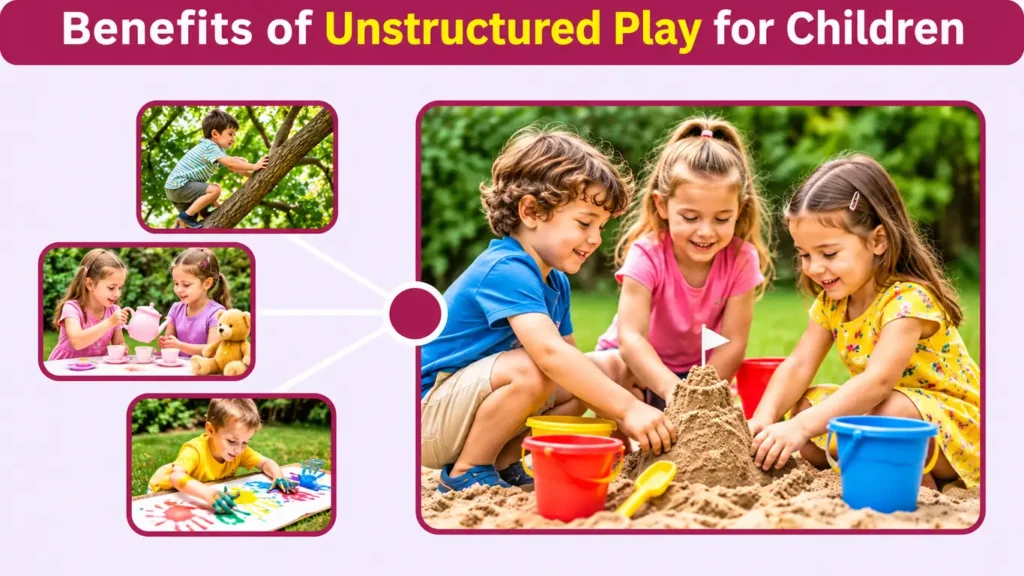
Unstructured play supports several areas of childhood development by allowing children to learn through exploration and personal experience. It encourages creative thinking, independent decision-making, physical movement, and emotional expression. Children also develop problem-solving abilities when they encounter challenges during self-directed activities. These benefits make free play a valuable part of a balanced childhood alongside organized learning and structured activities.
Creativity and Imagination
Unstructured play provides opportunities for children to invent stories, develop original ideas, and explore imaginary situations. They can experiment with different possibilities without worrying about strict expectations.
Important creative benefits include:
- Original thinking: Children develop unique ideas through imagination.
- Self-expression: Free activities provide opportunities to communicate feelings.
- Experimentation: Children explore different ways to use familiar materials.
- Flexible thinking: Changing activities encourages new approaches to challenges.
These experiences support creativity that can also be useful during everyday learning.
Problem-Solving and Decision-Making
Children regularly encounter small challenges during unstructured activities. They may need to stabilize a block tower, organize pretend-play materials, or decide how to continue an imaginary game.
Because adults do not provide every solution, children have opportunities to experiment and make decisions. These experiences can strengthen confidence, persistence, and independent thinking.
Physical Development
Unstructured outdoor play often encourages running, climbing, jumping, balancing, and other physical movements. These activities provide opportunities to develop coordination, muscle strength, and body awareness.
Indoor activities can also support physical development through building, drawing, manipulating toys, and creative movement. Offering different types of play helps children practice both large and small motor skills.
Emotional and Social Development
Free play allows children to explore emotions and practice managing everyday frustrations. They may experience excitement when an activity succeeds or disappointment when their plans do not work.
When children play together, they can also practice cooperation, communication, and resolving disagreements. These interactions provide opportunities to understand different perspectives and build friendships.
Unstructured Play vs. Structured Play
Structured and unstructured play both contribute to healthy childhood development, but they offer different learning experiences. Structured play usually involves adult guidance, predetermined rules, or specific objectives. Unstructured play gives children greater control over their activities and decisions. Understanding these differences helps parents and educators create balanced routines that include opportunities for independent exploration as well as organized learning experiences.
What Is Structured Play?
Structured play involves activities with established rules, instructions, or learning goals. Examples include organized sports, teacher-led games, and craft projects with specific steps.
These activities can help children practice following directions, developing particular skills, and working toward shared objectives. Adult guidance provides structure while children participate in planned experiences.
Main Differences Between Structured and Unstructured Play
The primary difference involves who controls the activity and determines its direction. Structured activities generally follow an established plan, while unstructured activities develop naturally through children’s interests.
Unstructured play emphasizes independence, exploration, and flexible thinking. Structured play can provide focused practice and opportunities to learn rules or specific techniques. Both approaches can complement each other.
How to Encourage Unstructured Play at Home
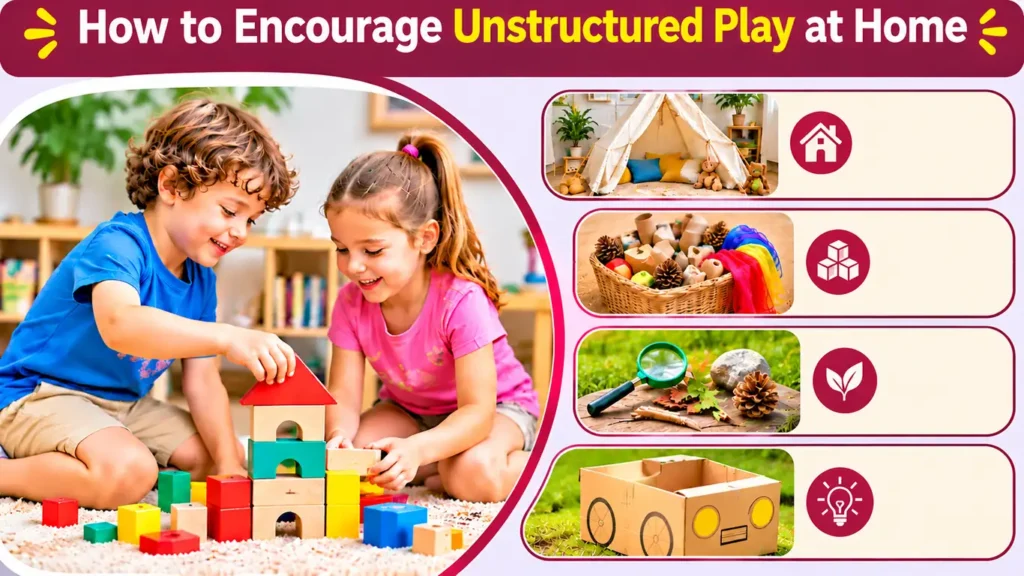
Parents and caregivers can support unstructured play by creating safe environments where children feel comfortable exploring independently. Providing simple materials and allowing enough free time encourages imagination without requiring elaborate activities. Adults should remain available when support is necessary while avoiding excessive direction. Children benefit most when they have meaningful choices and opportunities to experiment with their own ideas.
Provide Open-Ended Toys and Materials
Open-ended materials allow children to use objects in different ways rather than following one fixed activity. These materials encourage creativity because children decide how to incorporate them into their play.
Useful materials include:
- Wooden blocks and construction sets.
- Cardboard boxes and paper tubes.
- Crayons, paper, and washable paints.
- Play dough and modeling materials.
- Dress-up clothes and pretend-play accessories.
Choose materials appropriate for the child’s age and abilities. Avoid small objects that present choking hazards for young children.
Create Opportunities for Free Time
Children need opportunities to play without having every moment filled with organized activities. Providing regular periods for independent exploration allows them to discover interests and create their own games.
Free play does not require a rigid timetable, but including it in daily routines can make opportunities more consistent. Parents can adjust the duration according to their child’s age, needs, and interests.
Allow Children to Make Decisions
Giving children control over their activities encourages independence and confidence. Instead of telling them exactly what to build or create, adults can offer materials and allow them to choose.
Parents should avoid correcting every mistake or immediately solving minor challenges. Children often learn valuable lessons through experimentation and trying different approaches.
Common Challenges of Unstructured Play
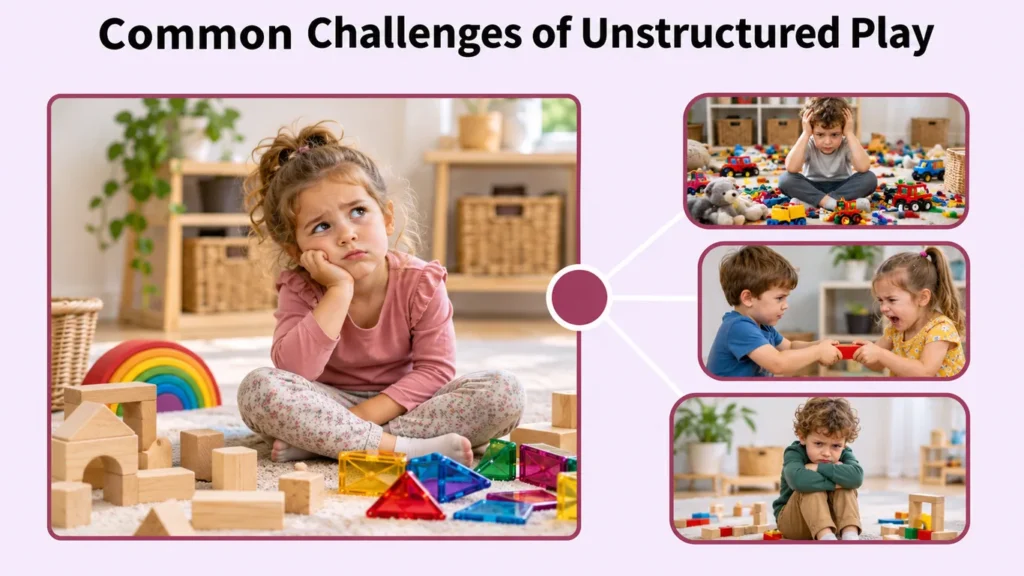
Although unstructured play offers valuable developmental opportunities, parents may encounter challenges when introducing it into daily routines. Some children initially struggle to choose activities, while others become accustomed to constant entertainment or adult direction. These situations are manageable with patience and appropriate support. Understanding common difficulties helps caregivers encourage independent play while maintaining a safe and comfortable environment.
Children May Become Bored
Children sometimes complain about boredom when they are not given specific activities. This response can occur when they are accustomed to frequent entertainment or organized schedules.
Parents can offer a small selection of interesting materials without directing exactly how they should be used. Given time and encouragement, children may discover creative ways to entertain themselves.
Managing Safety During Free Play
Unstructured play gives children freedom, but appropriate supervision remains important. Outdoor environments, climbing activities, and certain household materials may present hazards.
Caregivers should provide age-appropriate equipment and establish reasonable safety boundaries. Allowing independence within safe limits helps children explore confidently without unnecessary risks.
Balancing Play With Daily Responsibilities
Families may find it challenging to provide free-play opportunities alongside schoolwork, meals, and other responsibilities. A busy routine can limit the amount of time children spend exploring independently.
Parents can encourage unstructured play through simple opportunities throughout the day. Even short periods of child-led activity can provide meaningful experiences without requiring extensive preparation.
FAQs
1. What Is a Simple Example of Unstructured Play?
A simple example is a child using cardboard boxes to create an imaginary spaceship without following instructions. The child decides how to arrange the boxes and invents different adventures. This activity encourages creativity, decision-making, and independent exploration through self-directed play.
2. Why Is Unstructured Play Important for Children?
Unstructured play supports creativity, problem-solving, emotional development, and independence. Children learn to make decisions and explore personal interests without constant adult direction. These experiences can strengthen confidence while providing enjoyable opportunities for physical, social, and cognitive development.
3. What Is the Difference Between Structured and Unstructured Play?
Structured play follows predetermined rules, instructions, or specific goals, often with adult guidance. Unstructured play allows children to choose activities and determine how they unfold. Both approaches offer developmental benefits, but unstructured play provides greater freedom for imagination and independent exploration.
4. How Much Unstructured Play Do Children Need?
There is no single amount of unstructured play that suits every child. The appropriate duration depends on age, interests, daily routines, and individual needs. Parents should provide regular opportunities for free play alongside adequate physical activity, rest, and organized learning.
5. Can Unstructured Play Help Children Learn?
Yes, unstructured play can support learning through experimentation, curiosity, and problem-solving. Children explore relationships between objects, practice communication, and develop creative ideas during independent activities. These experiences complement formal education by encouraging active exploration and confidence in making decisions.
