
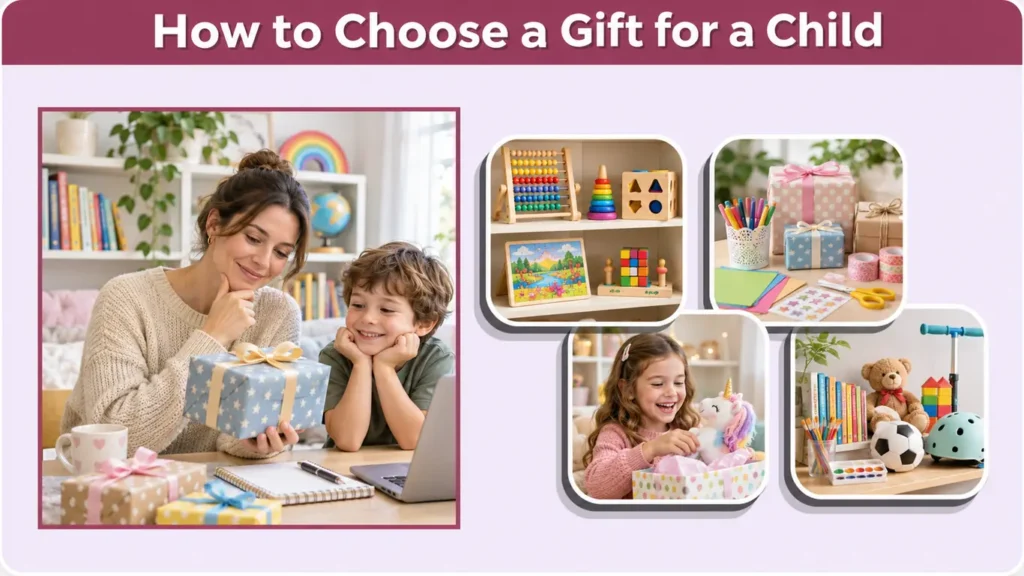
Choosing the perfect gift for a child can be exciting, but it can also feel overwhelming with so many toys, games, books, and educational products available. Understanding how to choose a gift for a child helps you find something enjoyable, meaningful, and suitable for their age and interests. The best gifts encourage creativity, support learning, and provide lasting entertainment. Whether you are shopping for a birthday, holiday, or special celebration, considering the child’s personality, developmental stage, and safety can make your gift more thoughtful and memorable.
1. Consider the Child’s Age and Developmental Stage
Age is one of the most important factors when selecting a gift for a child. Children develop different abilities, interests, and learning needs as they grow, so a gift that excites a toddler may not appeal to an older child. Choosing age-appropriate gifts helps ensure that the item is safe, engaging, and suitable for the child’s physical and cognitive development.
Gifts for Babies and Toddlers (0–3 Years)
Babies and toddlers enjoy exploring colors, textures, shapes, and sounds. Soft toys, stacking blocks, sturdy picture books, and simple sensory toys can support early learning and motor development. Choose products made from child-safe materials without small detachable parts. Toys should also be easy to clean and appropriate for the child’s developmental abilities.
Gifts for Preschoolers (3–5 Years)
Preschool children often enjoy imaginative play, creative activities, and simple problem-solving games. Building blocks, pretend-play sets, washable art supplies, and beginner puzzles can encourage curiosity and creativity. Select gifts that allow children to explore independently while developing communication, coordination, and social skills.
Gifts for School-Age Children (6–12 Years)
School-age children usually have more developed interests and enjoy challenging activities. Science kits, board games, sports equipment, craft sets, and age-appropriate books can make excellent choices. Consider the child’s hobbies, reading ability, and personal preferences rather than relying only on the recommended age printed on the packaging.
2. Understand the Child’s Interests and Personality
A thoughtful gift should reflect what the child genuinely enjoys. Some children love outdoor activities, while others prefer drawing, building models, reading stories, or exploring science. Understanding these preferences makes it easier to choose something they will use regularly. Observing their favorite activities or asking parents about their current interests can help you avoid buying an unwanted gift.
Identify Their Favorite Activities
Pay attention to how the child spends their free time. A child who enjoys drawing may appreciate an art kit, while someone interested in animals might enjoy illustrated wildlife books or animal-themed puzzles.
Match Gifts With Their Personality
Energetic children may enjoy sports toys and outdoor games, while children who prefer quieter activities might appreciate puzzles, books, or creative building sets. Avoid assuming that personality alone determines what a child will enjoy.
3. Choose Gifts That Encourage Learning and Creativity
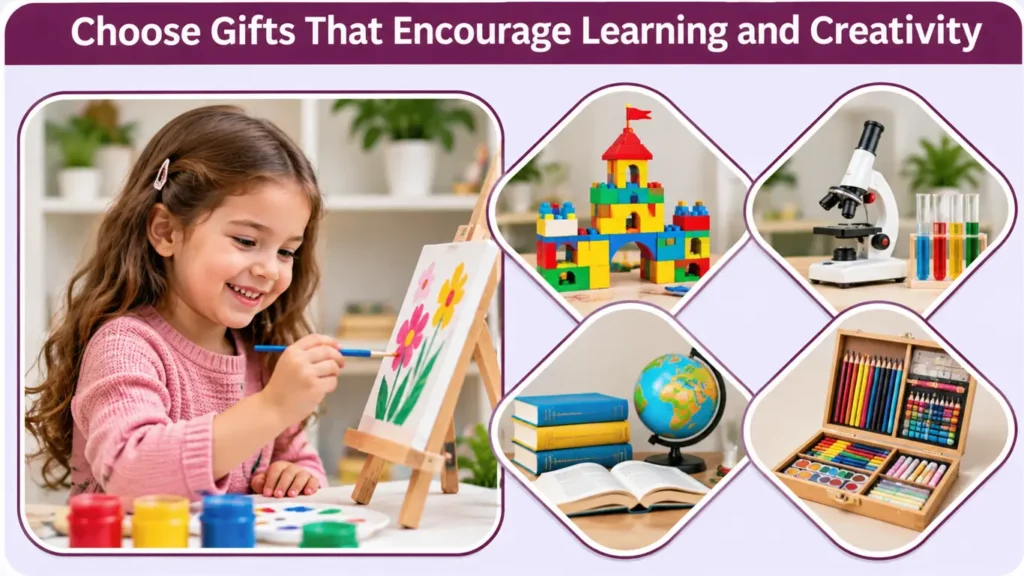
Educational gifts can combine entertainment with valuable learning opportunities. Children often learn naturally through play, especially when activities encourage imagination, experimentation, and problem-solving. The best educational gifts are enjoyable rather than overly demanding. Look for products that match the child’s abilities and provide opportunities to explore new ideas without making playtime feel like another school assignment.
Popular Educational Gift Ideas
- Building blocks: Encourage spatial awareness, creativity, and problem-solving.
- Science experiment kits: Introduce basic scientific concepts through supervised activities.
- Art and craft supplies: Support imagination and fine motor skills.
- Books: Develop vocabulary, curiosity, and reading interests.
- Board games: Encourage communication, patience, and strategic thinking.
Encourage Open-Ended Play
Open-ended toys allow children to create their own games and stories. Building sets, modeling clay, and drawing materials offer multiple ways to play without requiring one specific outcome. These gifts can remain interesting as children develop new abilities. They also encourage independent thinking and creative expression.
4. Prioritize Safety and Quality When Buying Gifts
Safety should always come before appearance, popularity, or price when choosing children’s gifts. Toys need to be suitable for the child’s age and made from durable materials. Poorly constructed products may break easily or contain hazardous components. Checking safety labels, manufacturer instructions, and product information helps reduce potential risks and ensures a more responsible purchase.
Important Toy Safety Checks
- Age recommendations: Follow manufacturer age restrictions and safety warnings.
- Small parts: Avoid choking hazards for children under three and others who may put objects in their mouths.
- Materials: Choose products that comply with applicable toy safety standards.
- Sharp edges: Check for pointed surfaces, exposed wires, or fragile components.
- Battery compartments: Ensure button batteries are secured behind child-resistant compartments.
- Magnets and cords: Avoid accessible high-powered magnets and dangerous cords.
Choose Durable and Reliable Products
High-quality toys often provide better long-term value because they withstand repeated use. Look for sturdy construction, secure attachments, and materials that are appropriate for the child’s age. Read product reviews and check for recalls before purchasing. For bicycles, scooters, and similar gifts, include suitable protective equipment.
5. Set a Practical Budget for the Gift
Choosing a meaningful gift does not require spending a large amount of money. Children often appreciate simple products that match their interests more than expensive items they rarely use. Setting a budget before shopping helps narrow your options and prevents unnecessary spending. Focus on usefulness, enjoyment, quality, and the child’s needs rather than selecting a gift based solely on its price.
Budget-Friendly Gift Ideas
- Under $15: Coloring books, small puzzles, storybooks, or basic craft supplies.
- $15–$30: Board games, building sets, or creative activity kits.
- $30–$60: Larger construction sets, sports equipment, or science kits.
- Above $60: Bicycles, larger playsets, or electronic learning devices.
These are illustrative price ranges in USD; actual prices vary by location and retailer.
Focus on Value Rather Than Price
A well-chosen book or creative activity kit may provide more enjoyment than an expensive toy that quickly loses its appeal. Consider how frequently the child will use the gift and whether it offers lasting entertainment.
6. Consider Gifts That Promote Physical Activity
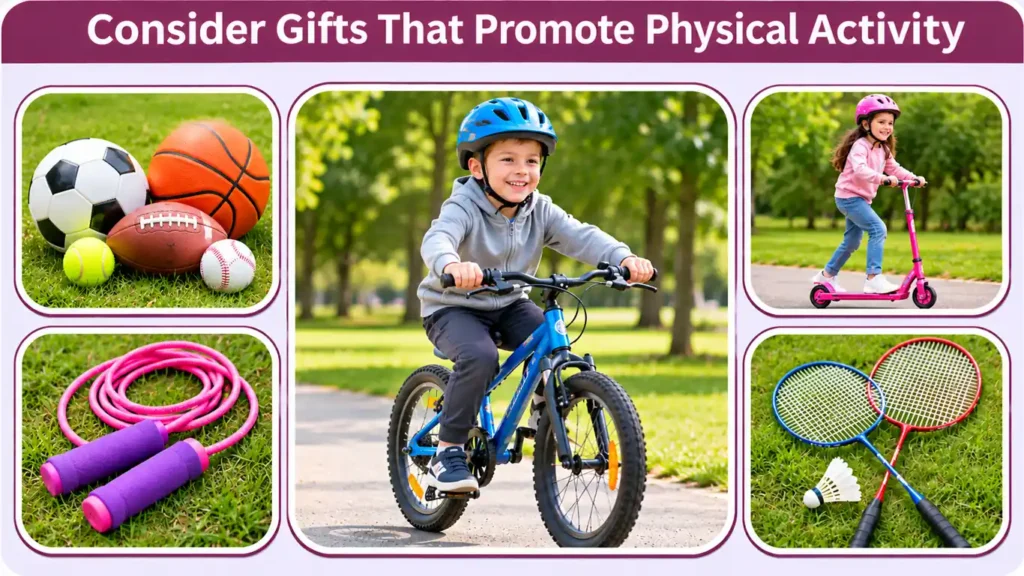
Active play supports children’s physical development and provides opportunities to practice coordination, balance, and movement. Gifts that encourage outdoor activities can be particularly helpful for children who enjoy sports and energetic games. However, physical activity gifts should match the child’s abilities, available play space, and supervision needs. Choosing suitable equipment helps make active play both enjoyable and safer.
Best Gifts for Active Children
- Bicycles and scooters: Encourage balance, coordination, and outdoor exploration.
- Sports balls: Support movement and cooperative games.
- Jump ropes: Offer a simple way to develop coordination.
- Outdoor playsets: Encourage climbing, movement, and imaginative play.
- Beginner sports equipment: Introduce activities such as badminton or basketball.
Think About Available Space
Before buying large outdoor equipment, consider whether the child has enough room to use it safely. Apartment living, shared outdoor areas, and limited storage space may make compact activity gifts more practical.
7. Choose Gifts That Create Memorable Experiences
Not every meaningful gift needs to be a physical object. Experience-based gifts provide opportunities for children to discover new interests, spend time with loved ones, and enjoy activities outside their regular routines. These gifts can be especially valuable for children who already have plenty of toys. The ideal experience should reflect their interests, comfort level, and age.
Experience Gift Ideas
A visit to a zoo, children’s museum, aquarium, or science center can create an exciting learning opportunity. Art workshops, beginner cooking classes, and age-appropriate sports lessons can also introduce enjoyable new activities.
For younger children, a planned picnic, storytelling session, or family adventure may be equally meaningful. Confirm scheduling and parental permission before purchasing tickets or memberships.
8. Avoid Common Mistakes When Choosing Children’s Gifts
Even thoughtful shoppers sometimes select gifts that are unsuitable for a child’s needs. Buying a toy simply because it is trending or visually attractive does not guarantee that the child will enjoy it. Considering the family’s preferences, available space, and the child’s abilities can prevent disappointment. A practical approach also helps avoid unnecessary expenses and unused products.
Common Gift-Buying Mistakes
- Ignoring age restrictions: May introduce safety risks or frustration.
- Following trends blindly: Popular toys may not match individual interests.
- Buying complicated products: Difficult instructions can discourage children.
- Overlooking parents’ preferences: Some families limit electronic or noisy toys.
- Choosing oversized gifts: Large products may create storage problems.
- Buying duplicate items: The child may already own something similar.
Ask Parents Before Purchasing
Parents or caregivers can provide helpful information about favorite activities, existing toys, allergies, and household preferences. A quick conversation can make your choice more appropriate without ruining the surprise for the child.
9. Think About Long-Term Use and Practical Benefits
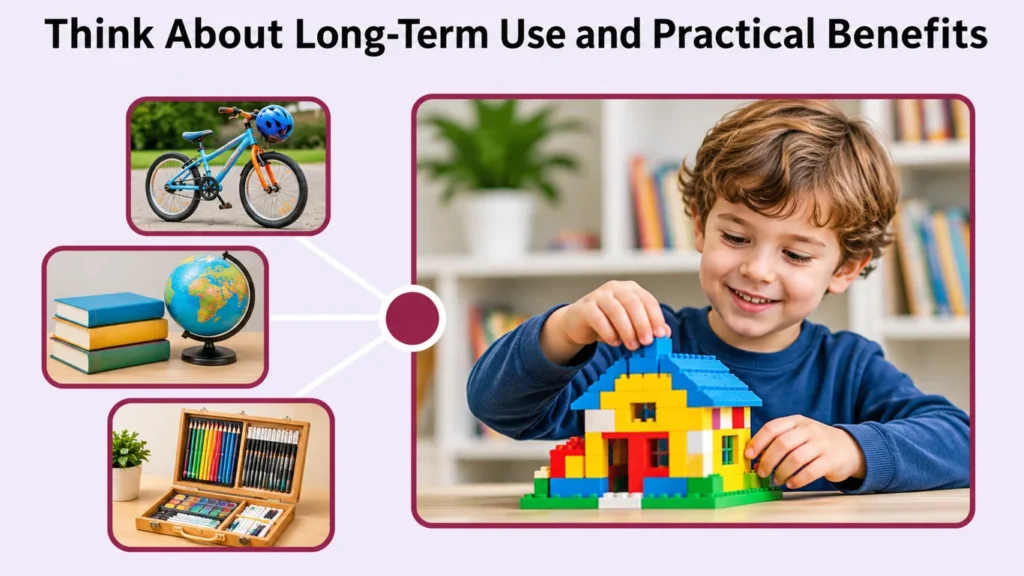
Some gifts offer entertainment for only a short period, while others remain useful as children grow. Selecting versatile products can make your purchase more valuable over time. Books, adjustable sports equipment, and expandable building sets may support changing interests and abilities. However, long-term usefulness should not come at the expense of immediate enjoyment or age-appropriate safety.
Choose Gifts That Grow With the Child
Look for toys that offer different levels of difficulty or multiple ways to play. For example, a construction set may begin with simple designs and later support more complicated projects. Avoid purchasing products that are unsafe or too advanced simply because a child might eventually grow into them. The gift should still be enjoyable and appropriate today.
10. Make the Gift Personal and Meaningful
Personal touches can transform an ordinary present into something memorable. Children often appreciate gifts that recognize their interests, achievements, or favorite stories. Personalization does not necessarily require custom-made products or expensive decorations. A thoughtful message, carefully chosen theme, or shared activity can make a gift feel more special and strengthen the connection between the giver and child.
Add a Personal Touch
Consider including the child’s name on an age-appropriate notebook, selecting a book about their favorite subject, or creating a small themed gift collection. A handwritten birthday card can also add emotional value. When choosing personalized products, avoid unnecessary exposure of personal information, especially on items used outside the home.
FAQs
1. What is the best gift for a child?
The best gift depends on the child’s age, interests, and developmental abilities. Books, building blocks, art supplies, puzzles, and outdoor toys are popular choices. Select something safe, enjoyable, and suitable for the child’s personality rather than choosing based on price.
2. How do I choose a gift for a child I don’t know well?
Ask the child’s parents about their interests, age, and favorite activities. If you cannot get specific information, consider age-appropriate books, creative kits, or simple board games. Avoid highly specialized toys, food gifts with unknown allergy risks, and complicated electronic devices.
3. Are educational toys better than regular toys?
Educational toys can encourage learning, but ordinary toys also provide developmental benefits. Imaginative play, outdoor activities, and creative games help children build important skills. The most valuable gifts combine enjoyment with opportunities for exploration, interaction, and age-appropriate challenges.
4. How much should I spend on a child’s gift?
There is no fixed amount you need to spend on a child’s gift. Your budget, relationship with the child, and occasion can guide your decision. An inexpensive but thoughtfully selected present can be just as meaningful as an expensive one.
5. What gifts should I avoid giving to young children?
Avoid toys with small detachable parts, accessible button batteries, loose high-powered magnets, sharp edges, or other age-inappropriate hazards. Also avoid products with unclear safety information. Always check the manufacturer’s age recommendations and consult parents before buying unfamiliar toys.
