

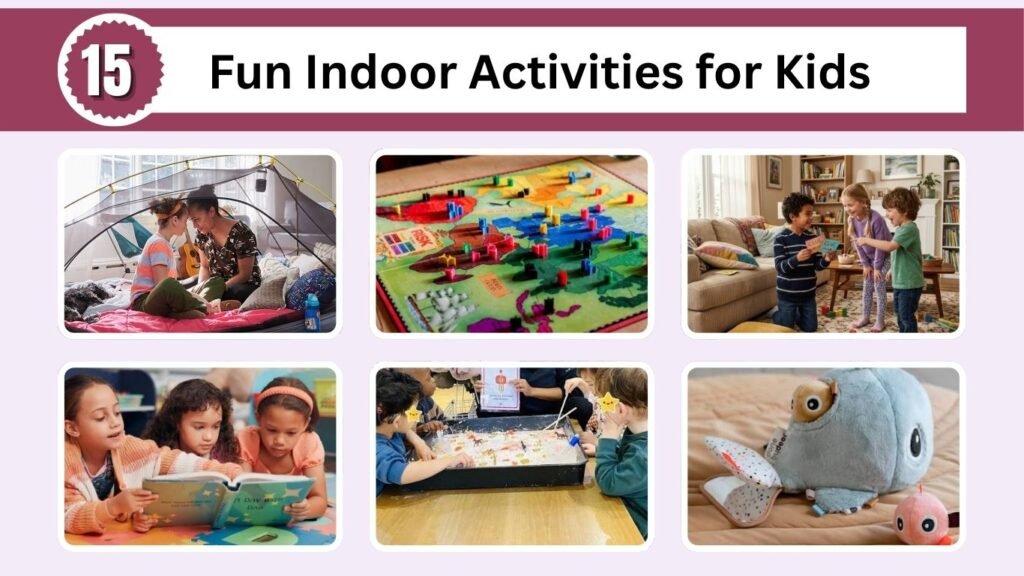
Keeping kids entertained indoors doesn’t have to be challenging! Whether it’s a rainy day, a school holiday, or simply time for family fun, exciting indoor activities can turn ordinary moments into memorable adventures. From creative crafts and educational games to energetic challenges, these 15 indoor activities for kids encourage imagination, learning, and physical movement while keeping children happily engaged at home.
1. Indoor Scavenger Hunt
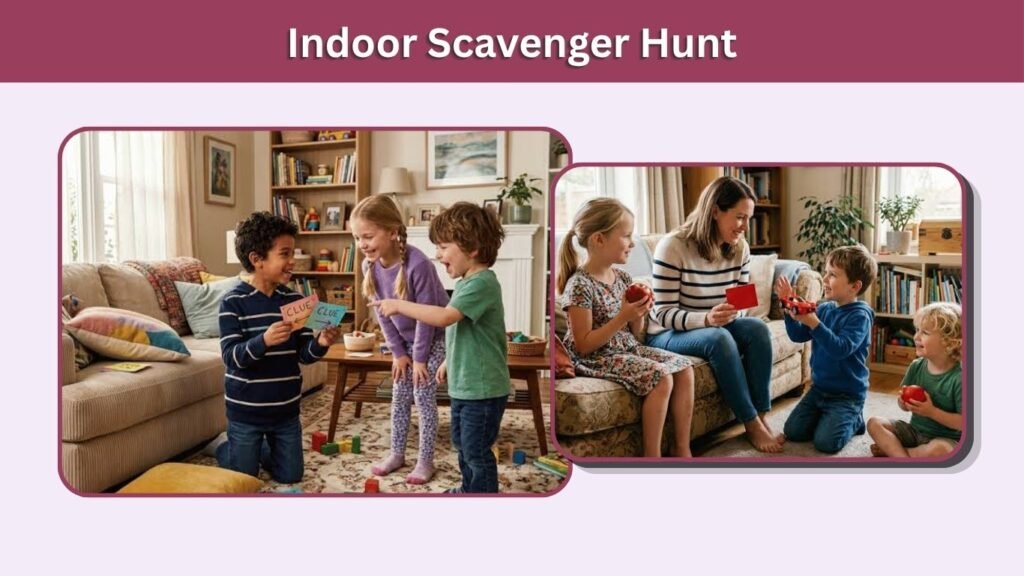
An indoor scavenger hunt is an exciting and interactive activity that encourages kids to explore their surroundings while solving clues and searching for hidden objects. This game can be played in living rooms, bedrooms, or other safe indoor spaces. It combines adventure, creativity, and problem-solving, making it perfect for rainy days or family gatherings. Children of different ages can enjoy scavenger hunts with challenges suited to their abilities.
How to Play Indoor Scavenger Hunt
- Create a list of household objects for children to find.
- Hide small toys, colorful items, or written clues around the house.
- Give children a checklist or simple picture-based instructions.
- Set a reasonable time limit to make the activity more exciting.
- Encourage kids to solve clues and collect the hidden objects.
- Celebrate their achievements with stickers or small rewards.
Benefits of Indoor Scavenger Hunt
Indoor scavenger hunts help children develop observation, critical thinking, and problem-solving skills. Searching for objects encourages concentration, memory, and attention to detail. The activity also promotes physical movement as children walk, bend, and explore different areas. When played in teams, scavenger hunts strengthen communication, cooperation, and social skills while encouraging children to work together toward shared goals.
2. Arts and Crafts
Arts and crafts are creative indoor activities that allow kids to express their imagination through drawing, painting, cutting, and designing. Children can use colorful paper, crayons, glue, and recycled materials to create unique artwork and handmade decorations. This activity is perfect for rainy days, weekends, or school holidays. Arts and crafts encourage creativity, improve concentration, and provide children with opportunities to explore different colors, shapes, and textures.
How to Do Arts and Crafts
- Gather colorful paper, crayons, markers, and washable paints.
- Choose simple projects such as paper flowers, greeting cards, or animal masks.
- Provide child-safe scissors, glue sticks, and decorative materials.
- Encourage children to draw, color, cut, and assemble their creations.
- Use recycled cardboard, paper rolls, and boxes for creative projects.
- Display completed artwork to celebrate children’s creativity.
Benefits of Arts and Crafts
Arts and crafts help children develop fine motor skills, hand-eye coordination, and creative thinking. Activities such as drawing, painting, and cutting strengthen small hand muscles while improving concentration and patience. Creating artwork also encourages self-expression, decision-making, and problem-solving. Children gain confidence when completing projects independently, while group crafting activities promote teamwork, communication, and sharing ideas with others.
3. Building Blocks and LEGO
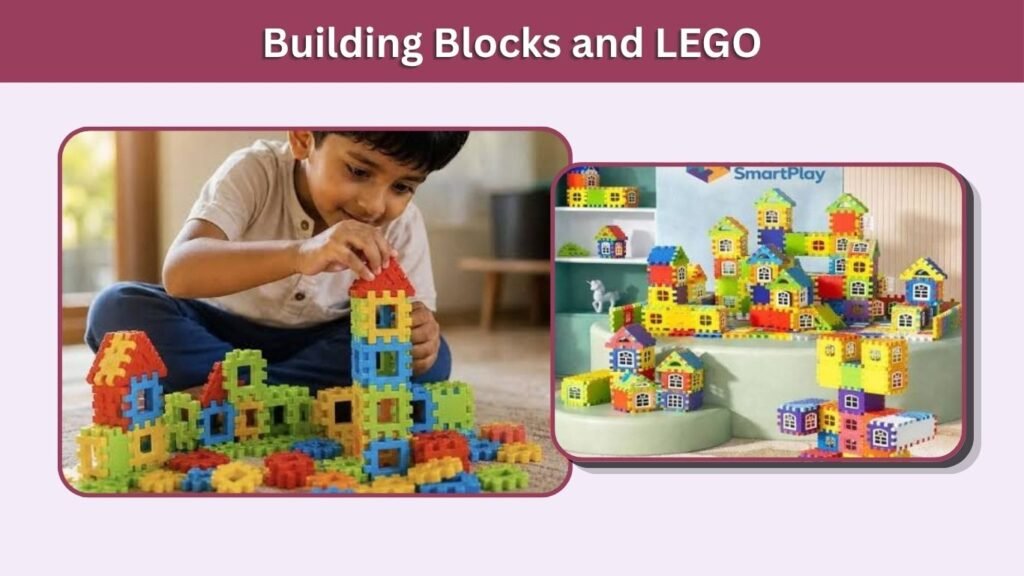
Building blocks and LEGO are engaging indoor activities that encourage kids to design, construct, and experiment with different structures. Children can build houses, towers, bridges, vehicles, or imaginary cities using colorful building pieces. This hands-on activity combines creativity with problem-solving and basic engineering concepts. It is suitable for different age groups when age-appropriate building sets are provided, making it an excellent activity for independent play or family participation.
How to Play with Building Blocks and LEGO
- Provide age-appropriate building blocks or LEGO sets.
- Start with simple projects such as towers, houses, or bridges.
- Encourage children to create structures using their imagination.
- Introduce building challenges with specific shapes or designs.
- Allow kids to experiment with different colors, sizes, and patterns.
- Organize friendly building competitions or collaborative projects.
Benefits of Building Blocks and LEGO
Building blocks and LEGO help children develop spatial awareness, logical thinking, and problem-solving abilities. Connecting and arranging pieces improves fine motor skills, hand-eye coordination, and concentration. Children also learn basic concepts of balance, symmetry, measurement, and structural stability through experimentation. Completing building projects encourages patience, persistence, and confidence, while collaborative construction activities strengthen communication and teamwork.
4. Indoor Obstacle Course
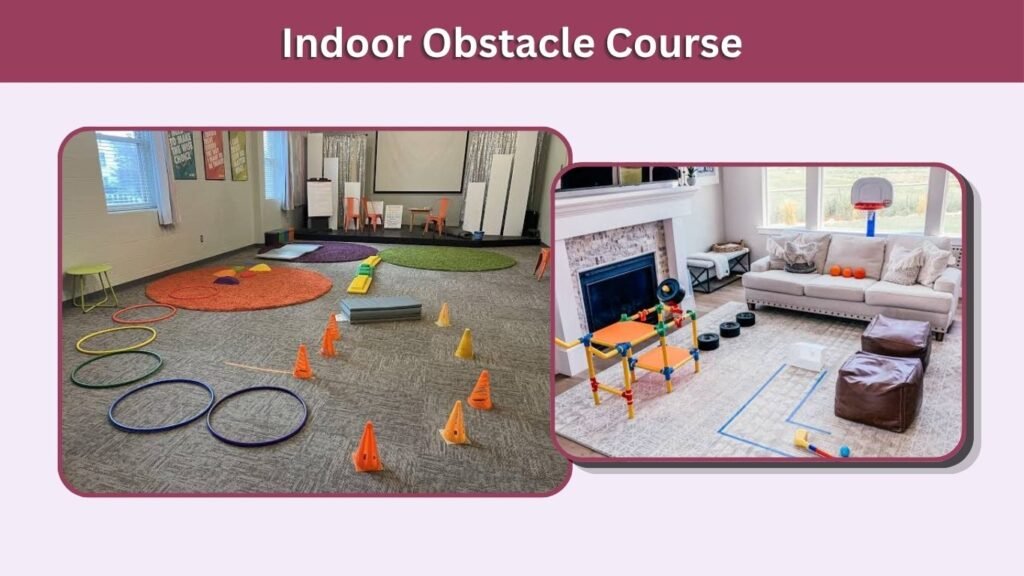
An indoor obstacle course is an exciting physical activity that challenges kids to move through different obstacles using everyday household items. Children can crawl under tables, jump over cushions, balance along marked paths, and navigate creative challenges. This activity transforms ordinary living spaces into adventurous playgrounds while encouraging movement, coordination, and problem-solving. Indoor obstacle courses are perfect for rainy days when outdoor play is limited.
How to Create an Indoor Obstacle Course
- Arrange pillows and cushions to create safe jumping obstacles.
- Use chairs and blankets to build crawling tunnels.
- Place masking tape on the floor to create balancing paths.
- Set up soft toys as obstacles for children to navigate around.
- Include activities such as hopping, crawling, and balancing.
- Let children complete the course individually or with friends.
Benefits of Indoor Obstacle Course
Indoor obstacle courses help children develop gross motor skills, balance, coordination, and physical strength. Moving through different challenges improves body awareness, spatial understanding, and concentration. The activity also encourages problem-solving as children determine how to navigate obstacles safely. Completing each challenge builds confidence, persistence, and independence. Group obstacle courses can also strengthen communication, teamwork, and social interaction while promoting healthy physical activity.
5. Hide and Seek
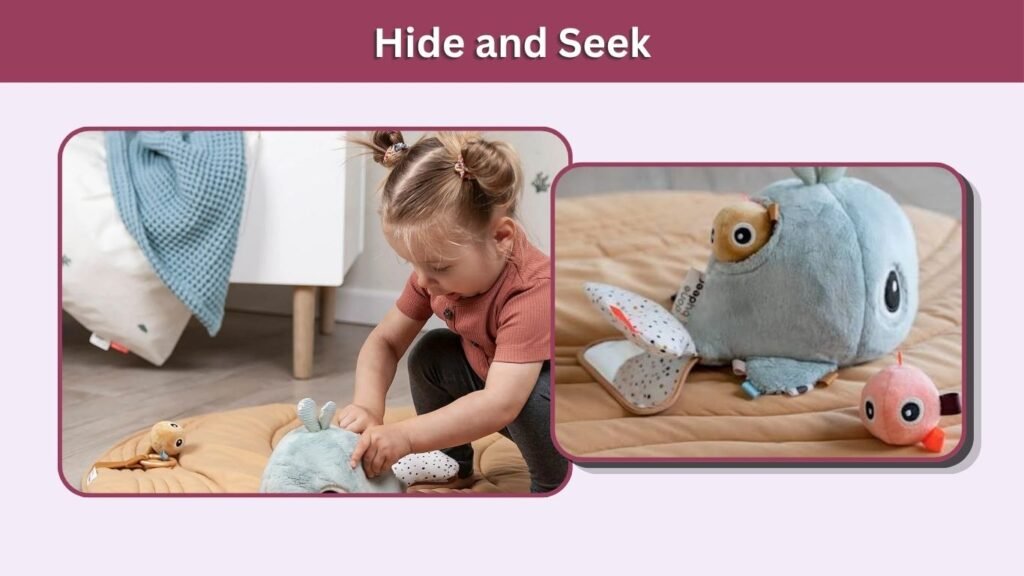
Hide and seek is a classic indoor game that combines excitement, exploration, and problem-solving. One child counts while others find safe places to hide around the house. The seeker then searches for everyone, making the activity entertaining and interactive. This timeless game requires minimal equipment and can be enjoyed by children of different ages. It encourages movement, observation, patience, and social interaction while providing hours of indoor entertainment.
How to Play Hide and Seek
- Choose one child to be the seeker while others prepare to hide.
- Ask the seeker to close their eyes and count to a chosen number.
- Allow other children to find safe hiding spots around the room.
- Once counting finishes, the seeker begins searching for everyone.
- The first child discovered can become the next seeker.
- Continue playing with different hiding areas and game variations.
Benefits of Hide and Seek
Hide and seek supports children’s cognitive development, spatial awareness, and problem-solving abilities. Finding suitable hiding places encourages creative thinking and decision-making, while searching improves observation and concentration. The game also promotes physical movement through walking, bending, and exploring different spaces. Taking turns helps children develop patience, self-control, and social skills. Successfully finding others or remaining hidden can also strengthen confidence and independence.
6. DIY Science Experiments
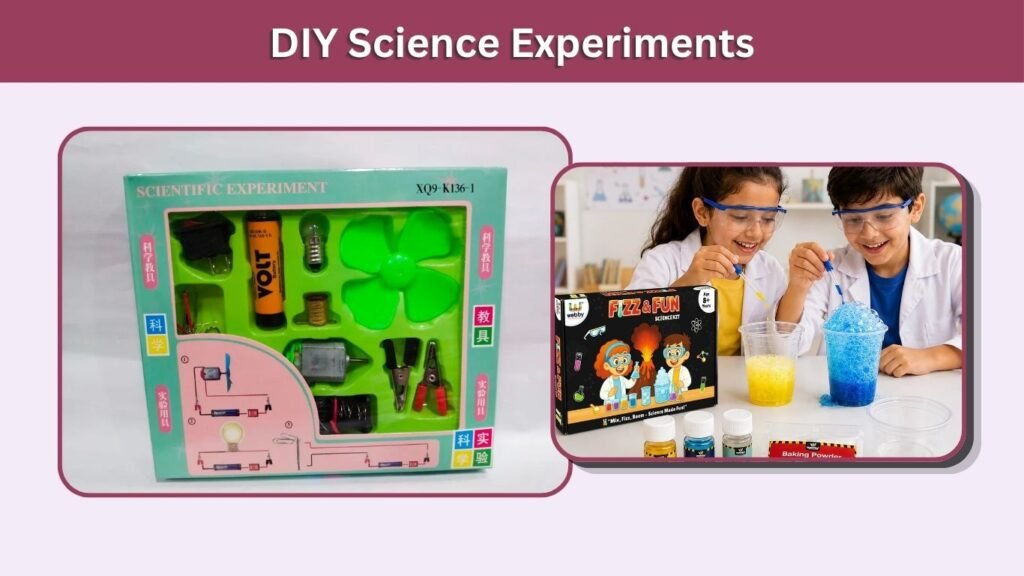
DIY science experiments are exciting indoor activities that allow kids to explore scientific concepts through hands-on learning and discovery. Using simple household materials, children can experiment with colors, chemical reactions, water, and everyday objects. Activities such as creating baking soda volcanoes, exploring floating objects, and mixing colors make learning interactive and enjoyable. These experiments encourage curiosity, creativity, and critical thinking while introducing basic scientific principles in a fun environment.
How to Do DIY Science Experiments
- Create a baking soda volcano using vinegar and food coloring.
- Explore floating and sinking objects in a bowl of water.
- Mix primary colors to discover new color combinations.
- Grow beans in a transparent container to observe plant development.
- Make a homemade lava lamp using oil, water, and food coloring.
- Experiment with magnets to discover which objects they attract.
Benefits of DIY Science Experiments
DIY science experiments help children develop critical thinking, observation, and problem-solving skills. Conducting simple experiments encourages them to ask questions, make predictions, and understand cause-and-effect relationships. These activities also strengthen concentration, creativity, and scientific curiosity. Hands-on learning makes abstract concepts easier to understand while encouraging children to investigate their surroundings. Working on experiments with family members can improve communication, cooperation, and teamwork.
7. Puzzle Solving
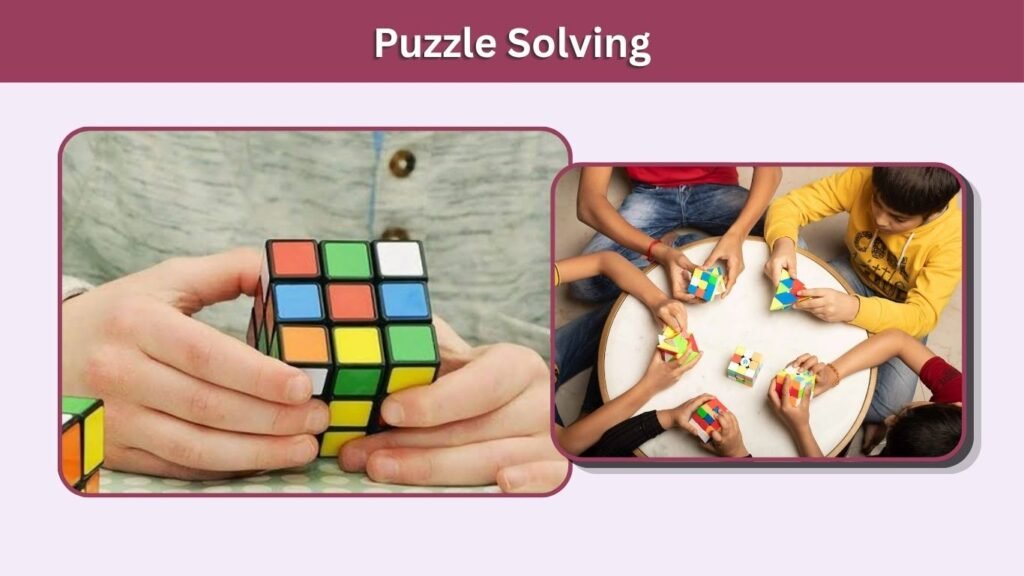
Puzzle solving is an engaging indoor activity that challenges kids to think critically, recognize patterns, and find solutions through interactive play. Children can enjoy jigsaw puzzles, word searches, matching games, and simple logic challenges based on their ages and abilities. This activity requires minimal space and can be enjoyed independently or with family members. Puzzle solving encourages patience, concentration, and creativity while helping children develop essential cognitive and problem-solving skills.
How to Play Puzzle Solving Games
- Choose age-appropriate jigsaw puzzles with colorful pictures.
- Start with simple puzzles containing fewer pieces.
- Introduce matching games featuring animals, shapes, or colors.
- Encourage older children to solve word searches and logic puzzles.
- Organize family puzzle-solving challenges with different difficulty levels.
- Allow children to complete puzzles independently or in small groups.
Benefits of Puzzle Solving
Puzzle solving supports children’s cognitive development, logical reasoning, and problem-solving abilities. Identifying shapes, matching patterns, and arranging pieces improve visual perception, spatial awareness, and hand-eye coordination. These activities also strengthen memory, concentration, and patience. Completing challenging puzzles encourages persistence and builds confidence as children experience a sense of accomplishment. Collaborative puzzle activities can additionally promote communication, teamwork, and positive social interaction.
8. Indoor Treasure Hunt
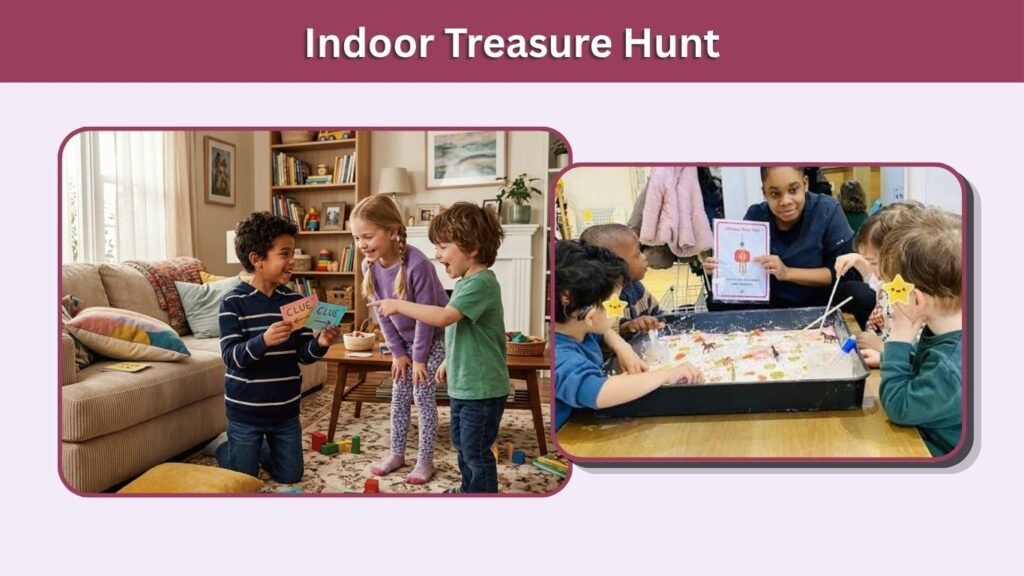
An indoor treasure hunt is an adventurous activity that encourages kids to search for hidden surprises by following clues, solving riddles, and completing challenges. Parents can transform their homes into exciting treasure-hunting environments using simple household objects, maps, and small rewards. This activity combines imagination, exploration, and problem-solving, making it perfect for rainy days, birthday parties, or family gatherings. Children can enjoy the excitement of discovering hidden treasures while developing important thinking and communication skills.
How to Play Indoor Treasure Hunt
- Choose a special treasure, such as a small toy, stickers, or a surprise gift.
- Hide the treasure somewhere safe inside the house.
- Create simple clues or riddles leading to different locations.
- Give children their first clue to begin the adventure.
- Encourage them to solve each clue to discover the next hiding spot.
- Celebrate when they successfully find the hidden treasure.
Benefits of Indoor Treasure Hunt
Indoor treasure hunts help children develop problem-solving, logical thinking, and observation skills. Following clues encourages concentration, memory, and attention to detail. Children also practice reading comprehension and decision-making as they interpret instructions and discover hidden locations. The activity promotes physical movement and exploration while strengthening confidence and independence. When played in teams, treasure hunts encourage cooperation, communication, and teamwork as children solve challenges together.
9. Dance Party

An indoor dance party is a fun and energetic activity that allows kids to move, dance, and express themselves through music. Children can enjoy their favorite songs while experimenting with different dance moves, rhythms, and creative performances. This activity requires minimal preparation and can transform an ordinary living room into an exciting entertainment space. Indoor dance parties are perfect for burning energy, improving coordination, and encouraging positive social interaction during rainy days or family celebrations.
How to Organize an Indoor Dance Party
- Choose upbeat, age-appropriate songs that children enjoy.
- Clear enough floor space to allow safe movement and dancing.
- Create a fun atmosphere using colorful decorations or soft lighting.
- Encourage kids to invent their own dance moves.
- Introduce games such as freeze dance or follow-the-leader.
- Organize friendly dance performances or family dance challenges.
Benefits of Dance Party
Indoor dance parties support children’s physical development by improving balance, coordination, flexibility, and motor skills. Moving to music also encourages rhythm recognition, body awareness, and creative expression. Dancing provides opportunities for physical exercise while helping children release energy and improve their mood. Group dancing can strengthen communication, confidence, and social connections. Learning simple dance routines also supports memory, concentration, and the ability to follow instructions.
10. Puppet Show
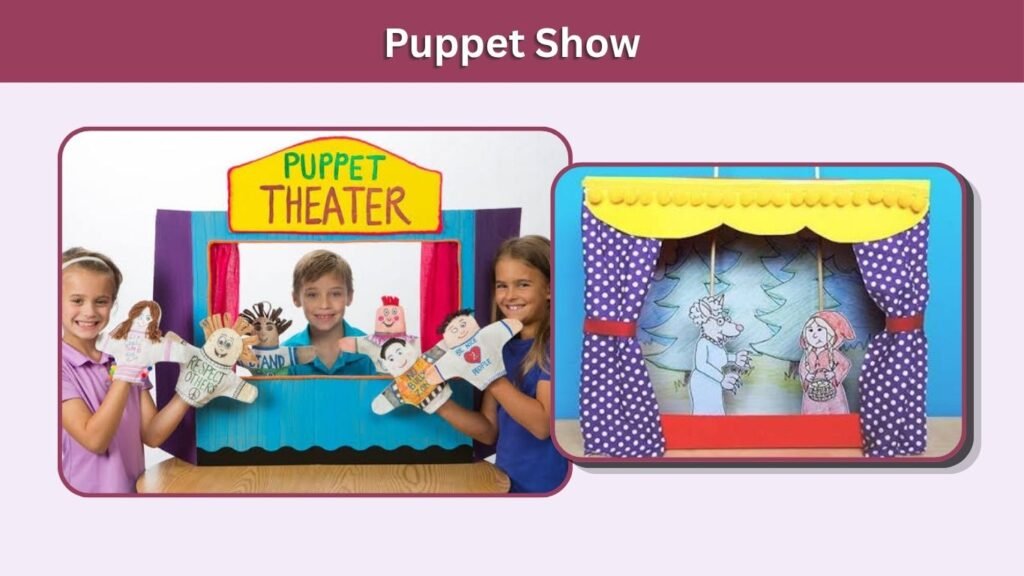
With a few homemade characters and a little imagination, children can turn an ordinary room into their own puppet theater. A puppet show is an enjoyable indoor activity where kids create stories and bring characters to life using finger puppets, hand puppets, or simple paper figures. Whether performing for friends or family, children can explore different roles, practice storytelling, and express their creativity. It is an entertaining choice for rainy afternoons and family activities.
How to Organize a Puppet Show
- Make puppets from socks, cardboard, or paper bags.
- Transform a cardboard box or table into a miniature puppet theater.
- Let children imagine their own characters and storylines.
- Help them create simple conversations between the characters.
- Decorate the theater with colorful props and backgrounds.
- Invite friends or family members to enjoy the final performance.
Benefits of Puppet Show
Performing puppet shows gives children opportunities to strengthen their speaking, language, and storytelling abilities. As they invent characters and develop conversations, they practice organizing ideas and exploring different emotions and perspectives. Puppet-making also supports hand-eye coordination and fine motor development. Performing with friends encourages cooperation and teamwork, while speaking through imaginary characters can help children build confidence and communicate their feelings creatively.
11. Board Games
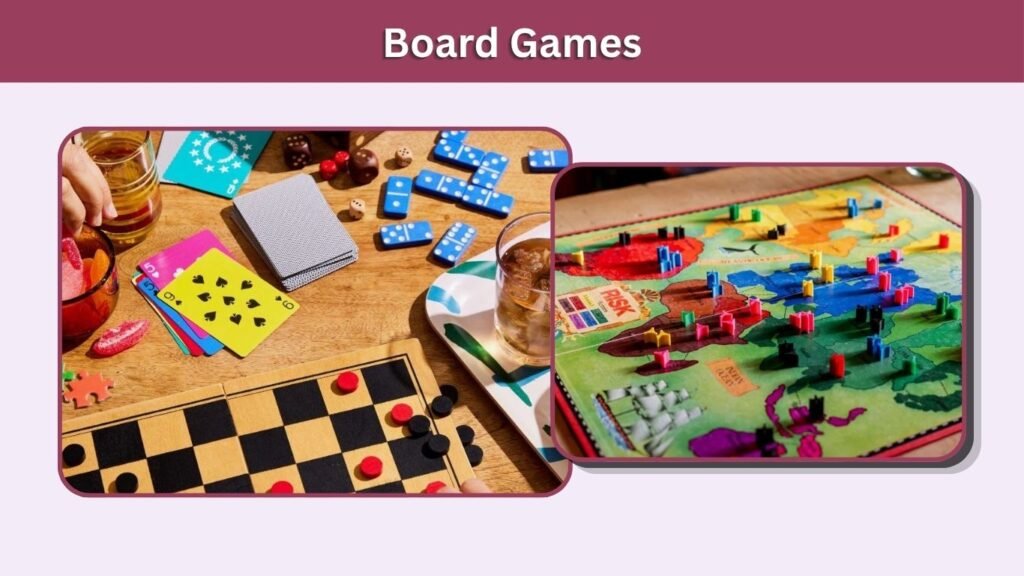
Board games offer children an enjoyable way to spend time indoors while interacting with friends and family. From Snakes and Ladders and Ludo to Candy Land and matching games, these activities combine entertainment with opportunities to learn. Moving pieces, rolling dice, following instructions, and making decisions keep children engaged throughout the game. Board games are particularly suitable for rainy afternoons, family evenings, and indoor playdates.
How to Play Board Games
- Select games that suit the children’s ages and understanding.
- Prepare a comfortable area where everyone can sit and play.
- Explain the main objectives and rules before beginning.
- Help children understand turn-taking and fair play.
- Include cooperative games that younger children can enjoy together.
- Appreciate teamwork, participation, and respectful behavior.
Benefits of Board Games
Playing board games encourages children to think carefully, remember instructions, and make decisions. Different games introduce opportunities to practice logical reasoning, problem-solving, concentration, and planning. Games involving numbers or patterns can also reinforce counting, matching, and number recognition. Beyond these learning benefits, children practice patience, communication, and following rules. Experiencing both winning and losing helps them develop positive sportsmanship while enjoying meaningful time with family and friends.
12. Indoor Bowling
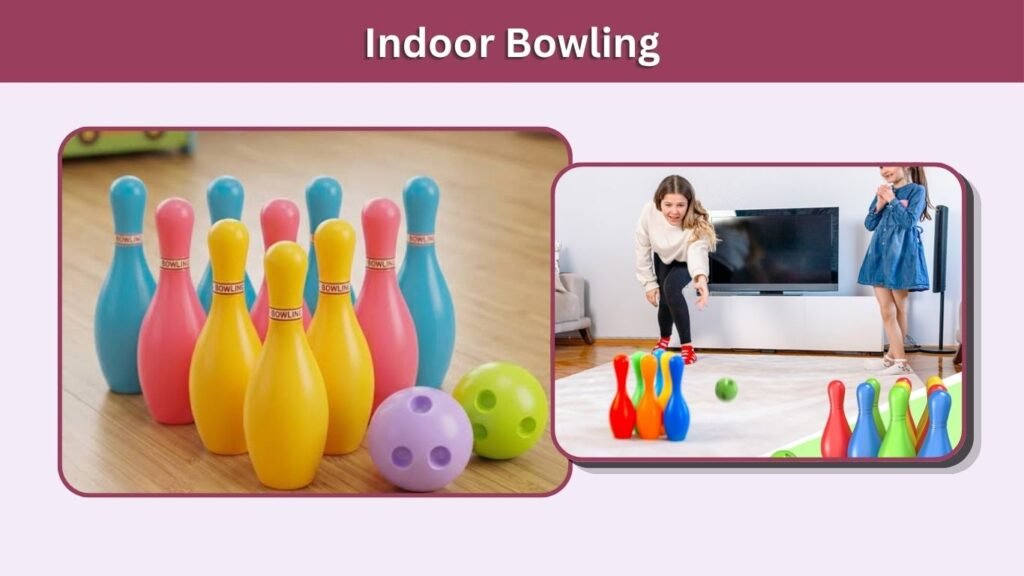
Children do not need a real bowling alley to enjoy this entertaining activity. With a soft ball and a few lightweight pins or empty plastic bottles, parents can create a simple bowling game in a living room or hallway. Kids can practice rolling the ball, aiming at targets, and counting fallen pins while enjoying friendly challenges. Indoor bowling is suitable for various age groups and works well for independent play, sibling activities, or family game nights.
How to Play Indoor Bowling
- Gather six to ten empty plastic bottles or lightweight bowling pins.
- Position the pins in a triangle on a clear section of the floor.
- Make a starting line with removable masking tape.
- Provide a lightweight or soft foam ball for rolling.
- Have each child roll the ball toward the arranged pins.
- Count how many pins fall and let players alternate turns over several rounds.
Benefits of Indoor Bowling
Rolling a ball toward bowling pins helps children practice aiming, balance, and hand-eye coordination. They also develop gross motor skills, concentration, and awareness of distances and positions. Counting knocked-down pins and keeping scores introduces simple mathematical practice. Playing with others encourages communication, patience, and taking turns. As children try different approaches to improve their performance, they can develop persistence, confidence, and problem-solving skills while staying physically active indoors.
13. Storytelling and Reading
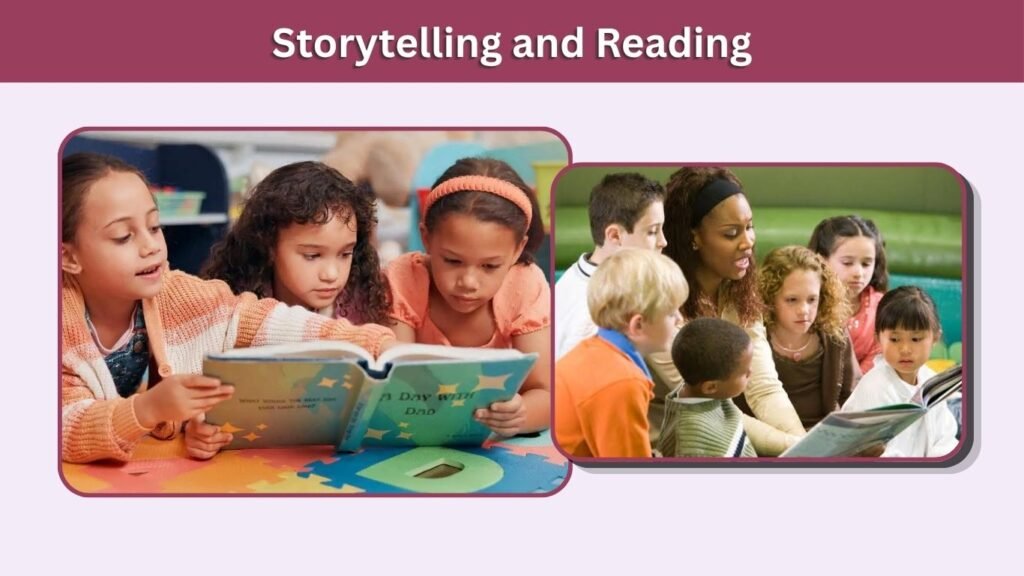
Storytelling and reading are enjoyable indoor activities that encourage kids to explore imaginary worlds, discover new ideas, and develop essential language skills. Children can listen to bedtime stories, read colorful picture books, or create their own exciting adventures. This activity requires minimal equipment and provides a relaxing alternative to screen time. Whether enjoyed independently or with family members, storytelling and reading help children develop imagination, creativity, and a lifelong interest in books.
How to Enjoy Storytelling and Reading
- Choose age-appropriate books with colorful illustrations and engaging stories.
- Create a comfortable reading corner with pillows and blankets.
- Encourage children to select books based on their interests.
- Read stories aloud using different voices for various characters.
- Ask children to predict what might happen next in the story.
- Invite kids to create and share their own imaginative stories.
Benefits of Storytelling and Reading
Storytelling and reading support children’s language development, vocabulary, comprehension, and communication skills. Listening to stories improves attention, memory, and imagination while introducing new ideas and experiences. Reading together also encourages emotional understanding as children explore different characters and situations. Creating original stories helps develop creativity, sequencing, and problem-solving abilities. Regular reading activities can strengthen family relationships and encourage children to develop positive reading habits from an early age.
14. Playdough Creations
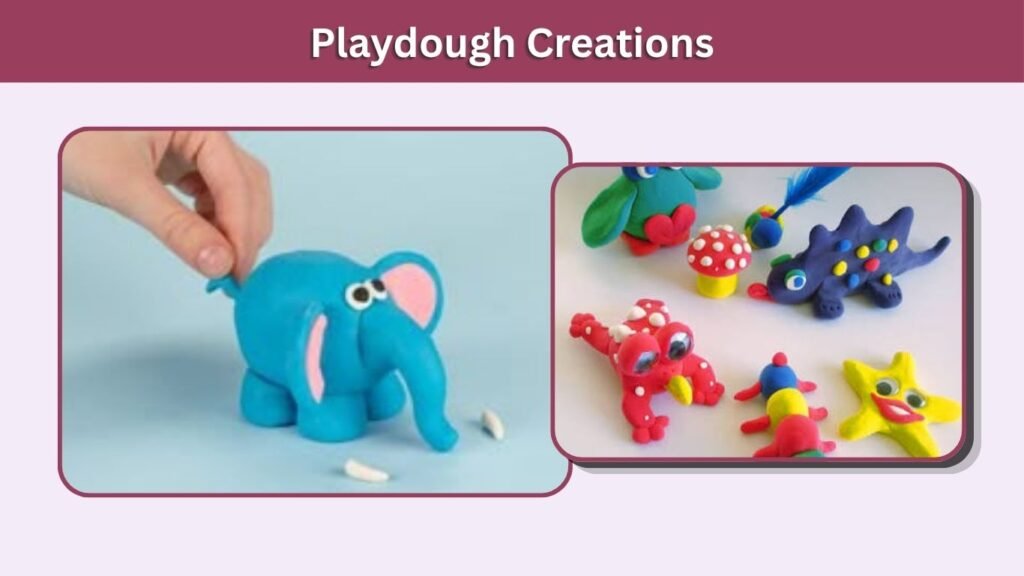
Playdough creations are fun, hands-on indoor activities that allow kids to shape, mold, and design different objects using soft modeling dough. Children can create colorful animals, pretend food, flowers, buildings, and imaginary characters while exploring their creativity. This activity is especially popular among preschoolers because it combines sensory exploration with artistic expression. Playdough activities are easy to organize at home and provide opportunities for independent or group play during rainy days.
How to Make Playdough Creations
- Provide soft, non-toxic, age-appropriate playdough in different colors.
- Prepare a clean table or washable play surface.
- Encourage children to roll, flatten, squeeze, and shape the dough.
- Use child-safe cookie cutters to create interesting shapes.
- Introduce themes such as animals, fruits, flowers, or favorite characters.
- Display completed creations before storing the playdough properly.
Benefits of Playdough Creations
Playing with playdough helps children develop fine motor skills, hand strength, and hand-eye coordination. Rolling, squeezing, and shaping the dough strengthens small muscles used for writing and other everyday activities. It also encourages creativity, sensory exploration, and problem-solving as children experiment with different designs. Creating shapes and patterns introduces basic mathematical concepts, while imaginative play promotes storytelling and communication. The hands-on activity can also support concentration, patience, and emotional relaxation.
15. Indoor Camping
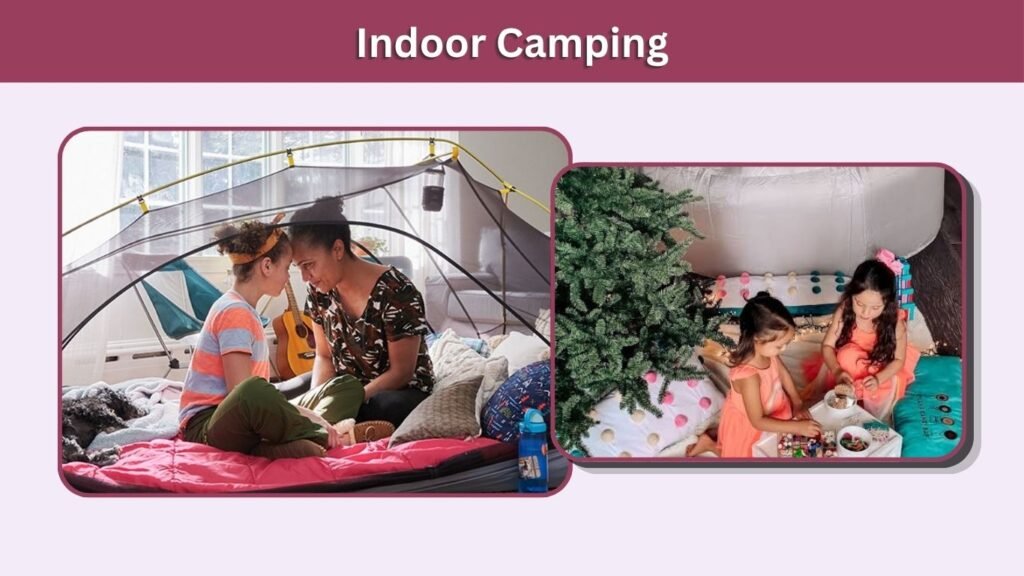
Indoor camping is an imaginative activity that transforms a living room or bedroom into a cozy camping adventure. Kids can build blanket tents, arrange sleeping bags, use battery-powered lanterns, and pretend they are exploring the wilderness. This activity brings the excitement of outdoor camping inside the home without worrying about bad weather. Indoor camping encourages creativity, teamwork, and imaginative storytelling while providing a memorable experience for children and their families.
How to Set Up Indoor Camping
- Choose a spacious area in the living room or bedroom.
- Build a simple tent using blankets, cushions, or a children’s play tent.
- Arrange pillows, sleeping bags, and soft blankets inside.
- Use battery-powered lanterns or flashlights for lighting.
- Prepare simple camping snacks and organize storytelling activities.
- Introduce pretend outdoor adventures, such as wildlife spotting or stargazing.
Benefits of Indoor Camping
Indoor camping encourages children’s imagination, creativity, and social interaction. Building tents and arranging camping materials supports planning, problem-solving, and teamwork. Pretend outdoor adventures allow children to explore nature-related ideas and develop storytelling skills. Sharing stories, playing games, and spending time together can strengthen family relationships and improve communication. The activity also provides opportunities for children to practice independence, organization, and responsibility in a comfortable home environment.
FAQs
1. What Are the Best Indoor Activities for Kids?
Some of the best indoor activities for kids include arts and crafts, building blocks, scavenger hunts, board games, indoor obstacle courses, and storytelling. These activities encourage creativity, problem-solving, physical movement, and social interaction while keeping children entertained at home.
2. How Can I Keep My Kids Entertained Indoors Without Screens?
You can keep kids entertained without screens by introducing creative activities such as painting, building LEGO structures, solving puzzles, making playdough creations, and organizing indoor treasure hunts. Rotating activities and allowing children to choose their favorites can help maintain their interest throughout the day.
3. What Indoor Activities Are Best for Toddlers?
Toddlers often enjoy sensory play, stacking blocks, finger painting, dancing, and simple puzzles. These activities support fine motor skills, coordination, creativity, and early learning. Always choose age-appropriate materials and supervise activities to ensure safety.
4. What Are Some Fun Indoor Physical Activities for Kids?
Fun indoor physical activities include obstacle courses, dancing, indoor bowling, hide and seek, and movement games. These activities help children stay active, improve balance, strengthen coordination, and release energy when outdoor play is not possible.
5. How Can Parents Make Indoor Activities More Educational?
Parents can make indoor activities educational by incorporating counting, storytelling, problem-solving, and creative challenges. Science experiments encourage curiosity, puzzles develop logical thinking, and reading improves vocabulary. Asking open-ended questions and encouraging children to explore independently can make everyday play more meaningful.
