

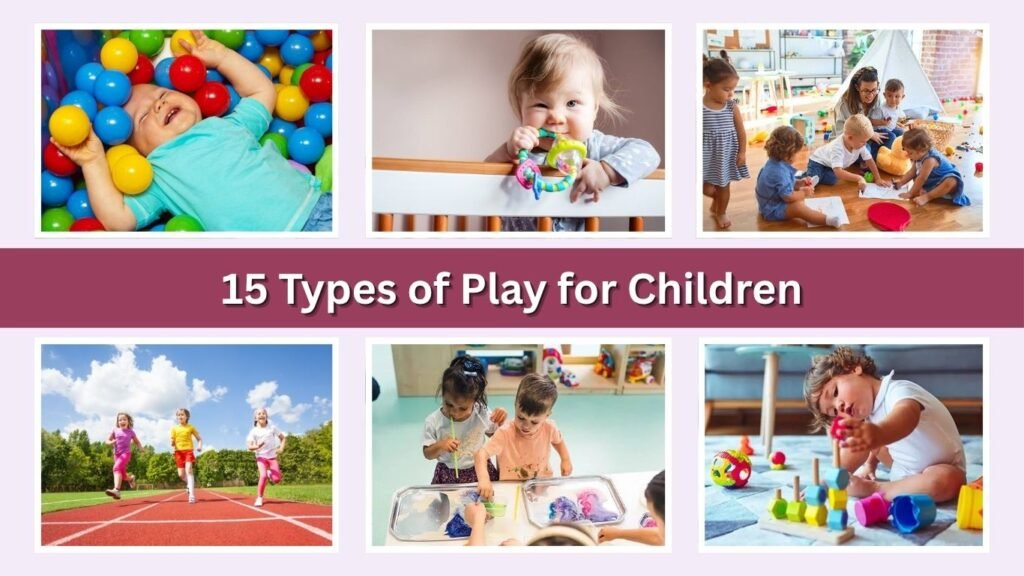
Play is more than just fun—it is an essential part of every child’s growth and development. From imaginative adventures to physical activities, different types of play help children build creativity, confidence, communication, and problem-solving skills. Understanding the 15 types of play for children can help parents and educators choose engaging activities that support learning, encourage social interaction, and promote healthy development at every stage of childhood.
1. Physical Play
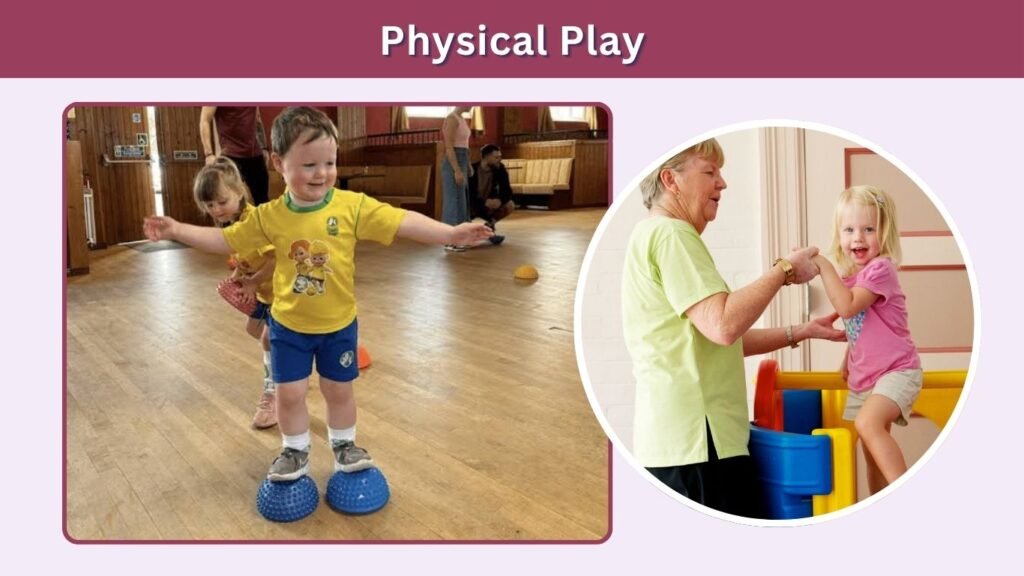
Physical play is an active type of play that involves body movements, exercise, and coordination. Children naturally enjoy activities such as running, jumping, climbing, dancing, and playing with balls. These activities help develop physical strength, balance, flexibility, and motor skills. Physical play also encourages children to explore their surroundings, build confidence, and develop healthy habits from an early age.
Examples of Physical Play
- Running, jumping, and skipping
- Riding bicycles or scooters
- Playing football or basketball
- Climbing playground equipment
- Dancing and movement games
- Playing hide-and-seek or tag
Benefits of Physical Play
Physical play supports children’s overall growth by strengthening muscles, bones, and coordination. It improves gross motor skills and helps children develop better balance and body control. Outdoor physical activities also encourage social interaction, teamwork, and problem-solving. Regular movement can improve sleep quality, support emotional well-being, and help children maintain a healthy lifestyle.
2. Pretend Play
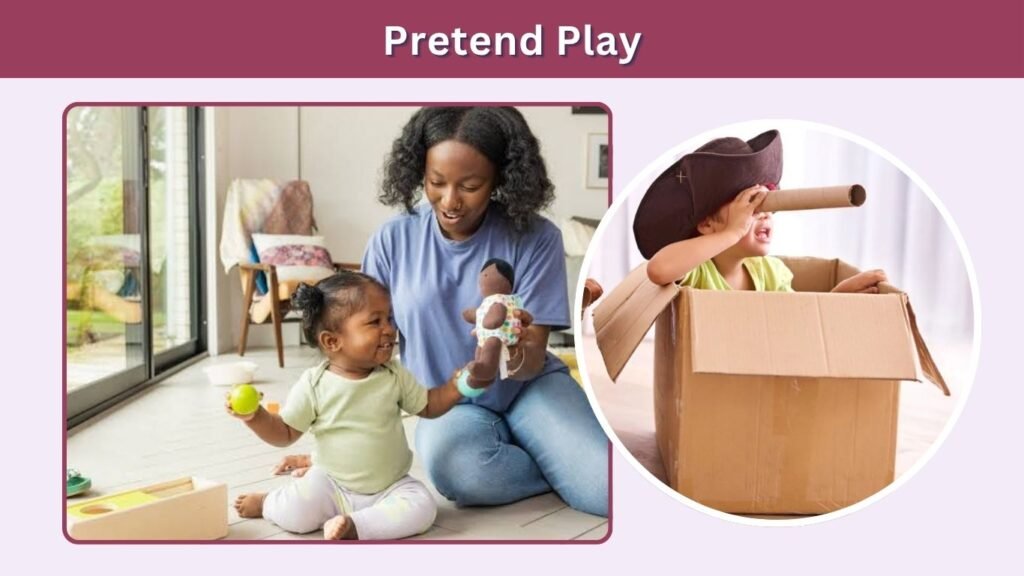
Pretend play is a creative and imaginative type of play where children act out different characters, situations, or real-life experiences. They may pretend to be doctors, teachers, superheroes, or parents while creating their own stories. This type of play helps children understand the world around them, express emotions, and develop communication skills. Pretend play is especially popular among preschoolers and young children.
Examples of Pretend Play
- Playing doctor or nurse with toy medical kits
- Pretending to cook in a toy kitchen
- Acting like superheroes or favorite characters
- Playing house with dolls and stuffed animals
- Pretending to run a grocery store
- Dressing up as different professionals
Benefits of Pretend Play
Pretend play strengthens children’s imagination, creativity, and problem-solving abilities. It encourages language development as children create conversations and explain their imaginary situations. Through role-playing, children also learn empathy, emotional expression, and social skills. Playing different characters allows them to explore responsibilities, understand relationships, and practice handling everyday situations in a safe environment.
3. Constructive Play
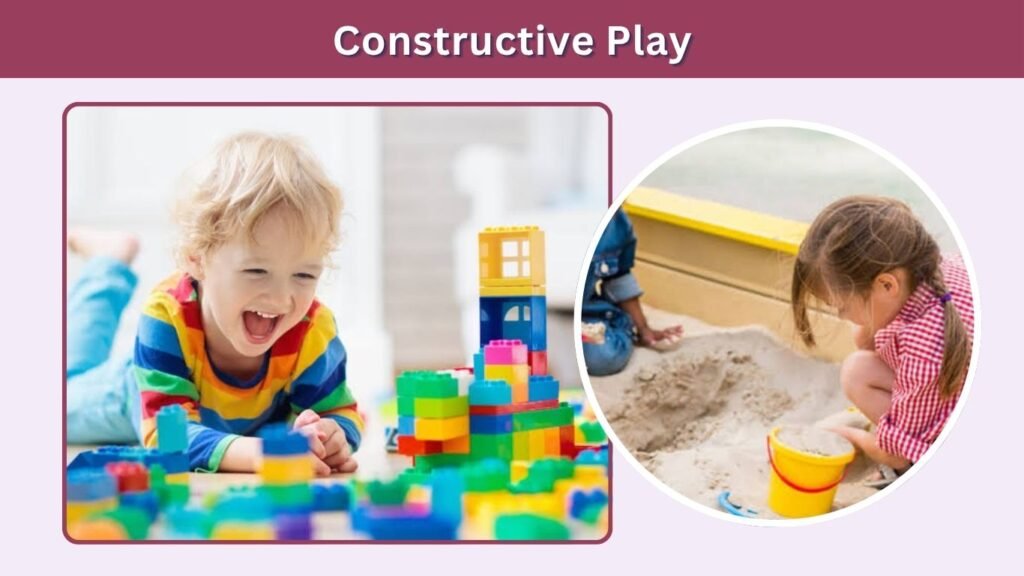
Constructive play involves children using different materials to build, create, or design something. Activities such as stacking blocks, assembling building sets, making sandcastles, and creating structures with cardboard are common examples. This type of play combines creativity with hands-on learning, allowing children to experiment with shapes, sizes, balance, and construction techniques while developing essential thinking and motor skills.
Examples of Constructive Play
- Building towers with wooden blocks
- Creating structures using LEGO bricks
- Making sandcastles at the beach
- Building houses with cardboard boxes
- Designing roads and bridges with toy blocks
- Creating models using clay or playdough
Benefits of Constructive Play
Constructive play develops children’s problem-solving skills, spatial awareness, and hand-eye coordination. As children experiment with different materials, they learn about balance, shapes, patterns, and basic engineering concepts. It also improves concentration, patience, and creativity. Completing a building project can increase confidence and provide children with a sense of accomplishment while encouraging independent thinking.
4. Sensory Play
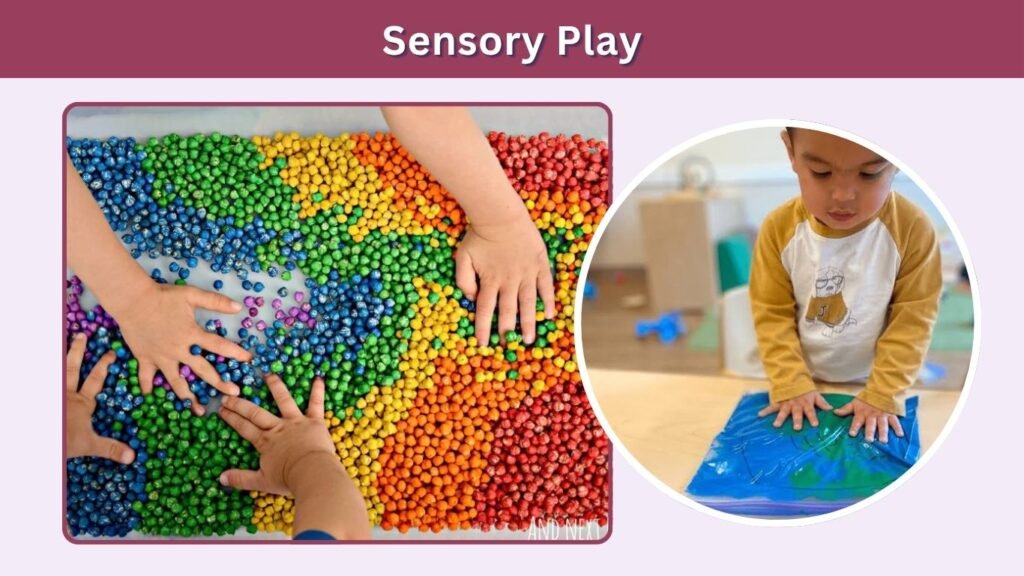
Sensory play is a hands-on type of play that stimulates children’s senses, including touch, sight, hearing, smell, and sometimes taste. Activities such as playing with water, sand, textured materials, and colorful objects allow children to explore their surroundings through sensory experiences. This type of play encourages curiosity, supports brain development, and helps young children understand different textures, temperatures, sounds, and materials.
Examples of Sensory Play
- Playing with sand and water tables
- Exploring colorful sensory bins
- Making shapes with playdough
- Finger painting with washable paints
- Playing with bubbles and foam
- Exploring textured fabrics and soft toys
Benefits of Sensory Play
Sensory play supports children’s cognitive development, fine motor skills, and sensory processing abilities. Handling different materials helps improve hand-eye coordination, concentration, and problem-solving skills. It also encourages language development as children describe textures, colors, and sensations. Some sensory activities can promote relaxation, emotional regulation, and creativity while allowing children to explore new experiences at their own pace.
5. Creative Play
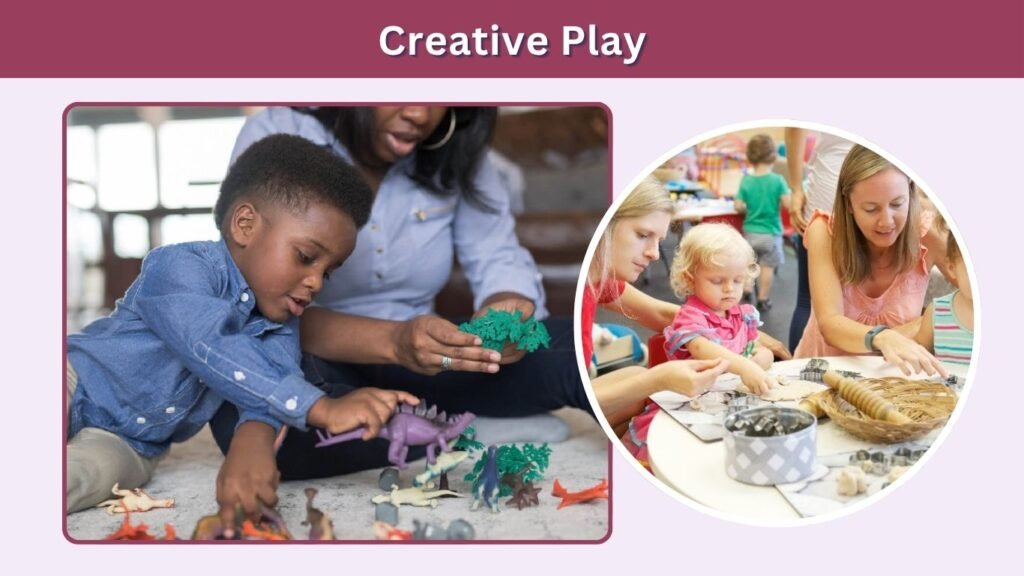
Creative play allows children to express their imagination, ideas, and emotions through artistic and inventive activities. It includes drawing, painting, storytelling, music, crafting, and creating original designs. Unlike structured activities with specific outcomes, creative play encourages children to experiment freely and develop their own unique creations. This type of play supports self-expression, imaginative thinking, and confidence while helping children discover their personal interests and abilities.
Examples of Creative Play
- Drawing pictures with crayons and markers
- Painting with brushes or fingers
- Making crafts using paper and recycled materials
- Creating stories with puppets or toys
- Singing songs and playing musical instruments
- Designing colorful artwork with clay
Benefits of Creative Play
Creative play strengthens children’s imagination, emotional expression, and problem-solving abilities. Artistic activities help develop fine motor skills, hand-eye coordination, and concentration. Children also learn to make decisions, explore new ideas, and experiment with different techniques. Expressing thoughts through art, music, and storytelling can improve communication skills and build confidence while encouraging independent thinking and originality.
6. Social Play
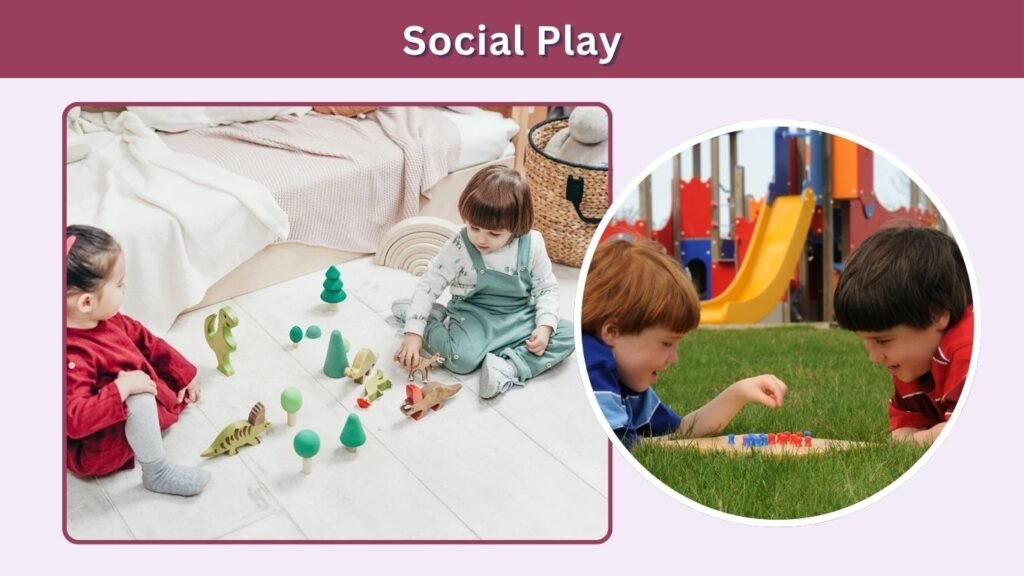
Social play is an interactive type of play that involves children engaging with others through shared activities, games, and conversations. It helps children develop relationships, understand social rules, and practice communication skills. Activities such as group games, role-playing, and playing with friends encourage cooperation and emotional understanding. Social play becomes increasingly important as children grow and begin developing friendships with peers.
Examples of Social Play
- Playing board games with friends
- Participating in group playground activities
- Organizing pretend tea parties
- Playing team sports with other children
- Building structures together with blocks
- Participating in group storytelling games
Benefits of Social Play
Social play helps children develop communication, cooperation, and relationship-building skills. Interacting with peers teaches them how to share, take turns, negotiate, and resolve disagreements. It also encourages empathy, emotional awareness, and confidence in social situations. Through shared experiences, children learn to respect different opinions, understand boundaries, and develop friendships that support their emotional and social development.
7. Solitary Play
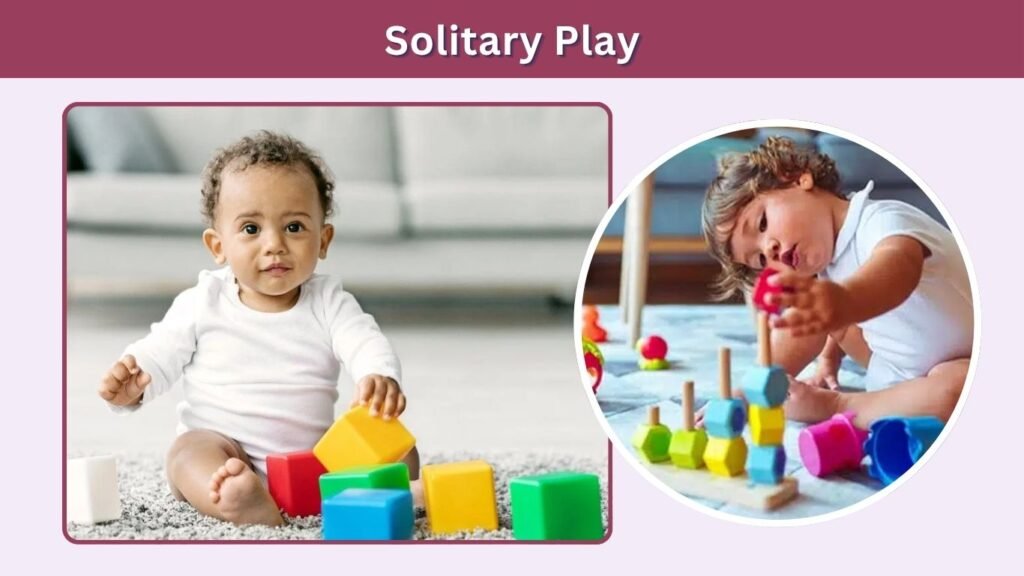
Solitary play is a type of independent play where children engage in activities alone without directly interacting with others. They may focus on toys, puzzles, books, or creative projects while exploring their interests at their own pace. This form of play is especially common among infants and toddlers, although older children also benefit from independent activities. Solitary play encourages self-discovery, concentration, and confidence while supporting independent learning.
Examples of Solitary Play
- Completing puzzles independently
- Playing with dolls or action figures alone
- Building towers with blocks
- Drawing or coloring pictures
- Looking through picture books
- Creating shapes with modeling clay
Benefits of Solitary Play
Solitary play promotes independence, creativity, and problem-solving abilities. Children learn to entertain themselves, make decisions, and explore activities without relying on constant guidance. It also strengthens concentration, patience, and self-confidence. Independent play gives children opportunities to process experiences, practice newly learned skills, and develop personal interests. These experiences can support emotional regulation and encourage children to become more comfortable spending time alone.
8. Parallel Play
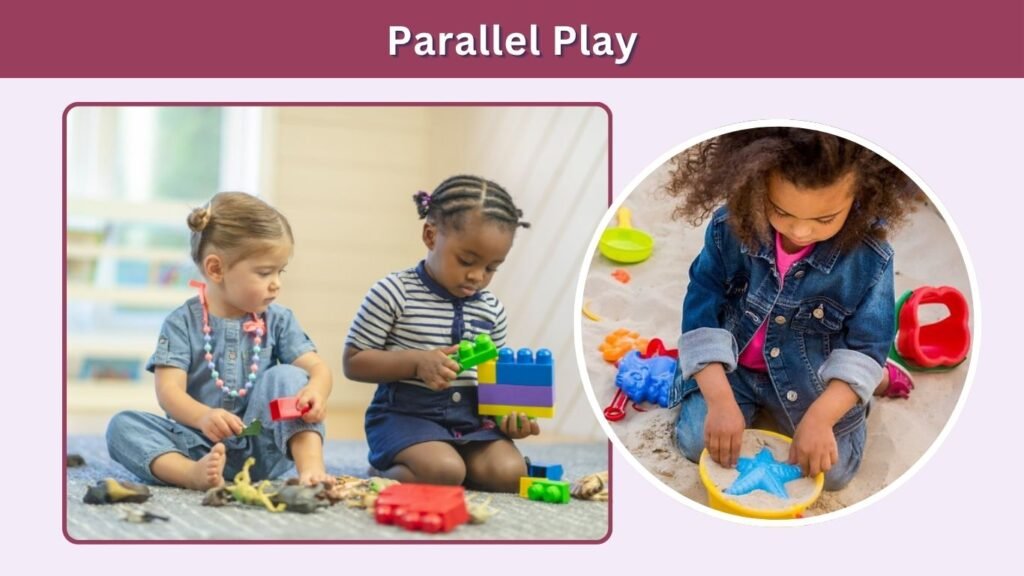
Parallel play is a type of play where children play alongside one another without directly interacting or sharing a common activity. They may use similar toys, build separate structures, or engage in individual activities while observing nearby children. This form of play is especially common among toddlers and represents an important stage of early social development. Parallel play allows children to become comfortable around peers while maintaining their independence.
Examples of Parallel Play
- Playing with separate sets of building blocks
- Drawing pictures while sitting beside another child
- Playing with individual toy cars in the same area
- Building separate sandcastles in a sandbox
- Exploring different toys at the same play table
- Completing individual puzzles beside friends
Benefits of Parallel Play
Parallel play supports children’s social awareness, independence, and observational learning. By watching nearby children, they discover new ways to use toys, solve problems, and express themselves. It also encourages concentration, fine motor development, and confidence in shared environments. Although children may not interact directly, parallel play helps them become familiar with social situations and gradually prepares them for more cooperative activities.
9. Cooperative Play
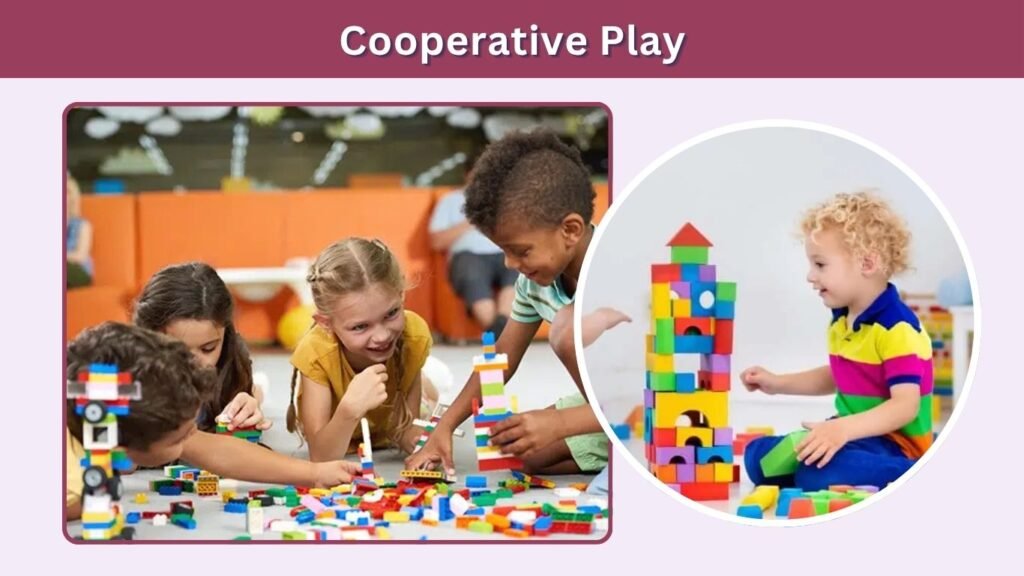
Cooperative play is a social type of play where children work together toward a shared goal or participate in organized activities. It involves communication, teamwork, sharing responsibilities, and following agreed-upon rules. Children may cooperate to build structures, complete group projects, or participate in imaginative games. This type of play becomes more common during the preschool years as children develop stronger language, emotional, and social skills.
Examples of Cooperative Play
- Building a large block tower together
- Playing team sports with friends
- Creating a group art project
- Acting out stories with assigned characters
- Working together to complete a puzzle
- Organizing group treasure hunts
Benefits of Cooperative Play
Cooperative play strengthens children’s teamwork, communication, and problem-solving abilities. Working toward shared goals teaches them to listen, negotiate, share responsibilities, and respect different opinions. It also encourages empathy, patience, and emotional regulation when challenges or disagreements arise. Through cooperative activities, children develop leadership skills, build friendships, and learn how individual contributions can help a group achieve success.
10. Associative Play
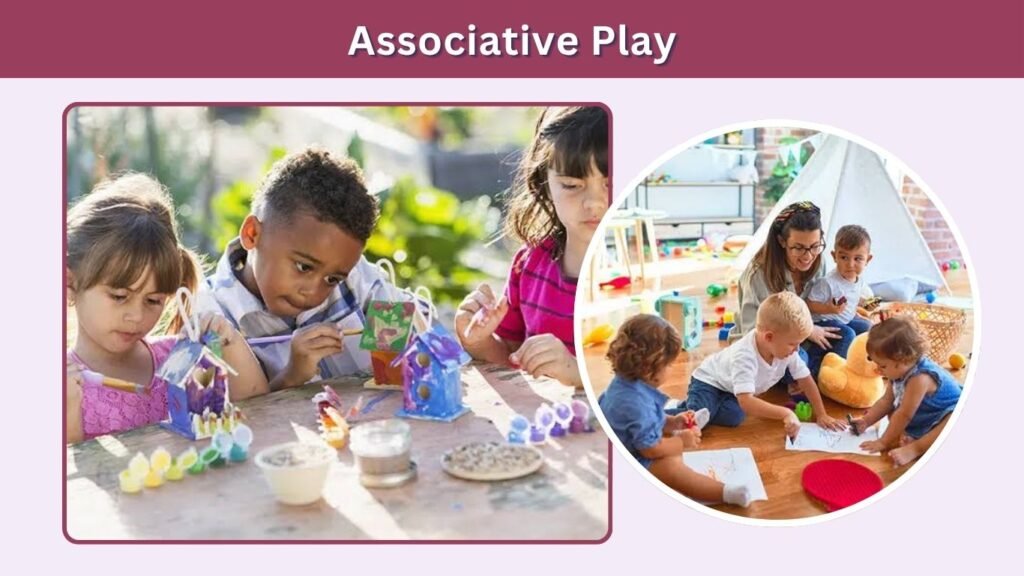
Associative play is a type of social play where children interact, communicate, and share materials while engaging in activities without following a common goal or organized plan. Children may exchange toys, discuss their creations, or participate in similar activities while maintaining their individual interests. This type of play is common among preschool-aged children and helps them develop essential communication, friendship, and social interaction skills.
Examples of Associative Play
- Sharing toys while playing different games
- Drawing pictures together without a shared project
- Building separate structures using the same blocks
- Playing with dolls while exchanging accessories
- Talking with friends during sandbox activities
- Exploring playground equipment alongside other children
Benefits of Associative Play
Associative play supports children’s social development, communication skills, and emotional awareness. Through informal interactions, children learn to share materials, express ideas, negotiate, and understand different perspectives. It encourages friendship development, confidence, and cooperative behaviors without requiring structured teamwork. Children also improve their language skills and creativity as they exchange ideas and observe how others approach similar activities.
11. Onlooker Play
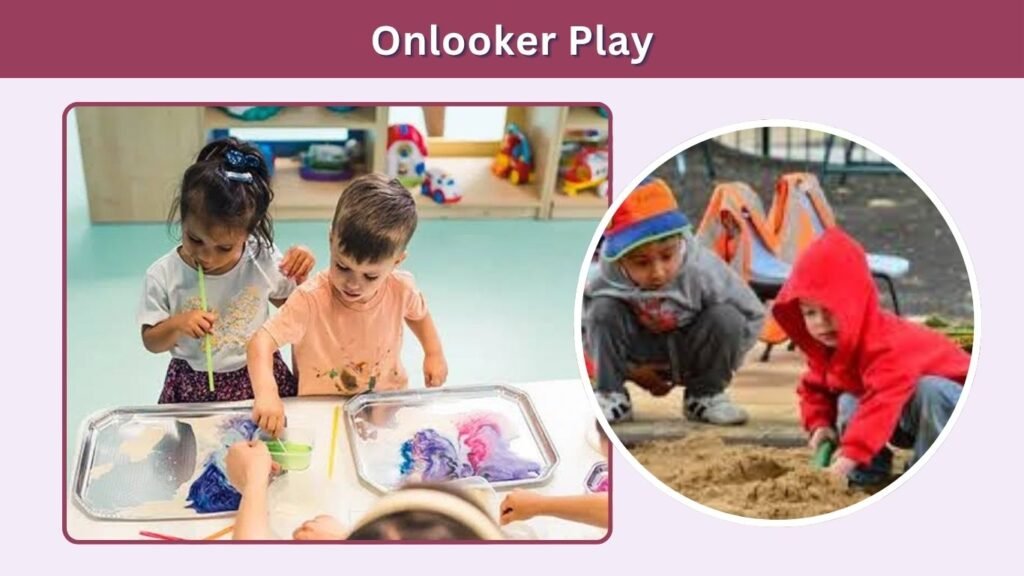
Onlooker play occurs when children watch others playing without actively joining the activity. They may stand nearby, observe how toys are used, ask questions, or comment on what other children are doing. This type of play is a normal part of early childhood development, particularly among toddlers and preschoolers. Observing others allows children to learn social behaviors, understand different activities, and build confidence before participating themselves.
Examples of Onlooker Play
- Watching other children build block towers
- Observing a group playing football
- Standing nearby while friends play pretend games
- Watching children use playground equipment
- Observing classmates during art activities
- Asking questions while watching a board game
Benefits of Onlooker Play
Onlooker play helps children develop observational learning, social awareness, and communication skills. By watching others, children discover new activities, understand social rules, and learn different approaches to problem-solving. It also encourages curiosity, patience, and emotional understanding. Observing interactions can help children feel more comfortable in unfamiliar environments and gradually develop the confidence needed to participate in group activities.
12. Unoccupied Play
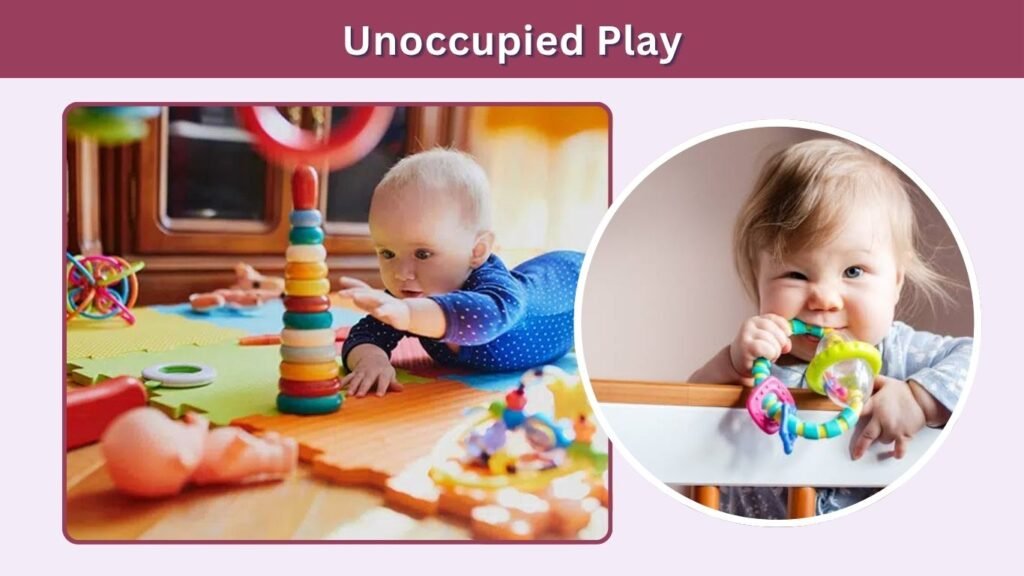
Unoccupied play is an early form of play in which children make spontaneous movements or explore their surroundings without an obvious goal or organized activity. It is especially common among infants, who may wave their arms, kick their legs, observe moving objects, or explore their own movements. Although these behaviors may appear random, they provide important opportunities for sensory discovery, physical development, and early learning.
Examples of Unoccupied Play
- Moving arms and legs while lying on a play mat
- Watching moving objects or colorful toys
- Repeatedly opening and closing hands
- Kicking feet during supervised floor time
- Exploring different body movements
- Looking around and responding to nearby sounds
Benefits of Unoccupied Play
Unoccupied play supports early sensory awareness, motor development, and curiosity. Spontaneous movements help infants discover how their bodies function and respond to different sensations. These experiences contribute to muscle development, coordination, and body awareness. Observing surrounding objects and responding to sounds also encourages attention and early cognitive development. This type of play provides a foundation for more purposeful exploration as children grow.
13. Dramatic Play
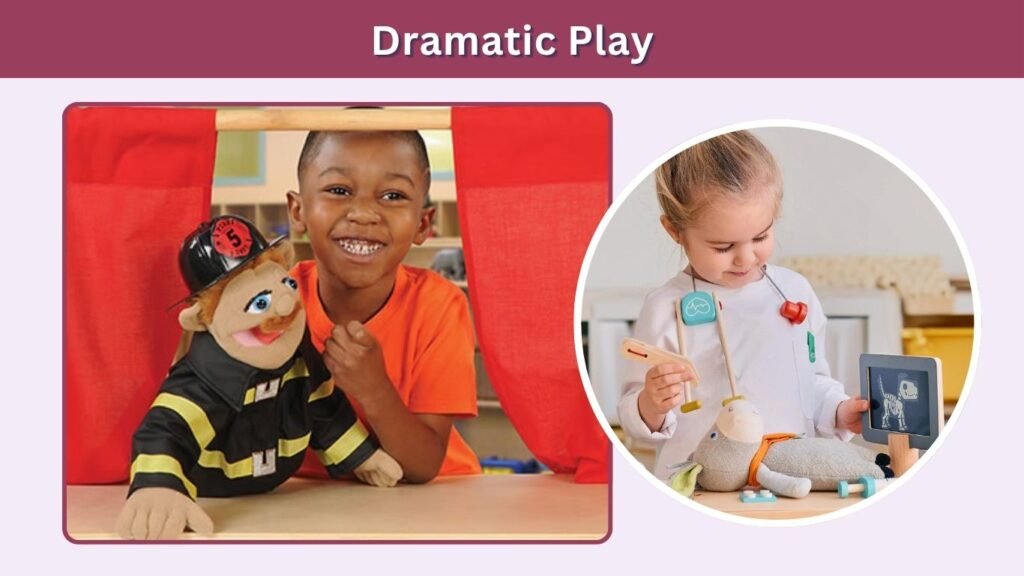
Dramatic play is an imaginative type of play where children act out different characters, stories, and real-life situations. They may pretend to be doctors, firefighters, teachers, or fictional characters while creating their own adventures. This type of play encourages children to explore emotions, understand social roles, and express their creativity. Dramatic play is especially popular among preschoolers and helps develop essential communication and social skills.
Examples of Dramatic Play
- Acting as doctors and treating toy patients
- Pretending to run a restaurant or grocery store
- Dressing up as superheroes or storybook characters
- Performing puppet shows with imaginary stories
- Playing school with friends and stuffed animals
- Acting out favorite fairy tales or television stories
Benefits of Dramatic Play
Dramatic play strengthens children’s imagination, communication skills, and emotional understanding. Acting out different roles allows them to explore real-world situations, practice conversations, and develop empathy. It also encourages creative thinking, problem-solving, and cooperation when children participate in group performances. Through storytelling and role-playing, children can build confidence, improve language abilities, and express feelings that may be difficult to communicate directly.
14. Competitive Play

Competitive play involves children participating in games or activities where individuals or teams attempt to achieve a goal, earn points, or win against others. It includes sports, board games, races, and skill-based challenges that follow specific rules. This type of play helps children understand healthy competition, practice self-control, and develop persistence. When appropriately guided, competitive play encourages teamwork, resilience, and respect for others.
Examples of Competitive Play
- Playing football or basketball matches
- Participating in running races
- Playing board games with winners and losers
- Organizing friendly obstacle course competitions
- Participating in relay races
- Playing age-appropriate card games
Benefits of Competitive Play
Competitive play helps children develop decision-making, strategic thinking, and problem-solving skills. Participating in organized games teaches them to follow rules, respect opponents, and handle both winning and losing. It also encourages patience, emotional regulation, and determination when facing challenges. Team competitions can strengthen communication, cooperation, and leadership abilities while physical competitions support coordination, endurance, and overall fitness.
15. Exploratory Play
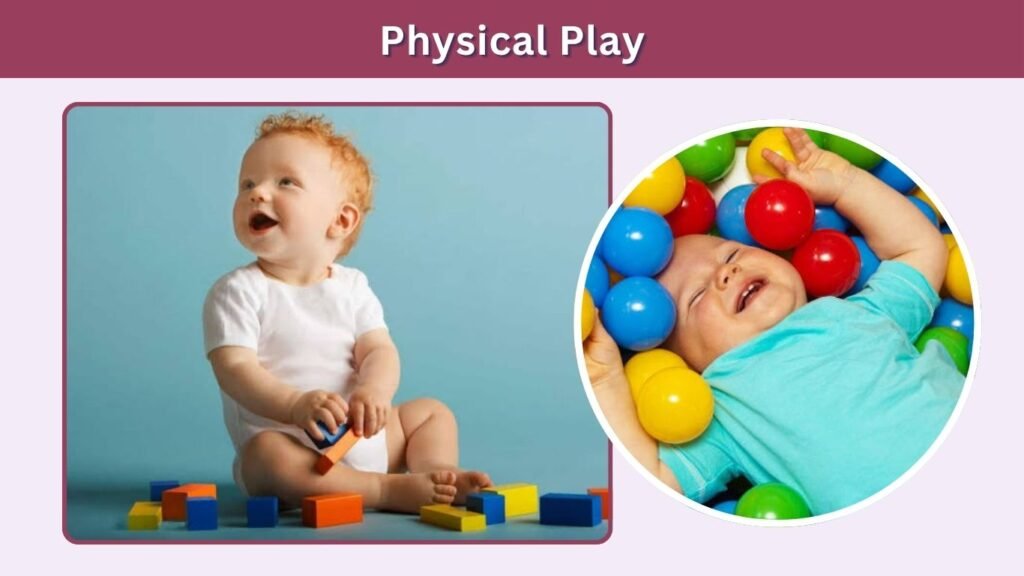
Exploratory play is a discovery-based type of play where children investigate objects, materials, and environments to understand how things work. They naturally explore by touching, observing, moving, sorting, and experimenting with different items. Activities such as examining leaves, mixing colors, or discovering how toys function encourage curiosity and independent learning. Exploratory play is important throughout childhood because it supports cognitive development, sensory awareness, and problem-solving skills.
Examples of Exploratory Play
- Collecting and examining leaves, rocks, and flowers
- Exploring how different toys move or function
- Mixing colors using washable paints
- Playing with magnets and magnetic objects
- Investigating water movement using cups and containers
- Observing insects and plants in the garden
Benefits of Exploratory Play
Exploratory play encourages curiosity, critical thinking, and scientific discovery. Children develop problem-solving skills by experimenting with materials, observing changes, and identifying patterns. It also improves sensory awareness, concentration, and hand-eye coordination. Exploring natural environments helps children understand basic scientific concepts, including cause and effect, movement, texture, and relationships between objects. These experiences support independent thinking and create a foundation for future learning.
FAQs
1. What Are the Main Types of Play for Children?
The main types of play include physical play, pretend play, constructive play, sensory play, creative play, social play, solitary play, parallel play, cooperative play, and exploratory play. Each type supports different aspects of children’s physical, cognitive, emotional, and social development.
2. Why Is Play Important for Child Development?
Play helps children develop essential life skills such as communication, creativity, problem-solving, and emotional regulation. It also supports physical coordination, builds confidence, encourages independence, and teaches children how to interact positively with others.
3. What Type of Play Is Best for Toddlers?
Sensory play, physical play, solitary play, and parallel play are particularly beneficial for toddlers. Activities such as stacking blocks, exploring textures, playing with water, and engaging with simple toys help develop motor skills, curiosity, and early social awareness.
4. At What Age Do Children Start Cooperative Play?
Children often begin showing cooperative play behaviors around ages 3 to 4, although development varies. During this stage, they gradually learn to share responsibilities, follow group rules, communicate ideas, and work together toward common goals.
5. How Can Parents Encourage Different Types of Play?
Parents can encourage different types of play by providing age-appropriate toys, safe play spaces, outdoor activities, and opportunities for social interaction. Allowing children to explore freely, use their imagination, and choose activities based on their interests supports balanced development and makes learning enjoyable.
