
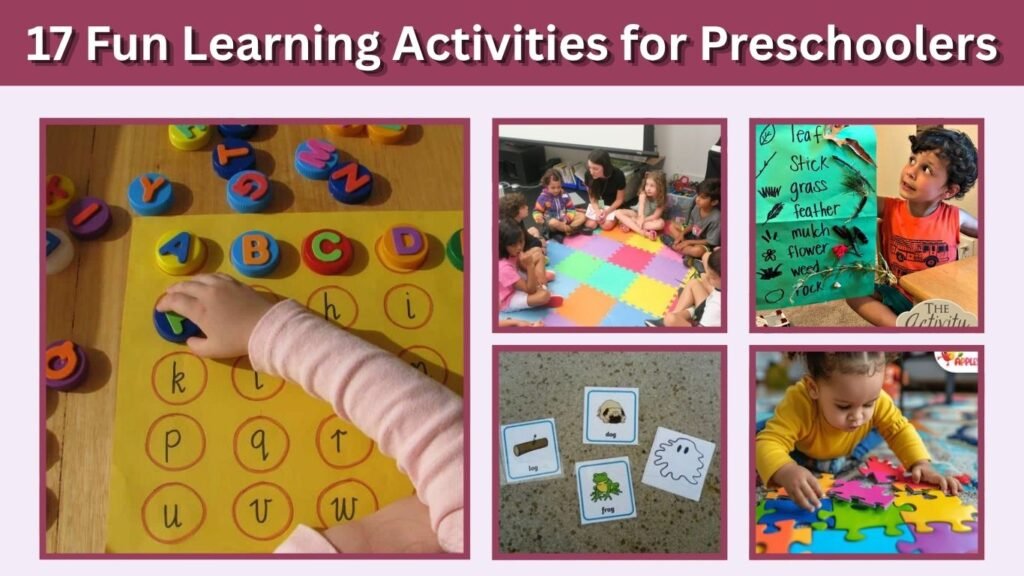
Learning through play helps preschoolers develop essential skills while keeping them engaged and excited. From alphabet matching and counting games to sensory exploration and simple science experiments, these 17 fun learning activities for preschoolers encourage creativity, problem-solving, and early literacy. Each activity is easy to organize at home or in the classroom using simple materials, making everyday learning enjoyable, interactive, and educational.
1. Alphabet Matching Activity
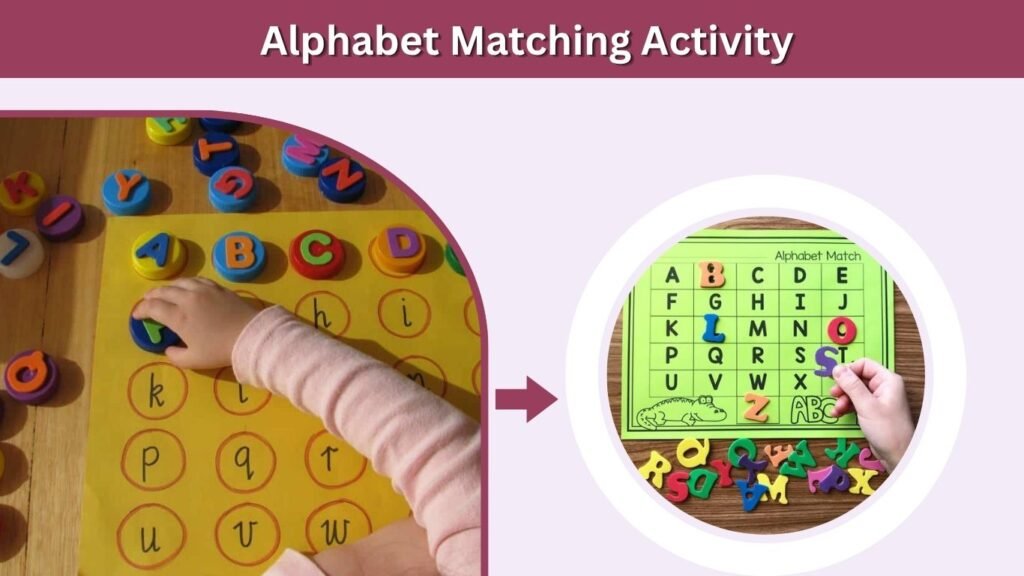
Alphabet matching is a fun and educational activity that helps preschoolers recognize letters and develop early reading skills. Children learn to identify uppercase and lowercase letters by matching them together. This hands-on learning activity improves memory, concentration, and letter recognition while making learning enjoyable. It is perfect for children ages 3–5 and can be easily organized at home or in the classroom.
Materials Needed
- Alphabet Flashcards: Uppercase and lowercase letter cards.
- Colored Paper: For creating homemade alphabet cards.
- Markers or Crayons: For writing and decorating letters.
- Small Containers: For sorting and organizing letter cards.
- Alphabet Chart: To help children identify unfamiliar letters.
How to Do the Alphabet Matching Activity
Start by preparing alphabet cards with uppercase letters on one set and lowercase letters on another. Place the cards on a table or play mat where children can easily see them.Choose five familiar letters to begin, such as A, B, C, D, and E. Show your preschooler an uppercase letter and encourage them to find its matching lowercase letter. For example, when you show the letter “A,” they should find the lowercase “a.”Once children become comfortable matching a few letters, gradually introduce additional letters. Make the activity more exciting by hiding alphabet cards around the room and encouraging children to find matching pairs.You can also ask children to say the letter names and sounds while matching them. Keep each session short, playful, and suitable for their attention span.
Learning and Development Benefits
Alphabet matching activities support early literacy development by helping preschoolers recognize and differentiate uppercase and lowercase letters. This foundational skill prepares children for reading, spelling, and writing.The activity also strengthens visual discrimination, memory, and concentration as children examine letter shapes and identify matching pairs. Picking up and arranging small cards encourages fine motor development and hand-eye coordination.When children pronounce letter names and practice their sounds, they develop phonological awareness and communication skills. Successfully finding matching letters also builds confidence and encourages independent learning.
2. Number Counting Games
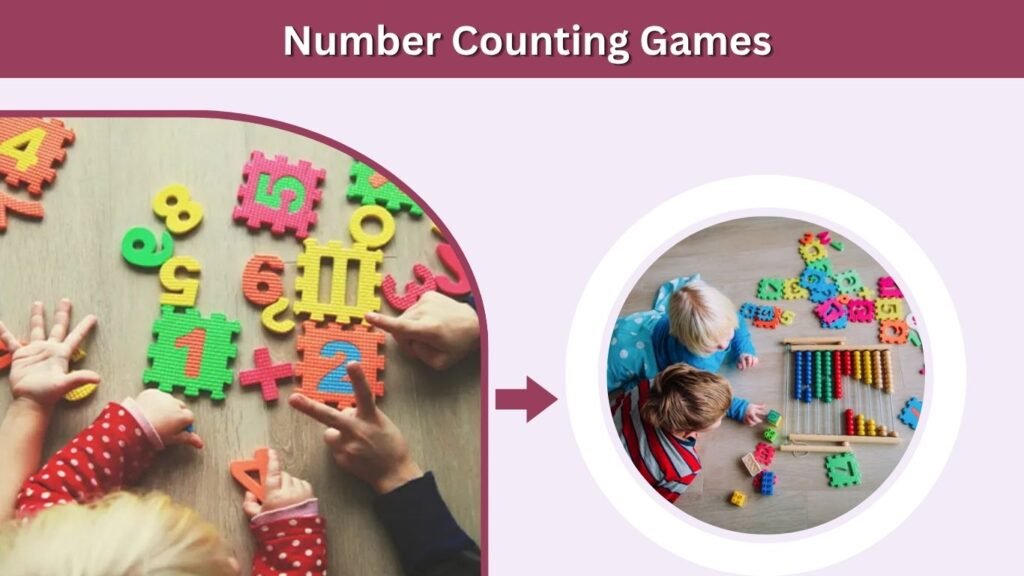
Number counting games are engaging learning activities that help preschoolers understand numbers and develop basic math skills. Through playful counting exercises, children learn to recognize numbers, count objects, and connect numbers with quantities. These activities encourage logical thinking, concentration, and problem-solving skills. Suitable for children ages 3–5, number counting games can be easily organized using everyday household materials.
Materials Needed
- Number Flashcards: Cards displaying numbers from 1 to 10.
- Counting Objects: Large buttons, blocks, or colorful toys for counting.
- Number Chart: A visual chart showing numbers and quantities.
- Small Containers: For sorting and organizing counting materials.
- Paper and Markers: For creating number cards and counting worksheets.
How to Play Number Counting Games
Start by introducing numbers from 1 to 5 using colorful flashcards. Show your preschooler a number and encourage them to say it aloud. Place several blocks or toys on a table and ask your child to count them individually.For example, display the number “3” and ask your child to place three blocks beside the card. Help them touch each block while counting to strengthen their understanding of number quantities.Once children become comfortable with smaller numbers, gradually introduce numbers up to 10. You can also organize a counting treasure hunt by asking preschoolers to find specific numbers of toys around the room.Make counting more exciting by incorporating songs, clapping, jumping, or other simple movements. Keep activities short and enjoyable to maintain children’s interest.
Learning and Development Benefits
Number counting games build early mathematical understanding by teaching preschoolers number recognition, counting sequences, and quantity relationships. These foundational skills prepare children for addition, subtraction, and more advanced mathematical concepts.Counting physical objects helps children develop one-to-one correspondence, meaning they learn to connect each spoken number with one object. This strengthens logical thinking and problem-solving abilities.Handling counting materials also improves fine motor skills and hand-eye coordination. Group activities encourage communication, cooperation, and patience as children take turns counting.Regular practice develops confidence with numbers and creates a positive attitude toward learning mathematics.
3. Color Sorting Activity
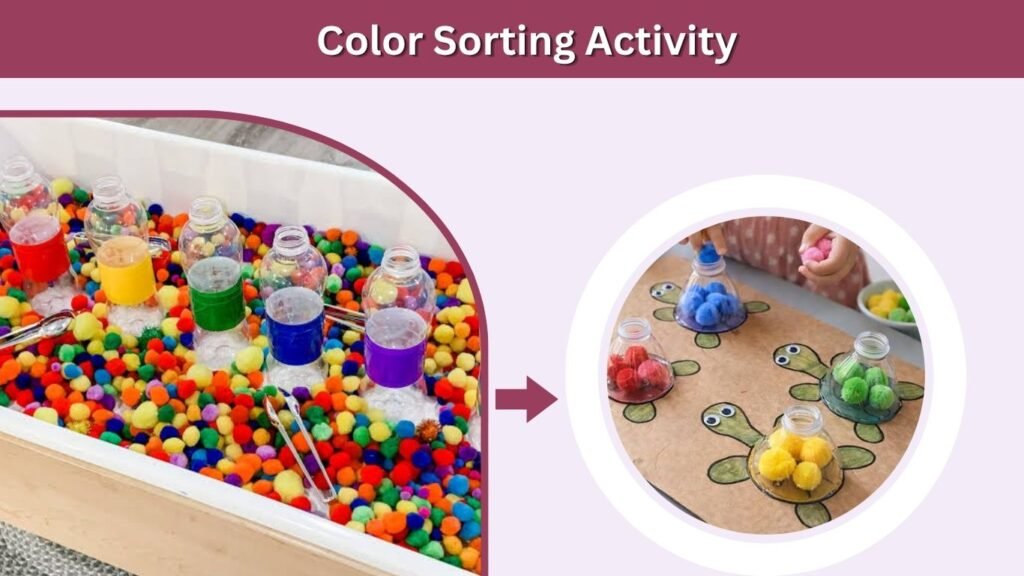
Color sorting is a creative and interactive learning activity that helps preschoolers recognize different colors while developing important cognitive skills. Children sort colorful objects into matching groups, improving their ability to identify similarities and differences. This simple activity encourages observation, concentration, and problem-solving while strengthening fine motor coordination. It is ideal for preschoolers ages 3–5 and requires only a few inexpensive household materials.
Materials Needed
- Colored Blocks: Large blocks in red, blue, yellow, and green.
- Sorting Bowls: Separate containers for organizing different colors.
- Colored Paper: Sheets matching the colors of the sorting objects.
- Color Flashcards: Cards displaying common colors.
- Play Mat: A comfortable surface for arranging and sorting materials.
How to Do the Color Sorting Activity
Begin by placing several colorful blocks or toys on a table. Introduce three basic colors, such as red, blue, and yellow, and ask your preschooler to name each color.Arrange three sorting bowls and place a piece of colored paper inside each bowl to identify its matching color. Demonstrate the activity by picking up a red block and placing it inside the red bowl.Encourage your child to continue sorting the remaining blocks independently. Ask simple questions such as, “Can you find another blue block?” or “Which bowl should the yellow toy go into?”Once children become confident with basic colors, introduce additional shades such as orange, purple, and pink.For a more exciting challenge, organize a color scavenger hunt around the room. Ask children to collect safe household objects of a particular color and sort them into matching groups.
Learning and Development Benefits
Color sorting activities help preschoolers develop visual discrimination and classification skills. By identifying and grouping objects according to color, children learn to recognize patterns, similarities, and differences.These skills support early mathematical concepts, including sorting, grouping, and comparing objects. Children also improve their observation and problem-solving abilities while deciding where each item belongs.Picking up blocks and placing them into containers strengthens fine motor coordination and hand-eye control. Naming colors during the activity expands vocabulary and supports language development.Successfully completing sorting challenges builds confidence, encourages independent thinking, and promotes curiosity about the surrounding environment.
4. Shape Recognition Games
Shape recognition games are fun and educational activities that help preschoolers identify basic geometric shapes while developing early mathematical skills. Children learn to recognize circles, squares, triangles, rectangles, and other common shapes through hands-on exploration. These interactive games encourage observation, problem-solving, and visual discrimination. Suitable for children ages 3–5, shape recognition activities can be easily organized at home or in the classroom using simple learning materials.
Materials Needed
- Shape Flashcards: Cards featuring circles, squares, triangles, rectangles, and other basic shapes.
- Colorful Paper: For creating different geometric shapes.
- Shape Blocks: Large wooden or plastic blocks in various shapes.
- Sorting Containers: Small baskets or trays for grouping matching shapes.
- Markers or Crayons: For drawing and decorating shapes.
- Play Mat: A comfortable surface for arranging learning materials.
How to Play Shape Recognition Games
Begin by introducing three basic shapes, such as circles, squares, and triangles. Show your preschooler each shape and explain its simple features. For example, a triangle has three sides, while a square has four equal sides.Place several shape cards or blocks on a table and ask your child to identify each one. Demonstrate how to match similar shapes by placing a circular block beside a circle flashcard.Encourage children to sort different shapes into matching groups. Once they become comfortable, introduce additional shapes such as rectangles, ovals, and stars.Make the activity more exciting by organizing a shape scavenger hunt. Ask children to find everyday objects that resemble familiar shapes, such as a circular plate, rectangular book, or square cushion.You can also encourage preschoolers to create pictures using paper shapes. For example, they can combine a square and a triangle to make a simple house.
Learning and Development Benefits
Shape recognition games help preschoolers develop foundational geometry skills by identifying, comparing, and classifying different shapes. These early mathematical abilities prepare children for more advanced concepts involving patterns, measurements, and spatial relationships. Recognizing shapes also improves visual discrimination, observation, and logical thinking. Children learn to notice important characteristics, such as the number of sides and corners. Handling shape blocks and arranging paper cutouts strengthens fine motor skills and hand-eye coordination. Describing different shapes encourages vocabulary development and communication.Shape-based activities also promote creativity and problem-solving. As children discover familiar shapes in everyday objects, they develop a stronger understanding of their surroundings.
5. Letter Tracing Activity
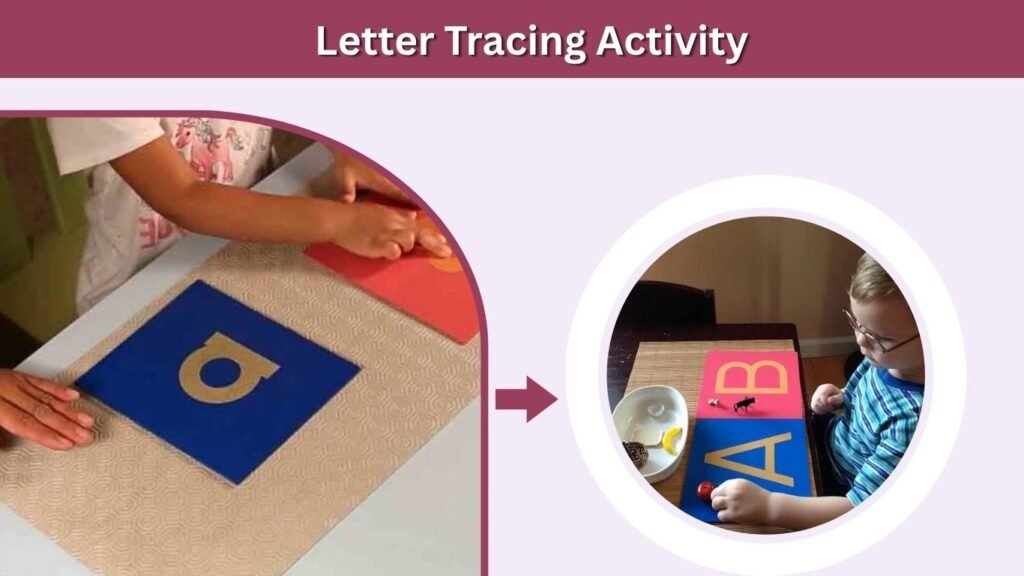
Letter tracing is an engaging preschool learning activity that introduces children to early handwriting skills. By tracing uppercase and lowercase letters, preschoolers become familiar with letter shapes and develop the hand movements needed for writing. This activity strengthens fine motor coordination, pencil control, and letter recognition while encouraging concentration and creativity. It is suitable for children ages 3–5 and can be adapted to different learning abilities using paper, crayons, or sensory materials.
Materials Needed
- Alphabet Tracing Worksheets: Printable pages featuring dotted uppercase and lowercase letters.
- Jumbo Crayons: Easy-to-grip crayons suitable for small hands.
- Pencils: Thick beginner pencils for practicing writing movements.
- Colored Markers: Washable markers for making tracing more enjoyable.
- Whiteboard: A reusable surface for practicing letter formation.
- Sensory Tray: A shallow tray with a thin layer of sand for finger tracing.
How to Do the Letter Tracing Activity
Start by selecting a few familiar letters, such as those found in your preschooler’s name. Provide a tracing worksheet featuring large dotted letters that are easy to follow.Demonstrate how to trace a letter slowly while explaining its shape. For example, show children how to form the letter “A” by drawing two diagonal lines and adding a horizontal line.Encourage your child to trace the letter using a jumbo crayon or washable marker. Offer gentle guidance when needed, but allow them to practice independently.Once children become comfortable with uppercase letters, introduce lowercase letters gradually. You can also make tracing more exciting by using a whiteboard or sensory tray.For a hands-on variation, ask preschoolers to trace letters with their fingers in sand or form letter shapes using playdough. These activities provide different sensory experiences while reinforcing letter recognition.
Learning and Development Benefits
Letter tracing activities help preschoolers develop pre-writing skills by improving pencil control, hand-eye coordination, and fine motor strength. Repeated tracing introduces children to the movements required for forming letters.The activity also strengthens letter recognition and visual memory. As children observe and trace different letter shapes, they become more familiar with the alphabet and develop foundational literacy skills.Tracing encourages concentration, patience, and attention to detail. Children practice following lines and controlling their hand movements, which supports future handwriting development.Using different tracing materials also stimulates sensory exploration and creativity. Completing familiar letters successfully can increase children’s confidence and motivation to practice writing.
6. Sensory Bin Exploration

Sensory bin exploration is a fun and interactive learning activity that encourages preschoolers to discover different textures, colors, shapes, and objects through hands-on play. Children explore materials by touching, scooping, pouring, and sorting, which helps develop sensory awareness and fine motor skills. This activity promotes curiosity, creativity, and problem-solving while providing opportunities for independent learning. Suitable for children ages 3–5, sensory bins can be created using simple household materials.
Materials Needed
- Large Plastic Bin: A shallow container for holding sensory materials.
- Sensory Fillers: Large fabric scraps, soft sponges, or other age-appropriate materials.
- Scoops and Cups: Plastic tools for transferring and exploring objects.
- Small Toy Animals: Large, child-safe animal figures for imaginative play.
- Colorful Blocks: Different shapes and colors for sorting activities.
- Plastic Tongs: Child-friendly tools for practicing gripping and coordination.
How to Do Sensory Bin Exploration
Start by choosing a large plastic container and placing it on a stable table or play mat. Fill the container with safe sensory materials, such as soft fabric pieces, large foam shapes, or clean sponges.Add colorful blocks, large toy animals, and other interesting objects for children to discover. Provide scoops, cups, and child-friendly tongs to encourage different movements. Invite your preschooler to explore the materials freely. Encourage them to touch different textures, move objects between containers, and describe what they feel.For example, ask questions such as, “Which object feels soft?” or “Can you find something blue?” These simple questions encourage observation and vocabulary development.You can also introduce themed sensory bins, such as an ocean exploration bin with blue fabric and large sea animal toys.Allow children to experiment with different sorting, scooping, and imaginative play activities while providing gentle guidance when needed.
Learning and Development Benefits
Sensory bin exploration supports preschoolers’ cognitive development by encouraging curiosity, observation, and experimentation. Exploring different textures and objects helps children understand their surroundings through sensory experiences.Scooping, transferring, and gripping materials strengthen fine motor coordination and hand muscles. These abilities are important for future activities such as writing, drawing, and using classroom tools.Sensory play also encourages problem-solving and early mathematical thinking. Children naturally practice sorting, comparing, counting, and recognizing patterns while exploring materials.Describing textures, colors, and objects promotes vocabulary development and communication skills. Imaginative play with toy animals or themed materials encourages creativity and storytelling.Sensory bins can also provide opportunities for focused, independent exploration while helping children develop patience and confidence.
7. Building Blocks Challenge

Building blocks challenges are creative and educational activities that help preschoolers develop problem-solving abilities, spatial awareness, and fine motor coordination. Children use colorful blocks to construct towers, houses, bridges, and other simple structures while exploring balance, shapes, and sizes. This hands-on activity encourages imagination, logical thinking, and cooperation. Ideal for children ages 3–5, building blocks challenges can be enjoyed individually or in small groups at home or in preschool classrooms.
Materials Needed
- Building Blocks: Large wooden, foam, or plastic blocks in different shapes.
- Play Mat: A flat, comfortable surface for building structures.
- Picture Cards: Images of simple towers, houses, and bridges for inspiration.
- Measuring Tape: A child-friendly measuring tool for comparing structure heights.
- Sorting Baskets: Containers for organizing blocks by size, shape, or color.
- Toy Figures: Large, age-appropriate figures for imaginative building activities.
How to Play the Building Blocks Challenge
Begin by placing a collection of colorful building blocks on a flat surface. Allow your preschooler to explore the different shapes, sizes, and colors before starting the challenge.Introduce a simple building task, such as constructing a tower using five blocks. Demonstrate how to stack blocks carefully while maintaining balance.Encourage your child to build their own tower and experiment with different arrangements. Once they become comfortable, introduce more challenging structures, such as bridges, houses, or walls.You can make the activity more exciting by asking children to build the tallest tower possible without letting it fall. Another challenge involves creating a structure using only blocks of a particular color or shape.For group activities, encourage preschoolers to work together on a shared building project. Allow them to discuss their ideas, exchange blocks, and solve construction problems cooperatively.
Learning and Development Benefits
Building blocks challenges support cognitive development by encouraging preschoolers to experiment with balance, stability, shapes, and spatial relationships. Children begin to understand how different objects fit together and how structures can remain standing.These activities strengthen problem-solving and critical-thinking skills. When a tower falls, children can explore new building strategies and learn through trial and error.Handling and stacking blocks improves fine motor coordination, hand-eye control, and finger strength. These abilities support future handwriting and other everyday tasks.Building structures also introduces early mathematical concepts, including counting, measuring, comparing sizes, and recognizing geometric shapes.Group building challenges encourage teamwork, communication, and patience. Children learn to share materials, explain ideas, and cooperate with others while completing creative projects.
8. Pattern Recognition Activity

Pattern recognition is a fun and educational learning activity that helps preschoolers identify, understand, and create simple patterns using colors, shapes, and everyday objects. Children learn to recognize repeating sequences while developing early mathematical thinking and problem-solving skills. This hands-on activity improves concentration, observation, and logical reasoning. Suitable for children ages 3–5, pattern recognition activities can be easily organized at home or in the classroom using colorful blocks, toys, and other simple materials.
Materials Needed
- Colorful Blocks: Large blocks in different colors for creating patterns.
- Shape Cards: Cards featuring circles, squares, triangles, and other shapes.
- Pattern Worksheets: Printable sheets showing simple repeating sequences.
- Colored Paper: For creating different shapes and pattern designs.
- Sorting Trays: Containers for organizing materials by color or shape.
- Markers or Crayons: For drawing and completing patterns on paper.
How to Do the Pattern Recognition Activity
Begin by introducing a simple repeating pattern using two different colored blocks. For example, arrange red, blue, red, blue, and ask your preschooler to identify which color should come next.Demonstrate how the colors repeat in a specific order. Encourage your child to continue the sequence by selecting the correct block.Once children understand basic patterns, introduce more challenging arrangements using three colors or different geometric shapes. For example, create a pattern using a circle, square, and triangle, then repeat the sequence.You can also incorporate everyday objects such as large toy animals or colorful cups to make the activity more interesting.Another engaging variation involves creating movement patterns. Ask children to clap, jump, clap, and jump while recognizing the repeating sequence.Encourage preschoolers to create their own patterns and explain how they work. This allows them to practice independent thinking while exploring creative possibilities.
Learning and Development Benefits
Pattern recognition activities help preschoolers develop foundational mathematical skills by teaching them to identify sequences, relationships, and repeating arrangements. These abilities support future learning in counting, number operations, and mathematical reasoning. Recognizing patterns also strengthens observation, concentration, and logical thinking. Children learn to examine objects carefully, identify similarities, and predict what comes next.Arranging blocks and shape cards improves fine motor coordination and hand-eye control. Creating movement patterns additionally supports physical coordination and body awareness. Pattern-based games encourage creativity and problem-solving as children experiment with different combinations of colors, shapes, and movements.Explaining patterns aloud supports language development and communication skills. Successfully completing sequences builds confidence and encourages children to approach new learning challenges independently.
9. Animal Matching Games

Animal matching games are exciting preschool learning activities that introduce children to different animals while improving memory, observation, and language skills. Preschoolers match animal pictures, identify familiar creatures, and learn about their characteristics, sounds, and habitats. This interactive activity encourages curiosity about wildlife and supports early cognitive development. Perfect for children ages 3–5, animal matching games can be organized using colorful flashcards, picture books, and simple animal toys.
Materials Needed
- Animal Flashcards: Cards featuring familiar animals such as cats, dogs, lions, and elephants.
- Matching Picture Cards: Duplicate animal images for creating matching pairs.
- Toy Animals: Large plastic or wooden animal figures.
- Animal Picture Books: Illustrated books showing different animals.
- Sorting Baskets: Containers for organizing matching materials.
- Play Mat: A comfortable surface for arranging animal cards and toys.
How to Play Animal Matching Games
Begin by selecting five familiar animals, such as a cat, dog, cow, elephant, and lion. Show your preschooler each animal picture and introduce its name.Place one set of animal cards face up on a table. Give your child a second set of matching pictures and encourage them to find the correct pairs.For example, show a picture of a lion and ask your child to locate another lion card. Once they make a match, encourage them to name the animal and imitate its sound if they know it.As children become more confident, introduce additional animal pictures and gradually increase the number of matching pairs.You can also create a memory game by placing duplicate animal cards face down. Children take turns flipping two cards and trying to find matching animals.For an additional learning challenge, ask preschoolers to group animals by habitat, such as farm animals, ocean animals, or forest animals.
Learning and Development Benefits
Animal matching games strengthen preschoolers’ memory, observation, and concentration skills. Finding matching pictures encourages children to examine visual details and recognize similarities between different objects.These activities also support language development by introducing animal names, sounds, and descriptive vocabulary. Discussing animal characteristics encourages communication and expands children’s knowledge of the natural world.Matching and sorting animals develops classification skills and early logical thinking. Children learn to organize animals into groups based on their appearance, habitats, or other characteristics.Handling flashcards and animal toys improves fine motor coordination and hand-eye control.Playing animal matching games with other children also promotes cooperation, turn-taking, and patience. Successfully identifying animal pairs builds confidence and encourages curiosity about wildlife and nature.
10. Playdough Letter Formation
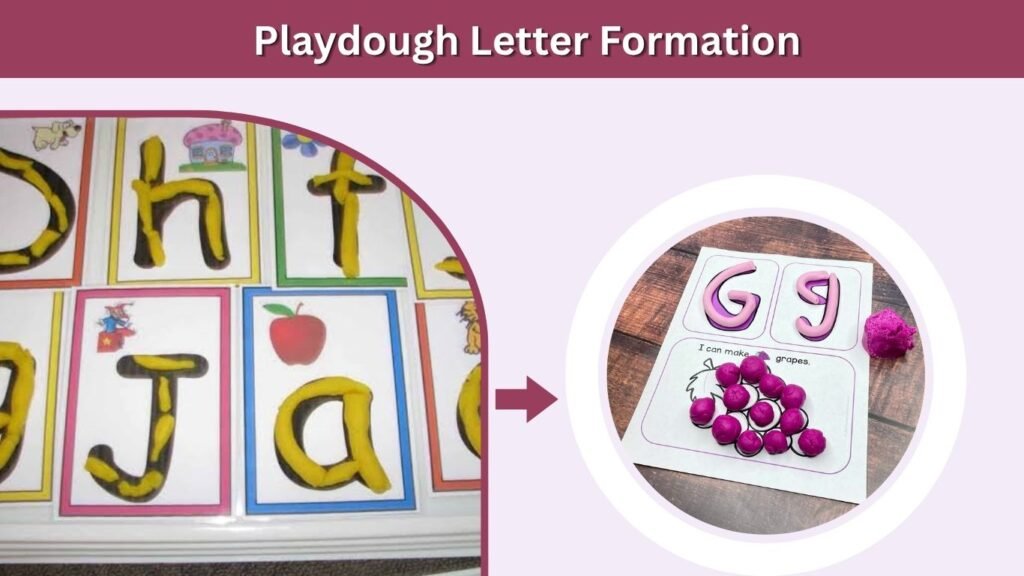
Playdough letter formation is a creative and hands-on learning activity that helps preschoolers recognize alphabet letters while developing fine motor skills. Children roll, shape, and arrange colorful playdough to form uppercase and lowercase letters. This interactive activity combines sensory exploration with early literacy development, making alphabet learning enjoyable and memorable. Suitable for children ages 3–5, playdough letter formation encourages creativity, concentration, and hand coordination while preparing children for future handwriting activities.
Materials Needed
- Colorful Playdough: Soft, non-toxic playdough in different colors.
- Alphabet Flashcards: Cards displaying uppercase and lowercase letters.
- Plastic Rolling Pin: A child-friendly tool for flattening playdough.
- Alphabet Mats: Printable sheets featuring large letter outlines.
- Playdough Tools: Child-safe plastic cutters and shaping tools.
- Play Mat: A clean, flat surface for shaping and arranging letters.
How to Do Playdough Letter Formation
Begin by placing several colors of playdough on a clean table or play mat. Allow your preschooler to explore the texture by squeezing, rolling, and flattening the dough.Choose a familiar letter, such as the first letter of your child’s name. Show the corresponding alphabet flashcard and explain its shape.Demonstrate how to roll a small piece of playdough into a long, thin rope. Arrange the rope along the letter outline to create the correct shape.Encourage your child to repeat the process independently. Offer guidance when needed, especially when forming letters with curved or diagonal lines.Once children become comfortable with uppercase letters, gradually introduce lowercase letters.For an additional challenge, ask preschoolers to create simple words using playdough letters. Start with familiar words such as “CAT,” “DOG,” or their own names.You can also encourage children to use different colors for each letter, making the activity more visually engaging and creative.
Learning and Development Benefits
Playdough letter formation supports early literacy development by helping preschoolers recognize alphabet letters and understand their shapes. Repeatedly forming letters strengthens visual memory and prepares children for handwriting.Rolling, squeezing, and shaping playdough develops fine motor strength and finger coordination. These movements help strengthen the small muscles used for holding pencils, drawing, and writing.The activity also improves hand-eye coordination, concentration, and spatial awareness. Children learn to position playdough pieces carefully while following letter outlines.Using different colors and creating unique letter designs encourages imagination and creative expression.When children name letters and practice their sounds during the activity, they develop communication and early phonics skills.Completing letters independently builds confidence and encourages a positive attitude toward learning.
11. Simple Science Experiments

Simple science experiments are exciting preschool learning activities that introduce children to basic scientific concepts through observation and hands-on discovery. Children explore how everyday materials behave while learning about colors, water, floating objects, and simple chemical reactions. These activities encourage curiosity, critical thinking, and problem-solving skills. Ideal for children ages 3–5, simple science experiments can be organized using safe household materials and provide valuable opportunities for interactive learning.
Materials Needed
- Clear Plastic Cups: For observing water and other materials.
- Water: For simple mixing and observation activities.
- Food Coloring: Child-safe colors for experimenting with color combinations.
- Baking Soda: A common household ingredient for simple reactions.
- Vinegar: For demonstrating a bubbling chemical reaction.
- Plastic Tray: A shallow container for managing spills.
- Plastic Spoons: For measuring and mixing small amounts of materials.
How to Do Simple Science Experiments
Begin by selecting a simple experiment that is appropriate for preschool-aged children. A colorful baking soda and vinegar experiment is an excellent introduction to observing chemical reactions.Place a shallow plastic tray on a stable table. Add a small amount of baking soda to a clear plastic cup positioned inside the tray.Mix a few drops of food coloring into a separate cup containing a small amount of vinegar.Ask your preschooler to predict what might happen when the colored vinegar is poured onto the baking soda.Slowly add the vinegar and encourage your child to observe the bubbling reaction.Explain that mixing these two ingredients produces a gas called carbon dioxide, which creates the bubbles.Encourage children to describe what they see, including the colors, movement, and bubbles.For another simple experiment, place two different food colors into separate cups of water and let children observe what happens when the colors are mixed.
Learning and Development Benefits
Simple science experiments introduce preschoolers to early scientific thinking by encouraging observation, prediction, and experimentation. Children begin to understand that actions can produce different results.These activities develop curiosity and problem-solving skills as preschoolers explore how materials interact. Asking questions such as “What do you think will happen?” encourages independent thinking and reasoning.Pouring, stirring, and measuring materials strengthens fine motor coordination and hand-eye control.Science experiments also support language development by introducing descriptive words such as bubbling, mixing, floating, sinking, and dissolving.Comparing different results helps children develop early mathematical and classification skills.Participating in experiments builds confidence, encourages creativity, and helps preschoolers develop a positive interest in science and the natural world.
12. Picture Storytelling Activity
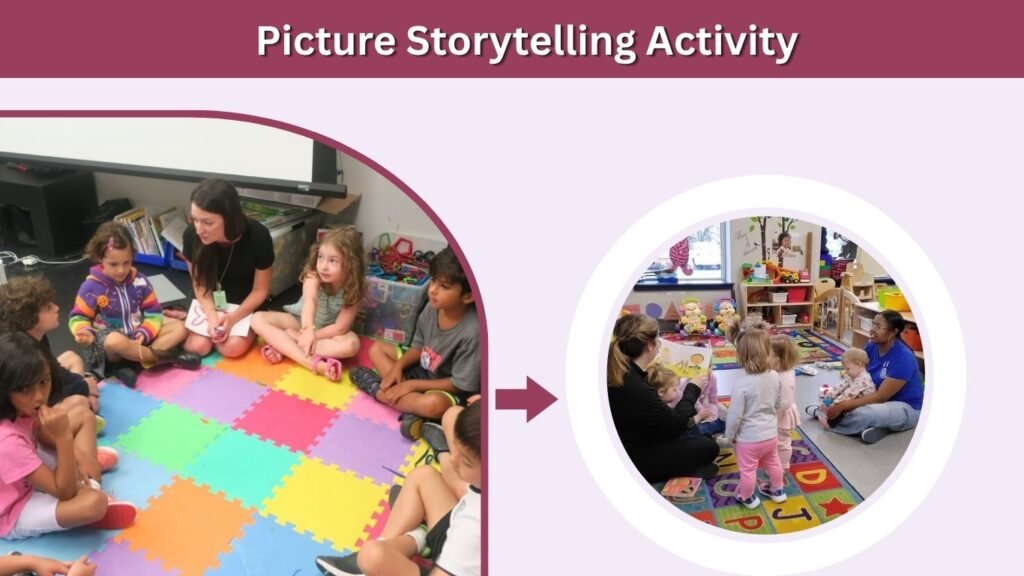
Picture storytelling is a creative and educational learning activity that helps preschoolers develop language, imagination, and communication skills. Children use colorful pictures to create simple stories, describe characters, and explain different events. This interactive activity encourages creative thinking, vocabulary development, and self-expression while strengthening listening and comprehension abilities. Suitable for children ages 3–5, picture storytelling can be organized at home or in preschool classrooms using picture cards, illustrated books, and everyday objects.
Materials Needed
- Picture Cards: Colorful cards featuring animals, people, places, and everyday activities.
- Storybooks: Illustrated children’s books with simple pictures.
- Drawing Paper: Blank sheets for creating original story illustrations.
- Crayons or Markers: Washable coloring supplies for drawing characters and scenes.
- Storytelling Props: Large toy animals, puppets, or familiar objects.
- Picture Sequence Cards: Cards showing different events in a simple story.
How to Do the Picture Storytelling Activity
Begin by selecting three or four colorful picture cards featuring familiar objects, animals, or activities. Place the cards on a table where your preschooler can easily see them.Choose one picture and ask your child to describe what is happening. For example, show a picture of a dog playing in a garden and ask, “What is the dog doing?”Encourage your child to create a simple story based on the picture. Help them develop the story by asking questions about the characters, setting, and events.Next, introduce additional picture cards and encourage children to connect them into a sequence. For example, they might create a story about a rabbit finding a carrot and sharing it with a friend.You can also allow preschoolers to draw their own pictures and explain the stories behind them.For group activities, invite children to take turns adding new events to a shared story. Encourage creativity and allow different interpretations without focusing on perfect storytelling.
Learning and Development Benefits
Picture storytelling activities support preschoolers’ language development by encouraging them to describe objects, explain events, and express their thoughts. Children naturally expand their vocabulary while learning to form sentences and communicate ideas. Creating stories strengthens imagination, creativity, and problem-solving skills. Preschoolers learn to organize events into simple sequences and understand relationships between characters and actions. Storytelling also develops listening comprehension and memory. When children follow or retell stories, they practice remembering important details and understanding the order of events. Using picture cards helps strengthen visual observation and attention to detail. Group storytelling encourages social interaction, cooperation, and turn-taking. Children learn to listen respectfully while sharing their own ideas. Regular storytelling builds confidence in speaking and prepares preschoolers for future reading, writing, and classroom communication activities.
13. Counting with Pom-Poms
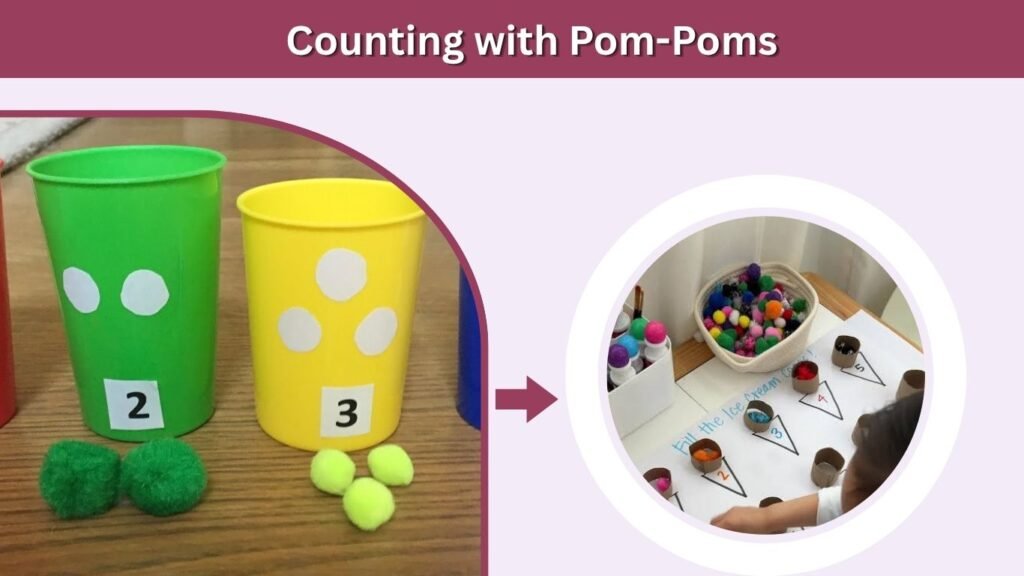
Counting with pom-poms is a colorful and interactive preschool learning activity that introduces children to numbers, counting, and basic mathematical concepts. Children use soft pom-poms to match quantities with numbers while practicing sorting, comparing, and grouping skills. This hands-on activity encourages concentration, fine motor development, and logical thinking. Ideal for preschoolers ages 3–5, counting with pom-poms can be organized using simple learning materials and provides an enjoyable introduction to early mathematics.
Materials Needed
- Large Pom-Poms: Oversized, colorful pom-poms suitable for preschool activities.
- Number Flashcards: Cards displaying numbers from 1 to 10.
- Plastic Counting Cups: Small containers for organizing pom-poms.
- Child-Friendly Tongs: Large plastic tongs for picking up and transferring objects.
- Counting Mat: A printable mat featuring numbers and counting spaces.
- Sorting Trays: Containers for arranging pom-poms by number or color.
How to Do Counting with Pom-Poms
Begin by placing several large, colorful pom-poms on a table or play mat. Introduce number flashcards from 1 to 5 and encourage your preschooler to identify each number.Choose the number “3” and demonstrate how to place three pom-poms beside the card. Count aloud while moving each pom-pom individually.Ask your child to repeat the activity using different number cards. Encourage them to touch or transfer each pom-pom as they count to develop one-to-one correspondence.Once children become comfortable with smaller numbers, introduce counting challenges up to 10.For an additional activity, provide several plastic cups labeled with numbers. Ask preschoolers to place the correct number of pom-poms inside each cup.You can also introduce color sorting by asking children to count only the red, blue, or yellow pom-poms.To make the activity more challenging, provide child-friendly tongs and encourage preschoolers to transfer pom-poms without using their fingers.
Learning and Development Benefits
Counting with pom-poms helps preschoolers develop essential early mathematical skills, including number recognition, counting, and quantity comparison. Children learn to associate written numbers with physical objects, strengthening their understanding of numerical relationships.Moving one pom-pom at a time encourages one-to-one correspondence, an important foundational counting skill.Using tongs or fingers to transfer pom-poms strengthens fine motor coordination, hand-eye control, and finger muscles. These movements help prepare children for handwriting and other classroom activities.Sorting pom-poms by color and quantity also develops classification, observation, and problem-solving abilities.Following counting instructions improves concentration, listening, and memory skills.Successfully completing counting challenges builds confidence and encourages a positive attitude toward mathematics. The colorful materials make number learning engaging and motivate preschoolers to practice independently.
14. Nature Scavenger Hunt
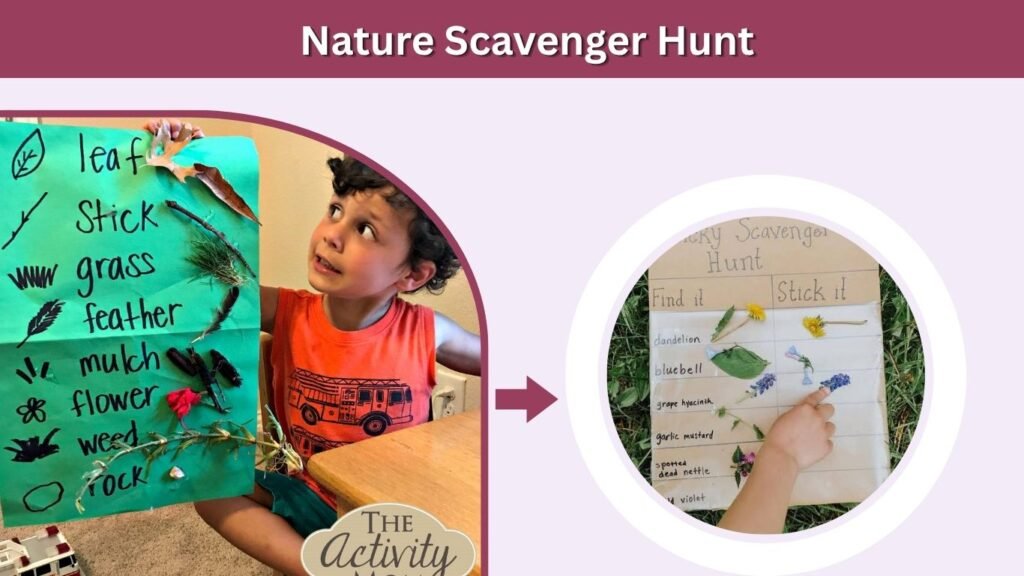
Nature scavenger hunts are exciting outdoor learning activities that encourage preschoolers to explore their surroundings while discovering plants, animals, and natural objects. Children search for leaves, flowers, rocks, and other interesting items while developing observation and problem-solving skills. This hands-on activity promotes curiosity, physical movement, and environmental awareness. Suitable for children ages 3–5, nature scavenger hunts can be organized in backyards, gardens, parks, or other safe outdoor spaces.
Materials Needed
- Nature Scavenger Hunt Checklist: A printable sheet featuring pictures of natural objects to find.
- Collection Basket: A lightweight container for gathering safe natural materials.
- Magnifying Glass: A child-friendly tool for observing leaves, rocks, and insects.
- Picture Cards: Images of flowers, trees, birds, and other outdoor objects.
- Crayons or Markers: For marking completed items on the checklist.
- Clipboard: A lightweight board for holding the scavenger hunt checklist.
How to Do a Nature Scavenger Hunt
Begin by choosing a safe outdoor location, such as a backyard, garden, or nearby park. Prepare a simple scavenger hunt checklist featuring familiar natural objects.Include items such as a green leaf, a small rock, a flower, a tree, and a bird. Use pictures instead of written words so preschoolers can easily understand the checklist.Show your child the checklist and explain that the goal is to find the objects while exploring nature.Walk around the selected area together and encourage your preschooler to observe their surroundings carefully. When they discover an object, help them identify it and mark it on their checklist.Ask simple questions such as, “What color is this leaf?” or “How does this rock feel?”Encourage children to compare different shapes, colors, and textures. They can collect a few safe fallen objects while leaving living plants and animals undisturbed.At the end of the activity, review the checklist together and discuss the interesting things they discovered.
Learning and Development Benefits
Nature scavenger hunts support preschoolers’ cognitive development by encouraging observation, exploration, and critical thinking. Searching for specific objects helps children recognize colors, shapes, textures, and patterns in the natural environment.These activities also develop early science skills. Children learn about plants, animals, weather, and natural materials through direct experiences.Walking, bending, reaching, and exploring outdoor spaces promote gross motor development, balance, and physical coordination.Identifying and describing natural objects expands vocabulary and strengthens communication skills. Asking questions about discoveries encourages curiosity and independent thinking.Nature scavenger hunts also improve concentration, memory, and problem-solving abilities as children search for different checklist items.Participating in outdoor exploration encourages environmental awareness and helps preschoolers develop an appreciation for nature and wildlife.
15. Rhyming Words Game
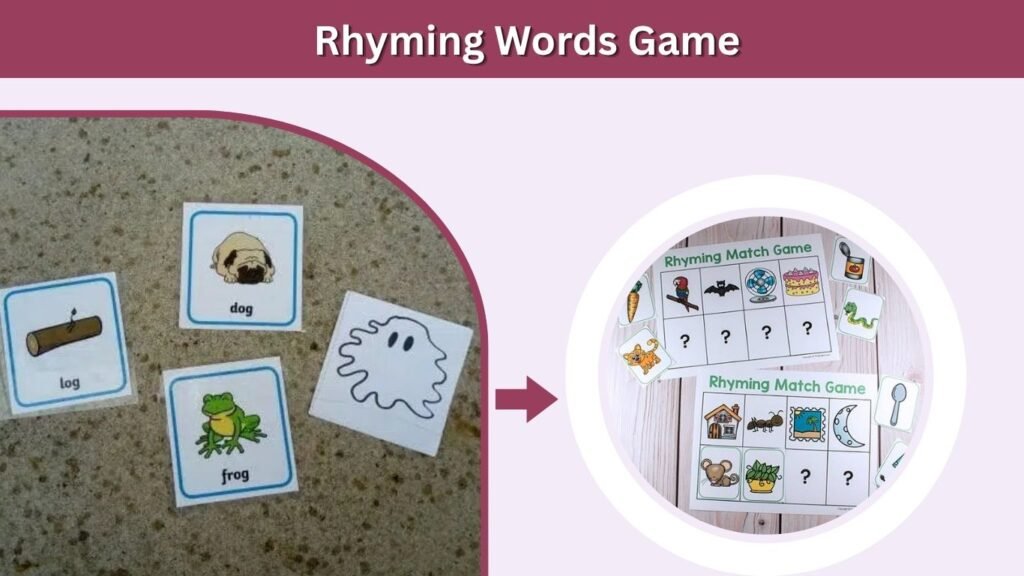
Rhyming words games are fun and interactive preschool learning activities that help children recognize similar ending sounds in spoken words. Through playful listening and speaking exercises, preschoolers discover how words such as cat, hat, and bat sound alike. This activity strengthens early literacy, phonological awareness, and language development while encouraging creativity and communication. Ideal for children ages 3–5, rhyming games can be organized using picture cards, songs, and simple everyday words.
Materials Needed
- Rhyming Picture Cards: Cards featuring familiar rhyming pairs such as cat and hat.
- Illustrated Storybooks: Children’s books containing rhyming words and repetitive sounds.
- Word Flashcards: Simple cards displaying familiar words.
- Picture Matching Board: A surface for arranging rhyming picture pairs.
- Crayons and Paper: For drawing pictures of rhyming objects.
- Nursery Rhyme Cards: Cards featuring short, familiar nursery rhymes.
How to Play the Rhyming Words Game
Begin by introducing two familiar words that rhyme, such as “cat” and “hat.” Say both words slowly and emphasize their matching ending sounds.Explain that rhyming words sound similar at the end, even when they begin with different letters.Show your preschooler a picture of a cat and provide several picture cards featuring a hat, dog, and sun. Ask your child to identify which picture rhymes with cat.Once they understand the concept, introduce additional rhyming pairs such as dog and frog, bee and tree, or star and car.You can also turn the activity into a listening game. Say a familiar word and ask children to think of another word that rhymes with it.For example, say “ball” and encourage your child to respond with “wall” or “tall.”Make the activity more enjoyable by singing nursery rhymes and pausing before familiar rhyming words. Allow children to complete the phrases independently.
Learning and Development Benefits
Rhyming words games support early literacy development by helping preschoolers recognize and manipulate sounds in spoken language. This skill, known as phonological awareness, provides an important foundation for future reading and spelling.Listening for matching ending sounds improves auditory discrimination and concentration. Children learn to recognize similarities between words while developing stronger listening abilities.Rhyming activities also expand vocabulary and encourage language development. Preschoolers discover new words and practice using them during conversations and games.Remembering rhyming pairs strengthens memory and recall skills. Creating new rhymes encourages imagination, creative thinking, and verbal expression.Group rhyming games promote cooperation, turn-taking, and communication. Children learn to listen to others and participate in shared language activities.Regular practice builds confidence in speaking and helps preschoolers develop a positive interest in words, stories, and reading.
16. Puzzle Solving Activity

Puzzle solving is a fun and educational learning activity that helps preschoolers develop problem-solving skills, logical thinking, and concentration. Children arrange puzzle pieces to complete pictures, recognize shapes, and understand how different parts fit together. This hands-on activity strengthens visual memory, spatial awareness, and fine motor coordination while encouraging patience and independent learning. Suitable for children ages 3–5, puzzle solving can be enjoyed at home or in preschool classrooms using age-appropriate puzzles.
Materials Needed
- Wooden Puzzles: Large-piece puzzles featuring animals, shapes, or familiar objects.
- Jigsaw Puzzles: Simple puzzles containing 4–12 large pieces.
- Shape Matching Boards: Boards with spaces for fitting different geometric shapes.
- Picture Cards: Images showing completed puzzles for reference.
- Puzzle Sorting Tray: A shallow container for organizing puzzle pieces.
- Play Mat: A flat, comfortable surface for arranging and completing puzzles.
How to Do the Puzzle Solving Activity
Begin by selecting a simple puzzle featuring familiar pictures, such as animals, vehicles, or colorful shapes. Choose a puzzle with a small number of large pieces to make the activity manageable for your preschooler.Place the puzzle pieces on a table or play mat and show your child the completed picture. Explain that the goal is to arrange the pieces to recreate the image. Demonstrate how to identify matching colors, shapes, and edges. Encourage your child to pick up one piece at a time and examine where it might fit.Allow children to experiment with different arrangements without immediately providing the correct answer. Offer gentle hints when they experience difficulty.Once they become comfortable with simple puzzles, gradually introduce puzzles containing more pieces.You can also organize a cooperative puzzle challenge where two or three preschoolers work together to complete a larger picture.
Learning and Development Benefits
Puzzle solving activities strengthen preschoolers’ problem-solving and logical-thinking abilities. Children learn to examine different pieces, recognize relationships, and experiment with possible solutions.Completing puzzles also improves visual discrimination and spatial awareness. Preschoolers develop the ability to recognize shapes, colors, and patterns while understanding how individual pieces form a complete picture.Picking up, rotating, and placing puzzle pieces strengthens fine motor coordination and hand-eye control. These skills support future writing, drawing, and classroom activities.Puzzle activities encourage concentration, patience, and perseverance. Children learn to continue working toward a goal even when a task becomes challenging.Completing puzzles independently builds confidence and provides a sense of accomplishment. Group puzzle challenges also encourage teamwork, communication, and cooperation among preschoolers.
17. Sink or Float Experiment

The sink or float experiment is an exciting hands-on science activity that introduces preschoolers to basic concepts of floating, sinking, and the properties of different materials. Children place everyday objects in water and observe whether they remain on the surface or sink to the bottom. This simple experiment encourages curiosity, prediction, observation, and critical thinking. Ideal for children ages 3–5, the sink or float experiment provides an enjoyable introduction to scientific exploration using safe household materials.
Materials Needed
- Clear Plastic Container: A wide, shallow container for holding water.
- Water: Enough to allow different objects to float or sink.
- Plastic Toys: Small but age-appropriate waterproof toys for testing.
- Wooden Blocks: Lightweight wooden objects for floating experiments.
- Large Stones: Smooth, clean stones for observing sinking objects.
- Plastic Spoons: Lightweight objects for testing floating behavior.
- Observation Chart: A simple worksheet for recording which objects sink or float.
How to Do the Sink or Float Experiment
Begin by filling a shallow plastic container with a small amount of water. Place it on a stable table or waterproof play mat.Collect several safe household objects, such as a wooden block, plastic spoon, rubber ball, and smooth stone.Show your preschooler each object and ask them to predict whether it will sink or float.For example, hold up a wooden block and ask, “Do you think this block will stay on top of the water or sink to the bottom?”Encourage your child to gently place the block into the water and observe what happens. Explain whether their prediction was correct.Repeat the experiment with the remaining objects, allowing children to test each item individually.Create a simple observation chart with two categories labeled “Sink” and “Float.” Help your preschooler place pictures of the tested objects into the correct groups. After completing the experiment, discuss why some objects float while others sink. Explain simply that floating depends on the object’s material, shape, and how much water it pushes aside.
Learning and Development Benefits
The sink or float experiment introduces preschoolers to early scientific reasoning by encouraging them to make predictions, observe results, and compare different objects.Children develop critical-thinking and problem-solving skills as they explore why certain materials behave differently in water.The experiment strengthens observation and classification abilities. Sorting objects into sinking and floating categories introduces early mathematical concepts related to grouping and comparing.Handling objects and carefully placing them into water also improves fine motor coordination and hand-eye control.Discussing predictions and results expands vocabulary by introducing words such as float, sink, heavy, light, surface, and underwater.This activity encourages curiosity, independent thinking, and confidence in exploring scientific ideas through hands-on experiences.
FAQs
1. What Are the Best Learning Activities for Preschoolers?
Some of the best learning activities for preschoolers include alphabet matching, number counting games, color sorting, shape recognition, puzzle solving, and sensory play. These activities help children develop early literacy, mathematical understanding, fine motor skills, and problem-solving abilities through enjoyable hands-on experiences.
2. How Long Should Preschoolers Spend on Learning Activities?
Most preschoolers benefit from short, engaging learning activities lasting approximately 10–20 minutes. However, the ideal duration depends on the child’s age, interests, and attention span. Allowing children to take breaks and explore activities at their own pace helps maintain enthusiasm and prevents frustration.
3. How Can I Make Learning Activities Fun for Preschoolers?
You can make preschool learning enjoyable by incorporating colorful materials, songs, storytelling, movement, and interactive games. Use familiar toys and everyday household objects to create hands-on experiences. Encourage children to explore independently, celebrate their efforts, and avoid putting too much pressure on achieving perfect results.
4. What Skills Do Preschool Learning Activities Help Develop?
Preschool learning activities support several important developmental skills, including language development, number recognition, creativity, memory, concentration, and problem-solving. Hands-on activities also strengthen fine and gross motor coordination. Group games encourage communication, cooperation, patience, and social interaction, helping children prepare for kindergarten.
5. Can Preschool Learning Activities Be Done at Home?
Yes, most preschool learning activities can be easily organized at home using inexpensive household materials. Parents can create alphabet matching games with paper cards, practice counting with blocks, explore shapes using toys, and conduct simple science experiments. These activities provide valuable learning opportunities without requiring expensive educational equipment.
