

Animal activities for kids are a wonderful way to combine creativity, learning, and hands-on fun. From colorful animal crafts and sensory bins to exciting matching games and obstacle courses, these activities help children explore the animal kingdom through imaginative play. They also encourage fine motor development, problem-solving, coordination, and early science learning. Whether you’re planning classroom activities, preschool lessons, or a fun afternoon at home, these 15 easy animal activities will keep toddlers, preschoolers, and older kids entertained while developing valuable skills.
1. Animal Paper Plate Craft

Animal Paper Plate Craft is a fun and creative activity that allows kids to make their favorite animals using simple household materials. Children can create lions, elephants, bears, rabbits, and other animals while exploring different colors, shapes, and textures. This hands-on activity encourages imagination, improves fine motor skills, and introduces basic animal characteristics through enjoyable artistic play.
Materials Needed
- Paper plates
- Colored construction paper
- Washable paints or crayons
- Child-safe scissors
- Non-toxic glue sticks
- Googly eyes or paper eyes
- Paintbrushes and markers
How to Do the Activity
Start by asking children to choose their favorite animal. Give them a paper plate and encourage them to paint or color it according to their chosen animal.
Help them cut ears, noses, tails, and other features from construction paper. Attach these pieces to the paper plate using glue.
Finally, add eyes and decorative details to complete the animal face. Allow the craft to dry before displaying it.
Learning Benefits
Animal paper plate crafts improve creativity, hand-eye coordination, and fine motor development. Children also practice color recognition, shape identification, and problem-solving while learning about different animals and their physical features.
Safety Tips
Use non-toxic craft supplies and child-safe scissors. Supervise younger children during cutting and gluing. Avoid small decorative items that could cause choking and keep the workspace clean and organized.
2. Animal Mask Making Activity

Animal Mask Making Activity is a fun and imaginative craft that allows kids to transform into their favorite animals. Children can create colorful masks resembling lions, tigers, rabbits, bears, or elephants using simple craft materials. This hands-on activity encourages creativity, self-expression, and pretend play while helping children recognize different animal features.
Materials Needed
- Paper plates or thick cardstock
- Colored construction paper
- Washable paints and markers
- Child-safe scissors
- Non-toxic glue
- Craft sticks or soft elastic bands
- Cotton balls or felt pieces
How to Do the Activity
Start by helping children choose an animal they want to create. Draw the animal’s face on a paper plate or piece of cardstock.
Cut out the mask shape and eye openings with adult assistance. Encourage children to decorate their masks using paint, paper ears, and other craft materials.
Attach a craft stick to hold the mask in front of the face. Once finished, children can pretend to be their chosen animals.
Learning Benefits
Animal mask making develops fine motor skills, creativity, and hand-eye coordination. It also encourages imaginative storytelling, animal recognition, and social interaction during group play.
Safety Tips
Use non-toxic craft supplies and supervise cutting activities. Ensure eye openings provide clear visibility. Avoid small decorations for younger children and never leave children unattended with elastic bands.
3. Animal Footprint Painting

Animal Footprint Painting is an exciting art activity that allows kids to explore different animal tracks through colorful prints. Children can use toy animals, sponges, or homemade stamps to create footprints on paper. This creative activity combines sensory exploration, artistic expression, and early science learning while introducing children to how animals move.
Materials Needed
- Plastic animal figures
- Washable, non-toxic paints
- Large white paper sheets
- Shallow paint trays
- Animal footprint stamps
- Aprons or old clothes
- Cleaning wipes
How to Do the Activity
Begin by pouring different paint colors into shallow trays. Spread large sheets of paper across a flat, protected surface.
Let children dip the feet of plastic animal toys or footprint stamps into the paint. Encourage them to press the toys onto the paper to create colorful animal tracks.
Ask children to compare the footprints and identify which animals might have made them. Allow the artwork to dry before displaying it.
Learning Benefits
Animal footprint painting improves fine motor coordination, creativity, and pattern recognition. Children learn to compare shapes and sizes while developing observation skills and understanding basic animal movement.
Safety Tips
Choose washable, child-safe paints and smooth plastic animal toys. Supervise younger children to prevent paint from entering their mouths or eyes. Clean spills immediately to avoid slipping.
4. Animal Sensory Bin

Animal Sensory Bin is an engaging hands-on activity that encourages kids to explore different animal habitats through touch and imaginative play. Children can discover farm animals, jungle creatures, or ocean animals using themed sensory materials. This interactive activity promotes curiosity, develops sensory awareness, and helps children understand where different animals live.
Materials Needed
- Large plastic sensory bin
- Age-appropriate sensory filler
- Plastic animal figures
- Artificial grass or plants
- Large smooth rocks
- Small plastic cups and scoops
- Toy trees or habitat decorations
How to Do the Activity
Start by filling a large container with an age-appropriate sensory material, such as kinetic sand for older children.
Arrange animal figures, toy trees, and habitat decorations inside the bin. Create different sections representing forests, farms, or grasslands.
Encourage children to explore the materials, move animal figures, and create imaginary stories about their habitats.
Ask questions about where each animal lives and what it needs to survive.
Learning Benefits
Animal sensory bins strengthen fine motor skills, sensory processing, and imaginative thinking. Children also develop animal identification, sorting, communication, and storytelling abilities through interactive exploration.
Safety Tips
Use materials appropriate for children’s ages and abilities. Avoid small fillers and detachable pieces for toddlers. Supervise sensory play and regularly clean toys and containers.
5. Animal Matching Game

Animal Matching Game is a simple educational activity that helps kids recognize different animals and identify their characteristics. Children match animal pictures with corresponding names, habitats, babies, or food sources. This interactive learning game encourages concentration, memory development, and logical thinking while introducing young learners to the animal kingdom.
Materials Needed
- Printable animal picture cards
- Matching animal cards
- Colored cardstock
- Child-safe scissors
- Glue sticks
- Laminating sheets (optional)
- Large activity board
How to Do the Activity
Start by preparing picture cards featuring familiar animals such as cats, dogs, elephants, lions, and rabbits.
Create matching cards showing identical animals or related features, such as their babies or habitats.
Spread the cards across a table and encourage children to find the correct pairs.
For younger kids, begin with a few simple matching cards. Older children can match animals with their habitats, diets, or offspring.
Learning Benefits
Animal matching games improve memory, concentration, and visual recognition. Children develop classification skills, vocabulary, and logical thinking while learning to identify different animals and their characteristics.
Safety Tips
Use large, sturdy cards with smooth edges. Supervise cutting and preparation activities. Avoid small game pieces that could present choking hazards for younger children.
6. Animal Sounds Guessing Game

Animal Sounds Guessing Game is an entertaining listening activity that challenges kids to identify animals by their unique sounds. Children listen to different animal noises and guess which creature makes each sound. This interactive game encourages active listening, improves memory, and builds animal knowledge while creating opportunities for laughter and group participation.
Materials Needed
- Animal sound recordings
- Smartphone or speaker
- Animal picture cards
- Small basket or container
- Paper and crayons
- Animal flashcards
How to Do the Activity
Begin by playing a familiar animal sound, such as a dog’s bark, a cat’s meow, or a cow’s moo.
Ask children to listen carefully and guess which animal is making the sound. Show the matching animal picture after each correct answer.
You can also imitate animal sounds yourself and encourage children to take turns making noises for others to guess.
For older children, introduce less familiar animal sounds to increase the challenge.
Learning Benefits
Animal sound guessing games strengthen auditory discrimination, concentration, and memory. Children improve language development, listening comprehension, and animal recognition while practicing communication and turn-taking skills.
Safety Tips
Keep audio at a comfortable volume to protect children’s hearing. Avoid sudden, frightening sounds and supervise the use of electronic devices. Choose age-appropriate animal recordings to ensure an enjoyable experience.
7. Animal Scavenger Hunt

Animal Scavenger Hunt is an exciting activity that encourages kids to explore their surroundings while searching for hidden animal toys or pictures. Children become little wildlife explorers as they follow clues, discover different animals, and learn about their characteristics. This interactive game combines physical movement, observation, and problem-solving skills with imaginative play.
Materials Needed
- Plastic animal toys
- Printable animal picture cards
- Small baskets or buckets
- Paper clues or treasure maps
- Colored markers
- Animal stickers or rewards
How to Do the Activity
Start by hiding animal toys or picture cards around your home, classroom, or backyard. Choose familiar animals such as lions, elephants, rabbits, and monkeys.
Give children simple clues that help them locate each hidden animal. Younger kids can follow picture clues, while older children can solve animal-themed riddles.
Encourage children to collect the animals and identify their names, sounds, and habitats after finding them.
Learning Benefits
Animal scavenger hunts improve observation, memory, and problem-solving abilities. Children also develop communication, teamwork, and animal recognition skills while exploring their surroundings through active play.
Safety Tips
Hide toys in safe, accessible locations away from sharp objects, electrical outlets, and stairs. Use age-appropriate materials and supervise younger children throughout the activity.
8. Animal Habitat Building Activity

Animal Habitat Building Activity is a creative educational project that allows kids to design miniature homes for different animals. Children can build forests, farms, deserts, or ocean environments using simple craft materials. This hands-on activity encourages imagination, environmental awareness, and problem-solving while teaching kids about animal habitats and their basic survival needs.
Materials Needed
- Shoeboxes or cardboard boxes
- Plastic animal figures
- Colored construction paper
- Non-toxic glue
- Washable paints and markers
- Artificial grass or plants
- Modeling clay
- Large decorative rocks
How to Do the Activity
Begin by asking children to choose an animal and research or discuss its natural habitat. Provide a shoebox or cardboard base for building the environment.
Encourage children to decorate their habitat using colored paper, clay, artificial plants, and other craft materials.
For example, they can create a forest for bears, a grassland for zebras, or a pond for frogs.
Once completed, place the animal figures inside their habitats and discuss how each environment supports animal life.
Learning Benefits
Building animal habitats develops creativity, spatial awareness, and problem-solving skills. Children learn about ecosystems, animal needs, and environmental differences while practicing fine motor coordination.
Safety Tips
Use non-toxic supplies and supervise cutting or gluing activities. Avoid sharp objects and small decorative pieces for younger children. Keep the crafting area organized and clean.
9. Animal Movement Game

Animal Movement Game is an energetic physical activity that encourages kids to imitate the movements of different animals. Children can hop like rabbits, crawl like bears, jump like frogs, and walk like penguins. This entertaining game combines exercise with imaginative play while helping children develop coordination, balance, and gross motor skills.
Materials Needed
- Animal picture cards
- Open indoor or outdoor space
- Soft exercise mats
- Music player (optional)
- Colorful floor markers
- Animal movement flashcards
How to Do the Activity
Start by gathering children in a safe, open play area. Show them an animal picture card and demonstrate how that animal moves.
Ask children to imitate the movement. For example, they can hop like rabbits, stretch like giraffes, or waddle like penguins.
Change the animal cards every few moments to keep the activity exciting.
You can also play music and ask children to freeze in their animal poses whenever the music stops.
Learning Benefits
Animal movement games strengthen balance, coordination, flexibility, and gross motor development. Children also improve listening skills, body awareness, and creativity while learning how different animals move.
Safety Tips
Choose movements suitable for each child’s age and abilities. Provide enough space to prevent collisions and use non-slip surfaces. Avoid difficult jumps or movements that may cause injuries.
10. Animal Puppet Making

Animal Puppet Making is a fun arts and crafts activity that allows kids to create their favorite animal characters using simple materials. Children can design lions, rabbits, cats, dogs, and other creatures while exploring colors, shapes, and textures. This creative activity encourages imaginative storytelling, improves fine motor skills, and promotes language development through pretend play.
Materials Needed
- Paper lunch bags or clean socks
- Colored construction paper
- Washable markers
- Non-toxic glue
- Child-safe scissors
- Yarn or felt pieces
- Paper eyes
How to Do the Activity
Begin by helping children choose an animal character. Provide a paper bag or clean sock to use as the puppet’s body.
Encourage them to decorate the puppet with paper ears, noses, whiskers, and other animal features. Attach the pieces using non-toxic glue.
Once the puppet is finished and dry, children can place their hands inside and bring their animal characters to life.
Encourage them to create short stories or perform a puppet show.
Learning Benefits
Animal puppet making develops creativity, hand coordination, and storytelling abilities. Children also strengthen communication, social interaction, and emotional expression through imaginative puppet performances.
Safety Tips
Use non-toxic materials and supervise cutting activities. Avoid small decorative pieces that may cause choking. Ensure puppets have no sharp attachments or loose strings that could create hazards.
11. Animal Shadow Matching Game

Animal Shadow Matching Game is an educational activity that helps kids recognize animals by their shapes and silhouettes. Children compare colorful animal pictures with corresponding shadow outlines to find matching pairs. This simple game encourages observation, concentration, and visual discrimination while introducing different animal body features through interactive learning.
Materials Needed
- Printable animal picture cards
- Matching animal silhouette cards
- Colored cardstock
- Child-safe scissors
- Glue sticks
- Large activity board
- Laminating sheets (optional)
How to Do the Activity
Start by preparing colorful animal pictures and matching black silhouettes. Choose familiar animals such as elephants, giraffes, lions, rabbits, and birds.
Arrange the shadow cards on a table and place the animal picture cards in a separate pile.
Ask children to examine each animal’s body shape and find its matching shadow.
Encourage them to compare features such as ears, tails, necks, and legs. For older children, introduce more animals with similar silhouettes.
Learning Benefits
Animal shadow matching improves visual recognition, memory, and logical thinking. Children develop observation, shape identification, and classification skills while learning to distinguish animals by their physical characteristics.
Safety Tips
Use large, sturdy cards with smooth edges. Supervise children when cutting or preparing materials. Avoid small detachable pieces and keep the playing area safe and organized.
12. Animal Playdough Sculpting

Animal Playdough Sculpting is a creative hands-on activity that allows kids to shape their favorite animals using colorful playdough. Children can create elephants, lions, turtles, rabbits, and other animals while exploring different shapes and textures. This enjoyable activity encourages imagination, strengthens finger muscles, and introduces basic animal features through sensory play and artistic expression.
Materials Needed
- Non-toxic, child-safe playdough
- Plastic rolling pins
- Animal-shaped cookie cutters
- Plastic sculpting tools
- Animal picture cards
- Large activity tray
- Plastic animal figures
How to Do the Activity
Start by giving children several colors of soft playdough. Ask them to choose their favorite animal and examine its body shape using picture cards.
Encourage children to roll, flatten, pinch, and shape the playdough into different animal body parts. Help them create heads, legs, tails, and ears before assembling their animals.
Younger kids can use animal-shaped cookie cutters, while older children can create detailed sculptures independently.
Learning Benefits
Animal playdough sculpting develops fine motor skills, creativity, and hand-eye coordination. Children also practice shape recognition, color identification, and problem-solving while learning about different animal body structures.
Safety Tips
Use non-toxic, age-appropriate playdough and smooth plastic tools. Supervise younger children and prevent them from eating the materials. Avoid small accessories that could present choking hazards.
13. Animal Sorting Activity
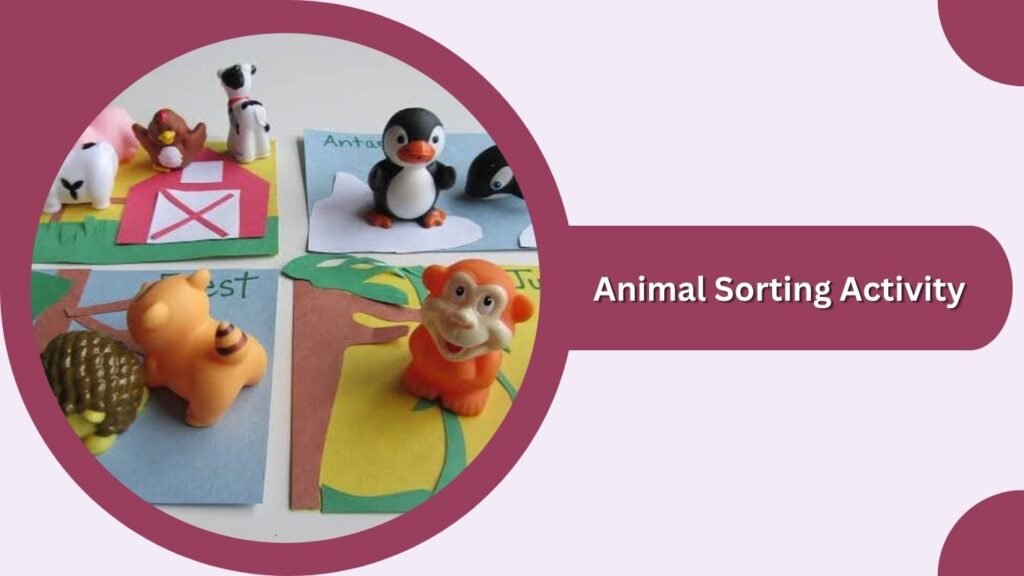
Animal Sorting Activity is a simple educational game that helps kids classify animals according to their characteristics, habitats, or sizes. Children learn to recognize similarities and differences between animals while organizing picture cards or toy figures into groups. This interactive activity encourages logical thinking, observation, and early science learning through enjoyable hands-on exploration.
Materials Needed
- Plastic animal figures
- Printable animal picture cards
- Large sorting trays
- Colored construction paper
- Animal habitat pictures
- Small baskets
- Markers and labels
How to Do the Activity
Begin by arranging different animal toys or picture cards on a table. Prepare sorting areas labeled with categories such as farm animals, wild animals, and ocean animals.
Ask children to examine each animal and place it in the appropriate group.
For younger children, start with simple categories such as big and small animals. Older kids can sort animals by habitat, diet, or body coverings.
Encourage children to explain why they placed each animal in a particular category.
Learning Benefits
Animal sorting improves classification, critical thinking, and observation skills. Children develop vocabulary, counting abilities, and an understanding of animal characteristics while practicing comparison and decision-making.
Safety Tips
Use large animal figures and sturdy picture cards suitable for children’s ages. Avoid small objects that may cause choking. Supervise younger children and keep the activity area organized.
14. Animal Rescue Sensory Game

Animal Rescue Sensory Game is an exciting hands-on activity where kids pretend to rescue animals trapped in different environments. Children can save toy animals from soft obstacles, sensory materials, or pretend habitats while developing problem-solving skills. This imaginative activity combines sensory exploration, fine motor practice, and creative storytelling, making it enjoyable for preschoolers and young children.
Materials Needed
- Large plastic animal toys
- Shallow plastic container
- Soft fabric strips
- Child-safe toy tweezers
- Small baskets
- Toy trees and habitat decorations
- Large plastic scoops
How to Do the Activity
Start by placing several animal toys inside a shallow container. Arrange soft fabric strips around the animals to create pretend obstacles.
Explain that the animals need help escaping from their imaginary habitats. Encourage children to carefully remove the fabric and rescue each animal using their hands or child-safe tools.
Once rescued, children can place the animals in a designated safe area.
Ask them to identify each animal and describe where it normally lives.
Learning Benefits
Animal rescue sensory games strengthen fine motor coordination, concentration, and problem-solving skills. Children also practice animal identification, imaginative storytelling, and empathy through pretend rescue situations.
Safety Tips
Use large animal figures and avoid tight strings, rubber bands, or small loose materials. Supervise children throughout the activity and choose tools appropriate for their developmental abilities.
15. Animal Obstacle Course

Animal Obstacle Course is an energetic physical activity that encourages kids to move like different animals while completing fun challenges. Children can hop like frogs, crawl like bears, slither like snakes, and balance like flamingos. This imaginative movement game combines physical exercise with animal learning, helping children develop coordination, strength, and confidence through active play.
Materials Needed
- Soft cushions and pillows
- Hula hoops
- Colorful floor markers
- Play tunnels
- Animal picture cards
- Exercise mats
- Plastic cones
How to Do the Activity
Create a simple obstacle course in an open indoor or outdoor space. Arrange cushions, hoops, tunnels, and floor markers into different activity stations.
Ask children to perform animal-inspired movements at each station. They can jump like frogs through hoops, crawl like bears under tunnels, and balance on one foot like flamingos.
Encourage kids to complete the course at their own pace while pretending to explore an animal kingdom.
Learning Benefits
Animal obstacle courses improve gross motor development, balance, coordination, and body awareness. Children also strengthen listening skills, concentration, and imagination while learning about different animal movements.
Safety Tips
Choose soft equipment and arrange obstacles on non-slip surfaces. Avoid high jumps or difficult climbing activities. Provide enough space between children and supervise every movement to prevent injuries.
FAQs
1. What Are the Best Animal Activities for Preschoolers?
The best animal activities for preschoolers include animal matching games, paper plate crafts, sensory bins, and animal movement games. These activities encourage creativity, coordination, and early learning. They also help children recognize different animals while developing important social and cognitive skills.
2. How Can Animal Activities Help Kids Learn?
Animal activities help kids develop observation, problem-solving, communication, and motor skills. Through matching games, habitat building, and creative crafts, children learn animal names, characteristics, and environments. These hands-on experiences also encourage curiosity, imagination, and an early appreciation of wildlife.
3. What Animal Activities Can Kids Do Indoors?
Kids can enjoy animal mask making, puppet crafts, shadow matching, playdough sculpting, and animal sorting games indoors. These activities require simple materials and limited space. They are excellent options for rainy days, classroom lessons, or creative family playtime at home.
4. Are Animal Sensory Activities Safe for Toddlers?
Animal sensory activities can be safe for toddlers when appropriate materials and supervision are provided. Choose large animal toys, non-toxic sensory materials, and shallow containers. Avoid small fillers, sharp objects, and loose pieces that could create choking hazards during play.
5. What Age Group Is Suitable for Animal Activities?
Animal activities are suitable for toddlers, preschoolers, and elementary-aged children when adapted to their developmental stages. Younger children benefit from simple matching and movement games, while older kids enjoy habitat building, animal classification, and more challenging creative projects.
