
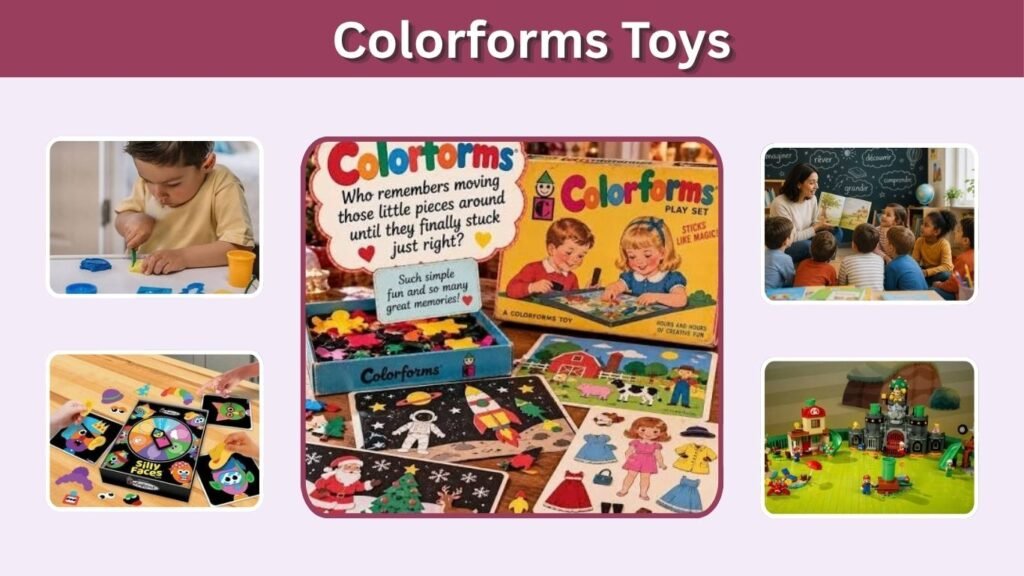
Colorforms toys are reusable activity sets built around thin vinyl pieces that cling to smooth play surfaces without traditional adhesive. Children can peel, place, remove, and rearrange the pieces to create pictures, characters, outfits, and imaginative scenes. First introduced in 1951, Colorforms became a long-running creative toy concept and later expanded into licensed character sets and themed playsets. Today, both modern and vintage Colorforms toys attract interest from families, nostalgic adults, and collectors who enjoy their simple, reusable style of play.
What Is a Colorforms Toy?
A Colorforms toy typically includes reusable vinyl pieces and a smooth background or play surface. Instead of behaving like ordinary stickers, the pieces cling to slick surfaces and can usually be moved again and again. This simple design allows children to change scenes, arrange characters, and create new stories without permanently attaching the pieces.
How Colorforms Work
Traditional Colorforms pieces are made from thin vinyl.
They cling to smooth surfaces because close contact between the vinyl and surface helps hold the piece in place. The original concept did not depend on ordinary sticker glue, which made the pieces easy to remove and reposition.
Children can:
- Place shapes on the play board
- Rearrange characters
- Build different scenes
- Mix and match accessories
- Remove pieces and start again
- Create simple stories
That reusability is one of the main features that distinguishes Colorforms from conventional sticker activities.
Why Colorforms Are Different From Stickers
A normal sticker usually uses adhesive and is intended to stay where it is placed.
Colorforms pieces are designed for repeated repositioning on an appropriate smooth surface. This gives children more freedom to experiment without worrying about getting the placement correct on the first attempt.
The result is closer to reusable scene-building than ordinary sticker decorating.
History of Colorforms Toys
The history of Colorforms began in New York in 1951. Artists Harry and Patricia Kislevitz experimented with flexible colored vinyl after discovering that it would cling to smooth household surfaces. They began cutting the material into shapes and arranging it on surfaces around their apartment, eventually realizing that the idea could become a creative toy.
When Was the Colorforms Toy Invented?
Colorforms was created in 1951.
The earliest sets focused on basic geometric shapes and creative arrangement rather than licensed cartoon characters. The first products were hand-assembled and presented in spiral-bound formats with reusable shapes and play surfaces.
From Art Toy to Character Playsets
Colorforms later expanded beyond simple abstract shapes.
Character licensing helped the brand become much more recognizable. Over the decades, Colorforms sets featured numerous well-known entertainment properties and children’s characters. TIME notes that the toy later appeared in sets tied to brands such as Peanuts, Popeye, and Gumby.
This transition helped Colorforms appeal to children who wanted to create scenes featuring familiar characters.
Popular Types of Colorforms Toys
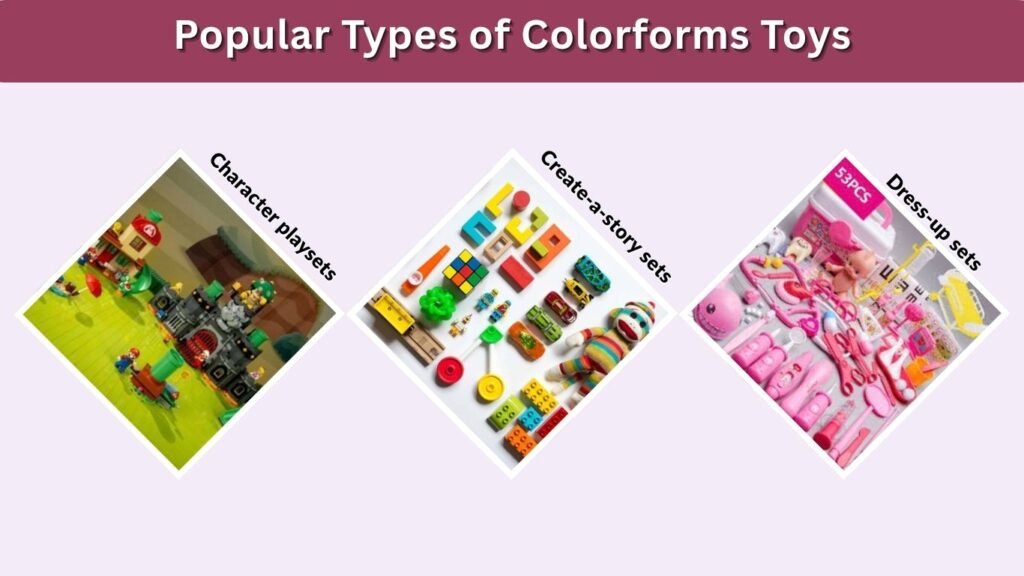
Colorforms toys have appeared in many forms over the decades. Some sets focus on basic creative play, while others are built around television characters, movies, storytelling, faces, fashion, or themed backgrounds. The exact contents vary, but most preserve the same basic idea: reusable pieces that can be rearranged to produce many different scenes.
Common Colorforms Toy Types
Popular categories include:
- Character playsets
- Create-a-story sets
- Dress-up sets
- Silly face sets
- Geometric shape sets
- Cartoon kits
- Movie-themed sets
- TV character sets
- Travel-size sets
- Retro reproduction sets
These formats allow children to choose between open-ended creativity and more structured character-based storytelling.
Colorforms Character Sets
Licensed characters became an important part of Colorforms history.
Many sets gave children a background scene along with vinyl characters, clothing, props, or accessories. Children could move those pieces around to create different situations rather than following one fixed story.
This helped turn familiar characters into interactive storytelling tools.
Charlie’s Colorforms City Toys
Charlie’s Colorforms City brought the Colorforms concept to a newer generation. The animated property centers on Charlie, a character who creates stories and environments through imagination and shape-based play. The modern Colorforms brand describes Charlie’s Colorforms City as a flagship part of its current identity.
What Is Charlie’s Colorforms City?
Charlie’s Colorforms City is built around imaginative storytelling.
Charlie creates and changes his world using the same general idea associated with classic Colorforms: shapes can be moved, transformed, and used to build new scenes.
The concept encourages children to think creatively instead of following only one predetermined storyline.
Charlie’s Colorforms City Toy Appeal
Toys connected to Charlie’s Colorforms City can appeal to children who already recognize the characters while introducing them to the reusable Colorforms play concept.
The connection between an animated world and physical play can encourage:
- Storytelling
- Character play
- Scene building
- Shape recognition
- Imaginative thinking
- Fine motor practice
The play remains flexible because children can change where pieces appear and what happens in the scene.
Vintage Colorforms Toys
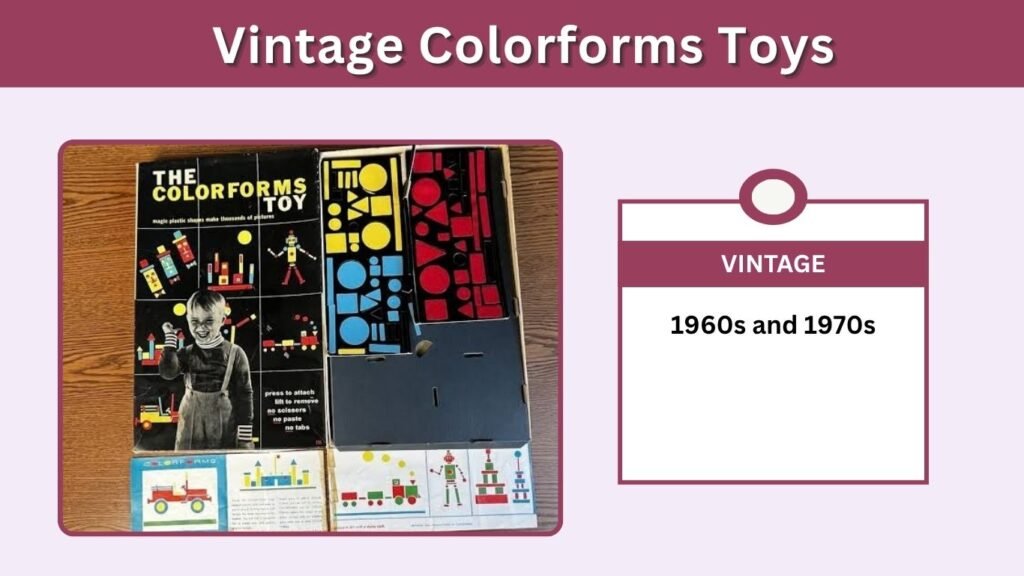
Vintage Colorforms toys remain interesting because the brand spans many decades of popular culture. Older sets may feature television programs, comic characters, movies, or artistic styles associated with a particular period. Collectors may therefore value a set both as a toy and as a piece of entertainment or design history.
Colorforms Toys From the 1960s and 1970s
By the 1960s and 1970s, Colorforms had expanded well beyond its original geometric designs.
Sets increasingly reflected popular entertainment and children’s characters of their respective eras.
Today, surviving examples can provide a snapshot of the cartoons, television shows, advertising styles, and graphic design that were popular when they were produced.
Colorforms Toys From the 1980s
Colorforms remained popular during the 1980s, with themed sets becoming strongly associated with children’s entertainment of the period. The current Colorforms brand itself describes the 1980s as an especially notable era for themed playsets.
For collectors, a 1980s Colorforms toy may be attractive because of its artwork, nostalgic characters, packaging, or completeness.
Are Vintage Colorforms Toys Collectible?
Some vintage Colorforms toys can attract collectors, especially when the set is complete, features a desirable licensed character, or remains in good condition. However, age can affect the vinyl pieces, packaging, and play surfaces, so condition matters significantly.
What Affects Collectible Value?
Collectors may consider:
- Age
- Character or franchise
- Box condition
- Number of original pieces
- Completeness
- Rarity
- Play-board condition
- Vinyl flexibility
- Original instructions
- Whether the set is sealed
A missing or badly damaged set may have less collector appeal even when the theme itself is popular.
Condition of Old Vinyl Pieces
Vintage Colorforms pieces can deteriorate with age.
Older vinyl may become stiff, curled, brittle, dirty, or less able to cling effectively. Heat and poor storage can also contribute to deterioration.
Collectors should therefore look beyond the box artwork and check whether the actual playing pieces remain usable.
Colorforms and Creative Play

Colorforms are simple compared with many electronic toys, but that simplicity can be part of their appeal. Children must decide where pieces go, what the characters are doing, and how the scene changes. This gives the child more control over the activity instead of requiring them to simply watch the toy perform.
Encourages Storytelling
Character sets naturally lend themselves to storytelling.
A child can create a scene, move the characters, add props, and change the story whenever they want.
Because the pieces are reusable, the same playset can support many different scenarios instead of one fixed sequence.
Supports Fine Motor Practice
Picking up, positioning, removing, and rearranging thin pieces requires controlled hand movements.
These actions can give children opportunities to practice finger coordination and visual placement.
Parents should still choose sets appropriate for the child’s age, especially when products contain small pieces.
Colorforms Toy Story and Other Licensed Sets
Colorforms has a long history of working with recognizable entertainment properties. Searches for Toy Story Colorforms, Disney-themed sets, and other character versions reflect how important licensing became to the brand over time. Licensed editions allow children to combine familiar characters with the reusable scene-building format.
Toy Story Colorforms
Toy Story-themed Colorforms sets have combined characters from the Disney and Pixar franchise with reusable scene play.
Depending on the edition, children may be able to position characters and accessories against themed backgrounds and repeatedly change the layout.
Because product contents can vary between releases, buyers looking at older or secondhand sets should check exactly what is included.
Other Character Themes
Over its history, Colorforms has appeared with a wide variety of popular characters. Sources documenting the brand mention properties ranging from Popeye and Peanuts to later television and entertainment franchises.
This broad licensing history is also one reason vintage Colorforms can appeal to collectors interested in specific franchises.
How to Choose a Colorforms Toy

A good Colorforms set should match the child’s age, interests, and ability to handle the individual pieces. Some children may prefer familiar character sets, while others may enjoy faces, shapes, or more open-ended design activities.
What to Check Before Choosing
Consider:
- Recommended age
- Size of the pieces
- Favorite characters or themes
- Number of reusable pieces
- Portability
- Complexity of the scene
- Storage method
- Condition when buying used
For vintage sets, also confirm whether important pieces are missing.
New vs. Vintage Colorforms
New Colorforms toys are usually the better option when the goal is everyday children’s play because the pieces and surfaces are fresh.
Vintage sets may be better suited to collectors or nostalgic buyers, especially when the packaging or character theme is important.
An older set can still be playable, but its condition should be inspected carefully.
FAQs
What is a Colorforms toy?
A Colorforms toy is a reusable activity set featuring thin vinyl pieces that cling to a smooth play surface. Children can remove and rearrange the pieces to build scenes, characters, and stories.
When were Colorforms toys invented?
Colorforms was created in 1951 by Harry and Patricia Kislevitz after they discovered that thin colored vinyl could cling to smooth surfaces and be repositioned.
Are Colorforms toys reusable?
Yes. Reusability is one of the defining features of traditional Colorforms. The vinyl pieces are designed to be placed, removed, and repositioned on suitable smooth surfaces.
What are Charlie’s Colorforms City toys?
They are products connected with Charlie’s Colorforms City, a modern animated property inspired by the Colorforms concept of creative, shape-based storytelling.
Are vintage Colorforms toys valuable?
Some can be collectible, particularly complete sets featuring desirable characters or uncommon editions. Value depends on factors such as age, rarity, condition, completeness, and collector demand.
