

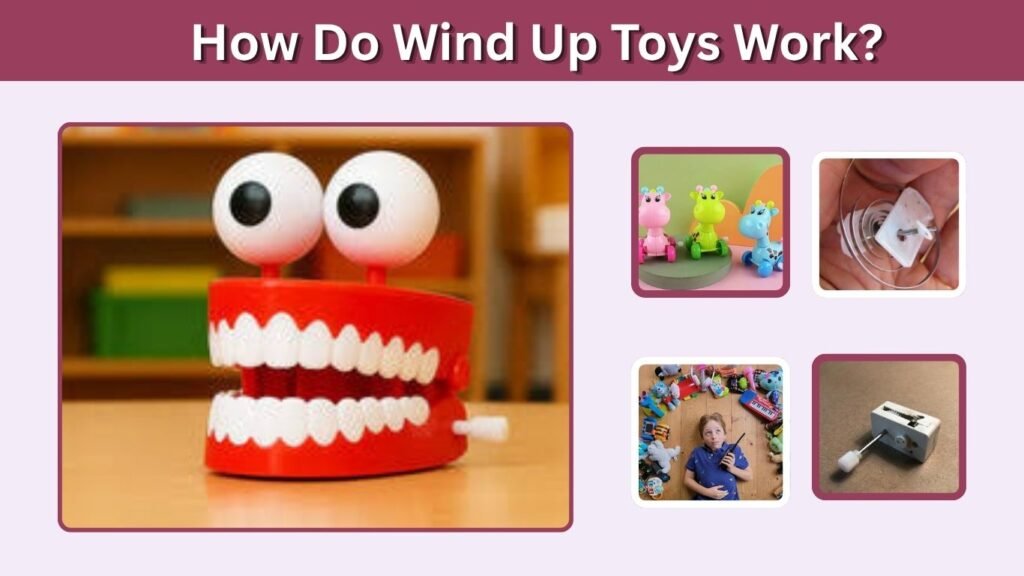
Wind-up toys are fascinating mechanical toys that move without batteries, electricity, or complicated electronics. With just a few turns of a key or knob, these toys can walk, jump, spin, or drive across the floor. Their movement comes from a simple mechanism that stores energy and releases it gradually. Wind-up toys have entertained children for generations and remain popular because of their clever designs. Understanding how wind-up toys work reveals the basic principles of springs, gears, and mechanical energy that make these small toys come alive.
What Are Wind-Up Toys?
Wind-up toys are mechanical toys powered by energy stored in a spring. Instead of using batteries or motors, they operate through a winding mechanism connected to gears and moving parts. When someone turns a key or knob, the internal spring tightens and stores energy. As the spring unwinds, it powers the toy’s movement.
These toys come in many designs, including walking animals, racing cars, jumping frogs, and dancing figures.
Common Types of Wind-Up Toys
- Walking toys: Use mechanical legs to imitate walking movements.
- Wind-up cars: Move forward using rotating wheels and gears.
- Jumping toys: Release stored energy to create jumping motions.
- Spinning toys: Rotate around a central point after winding.
- Dancing toys: Use gears and moving joints to create rhythmic movements.
- Swimming toys: Move fins or propellers to travel through water.
Each type uses a similar energy-storage principle, but its internal mechanism determines the movement.
How Do Wind-Up Toys Work?

Wind-up toys work by converting stored mechanical energy into motion. Turning a winding key tightens a spring inside the toy, storing elastic potential energy. When the mechanism is released, the spring gradually returns toward its original shape, transferring energy through gears and other mechanical components.
This controlled energy release allows the toy to move independently until most of the stored energy has been used.
Step 1: Winding the Spring
The process begins when someone turns the toy’s winding key or knob. The key connects to an internal shaft that winds a metal spring. As the spring becomes tighter, it stores elastic potential energy.
More winding generally increases the stored energy, but every toy has a mechanical limit. Turning beyond that limit can damage the spring or gears.
Step 2: Storing Mechanical Energy
After winding, the spring holds the energy supplied by the user’s hand. Many wind-up toys use a flat metal spiral spring, often called a mainspring. This spring can store energy in a compact space.
Depending on the design, a locking mechanism may hold the spring in place until the toy is released.
Step 3: Releasing the Stored Energy
When the toy starts moving, the wound spring begins to unwind. The spring applies rotational force, known as torque, to the connected mechanical components.
This force drives gears and shafts, allowing the toy to move without an external power source.
Step 4: Transferring Energy Through Gears
Gears transmit the spring’s rotational motion to different parts of the toy. Depending on their sizes and arrangement, gears can change rotational speed, direction, and available torque.
For example, a wind-up car uses gears to rotate its wheels, while a walking toy uses mechanical linkages to move its legs.
Step 5: Creating Movement
The final stage converts rotational motion into the toy’s intended action. Wheels allow cars to travel forward, while cams and linkages can produce walking, jumping, or dancing movements.
As the spring loses stored energy, the available torque decreases. Eventually, the toy slows down or stops and needs winding again.
Main Parts of a Wind-Up Toy Mechanism
A wind-up toy contains several small mechanical components working together. Each component has a specific function, from storing energy to controlling movement. Although the internal arrangement varies between toys, most traditional wind-up designs share several essential parts.
Understanding these components makes it easier to explain how a simple turn of a key produces repeated mechanical movements.
1. Winding Key
The winding key allows users to transfer energy from their hands into the toy. It connects to the spring mechanism through a shaft and is usually positioned on the toy’s side, back, or bottom. Some toys replace the traditional metal key with a plastic knob.
2. Mainspring
The mainspring is the main energy-storage component. It is commonly made from thin, flexible spring steel shaped into a spiral.
When wound, it stores elastic potential energy. As it unwinds, it releases rotational force that powers the mechanism.
3. Gear Train
The gear train consists of several interconnected gears.
Its main functions include:
- Transferring energy from the spring.
- Adjusting rotational speed.
- Changing the direction of rotation.
- Delivering suitable torque to moving components.
Gear sizes and arrangements influence how quickly or slowly the toy operates.
4. Axles and Shafts
Axles and shafts connect gears to wheels and other moving parts. They transfer rotational motion and help keep components properly aligned.
In wind-up vehicles, an axle typically connects the drive mechanism to the wheels.
5. Cams and Linkages
Cams and linkages convert rotating movement into other types of motion. For example, an off-center rotating cam can push a mechanical leg forward and backward.
These components are especially important in walking animals and dancing figures.
What Makes Different Wind-Up Toys Move?

Although wind-up toys share a similar energy-storage system, their movements depend on how their internal mechanisms are arranged. Designers use different combinations of gears, wheels, cams, and linkages to create specific actions.
Some toys move continuously across surfaces, while others produce repeated movements in one location. These differences make mechanical toys entertaining and visually interesting.
What Makes Different Wind-Up Toys Move?
Wind-up cars use a spring-powered gear train to rotate their driving wheels. When the spring unwinds, rotational energy travels through the gears to an axle.
The wheels push against the ground, and friction between the tires and surface helps propel the car forward.
How Do Wind-Up Walking Toys Work?
Walking toys use rotating cams, crankshafts, or linkages to move their legs.As the internal gears rotate, these components create repeated leg movements that imitate walking.
The toy’s weight distribution and foot design help maintain balance during movement.
How Do Wind-Up Jumping Toys Work?
Jumping toys use a spring-powered mechanism to produce sudden movements.
Some designs gradually load a separate jumping spring or lever before releasing it.
This quick release pushes the toy upward, producing a hopping or jumping action.
How Do Wind-Up Spinning Toys Work?
Spinning toys use stored spring energy to rotate a central shaft or spinning component.
Their gear arrangement transfers rotational motion to the spinning mechanism.
The toy continues rotating until friction and other energy losses slow it down.
Why Do Wind-Up Toys Stop Moving?
Wind-up toys cannot move forever because their stored energy is limited. Once the spring releases most of its usable energy, it can no longer supply enough torque to overcome friction and other resistance.
Several factors influence how long a toy operates after winding. The spring’s size, gear arrangement, mechanical condition, and type of movement all affect its running time.
Factors That Affect Running Time
- Spring capacity: Larger or stronger springs may store more energy.
- Gear design: Gear ratios influence movement speed and torque.
- Friction: Resistance between components wastes mechanical energy.
- Toy weight: Heavier moving toys may require more energy.
- Surface conditions: Rough surfaces increase resistance for wheeled toys.
- Mechanical wear: Damaged or misaligned parts reduce efficiency.
A well-designed mechanism uses stored energy efficiently, allowing the toy to operate smoothly.
Are Wind-Up Toys Better Than Battery-Operated Toys?
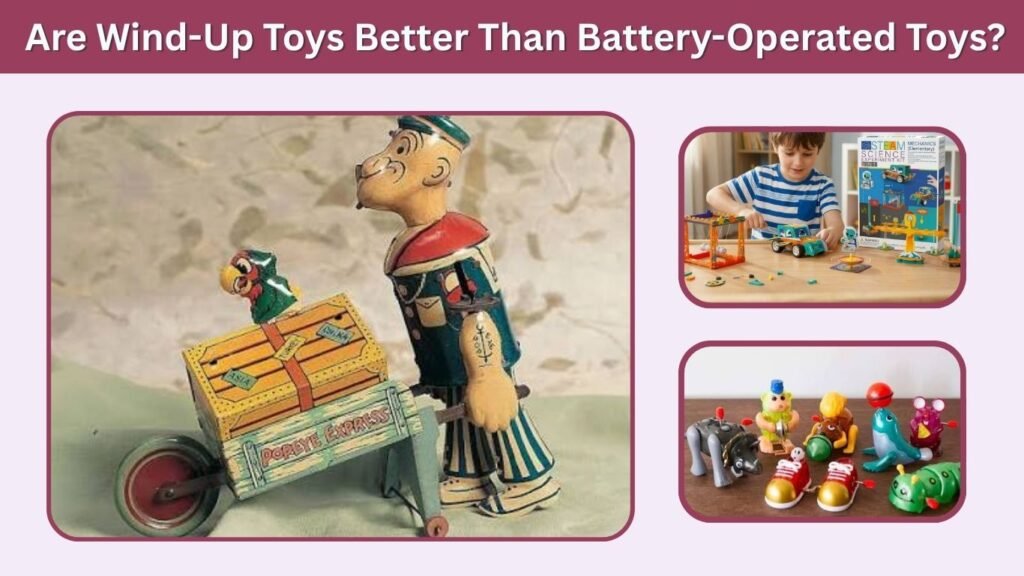
Wind-up toys and battery-operated toys both provide entertainment, but they use different power systems. Wind-up toys rely on mechanical energy supplied by the user, while battery-powered toys convert stored chemical energy into electrical energy.
Neither type is automatically better. Their advantages depend on the child’s age, the toy’s features, maintenance requirements, and intended use.
Advantages of Wind-Up Toys
- No batteries required: They operate without disposable or rechargeable batteries.
- Simple operation: Most models need only a few turns of a key.
- Lower operating costs: There are no batteries to replace.
- Educational value: Children can observe basic mechanical principles.
- Portable design: They work without electrical charging.
- Traditional appeal: Their simple movements make them interesting collectibles.
Limitations of Wind-Up Toys
Wind-up toys generally have shorter operating times than battery-powered models.
Their movements are also more limited because they depend on fixed mechanical components.
Some small wind-up toys contain delicate gears or springs that can break under excessive force.
How to Take Care of Wind-Up Toys
Proper maintenance helps wind-up toys operate smoothly and reduces unnecessary wear. Because their mechanisms contain small moving parts, rough handling, dirt, and excessive winding can affect performance.
Most modern wind-up toys require very little maintenance. Simple storage and handling habits are usually enough to keep them working properly for a long time.
Simple Maintenance Tips
- Avoid overwinding: Stop turning when the mechanism reaches its designed limit.
- Keep toys clean: Remove surface dust using a soft, dry cloth.
- Avoid water exposure: Keep non-waterproof toys away from moisture.
- Use smooth surfaces: Operate walking and wheeled toys on suitable surfaces.
- Store carefully: Protect toys from crushing, falling, and extreme temperatures.
- Check for damage: Stop using toys with broken keys or exposed sharp parts.
Do not apply household oil inside the mechanism unless the manufacturer specifically recommends it.
FAQs
1. Do Wind-Up Toys Need Batteries?
No, traditional wind-up toys do not require batteries. They operate using mechanical energy stored in an internal spring. Turning the winding key tightens the spring, and its gradual release powers the toy’s movement. Some modern hybrid toys may include electronic features, but ordinary spring-powered models work without electricity.
2. How Long Do Wind-Up Toys Run?
Most small wind-up toys operate for several seconds to a few minutes after winding, depending on their design. Running time depends on spring capacity, gear ratios, friction, and movement type. A larger spring does not always guarantee a longer running time because mechanical efficiency also matters.
3. Can You Overwind a Wind-Up Toy?
Yes, some wind-up toys can be damaged by excessive winding. Turning the key beyond the recommended limit may deform the spring, damage gears, or break the winding mechanism. Many modern toys include protective features, but users should still follow the manufacturer’s instructions and avoid forcing the key.
4. Why Is My Wind-Up Toy Not Moving?
A wind-up toy may stop working because of a damaged spring, jammed gears, dirt, or broken mechanical connections. Sometimes the winding key turns without properly engaging the mechanism. Check for visible obstructions and follow the manufacturer’s guidance. Avoid forcing small components, as this can cause additional damage.
5. Are Wind-Up Toys Safe for Toddlers?
Wind-up toys can be suitable for toddlers when specifically designed for their age group. However, some models contain small detachable parts, sharp metal components, or delicate winding keys that may present hazards. Always check the manufacturer’s age recommendation and choose toys with durable construction and secure mechanical components.
