
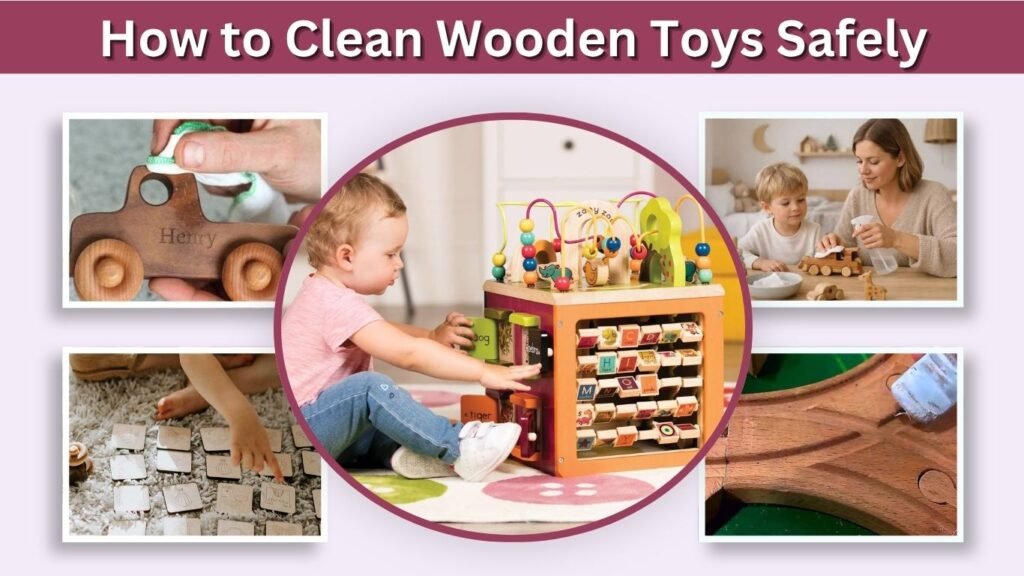
Wooden toys are durable, eco-friendly, and popular among parents who prefer natural play materials. However, dirt, saliva, and everyday handling can leave wooden blocks, trains, and teething toys needing regular cleaning. Learning how to clean wooden toys properly helps maintain hygiene without damaging their natural finish. Unlike plastic toys, wooden toys require gentle cleaning because excessive moisture can cause swelling, cracking, or discoloration. This guide explains safe cleaning methods, natural cleaning options, disinfecting precautions, and practical maintenance tips for wooden baby toys, blocks, and secondhand toys.
How to Clean Wooden Toys Step by Step
Cleaning wooden toys requires a gentle approach because wood absorbs moisture more easily than plastic. Using too much water or harsh cleaning products can damage the surface, loosen paint, or cause cracks. Fortunately, most wooden toys can be cleaned using a soft cloth, mild soap, and a little water. Following the correct steps helps maintain their appearance and usability.
Step 1: Remove Loose Dirt and Dust
Start by removing visible dust, crumbs, and dirt from the toy. Use a dry microfiber cloth or a soft- bristled brush to clean corners and small spaces.
Pay particular attention to grooves, joints, and textured surfaces where dirt collects. For wooden toy blocks, clean each block individually to remove accumulated dust.
Step 2: Prepare a Mild Cleaning Solution
Fill a small bowl with lukewarm water and add a few drops of mild, fragrance-free dish soap. Mix gently until the soap dissolves.
Avoid strong detergents, bleach, ammonia, or abrasive cleaners unless the toy manufacturer specifically recommends a suitable product.
Step 3: Wipe the Wooden Surface
Dip a soft cloth into the soapy water and wring it out thoroughly. The cloth should be damp rather than wet.
Gently wipe every surface, including edges and corners. For stubborn dirt, apply slightly more pressure without scrubbing away the paint or protective finish.
Step 4: Remove Soap Residue
Use another clean cloth lightly dampened with plain water to remove the remaining soap. Avoid rinsing wooden toys directly under running water unless the manufacturer’s instructions specifically allow it.
Step 5: Dry the Toys Completely
Immediately wipe the toys with a dry towel. Place them in a well-ventilated area and allow them to air-dry thoroughly before returning them to storage.
Avoid radiators, ovens, or prolonged direct sunlight because excessive heat can damage wood and painted finishes.
How to Clean Wooden Baby Toys and Teething Toys

Wooden baby toys require additional attention because infants frequently place them in their mouths. Saliva, food residue, and constant handling make regular cleaning important. However, boiling, soaking, and steam sterilization can damage wooden surfaces. The safest approach depends on the toy’s finish, construction, and manufacturer’s care instructions.
Cleaning Wooden Baby Toys
For wooden rattles, stacking rings, and activity toys, use a clean cloth dampened with mild soapy water. Wipe carefully around painted surfaces, openings, and joints.
Remove soap residue with a second damp cloth and dry the toy completely. Inspect the surface for loose paint, cracks, and splinters before allowing your baby to use it again.
Cleaning Wooden Teething Toys
Wooden teething toys need special care because they come into direct contact with a baby’s mouth.
Use mild soap and a damp cloth if the manufacturer permits it. Clean all accessible surfaces, remove soap residue, and allow the toy to dry thoroughly.
Do not boil or soak wooden teethers. Avoid essential oils, scented cleaners, and unapproved disinfectants that could leave unwanted residues.
How to Clean Wooden Toy Blocks and Trains
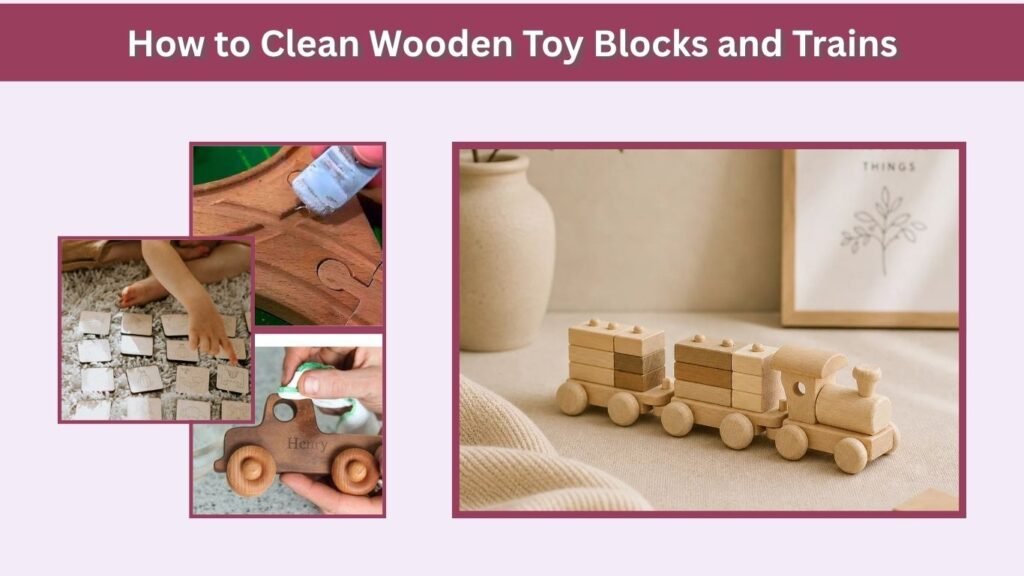
Wooden blocks, toy trains, and building sets often contain painted surfaces, glued components, or small decorative details. These features require careful cleaning to prevent color fading or damage. Although the basic cleaning process remains similar, different toy designs may need slightly different approaches. Understanding these differences helps protect toys during routine cleaning.
Cleaning Wooden Blocks
Wooden toy blocks are relatively easy to maintain because most have flat surfaces. Wipe each block with a lightly damp cloth and mild soap when necessary.
For unfinished blocks, use minimal moisture because exposed wood absorbs water quickly. Dry individual blocks separately before stacking them.
Cleaning Wooden Toy Trains and Tracks
Wooden train sets contain grooves, wheels, and connectors that collect dust and debris.
Use a soft brush to loosen dirt from train tracks and connecting pieces. Wipe accessible surfaces with a damp cloth without allowing water to enter wheel assemblies.
For wooden Thomas-style trains, avoid soaking painted bodies or metal connectors.
Cleaning Popular Wooden Toy Brands
Different manufacturers may use different finishes and construction methods. Always check their instructions before applying cleaning solutions.
- Grimm’s wooden toys: Use a lightly damp cloth, treating unfinished or stained surfaces gently.
- Lovevery wooden toys: Wipe with a damp cloth and avoid excessive water.
- Melissa & Doug wooden toys: Check the specific product’s instructions and gently wipe suitable surfaces.
- Painted wooden puzzles: Use minimal moisture to protect printed images and glued layers.
How to Clean Wooden Toys Naturally With Vinegar
Some parents prefer natural cleaning ingredients when caring for children’s toys. Diluted vinegar is a commonly discussed option, particularly for removing light residue and odors. However, vinegar is acidic and may affect certain paints, stains, and protective finishes. It is also not a reliable replacement for an approved sanitizer or disinfectant. Mild soap and water remain the preferred general cleaning method.
Can You Use Vinegar on Wooden Toys?
Vinegar should only be considered when the manufacturer confirms it is suitable for the toy’s finish.
If permitted, apply the recommended dilution to a cloth rather than spraying the toy directly. Test an inconspicuous area before cleaning the entire surface.
Avoid using vinegar on delicate finishes, antique toys, or wooden teethers without specific manufacturer approval.
Is Soap Better Than Vinegar?
For everyday cleaning, mild soap and water are generally preferable. Soap helps loosen dirt, oils, and other surface contaminants without the acidity associated with vinegar.
Vinegar should never be mixed with bleach or other cleaning chemicals. Neither vinegar nor ordinary soap washing should be described as guaranteed disinfection.
How to Clean Secondhand and Old Wooden Toys
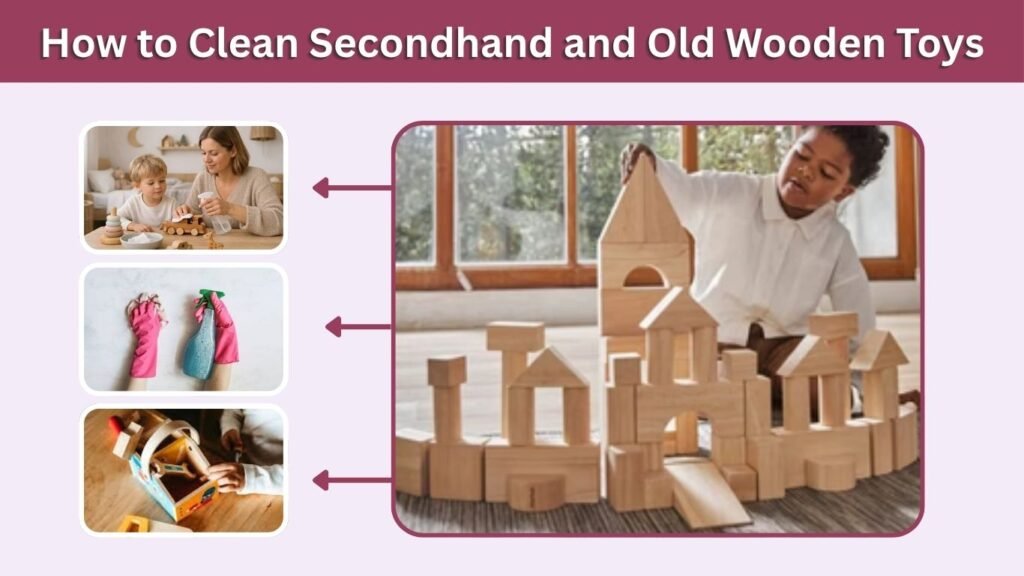
Secondhand wooden toys can be affordable and environmentally friendly, but they require careful inspection before use. Previously owned toys may contain accumulated dirt, damaged paint, or hidden moisture problems. Older wooden toys may also have finishes that do not meet modern toy safety requirements. Cleaning helps remove surface contamination, but it cannot correct structural problems or unsafe coatings.
Cleaning Secondhand Wooden Toys
Before giving used wooden toys to children, follow these precautions:
- Inspect the toy for cracks, splinters, loose parts, and peeling paint.
- Check for recalls and confirm the toy is appropriate for the child’s age.
- Remove surface dust using a dry cloth or soft brush.
- Clean suitable surfaces using mild soap and a damp cloth.
- Remove soap residue and let the toy dry thoroughly.
- Avoid giving antique toys with unknown finishes to babies or children who mouth toys.
Cleaning Vintage and Antique Wooden Toys
Vintage wooden toys may have delicate paint, old glue, or protective coatings that react poorly to moisture.
Start with gentle dry dusting. If additional cleaning is necessary, seek advice appropriate to the toy’s age and finish.
For collectible antique toys, professional conservation may be more appropriate than household cleaning.
How to Disinfect Wooden Toys and Remove Mold
Cleaning and disinfecting are different processes. Cleaning removes dirt and many germs, while disinfecting uses appropriate products to kill germs. Because wood may be porous or unfinished, disinfectants suitable for plastic toys are not automatically appropriate for wooden ones. Special caution is necessary when toys have been exposed to illness, bodily fluids, or mold.
How to Safely Disinfect Wooden Toys
If disinfection is necessary, first clean the toy and check its manufacturer’s instructions.Only use a disinfectant explicitly suitable for that wooden surface and the intended use. Follow the product label, including contact time, any required rinsing, and complete drying. If a mouthed wooden toy cannot be safely sanitized according to the manufacturer’s instructions, consider replacing it rather than applying an unsuitable chemical.
How to Clean Mold Off Wooden Toys
Mold may develop when wooden toys remain damp or are stored in poorly ventilated spaces.
Visible mold, musty odors, or dark growth inside cracks can indicate contamination. Because mold may penetrate porous wood, surface wiping cannot guarantee complete removal.
Discard moldy wooden toys intended for babies or young children, particularly unfinished or cracked items. Do not sand moldy toys indoors or apply bleach in an attempt to restore them for mouthing.
Common Mistakes to Avoid When Cleaning Wooden Toys

Even durable wooden toys can become damaged through improper cleaning. Excessive moisture, strong chemicals, and unsuitable drying methods may weaken the wood or protective coating. Avoiding these common mistakes helps preserve wooden toys and reduce unnecessary replacement costs.
- Soaking toys in water: Can cause swelling, cracking, or separation of glued components.
- Using dishwashers: Heat and prolonged moisture can damage wooden surfaces.
- Applying harsh disinfectants: May damage finishes or leave unsuitable residues.
- Scrubbing with abrasive materials: Can remove paint and create rough surfaces.
- Storing damp toys: Encourages moisture buildup and possible mold development.
- Using unapproved oils: Cooking oils can become rancid, and essential oils may be unsuitable for children.
How Often Should You Clean Wooden Toys?
The ideal cleaning frequency depends on how often the toys are handled and whether children put them in their mouths. Toys used by babies generally need more frequent attention than decorative or occasionally used wooden playsets. Regular inspection is equally important because damaged surfaces may require replacement rather than cleaning.
Daily and Weekly Cleaning
Clean wooden teething toys and frequently mouthed toys after use when necessary, following the manufacturer’s instructions.
For blocks, puzzles, and train sets used by older children, regular weekly cleaning is often sufficient when no visible dirt is present.
Clean toys promptly after exposure to food, saliva, spills, or other contamination. If a child has been sick, follow appropriate sanitizing or disinfecting guidance for the specific toy.
Proper Storage After Cleaning
Allow wooden toys to dry completely before putting them away. Store them in a clean, dry, well-ventilated location. Avoid damp basements, humid storage containers, and locations exposed to extreme temperatures. Periodically inspect wooden toys for rough surfaces, loose components, or signs of deterioration.
FAQs
1. Can You Wash Wooden Toys With Soap and Water?
Yes, most wooden toys can be cleaned using mild soap and a lightly damp cloth. Wipe the surface gently, remove soap residue, and dry thoroughly. Avoid soaking the toys or washing them under running water unless the manufacturer specifically recommends doing so.
2. Can You Put Wooden Toys in the Dishwasher?
No, most wooden toys should not go in the dishwasher. High temperatures, strong detergents, and prolonged water exposure can cause swelling, cracking, and peeling paint. Hand cleaning with a damp cloth is generally safer and helps preserve the toy’s finish and structure.
3. How Do You Sanitize Wooden Toys for Babies?
Start by cleaning the toy with mild soap and a damp cloth. If sanitizing is required, follow the manufacturer’s approved method using a product suitable for the material and mouth contact. Avoid boiling, steaming, or applying unapproved disinfectants to wooden toys.
4. Can You Use Vinegar to Clean Wooden Toys?
Vinegar may be suitable for certain wooden finishes when the manufacturer permits it, but its acidity can damage some paints and coatings. It should not be relied upon to disinfect toys. For routine cleaning, mild soap and water are generally safer choices.
5. How Do You Clean Unfinished Wooden Toys?
Clean unfinished wooden toys using a dry or very lightly damp cloth. Apply minimal moisture because unfinished wood absorbs water more easily than sealed surfaces. If mild soap is needed, use it sparingly, remove residue carefully, and allow the toy to dry completely before use.
