

Slime is a fun sensory activity for kids, but cleaning it off toys can be frustrating when the sticky mixture gets trapped in small spaces or dries onto surfaces. Learning how to remove slime from toys helps parents clean plastic figures, dolls, action figures, and other playthings without causing damage. Fortunately, simple household items like warm water, mild dish soap, and baking soda can make the process easier. This guide explains effective cleaning methods, safe solutions for different toy materials, and practical ways to prevent future slime messes.
1. How to Remove Slime From Toys Step by Step

Removing slime from toys requires a gentle approach to avoid damaging delicate surfaces, paint, or moving parts. Fresh slime usually comes off more easily than dried slime, but both can be removed with proper cleaning methods. Start by checking the toy’s material and removing as much slime as possible before applying water or cleaning solutions.
Step 1: Remove Excess Slime by Hand
Begin by gently pulling away large pieces of slime using your fingers. If the slime is still soft, you can use a clean piece of the same slime to lift smaller sticky portions from the toy.
Avoid scraping the surface with sharp objects because they may leave scratches or damage decorative paint. A plastic spoon or soft silicone spatula can help remove thicker slime without harming sturdy toy surfaces.
Step 2: Soften the Remaining Slime
For washable, non-electronic toys, dampen a soft cloth with warm water and place it over the affected area for a few minutes. This helps soften dried slime and makes removal easier without excessive rubbing.
Use warm rather than boiling water because high temperatures can warp plastic or damage glued decorations. For toys with fabric, electronic components, or delicate finishes, check the manufacturer’s cleaning instructions first.
Step 3: Clean With Mild Dish Soap
Mix a few drops of mild dish soap with warm water to create a gentle cleaning solution. Dip a soft cloth into the mixture and carefully wipe the sticky areas until the slime begins to loosen.
For detailed plastic toys, use a soft toothbrush to reach small grooves and textured surfaces. Apply light pressure around painted details, joints, and accessories to avoid damaging the toy.
Step 4: Rinse and Dry Completely
After removing the slime, wipe washable toys with a clean, damp cloth to eliminate soap residue. Fully washable plastic toys can be rinsed under running water if their manufacturer permits it.
Dry the toy with a soft towel and allow remaining moisture to evaporate before returning it to storage. Pay special attention to openings and joints where water may become trapped.
2. Best Household Products for Removing Slime From Toys
Several common household products can help remove sticky slime without requiring specialized cleaning chemicals. However, the safest option depends on the toy’s material, finish, and construction. Mild dish soap and water should always be your first choice because stronger cleaning products may damage painted surfaces, rubber components, or delicate accessories.
Mild Dish Soap and Warm Water
Dish soap is one of the simplest ways to clean slime from washable plastic toys. It helps loosen sticky residue while removing dirt and oils left behind by the slime mixture.
Apply diluted soap using a soft sponge or cloth, then wipe the affected surface carefully. Repeat the process if necessary rather than using excessive force or concentrated detergent.
Baking Soda Paste
Baking soda may help lift stubborn residue from durable, unpainted plastic surfaces. Mix a small amount with water to create a soft paste, then apply it gently using a damp cloth.
Because baking soda can be mildly abrasive, test it on an inconspicuous area first. Avoid using it on glossy finishes, painted toys, transparent plastic, or delicate decorative coatings.
White Vinegar Solution
Diluted white vinegar may help loosen some types of slime residue on compatible hard surfaces. Mix equal amounts of white vinegar and water, then test a small hidden area before cleaning.
Apply a little solution to a cloth and gently wipe the affected spot. Avoid vinegar on metal parts, painted finishes, electronic toys, and materials that may react to acidic cleaners.
3. How to Remove Dried Slime From Toys
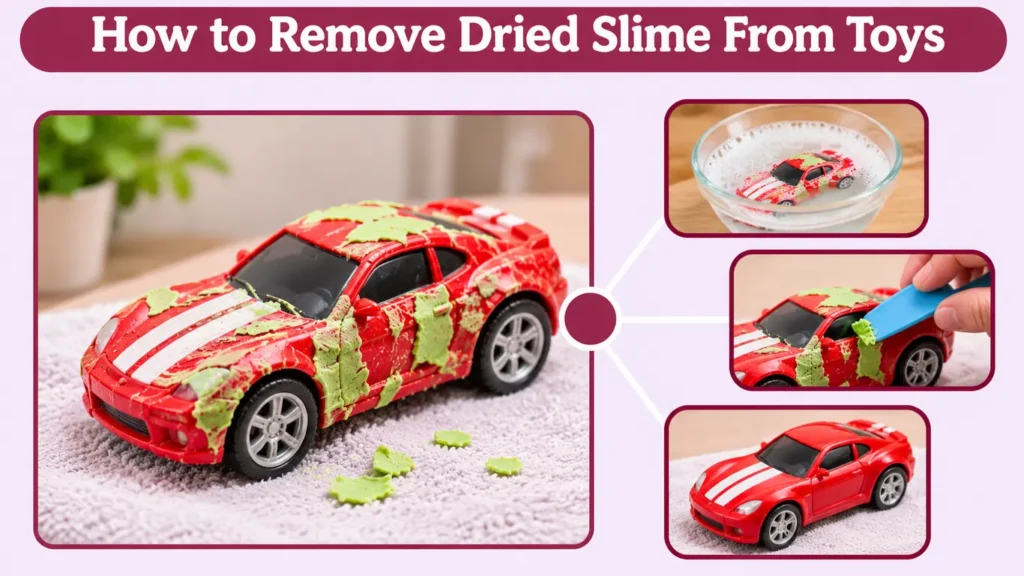
Dried slime can become hard, sticky, or rubbery depending on its ingredients and how long it has remained on a surface. Removing it requires patience because aggressive scraping may damage the toy. The best method involves gradually softening the residue, gently lifting it away, and repeating the cleaning process until the surface is clean.
Soften Dried Slime With a Damp Cloth
Place a warm, damp cloth over dried slime on a water-safe toy for several minutes. The moisture may soften water-based slime, making it easier to remove without damaging the plastic surface.
Once the slime loosens, carefully peel it away using your fingers or a soft plastic tool. Repeat the process for thicker deposits rather than trying to remove everything at once.
Remove Stubborn Slime From Small Crevices
Slime often becomes trapped inside narrow grooves, joints, and textured toy surfaces. A soft toothbrush or cotton swab can help remove softened residue from these difficult areas.
Work carefully around hinges and moving components to avoid pushing slime deeper into the toy. For electronic toys, use only a lightly dampened cloth on manufacturer-approved surfaces and keep moisture away from openings.
4. How to Clean Slime From Different Types of Toys
Not all toys can be cleaned using the same method because materials react differently to moisture and household cleaning products. Plastic toys are generally easier to clean, while stuffed animals, wooden toys, and electronic playthings require extra caution. Choosing a material-appropriate method helps remove slime while preserving the toy’s appearance and functionality.
Removing Slime From Plastic Toys
Most sturdy, washable plastic toys can be cleaned using mild dish soap and warm water. First, remove loose slime, then wipe the surface with a damp, soapy cloth until the sticky residue disappears.
Use a soft brush for textured plastic and small decorative grooves. Rinse only if the toy is designed for water exposure, and dry it completely afterward.
Removing Slime From Stuffed Animals
Stuffed animals require gentle cleaning because slime can stick to fabric fibers and become embedded in the stuffing. Carefully remove excess slime, then use a small amount of mild detergent and cool water to spot-clean the affected area.
Blot instead of scrubbing to avoid spreading the stain or damaging the fabric. If the care label permits machine washing, follow its instructions after removing as much slime as possible.
Removing Slime From Wooden Toys
Wooden toys should not be soaked because excessive moisture can cause swelling, cracking, or damage to the finish. Remove loose slime using a soft cloth or plastic scraper without applying excessive pressure.
Wipe the affected area with a barely damp cloth and a little mild soap if the finish allows it. Immediately dry the surface and avoid acidic or abrasive cleaning products.
Removing Slime From Electronic Toys
Electronic toys require special attention because water can damage batteries, circuits, and speakers. Turn off the toy and remove removable batteries before cleaning, following the manufacturer’s instructions.
Use a dry, soft brush to lift loose slime from external surfaces. If permitted, wipe the outside with a slightly damp cloth, keeping all moisture away from buttons, ports, speakers, and battery compartments.
5. Common Mistakes to Avoid When Cleaning Slime
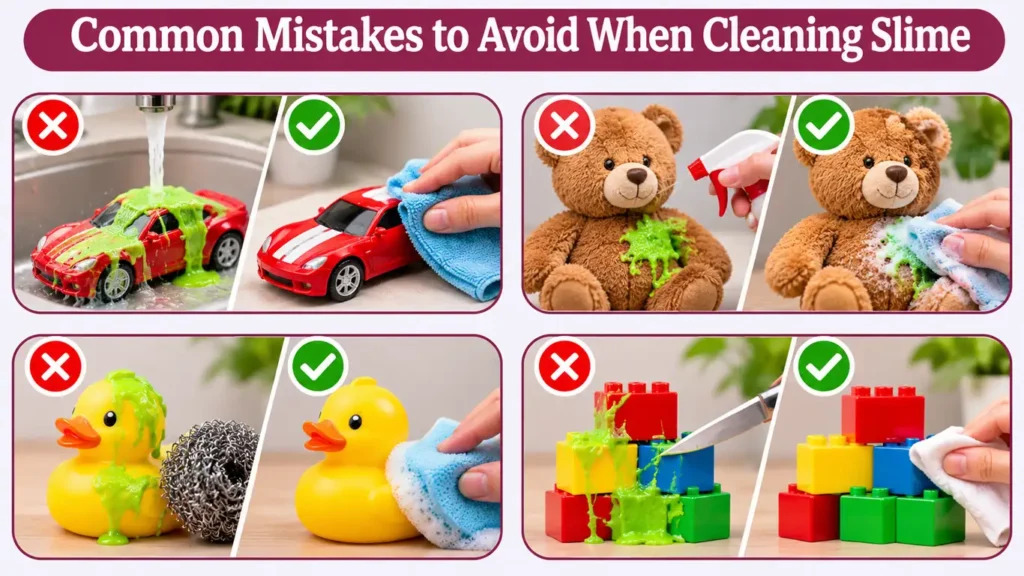
Cleaning slime incorrectly can make the mess worse or permanently damage a favorite toy. Strong chemicals, excessive heat, and aggressive scrubbing are common causes of scratches, discoloration, and damaged finishes. Understanding what to avoid helps protect toys and makes cleaning more effective, especially when dealing with expensive collectibles or delicate children’s playthings.
Using Harsh Cleaning Chemicals
Bleach, acetone, and strong solvent-based cleaners should not be used as general slime-removal solutions. These products may discolor plastic, damage painted decorations, or weaken certain materials.
Start with mild soap and water instead of experimenting with stronger chemicals. Always follow the toy manufacturer’s instructions when selecting cleaning products.
Scrubbing Too Hard
Aggressive scrubbing can scratch plastic surfaces, damage printed designs, and spread slime deeper into fabric. This is especially problematic for collectible figures and toys with delicate paint.
Use gentle pressure and allow cleaning solutions time to work. Repeating a mild cleaning method is usually safer than attempting to remove stubborn residue through force.
Soaking Toys Without Checking Their Material
Not every toy is waterproof, even when its exterior looks like ordinary plastic. Water can enter small openings and damage internal parts, adhesives, or hidden metal components.
Avoid soaking electronic toys, battery-operated products, wooden toys, and stuffed animals unless their care instructions specifically permit it. Surface cleaning is the safer approach for these materials.
6. How to Remove Slime Stains and Sticky Residue
Sometimes the main slime mixture comes off easily, but colored stains or sticky residue remain behind. These marks can be particularly noticeable on light-colored plastic, dolls, and fabric toys. Removing residue depends on the slime’s ingredients and dyes, so begin with gentle methods and avoid strong chemicals that could permanently discolor the surface.
Cleaning Sticky Residue From Plastic
Use a soft cloth dampened with diluted dish soap to wipe away leftover stickiness. Work gently in circular motions and repeat until the surface feels clean.
If residue remains, let the soap solution sit briefly on a compatible hard surface before wiping again. Avoid using abrasive pads or strong solvents, particularly on glossy or painted toys.
Removing Slime Color From Fabric Toys
Colored slime may leave dye stains on plush toys even after the sticky material has been removed. Apply a small amount of diluted, fabric-safe detergent to an inconspicuous area to check for colorfastness.
Blot the stain gently with a clean cloth and cool water, working from the outside toward the center. Repeat as needed, and avoid heat until the stain has disappeared because it may make some stains harder to remove.
7. How to Prevent Slime From Sticking to Toys

Preventing slime messes is often easier than cleaning dried residue from toys and play surfaces. A few simple habits can reduce unwanted slime contact and make playtime more enjoyable for children. Establishing a designated slime area, selecting suitable toys, and cleaning materials promptly can help keep toys in better condition.
Create a Dedicated Slime Play Area
Choose a smooth, washable table or play tray specifically for slime activities. This keeps the mixture away from carpets, upholstered furniture, and toys that are difficult to clean.
Use a reusable silicone mat or plastic tray to contain spills. Encourage children to return slime to its container when they finish playing.
Keep Delicate Toys Away From Slime
Avoid combining slime with electronic toys, collectible figures, plush animals, or unfinished wooden toys. These items may be difficult to clean and can suffer permanent damage from sticky residue.
Instead, provide sturdy, washable plastic accessories specifically intended for slime play. Check that accessories are age-appropriate and do not create choking hazards.
Clean Slime Immediately After Playtime
Fresh slime is generally easier to remove than slime that has dried and hardened. Inspect toys and surrounding surfaces immediately after each activity to catch any remaining residue.
Store slime in a properly sealed container to prevent drying and accidental spills. Wash hands after play and clean reusable accessories according to their material and care instructions.
FAQs
1. What is the easiest way to remove slime from plastic toys?
The easiest method is to remove excess slime by hand and clean the remaining residue using mild dish soap and warm water. A soft toothbrush can help with small grooves. Rinse only washable toys and dry them completely afterward.
2. Can vinegar remove dried slime from toys?
Diluted white vinegar may help loosen certain slime residues on compatible hard surfaces. However, it can damage some finishes and materials. Test a small hidden area first, and avoid using vinegar on electronic toys, delicate paint, or metal components.
3. How do you remove slime from stuffed animals?
Carefully peel away excess slime, then spot-clean the affected fabric using a small amount of mild detergent and cool water. Blot gently rather than scrubbing. Follow the stuffed animal’s care label for washing and drying instructions to prevent damage.
4. Will baking soda remove sticky slime residue?
Baking soda may help clean stubborn residue from durable, unpainted plastic toys. Mix it with a little water and apply gently using a soft cloth. Because it is mildly abrasive, avoid using it on painted, glossy, or delicate surfaces.
5. Can slime permanently stain toys?
Yes, some slime dyes can leave permanent stains, especially on porous materials, unfinished wood, and light-colored fabrics. Removing slime quickly reduces the risk, but not every stain can be eliminated. Always test cleaning solutions before treating delicate toy surfaces.
