

Plastic toys can lose their bright colors over time because of sunlight, heat, dirt, and everyday wear. Whether you have old action figures, colorful building blocks, outdoor playsets, or vintage collectibles, knowing how to restore faded plastic toys can help improve their appearance and extend their useful life. Fortunately, several simple cleaning and restoration techniques can refresh dull surfaces without expensive equipment. This guide explains safe methods for cleaning faded plastic, restoring color where possible, removing yellow discoloration, and preventing further damage to your favorite toys.
1. Why Do Plastic Toys Fade Over Time?
Plastic toys often become faded, dull, or discolored after years of exposure to environmental conditions. Understanding the causes of fading helps you choose the right restoration method and prevent further damage. While some discoloration comes from removable dirt, permanent color changes can occur when sunlight, oxygen, and heat alter the plastic or its pigments.
Sunlight and UV Exposure
Ultraviolet rays from sunlight can break down certain plastic materials and affect the pigments used to create their colors. Over time, bright red, blue, yellow, and green toys may become lighter or unevenly faded.
Outdoor toys are especially vulnerable because they receive regular sunlight exposure. Even toys displayed near windows may gradually lose their original color without adequate UV protection.
Heat and Environmental Damage
High temperatures can accelerate plastic aging, causing discoloration, brittleness, or surface deterioration. Toys stored in hot garages, vehicles, or outdoor sheds may experience these changes more quickly.
Repeated exposure to temperature changes can also damage painted finishes and decorative coatings. Keeping toys in a stable indoor environment helps reduce these problems.
Dirt, Scratches, and Surface Wear
Sometimes plastic toys appear faded because dirt, dust, and tiny scratches reduce their surface shine. These imperfections scatter light and make bright colors look dull.
Regular cleaning can improve the appearance of toys affected mainly by surface buildup. However, washing alone cannot reverse permanent pigment fading or chemical changes within the plastic.
2. How to Restore Faded Plastic Toys Step by Step

Restoring faded plastic toys begins with determining whether the discoloration comes from dirt, scratches, or actual pigment degradation. Gentle cleaning should always come first because aggressive treatments can permanently damage plastic surfaces. Once the toy is clean and dry, you can assess whether polishing, touch-up painting, or another material-appropriate restoration technique is necessary.
Step 1: Clean the Plastic Surface
Mix a few drops of mild dish soap with warm water to create a gentle cleaning solution. Use a soft microfiber cloth or sponge to remove dirt, dust, and oily residue from the toy.
For small grooves and textured surfaces, use a soft toothbrush with light pressure. Avoid soaking electronic toys, battery-operated figures, or products with delicate internal components.
Step 2: Check the Type of Fading
After cleaning, inspect the plastic under natural lighting to determine the extent of the damage. Surface dirt may disappear completely, while UV-damaged colors usually remain lighter or uneven.
Check for scratches, cracks, peeling paint, and brittle areas before proceeding. Severely damaged plastic may not be suitable for polishing or other restoration treatments.
Step 3: Restore the Surface Appearance
For compatible, unpainted plastic, a plastic-safe polish may help improve minor scratches and restore some surface shine. Apply a small amount to a hidden area first to check for unwanted changes.
Gently buff the surface with a clean microfiber cloth according to the product instructions. Remember that polishing can improve gloss, but it cannot replace pigments that have faded.
Step 4: Repaint Severely Faded Areas
When permanent color fading remains visible, repainting may be the most practical way to improve the toy’s appearance. Choose a coating specifically suitable for the plastic material and intended use.
Clean and prepare the surface according to the paint manufacturer’s directions before applying thin, even coats. For toys handled by children, use only coatings explicitly suitable for that purpose and allow them to cure completely.
3. Best Methods to Restore Color on Faded Plastic Toys
Different restoration techniques work for different types of plastic damage. Some methods improve surface shine, while others cover faded colors or remove certain forms of discoloration. Choosing a suitable approach is important because not every product works on every plastic. Always test a small hidden section before treating the entire toy.
Mild Soap and Microfiber Cleaning
Gentle cleaning is the safest starting point for most washable plastic toys. It removes accumulated dirt and residue that can make the toy’s original colors appear faded.
Use diluted dish soap and a microfiber cloth, then remove any remaining detergent with a damp cloth. Allow the surface to dry completely before deciding whether further restoration is needed.
Plastic-Safe Polishing Products
Plastic polishing compounds can improve the appearance of minor scratches on certain smooth, unpainted surfaces. These products work by refining the surface rather than restoring chemically damaged pigments.
Follow the manufacturer’s instructions and test a hidden area before application. Avoid polishing printed decorations, painted details, textured finishes, and delicate collectible figures.
Plastic-Compatible Paint
Repainting is useful when a toy’s color has faded permanently and cleaning cannot improve its appearance. Plastic-compatible acrylic coatings or model paints may be suitable for decorative restoration projects.
Select a paint formulated for the specific material and follow all preparation and curing instructions. Avoid using ordinary craft paint on toys intended for mouthing or rough play unless the coating is specifically approved for that use.
UV-Protective Finishes
Some compatible protective coatings can reduce future UV-related discoloration after a toy has been restored. However, they do not reverse existing fading or guarantee complete protection from sunlight.
Choose a finish recommended for the toy’s plastic and intended use. Test it first because clear coatings may alter gloss, texture, or color.
4. How to Restore Different Types of Plastic Toys
Plastic toys are manufactured using different materials, paints, and surface finishes, so restoration techniques should not be applied universally. Action figures, building blocks, outdoor play equipment, and vintage collectibles may require different approaches. Identifying the toy’s construction and condition helps prevent accidental damage while improving faded or discolored surfaces.
Restoring Faded Action Figures
Action figures often contain painted details, flexible joints, and multiple plastic materials. Start by gently cleaning the figure with a soft cloth and mild soap, avoiding excess moisture around joints.
For permanently faded paint, careful touch-ups may improve the appearance of display-only figures. Use fine brushes and compatible model paints, and avoid polishing printed faces or decorative details.
Restoring Plastic Building Blocks
Building blocks can become dull from dirt, scratches, and frequent handling. Wash compatible, non-electronic blocks with mild soap and lukewarm water, then dry them thoroughly.
Avoid abrasive compounds that might change their dimensions or interfere with how pieces connect. Cleaning may improve their appearance, but permanently faded blocks cannot regain their original pigment through washing.
Restoring Outdoor Plastic Toys
Outdoor toys frequently experience significant UV exposure, making color fading more noticeable. Begin by cleaning away dirt, pollen, and surface buildup using a mild cleaning solution.
If the plastic remains faded, consider a manufacturer-approved restoration coating suitable for outdoor use. Check for brittleness, cracking, or structural weakness, especially on ride-on toys and play equipment.
Restoring Vintage Plastic Toys
Vintage toys require extra caution because older plastics and finishes may react unpredictably to modern cleaning products. Some collectible toys can also lose value when their original surfaces are repainted or polished.
Start with gentle dust removal and minimal cleaning. For valuable or fragile collectibles, consult a professional toy conservator before attempting chemical treatments or permanent modifications.
5. How to Remove Yellow Discoloration From Plastic Toys

Yellow discoloration is another common problem affecting aging plastic toys, particularly older white and light-colored items. Unlike ordinary dirt, yellowing can result from chemical changes within the plastic material. Although some restoration methods can temporarily improve the appearance of certain plastics, these treatments carry risks and may not produce permanent results.
Cleaning Yellowed Plastic With Mild Soap
Begin by removing surface dirt using a soft cloth and a small amount of mild dish soap. This helps determine whether the yellow appearance comes from stains or changes within the plastic.
Rinse only water-safe toys and dry them thoroughly. If the yellow discoloration remains, it may be caused by plastic aging rather than removable residue.
Should You Use Hydrogen Peroxide?
Hydrogen peroxide is sometimes used by hobbyists to lighten yellowed ABS plastic, particularly on vintage electronic housings. However, results vary, and the process can cause uneven discoloration, surface changes, or damage to plastic components.
It is not a recommended general cleaning method for children’s toys. Avoid experimental bleaching treatments, especially on painted figures, flexible plastics, valuable collectibles, or toys intended for frequent handling.
6. Common Mistakes to Avoid When Restoring Faded Toys
Improper restoration can make plastic toys look worse or damage them permanently. Strong chemicals, abrasive cleaning tools, and excessive heat may remove paint, weaken materials, or change surface textures. Using gentle, material-specific methods helps protect the toy’s appearance and functionality while avoiding unnecessary restoration problems.
Using Strong Solvents
Acetone, paint thinner, and similar solvents can soften, dissolve, or discolor certain plastics. They may also strip decorative paint and printed details from toys.
Avoid experimenting with solvent-based products unless their compatibility with the exact material is established. Mild soap and water are safer starting options for routine cleaning.
Applying Too Much Heat
Some online restoration methods recommend heat guns or open flames to darken faded plastic surfaces. Although heat can temporarily change the appearance of certain plastics, it may also warp, weaken, or permanently damage toys.
Do not use heat guns, hair dryers on high settings, or open flames to restore children’s toys. These methods are particularly risky around thin plastic, glued parts, and painted surfaces.
Using Abrasive Scrubbing Tools
Steel wool, rough scouring pads, and aggressive polishing compounds can scratch plastic and remove protective finishes. The resulting surface damage may make fading appear even more noticeable.
Choose soft microfiber cloths and gentle cleaning methods instead. For stubborn dirt, repeat the cleaning process rather than applying excessive pressure.
7. How to Prevent Plastic Toys From Fading Again
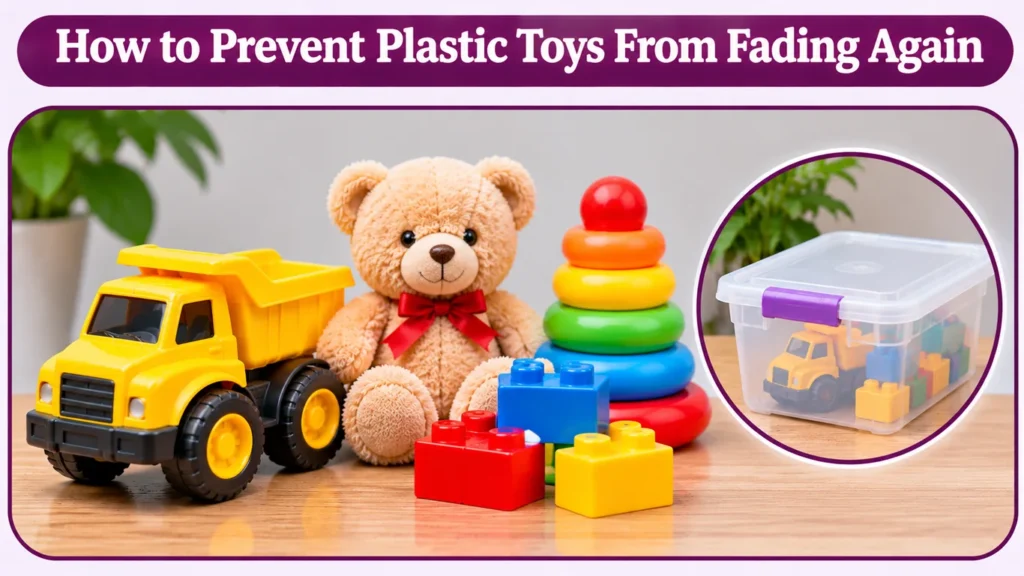
Preventing further discoloration is essential after cleaning or restoring plastic toys. Even successfully restored surfaces can fade again when exposed to strong sunlight, heat, and harsh environmental conditions. Simple storage habits, regular cleaning, and careful handling can help preserve colors and keep plastic toys looking attractive for longer periods.
Store Toys Away From Direct Sunlight
Keep plastic toys away from windows and other areas that receive prolonged direct sunlight. UV exposure can gradually damage pigments and accelerate the aging of certain plastic materials.
Use covered storage boxes or shaded shelves for toys that are not used regularly. Outdoor toys should be moved into sheltered areas when possible.
Maintain a Regular Cleaning Routine
Dust, grime, and oily residue can make plastic toys appear dull even when their colors remain intact. Routine cleaning helps maintain the original surface appearance without requiring aggressive restoration.
Wipe washable toys with a soft cloth and mild detergent when necessary. Always dry them thoroughly before placing them in storage containers.
Avoid Excessive Heat and Moisture
Store plastic toys in a cool, dry, well-ventilated environment. High temperatures may accelerate material deterioration, while excessive moisture can damage metal components and encourage mold growth in trapped spaces.
Avoid keeping toys in hot vehicles, damp basements, or poorly ventilated outdoor sheds. Stable storage conditions help preserve both the plastic and its decorative finishes.
Inspect Toys for Damage
Regularly check toys for cracks, loose parts, brittle surfaces, and peeling coatings. Early inspection helps identify deterioration before it becomes a serious problem.
Replace toys that have become structurally unsafe rather than attempting cosmetic repairs. This is especially important for ride-on toys, climbing equipment, and products used by young children.
FAQs
1. Can faded plastic toys be restored to their original color?
Some faded plastic toys can regain a brighter appearance through cleaning, polishing, or repainting. However, permanent UV damage to plastic pigments cannot usually be reversed. Restoration results depend on the material, surface condition, and extent of the discoloration.
2. Does vinegar restore faded plastic toys?
Vinegar may remove certain types of surface residue, but it does not restore pigments damaged by sunlight. It can also affect some finishes or metal components. Mild soap and water are generally better starting options for cleaning plastic toys.
3. How do you restore faded outdoor plastic toys?
First, wash the toys using mild soap and water to remove dirt and buildup. If permanent fading remains, consider a compatible, manufacturer-approved restoration coating. Inspect the plastic for cracks or brittleness before allowing children to use the toys again.
4. Can you use WD-40 to restore faded plastic toys?
WD-40 and other oil-based products may temporarily make some plastic surfaces appear darker or shinier, but they do not restore lost pigments. They can leave residue and may affect certain materials, so they are not recommended for children’s toys.
5. How can I prevent plastic toys from fading?
Store toys away from direct sunlight, excessive heat, and harsh environmental conditions. Clean them regularly with mild soap and soft cloths to maintain their appearance. Covered storage and manufacturer-approved UV protection can also help reduce future discoloration.
