


Puzzles are a wonderful way to relax, challenge your mind, and spend quality time with family. However, storing them properly can become difficult, especially when you have multiple sets, unfinished projects, or large completed puzzles. Without an organized storage system, pieces can get lost, boxes can become damaged, and finished puzzles may fall apart. Learning how to store puzzles helps protect your collection while saving space in your home. Whether you have 1000-piece jigsaw puzzles, wooden puzzles, or children’s puzzles, several practical storage methods can keep everything organized.
How to Store Puzzles Properly
Proper puzzle storage begins with choosing a method that protects the pieces and makes them easy to access. The best solution depends on the puzzle’s size, material, and whether it is completed or unfinished. Some puzzles fit neatly into storage bags, while larger collections may require shelves, organizers, or dedicated storage containers.
1. Use Clear Plastic Storage Bags
Clear plastic bags are among the simplest and most affordable ways to organize puzzle pieces. They work particularly well for collections with damaged boxes or limited storage space.
- Choose resealable plastic bags large enough to hold all the pieces.
- Keep each puzzle set in a separate bag.
- Label every bag with the puzzle name and piece count.
- Include a small picture of the completed puzzle for reference.
- Store the bags inside a larger plastic container.
This method prevents different puzzle sets from mixing and makes finding individual puzzles easier.
2. Store Puzzles in Plastic Containers
Plastic containers provide excellent protection against dust, moisture, and accidental spills. They are particularly useful for storing multiple jigsaw puzzles together.
Choose stackable containers with secure lids to maximize storage space. Smaller containers work well for individual puzzles, while larger bins can hold several labeled bags.
Avoid overfilling containers because excessive pressure may bend or damage puzzle pieces.
3. Organize Puzzles on Shelves
Bookshelves and storage cabinets are convenient options for keeping puzzle boxes accessible.
Arrange boxes vertically when their contents are securely bagged, or stack them horizontally to prevent loose pieces from spilling. Place heavier boxes at the bottom and smaller sets above them.
Keep puzzle collections away from direct sunlight, damp walls, and excessive heat to protect cardboard materials.
How to Store Puzzles in Progress
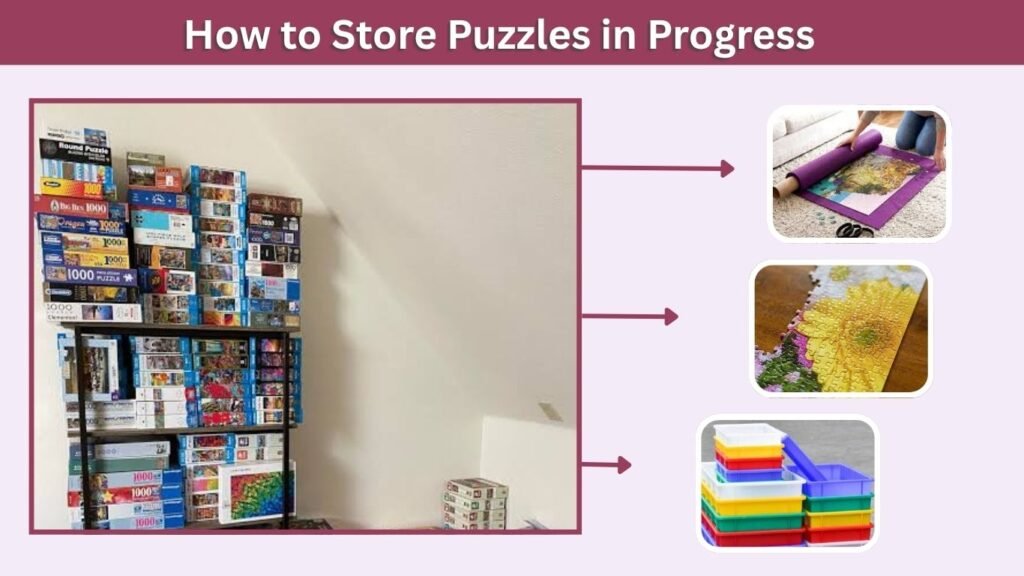
An unfinished puzzle requires special storage because moving it carelessly can destroy hours of work. Fortunately, several storage solutions allow you to preserve your progress without leaving the puzzle on a dining table. Choosing the right method depends on your available space, puzzle dimensions, and how frequently you plan to continue working.
Use a Puzzle Roll-Up Mat
A puzzle roll-up mat allows you to temporarily store an unfinished jigsaw puzzle without completely disassembling it.
Place the puzzle on the mat, then carefully roll the mat around its provided cylinder. Secure it using the included straps before placing it in storage.
Roll slowly and evenly to minimize movement. Some pieces may shift, so this method works best when slight adjustments are acceptable.
Store Unfinished Puzzles on a Puzzle Board
Puzzle boards provide a firm, flat surface for assembling and transporting unfinished puzzles.
Many boards include sorting drawers, protective covers, or raised edges that prevent loose pieces from falling.
A puzzle board can slide beneath a bed or onto a wide shelf when not in use. Keep it horizontal to prevent completed sections from separating.
Use a Large Flat Storage Tray
A flat storage tray is another practical solution for temporarily protecting puzzle projects.
Choose a tray slightly larger than the completed puzzle dimensions. Place a lightweight cover over the puzzle to protect it from dust and pets.
This arrangement works particularly well for families who need to clear their tables between puzzle sessions.
How to Store Completed Puzzles
Completed puzzles often become meaningful keepsakes, especially when they feature beautiful artwork or memorable family projects. However, storing assembled puzzles requires additional care because individual pieces may separate during movement. Whether you want to preserve a finished puzzle permanently or save it for future reassembly, the appropriate method will help maintain its appearance and condition.
Store Completed Puzzles Flat
Keeping completed puzzles flat is one of the safest methods for preserving their assembled shape.
Place the puzzle between two sturdy sheets of cardboard, foam board, or other rigid protective materials. Both sheets should extend beyond the puzzle’s edges.
Secure the boards together without applying excessive pressure to the pieces. Store the protected puzzle horizontally in a dry location.
Preserve Finished Puzzles With Puzzle Glue
Puzzle glue is useful when you want to preserve a completed puzzle permanently.
- Confirm that every piece is correctly positioned.
- Place protective paper beneath the puzzle.
- Apply puzzle-specific glue according to the manufacturer’s directions.
- Spread the glue evenly across the recommended surface.
- Allow it to dry completely before moving the puzzle.
- Mount or frame the finished puzzle for additional protection.
Remember that gluing makes future disassembly difficult or impossible.
Frame Completed Jigsaw Puzzles
Framing transforms finished puzzles into decorative artwork while protecting them from dust and accidental damage.
Choose a frame that matches the puzzle’s dimensions. Use a suitable backing board to support the assembled pieces and consider UV-protective glazing for puzzles displayed in bright rooms.
Framing works particularly well for landscapes, artistic designs, and sentimental puzzle collections.
How to Store 1000-Piece Puzzles
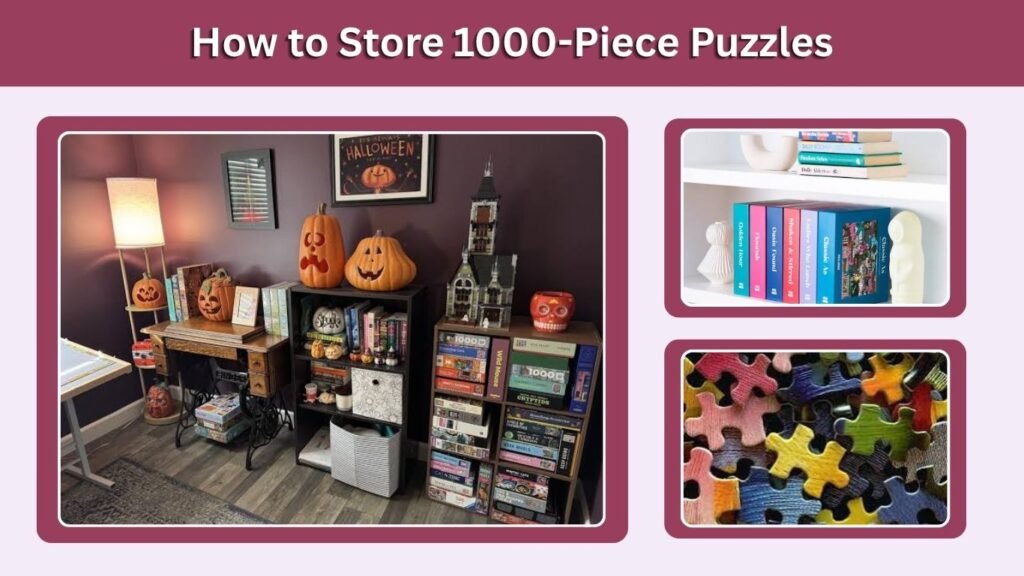
Large puzzles require more careful storage because they contain hundreds or thousands of small pieces. A 1000-piece puzzle can occupy considerable space during assembly, and losing even one piece can affect the finished result. Selecting appropriate containers and sorting systems makes these large puzzles easier to manage and protects them between uses.
Choose Large Puzzle Storage Boxes
Large storage boxes are useful for protecting 1000-piece puzzles after disassembly.
Select a container that comfortably accommodates every piece without compressing the contents. Keep the original reference image or a printed photograph inside the container.
For unfinished puzzles, choose a dedicated puzzle board large enough to support the completed dimensions.
Separate Puzzle Pieces Into Groups
Sorting pieces into smaller groups can make large puzzles easier to assemble and store. You can separate pieces by color, pattern, edge shape, or recognizable sections of the image. Place each group inside a labeled resealable bag or sorting tray.
Keeping sorted groups together saves preparation time when you return to the puzzle.
How to Store Kids’ Puzzles and Wooden Puzzles
Children’s puzzles often come in unusual shapes, sizes, and materials, making traditional puzzle boxes less practical. Wooden puzzles, toddler knob puzzles, and floor puzzles need different storage solutions than standard cardboard jigsaws. An organized system helps children find their favorite activities while reducing missing pieces and keeping play areas tidy.
Use Storage Pouches for Kids’ Puzzles
Small fabric pouches or transparent zippered bags are useful for storing children’s puzzle sets.
- Assign one pouch to each puzzle.
- Attach a picture label so younger children recognize the contents.
- Choose durable, easy-to-open closures.
- Keep puzzle sets in a low, accessible storage basket.
- Inspect bags regularly for damaged closures or missing pieces.
For toddlers, avoid loose bags, cords, or small pieces that could create choking hazards.
Store Wooden Puzzles in Vertical Organizers
Wooden board puzzles can be arranged in vertical puzzle racks designed to accommodate their shapes.
These organizers help separate individual boards and reduce clutter. They are especially helpful for knob puzzles and chunky wooden puzzles.
Choose sturdy racks with smooth edges and stable bases, and keep them away from damp environments that could warp the wood.
Organize Floor Puzzles in Large Bins
Large floor puzzles often contain oversized pieces that do not fit conveniently into standard puzzle organizers.
Use spacious plastic bins or fabric storage baskets to keep the pieces together. Place a photograph of the completed puzzle inside the container.
Avoid folding oversized cardboard pieces or forcing them into containers that are too small.
How to Store Puzzle Boxes and Save Space
Puzzle boxes can take up significant shelf space, particularly when you own a growing collection. Fortunately, organizing boxes efficiently can free up room without sacrificing protection. Some collectors prefer keeping original packaging, while others transfer pieces into smaller containers. Both approaches work when puzzles are clearly labeled and protected from damage.
Keep Original Puzzle Boxes Organized
Original boxes are useful because they contain the artwork, manufacturer information, and piece count.
Stack boxes neatly on sturdy shelves or arrange them vertically after securing the pieces inside individual bags.
Group puzzles by size, difficulty, or theme to make your collection easier to browse.
Replace Bulky Boxes With Compact Storage
If space is limited, transfer puzzle pieces into smaller labeled containers. Photograph or cut out the reference image from a damaged box before discarding it. Keep the picture with the pieces so you can identify the puzzle later.
This system works particularly well for large collections stored inside closets or cabinets.
Best Tips for Long-Term Puzzle Storage
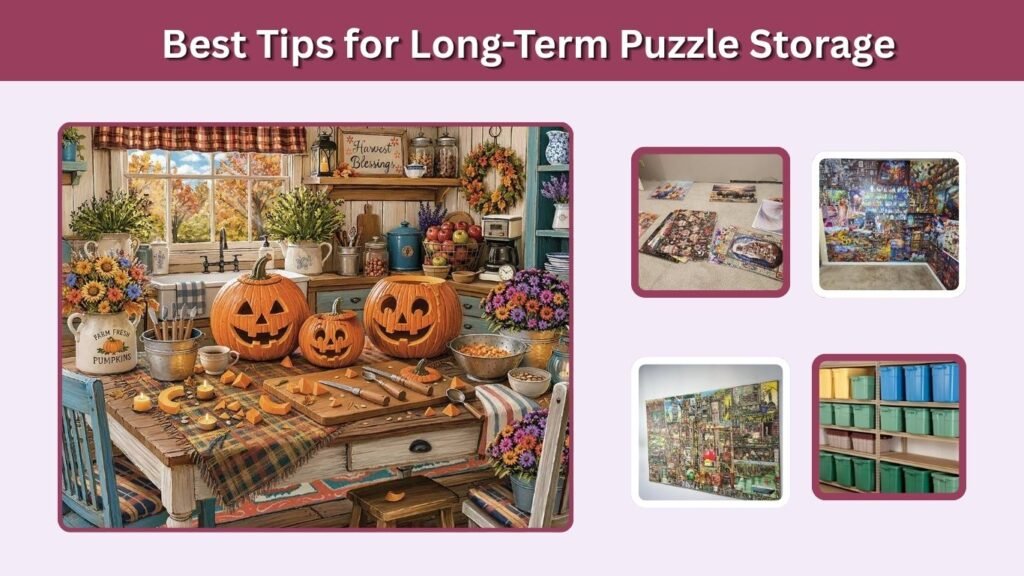
Long-term storage requires protection against environmental damage and missing pieces. Cardboard puzzles are particularly vulnerable to humidity, while wooden puzzles may warp when exposed to moisture. A consistent organization system helps maintain your collection for years, whether the puzzles are stored in closets, dedicated hobby rooms, or seasonal storage spaces.
Protect Puzzles From Moisture and Dust
Store puzzles in a clean, dry, temperature-stable environment.
- Keep boxes away from damp basements and leaking pipes.
- Use closed containers to minimize dust exposure.
- Avoid placing puzzles directly against exterior walls.
- Keep cardboard puzzles away from direct sunlight.
- Check stored puzzles occasionally for moisture or damage.
Label Every Puzzle Container
Labeling makes puzzle storage easier, especially when multiple family members share a collection.Include the puzzle title, piece count, and age recommendation when applicable. For large collections, consider numbering containers and maintaining a simple inventory.
A consistent labeling system reduces the chances of mixing pieces and makes puzzle selection much faster.
FAQs
1. What Is the Best Way to Store Jigsaw Puzzles?
The best way to store jigsaw puzzles is to place each set inside a labeled resealable bag or secure storage container. Keep the reference image with the pieces and arrange the containers on shelves. For unfinished puzzles, use a flat puzzle board or roll-up mat to preserve your progress.
2. How Do You Store a Puzzle Without Taking It Apart?
Place the assembled puzzle on a sturdy puzzle board or between two rigid sheets of cardboard. Secure the protective layers and keep the puzzle horizontal during transportation and storage. A puzzle roll-up mat is another option, although some pieces may move when the mat is rolled.
3. How Do You Store 1000-Piece Puzzles?
Store disassembled 1000-piece puzzles inside large, secure containers or labeled resealable bags. Keep the reference picture with the pieces and separate them into smaller sorting groups when necessary. For unfinished puzzles, use a spacious puzzle board that accommodates the assembled dimensions and keeps the pieces flat.
4. How Do You Store Wooden Puzzles for Toddlers?
Wooden toddler puzzles are best stored in sturdy vertical organizers, shallow bins, or dedicated shelves. Keep all pieces together and choose accessible storage areas that encourage independent cleanup. Ensure organizers are stable and age-appropriate, and inspect wooden pieces regularly for splinters, cracks, or loose components.
5. Can You Store Completed Puzzles Without Glue?
Yes, completed puzzles can be stored without glue by placing them between two sturdy protective boards. Keep the assembled puzzle flat and secure the boards to prevent unwanted movement. This method preserves the completed design while allowing you to disassemble and enjoy the puzzle again later.
