
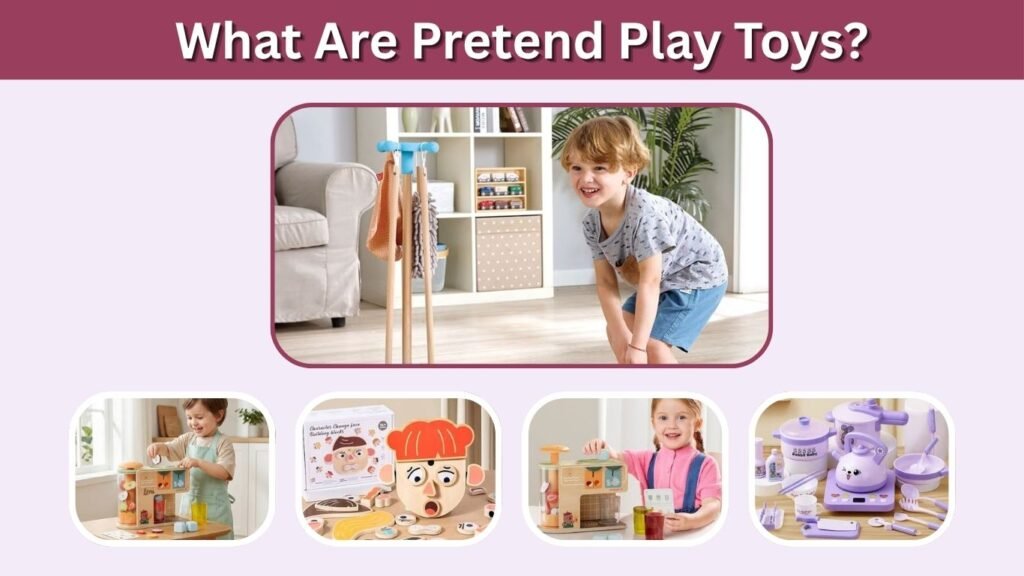
Pretend play toys are imaginative play materials that allow children to recreate real-life situations, explore different roles, and invent creative stories. From miniature kitchens and doctor kits to dolls and toy vehicles, these toys encourage children to express their imagination through playful activities. Pretend play can support communication, social interaction, problem-solving, and emotional development during early childhood. Understanding what pretend play toys are, how they work, and which options suit different ages can help parents choose engaging, age-appropriate toys that encourage meaningful learning through everyday play experiences.
What Are Pretend Play Toys?
Pretend play toys are objects and playsets that children use to imagine characters, activities, and everyday situations. Also called imaginative or role-play toys, they help children create fictional scenarios based on real-world experiences. These toys may represent household objects, professional tools, animals, or characters, allowing children to practice different roles while developing creativity and communication through playful exploration.
How Do Pretend Play Toys Work?
Pretend play begins when children assign imaginary meanings to objects or actions. For example, a child may use a toy kitchen to prepare imaginary meals or a doctor kit to examine a stuffed animal.
Unlike toys with fixed instructions, many pretend play materials allow children to invent stories and change activities according to their interests.
Types of Pretend Play Toys for Kids

Pretend play toys come in many designs, allowing children to explore different imaginative activities. Some toys recreate familiar household experiences, while others introduce professional roles, fantasy adventures, or creative storytelling. Choosing varied play materials encourages children to experiment with different scenarios. The most suitable toys depend on a child’s developmental abilities, interests, and preferred activities.
Popular Examples of Pretend Play Toys
- Play kitchen sets: Encourage imaginary cooking, food preparation, and family activities.
- Doctor play kits: Allow children to imitate medical checkups and caregiving.
- Toy cash registers: Support pretend shopping, counting, and customer interactions.
- Dolls and accessories: Encourage storytelling, nurturing, and imaginative relationships.
- Pretend cleaning sets: Introduce familiar household routines through playful imitation.
- Dress-up costumes: Help children explore characters, occupations, and creative identities.
- Toy vehicles: Support imaginative transportation, delivery, and rescue adventures.
Benefits of Pretend Play Toys for Child Development
Pretend play offers children opportunities to explore ideas, practice communication, and understand everyday experiences. Through imaginative activities, children can experiment with social roles and develop creative thinking. These play experiences may also support emotional expression, cooperation, and problem-solving. Although individual development varies, providing suitable pretend play materials can encourage meaningful learning in enjoyable, age-appropriate ways.
Encourage Creativity and Imagination
Pretend play toys encourage children to create stories, characters, and imaginary environments.
A simple toy kitchen might become a restaurant, bakery, or family dining room. Children decide how their imaginary world works, encouraging flexible thinking and creative expression.
Improve Communication and Social Skills
Playing restaurant, school, or doctor provides opportunities to practice conversations and social interactions.
When children play together, they may negotiate roles, share ideas, and cooperate to complete imaginary activities.
Support Emotional Development
Children sometimes recreate familiar experiences through pretend play, including visiting doctors, attending school, or caring for family members.
These activities provide opportunities to explore emotions and everyday situations in a comfortable environment.
Best Pretend Play Toys for Toddlers
Toddlers often begin imaginative activities by copying familiar actions they observe at home. Simple pretend play toys allow them to imitate cooking, feeding, cleaning, and caring for others. At this stage, toys should be easy to handle, durable, and appropriate for developing coordination. Familiar objects and simple playsets are generally more engaging than complicated accessories.
Pretend Play Toys for 1-Year-Olds
One-year-olds may enjoy simple imitation activities using soft dolls, large toy phones, and age-appropriate household play objects.
Choose lightweight materials without small detachable parts. Adults can demonstrate simple actions such as pretending to talk on a phone or feeding a doll.
Pretend Play Toys for 2-Year-Olds
Two-year-olds may enjoy toy kitchens, large pretend food pieces, dolls, and simple cleaning sets.
These toys encourage children to imitate daily routines. Select sturdy items with appropriately sized accessories and avoid toys containing choking hazards.
Pretend Play Toys for 3–4-Year-Olds

Children aged three and four often develop more elaborate imaginative stories and role-playing activities. They may enjoy pretending to run shops, prepare meals, care for animals, or explore professional occupations. Toys that include multiple accessories and flexible play possibilities can encourage longer imaginative experiences. Cooperative activities also create opportunities to develop communication and social interaction.
Best Pretend Play Toys for 3-Year-Olds
- Wooden kitchen sets: Encourage pretend cooking and serving imaginary meals.
- Doctor kits: Introduce simple healthcare role-playing activities.
- Grocery store sets: Support shopping scenarios and basic counting practice.
- Dollhouses: Allow children to create family stories and everyday situations.
- Tool sets: Encourage imaginary building and repair activities.
Best Pretend Play Toys for 4-Year-Olds
Four-year-olds may enjoy more detailed role-playing materials, including restaurant sets, dress-up accessories, puppet theaters, and pretend camping equipment.
These toys provide opportunities for collaborative storytelling and increasingly complex imaginative scenarios.
Pretend Play Toys for 5–7-Year-Olds
As children grow, their imaginative activities may become more detailed and organized. Older preschoolers and early elementary-aged children often enjoy inventing characters, designing imaginary environments, and creating stories with friends. Pretend play toys that encourage flexible storytelling can remain engaging beyond toddlerhood, especially when children can combine different accessories and develop their own games.
Creative Pretend Play Ideas for Older Kids
Encourage children to organize pretend restaurants, schools, space missions, or community rescue activities.
Costumes, puppets, play money, and reusable props help expand their imaginary environments. Older children may also enjoy creating their own pretend play accessories using art and craft materials.
Wooden and Montessori-Inspired Pretend Play Toys

Wooden pretend play toys are popular because of their durability, simple appearance, and versatility. Many wooden kitchens, food sets, and dollhouse accessories support imaginative play without requiring electronic features. Montessori-inspired toys may emphasize realistic objects and independent exploration, although traditional Montessori materials often have specific learning purposes rather than unrestricted pretend play.
Why Choose Wooden Pretend Play Toys?
Wooden toys can withstand repeated use when properly constructed and maintained. Their simple designs may also encourage children to create imaginary details themselves.
Choose smooth finishes, securely attached components, and products that meet applicable toy safety standards.
Montessori-Inspired Pretend Play Activities
Realistic miniature household objects can encourage children to imitate familiar activities.
Children might arrange pretend food, organize household accessories, or care for dolls. Select materials appropriate for their age and developmental readiness.
Outdoor Pretend Play Toys and Activities
Pretend play does not need to remain inside the home. Outdoor environments provide opportunities for imaginative exploration, physical movement, and cooperative activities. Children can create pretend campsites, gardening stations, restaurants, or construction areas using suitable play materials. Outdoor imaginative activities combine storytelling with opportunities to explore natural surroundings and develop coordination.
Fun Outdoor Pretend Play Ideas
- Pretend gardening: Use child-safe gardening tools to imitate planting and watering.
- Outdoor kitchens: Create imaginary meals using suitable toy cookware.
- Camping adventures: Set up a play tent for imaginative outdoor exploration.
- Toy construction sites: Use large toy trucks and building accessories.
- Pretend restaurants: Organize outdoor seating and imaginary food-serving activities.
Pretend Play Toys vs. Open-Ended Toys
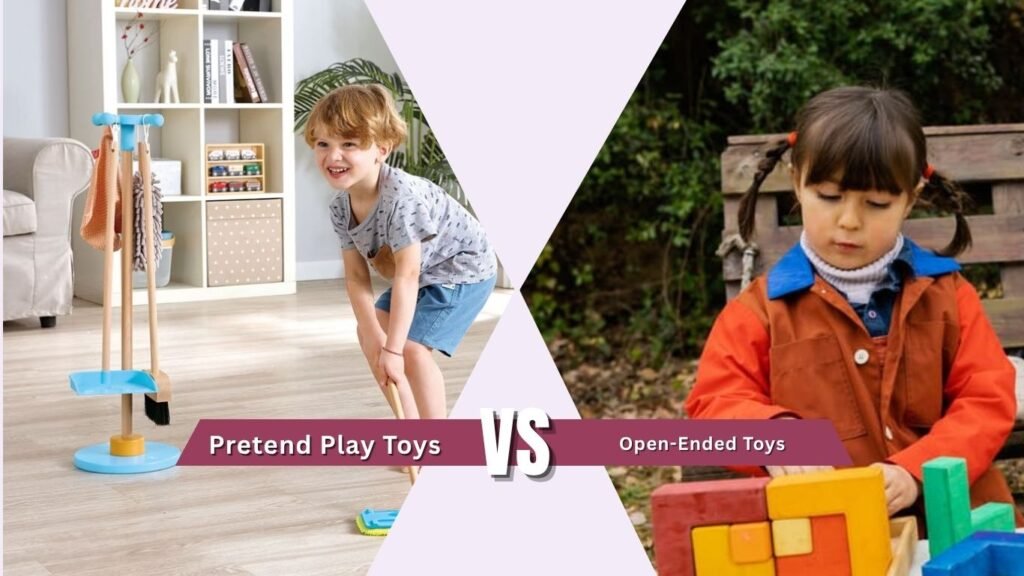
Pretend play toys and open-ended toys both encourage imagination, but they describe slightly different play concepts. Pretend play focuses on imaginary roles, situations, and storytelling, while open-ended play involves activities without fixed outcomes. Some toys support both approaches, making them versatile options for children with changing interests and developmental abilities.
Understanding the Main Differences
A toy doctor kit encourages pretend play by allowing children to imitate healthcare activities.
Wooden building blocks support open-ended construction because children can create many different structures. However, those same blocks can become pretend food, houses, or vehicles during imaginative play.
These categories frequently overlap rather than representing completely separate types of toys.
How to Choose Safe Pretend Play Toys
Selecting suitable pretend play toys involves considering safety, durability, developmental readiness, and play value. Attractive designs are important, but children also need toys that match their physical abilities and interests. Parents should examine materials, construction quality, and manufacturer age recommendations before choosing playsets, particularly when accessories contain small pieces or removable components.
Important Features to Consider
- Age suitability: Follow manufacturer age recommendations and safety warnings.
- Safe construction: Choose sturdy toys without sharp edges or easily detached hazardous parts.
- Appropriate accessories: Avoid small pieces for children younger than three.
- Durable materials: Look for quality construction and finishes that withstand repeated handling.
- Imaginative flexibility: Choose toys supporting different stories and activities.
- Easy maintenance: Select materials that can be cleaned according to manufacturer instructions.
FAQs
1. What Are Examples of Pretend Play Toys?
Common examples include toy kitchens, doctor kits, dolls, play food, cash registers, dress-up costumes, and dollhouses. These toys allow children to recreate familiar experiences and invent stories.
2. At What Age Do Children Start Pretend Play?
Simple pretend actions often emerge around 12–18 months, although developmental timing varies. More elaborate imaginative stories typically develop during the toddler and preschool years.
3. Are Pretend Play Toys Educational?
Yes. Pretend play toys offer opportunities to practice creativity, language, cooperation, problem-solving, and emotional expression through enjoyable activities.
4. What Are the Best Pretend Play Toys for 3-Year-Olds?
Play kitchens, doctor kits, dolls, pretend grocery sets, and age-appropriate dress-up accessories are popular options for three-year-olds.
5. What Is the Difference Between Pretend Play and Role Play?
Pretend play broadly involves imaginary situations, objects, and actions. Role play is a type of pretend play in which children act as characters or imitate roles, such as teachers, doctors, or shopkeepers.
