
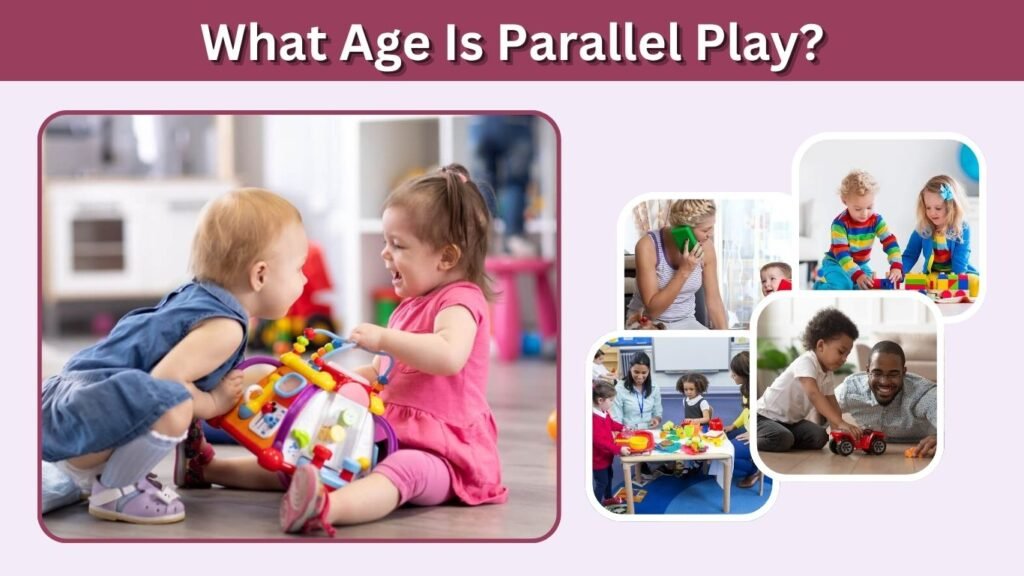
Parallel play is an important stage of early childhood development when toddlers play alongside other children without directly interacting or sharing activities. It usually becomes noticeable around age two and is particularly common between ages two and three. During this period, children observe their peers, explore toys independently, and gradually develop social awareness. Although they may not play together, these experiences support communication, emotional growth, and confidence. Understanding the age of parallel play, its characteristics, and developmental benefits helps parents encourage healthy social interactions.
What Age Does Parallel Play Start?
Parallel play usually begins around 18 to 24 months and becomes especially common between ages two and three. During this developmental period, toddlers enjoy spending time near other children while remaining focused on their own activities. The transition toward more interactive play happens gradually, and individual children may demonstrate different play behaviors depending on their interests, environment, and social development.
Parallel Play at 18 to 24 Months
Between 18 and 24 months, toddlers may begin showing early signs of parallel play. They often sit near other children and explore similar toys without attempting direct interaction. For example, two toddlers might play with separate sets of building blocks while occasionally watching each other’s actions.
At this age, children are developing language, self-awareness, and emotional regulation. Playing alongside peers provides valuable opportunities to observe social behaviors without requiring complicated communication or cooperation. Some toddlers may prefer solitary activities, which can also be developmentally typical.
Parallel Play at 2 to 3 Years Old
Parallel play is especially noticeable between 24 and 36 months. Toddlers frequently enjoy playing beside other children while concentrating on their own toys, imaginative activities, or simple games. They may occasionally imitate movements, exchange short comments, or show curiosity about what nearby children are doing.
During this period, children gradually become more aware of their peers’ interests and emotions. Although sharing and teamwork may still be challenging, parallel play helps them become comfortable with social environments and prepares them for more interactive experiences.
Parallel Play After Age 3
Parallel play can continue after age three, even when children begin developing stronger social and communication skills. Preschoolers may switch between independent, parallel, associative, and cooperative play depending on their mood, interests, and familiarity with other children.
For example, a four-year-old might enjoy building a puzzle independently beside a friend before joining a shared pretend game. Continuing to engage in parallel play is not automatically concerning because different play styles remain useful throughout childhood.
Signs of Parallel Play in Toddlers
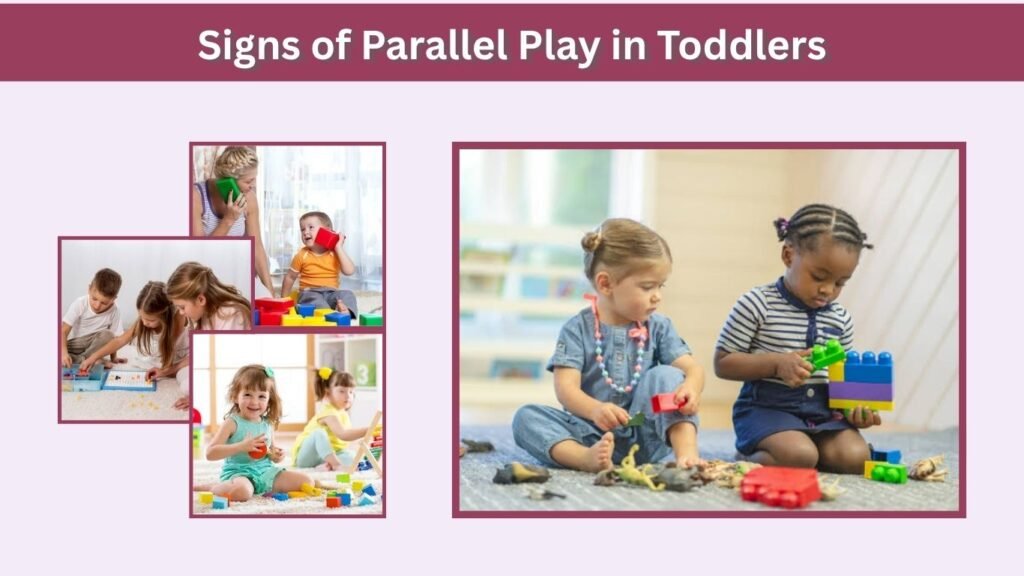
Parallel play includes several recognizable behaviors that help parents understand how children interact during early social development. Toddlers usually remain physically close to other children while exploring separate activities. Although they may appear uninterested in direct cooperation, they often observe their peers and learn through imitation. Recognizing these characteristics helps caregivers distinguish parallel play from solitary or cooperative activities.
1. Playing Beside Other Children
Children participating in parallel play usually sit or stand near their peers while focusing on individual toys or activities. They may share the same play area without trying to organize a common game or follow shared rules.
For example, two toddlers might sit beside each other with separate toy cars. Although they do not race together, both remain comfortable playing in the same environment. This behavior demonstrates growing awareness of other children.
2. Using Similar Toys Independently
Toddlers often choose similar toys while maintaining separate activities. They may use building blocks, dolls, puzzles, or toy vehicles without directly exchanging materials or creating shared goals.
For instance, two children might construct separate towers using identical blocks. Each child decides what to build independently while occasionally observing the other’s progress. This combination of independence and social awareness is characteristic of parallel play.
3. Observing and Copying Other Children
Observation and imitation frequently occur during parallel play. A toddler may notice another child stacking blocks, arranging toys, or making sounds and then attempt a similar action.
Although children are not directly collaborating, copying behaviors can introduce unfamiliar activities and encourage experimentation. Imitation also helps toddlers develop an understanding of how other children interact with objects and their surroundings.
4. Limited Direct Communication
Parallel play typically involves less direct conversation than cooperative activities. Children may exchange occasional words, smiles, or gestures without maintaining an ongoing interaction.
For example, a toddler might briefly comment on another child’s toy before returning to their own activity. These small exchanges provide opportunities to practice communication while allowing children to remain focused on independent play.
Benefits of Parallel Play for Child Development
Parallel play supports several important aspects of early childhood development, including social awareness, communication, independence, and emotional growth. Although children do not actively cooperate throughout these activities, they learn valuable skills by observing nearby peers and exploring their surroundings. These experiences help toddlers become familiar with group environments and gradually prepare them for more interactive forms of childhood play.
Develops Social Awareness and Confidence
Playing near other children helps toddlers recognize that peers have their own interests, preferences, and behaviors. They gradually become comfortable sharing physical spaces while remaining engaged in individual activities.
This experience can also build confidence in social environments. Children who initially feel uncertain around unfamiliar peers may become more comfortable through repeated opportunities to play nearby without pressure to interact directly.
Encourages Independent Thinking
Parallel play gives toddlers opportunities to explore materials, make decisions, and experiment with different activities independently. They can choose toys, organize objects, and solve simple challenges without depending on another child’s instructions.
These experiences support autonomy and curiosity. Children learn to develop their own ideas while becoming familiar with the presence of others, creating a useful balance between independent exploration and social learning.
Supports Language and Communication Skills
Children participating in parallel play frequently hear words, sounds, and conversations from nearby peers. They may listen to simple instructions, observe gestures, or imitate familiar expressions.
Although direct communication may be limited, exposure to social language provides opportunities to expand vocabulary and understand conversational patterns. Some toddlers also begin making short comments about shared surroundings, supporting early interaction skills.
Prepares Children for Cooperative Activities
Parallel play introduces toddlers to group environments before they are ready for complex cooperation. They become familiar with other children’s activities and gradually develop an interest in participating more directly.
As language, emotional regulation, and social understanding improve, children may begin exchanging toys, discussing activities, and organizing shared games. These abilities contribute to the development of associative and cooperative play.
Examples of Parallel Play Activities for Toddlers
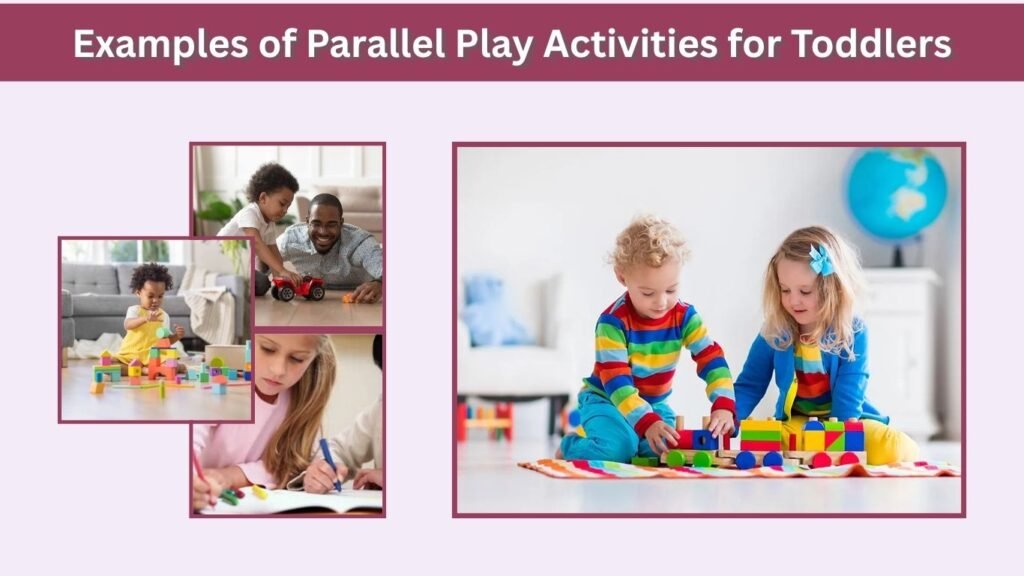
Parallel play can happen naturally in homes, playgrounds, daycare centers, and preschool classrooms. Activities involving similar materials allow toddlers to remain close while exploring independently. Parents can encourage these experiences by providing comfortable spaces and enough toys for each child. The following examples demonstrate how simple activities can support parallel play without requiring organized games or complicated instructions.
Playing With Building Blocks
Two toddlers sit beside each other with separate collections of building blocks. One child creates a tall tower while the other constructs a small house. They occasionally observe each other’s activities but continue building independently.
This activity encourages fine motor coordination, problem-solving, and spatial awareness. It also allows children to learn new building techniques through observation without requiring direct cooperation or shared instructions.
Drawing and Coloring Together
Children sit at the same table with individual sheets of paper and coloring materials. Each toddler creates a separate picture while remaining aware of the other child’s presence.
For example, one child may draw circles while another colors a picture of an animal. Both enjoy working independently within a shared environment. This activity encourages creativity, concentration, and early social familiarity.
Playing With Toy Cars
Two toddlers play with separate toy vehicles in the same area. One child moves a car along an imaginary road while another pushes a truck across the floor.
Although they do not organize a shared race, they may imitate each other’s movements or sounds. This activity encourages imaginative exploration, hand-eye coordination, and awareness of nearby children.
Parallel Play vs. Other Stages of Play
Parallel play is one of six social play categories described by researcher Mildred Parten. These categories explain different patterns of children’s participation in play, from independent exploration to coordinated group activities. Although often presented as stages, they do not follow strict age boundaries. Children may move between several types of play depending on their developmental abilities, surroundings, and personal preferences.
Solitary Play vs. Parallel Play
Solitary play occurs when children focus on their own activities without showing much interest in nearby peers. They may explore toys independently and remain absorbed in their individual experiences.
Parallel play differs because children engage in separate activities while remaining close to other children. They may watch or imitate their peers without organizing shared activities.
Both play styles support development and can remain appropriate throughout childhood.
Associative Play vs. Parallel Play
Associative play involves more direct interaction between children. They may exchange toys, talk about activities, or participate in similar games without following a shared plan.
During parallel play, children generally remain focused on their individual activities, even when they use similar materials.
Associative play becomes increasingly noticeable during the preschool years as children develop stronger communication and social interaction skills.
Cooperative Play vs. Parallel Play
Cooperative play occurs when children organize activities around shared goals, roles, or rules. Examples include building a large structure together, participating in group pretend games, or playing organized outdoor activities.
Parallel play does not require shared objectives or coordinated responsibilities. Instead, children explore independently while remaining near others.
Cooperative play becomes more common as children develop the language, negotiation, and emotional skills needed for teamwork.
How to Encourage Parallel Play at Home
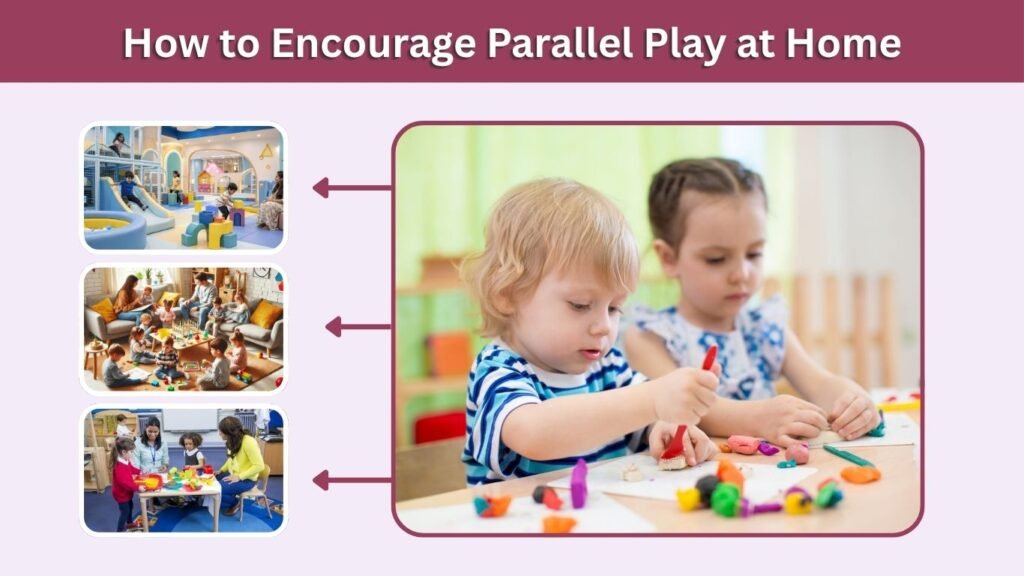
Parents and caregivers can encourage parallel play by creating welcoming environments where toddlers feel comfortable exploring activities near their peers. The goal is not to force interaction, sharing, or teamwork before children are developmentally ready. Instead, adults should provide suitable toys, model positive behavior, and allow children to participate naturally. Consistent opportunities for relaxed social experiences can support healthy development.
1. Arrange Small Playdates
Small playdates allow toddlers to become comfortable around other children without the pressure of large groups. Familiar surroundings and predictable routines can make these experiences more enjoyable.
- Invite one or two children of similar ages.
- Choose a safe and familiar play area.
- Provide enough materials for independent activities.
- Allow children to determine their level of interaction.
2. Provide Duplicate Toys
Having similar toys available can reduce conflicts when toddlers are still developing sharing and turn-taking abilities. Children can explore comparable activities without needing to exchange materials constantly.
- Offer multiple sets of building blocks.
- Provide individual toy vehicles or dolls.
- Give each child separate coloring supplies.
- Include age-appropriate puzzles and sensory toys.
3. Encourage Independent Exploration
Independent activities help toddlers build confidence while becoming familiar with nearby peers. Parents can arrange materials that allow children to explore freely without requiring coordinated participation.
- Set up separate building stations.
- Offer individual drawing or coloring activities.
- Provide pretend cooking toys.
- Encourage simple sorting and stacking games.
4. Model Gentle Social Interaction
Children learn social behaviors by observing caregivers. Demonstrating friendly communication and respectful interactions can gradually encourage toddlers to become more comfortable around peers.
- Greet other children warmly.
- Model simple phrases such as “hello” and “please.”
- Demonstrate gentle handling of shared materials.
- Praise positive interactions without forcing participation.
FAQs
1. At What Age Is Parallel Play Most Common?
Parallel play is most common between ages two and three, although some toddlers begin showing related behaviors around 18 months. During this period, children enjoy playing near peers without directly coordinating activities. Individual developmental differences mean some children continue parallel play beyond their third birthday.
2. Is Parallel Play Normal for a 3-Year-Old?
Yes, parallel play is normal for three-year-old children. Many preschoolers alternate between independent activities, parallel play, and more interactive games. Their preferred play style may depend on the environment, familiarity with peers, and communication abilities. Parallel play alone does not indicate a developmental problem.
3. What Is the Difference Between Parallel and Associative Play?
Parallel play occurs when children play alongside each other without coordinating their activities. Associative play involves more direct communication, toy exchanges, and participation in related activities without organized shared goals. Both forms contribute to social development and help children gradually become comfortable interacting with peers.
4. How Long Does the Parallel Play Stage Last?
Parallel play is especially common throughout the toddler years, particularly from ages two to three. However, there is no fixed ending age. Children may continue playing alongside others during preschool and beyond while also developing cooperative skills. Developmental progress varies according to individual abilities and experiences.
5. When Should Parents Be Concerned About Parallel Play?
Parallel play alone is generally not concerning, even when it continues beyond age three. However, parents should speak with a pediatrician if a child shows persistent difficulties with communication, limited social engagement across different situations, loss of previously acquired abilities, or other developmental concerns.
