

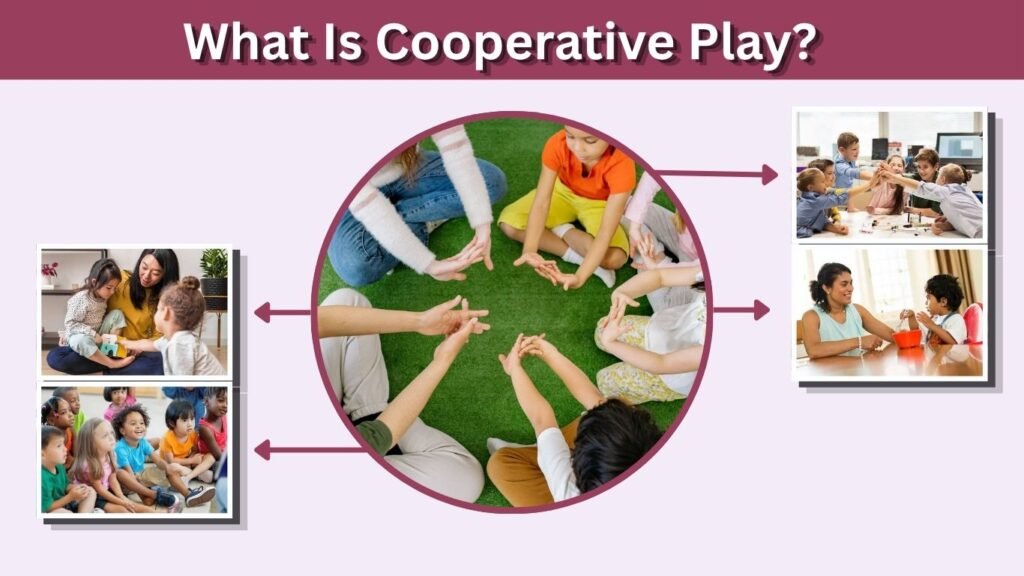
Cooperative play is an important stage of childhood development in which children work together, share ideas, and participate in activities with common goals. It helps young children develop essential social, emotional, communication, and problem-solving skills through meaningful interactions with others. Unlike independent or parallel play, cooperative play involves teamwork, shared responsibilities, and active collaboration. Children often begin demonstrating more advanced cooperative play skills during their preschool years. Understanding what cooperative play is, when it develops, and how to encourage it can help parents and educators support healthy childhood development.
What Is Cooperative Play in Child Development?
Cooperative play is a type of social play in which two or more children actively interact, share responsibilities, and work toward a common goal. It is commonly associated with the later stages of early childhood play development. During cooperative activities, children communicate, negotiate rules, assign roles, and solve problems together while learning how to participate successfully in group situations.
Definition of Cooperative Play
Cooperative play occurs when children organize their activities around a shared purpose. They may work together to build a structure, create an imaginary story, or participate in a team game.
For example, several children building a pretend restaurant may take different roles as customers, cooks, and servers. Their actions contribute to the same imaginative experience.
Unlike simply playing near one another, cooperative play requires meaningful interaction and coordination.
At What Age Does Cooperative Play Begin?
Cooperative play commonly becomes more noticeable between ages four and six, although some children demonstrate cooperative behaviors earlier.
Development varies depending on temperament, language abilities, social experiences, and individual needs. Younger children may participate in brief cooperative activities before they consistently demonstrate more complex teamwork and shared decision-making.
What Are the Main Characteristics of Cooperative Play?
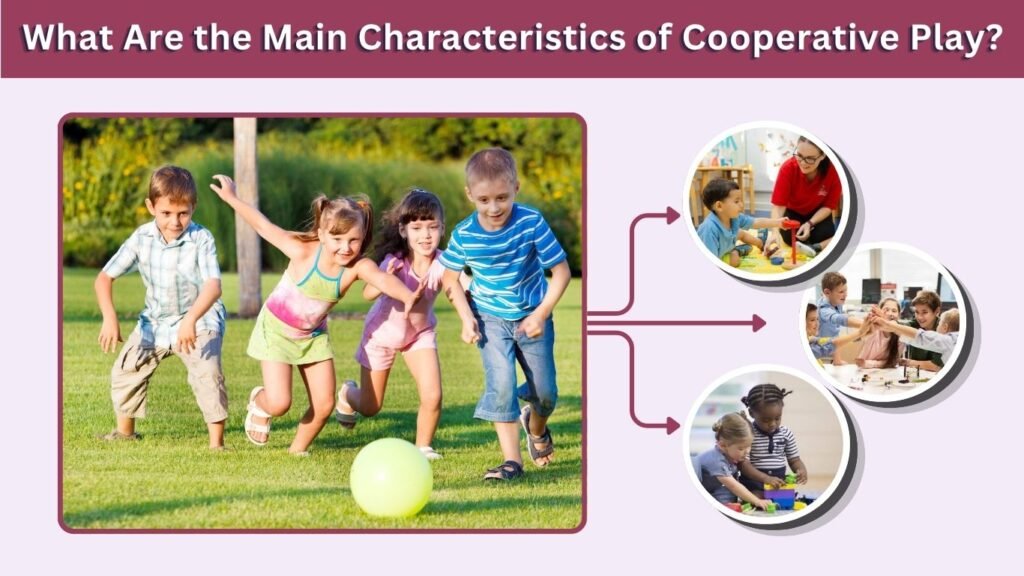
Cooperative play involves several behaviors that distinguish it from other forms of childhood play. Children become more aware of their playmates’ ideas, feelings, and intentions while organizing activities around shared interests. These experiences provide opportunities to practice social communication, cooperation, and decision-making. Recognizing the characteristics of cooperative play helps parents and educators identify important developmental behaviors.
Shared Goals and Teamwork
One defining feature of cooperative play is working toward a common objective. Children may collaborate to complete a puzzle, build a large block tower, or organize a pretend adventure. Each participant contributes ideas and actions that help the group achieve its goal.
Communication and Role Sharing
Cooperative play often involves assigning roles, discussing plans, and adjusting activities according to group decisions.
Common characteristics include:
- Shared objectives: Children work toward the same outcome.
- Active communication: Participants exchange ideas and instructions.
- Role assignment: Children take on different responsibilities.
- Negotiation: Players discuss rules and solve disagreements.
- Turn-taking: Children practice waiting and sharing opportunities.
- Group participation: Everyone contributes to the activity.
These behaviors become more sophisticated as children gain experience interacting with others.
What Are the Six Stages of Play Development?
The six stages of play development were described by sociologist Mildred Parten in 1932. Her framework explains different patterns of children’s social participation during play. These stages are useful for understanding how social interactions develop, although they are not strict milestones that every child must complete in a particular order. Children may demonstrate several types of play throughout childhood.
1. Unoccupied Play
Unoccupied play involves seemingly random movements or exploration without an obvious organized play activity.
Infants may move their arms, kick their legs, or observe objects while becoming familiar with their surroundings.
2. Solitary Play
During solitary play, children play independently without actively interacting with nearby children.
They may build with blocks, explore toys, or complete simple activities alone.
Independent play remains valuable even after children develop stronger social skills.
3. Onlooker Play
Onlooker play occurs when children watch others playing without directly joining the activity.
They may observe rules, conversations, and interactions while developing interest in group activities.
4. Parallel Play
Parallel play involves children playing beside one another while engaging in separate activities.
For example, two toddlers may build individual block towers while sitting next to each other without coordinating their actions.
5. Associative Play
Associative play involves interaction and shared materials without a clearly organized common goal.
Children may talk, exchange toys, and participate in similar activities while maintaining their own individual play objectives.
6. Cooperative Play
Cooperative play involves organized interaction, shared responsibilities, and common objectives.
Children may create group games, establish rules, and work together to complete activities.
This form of play demonstrates growing abilities in communication, collaboration, and social understanding.
What Are the Benefits of Cooperative Play for Children?
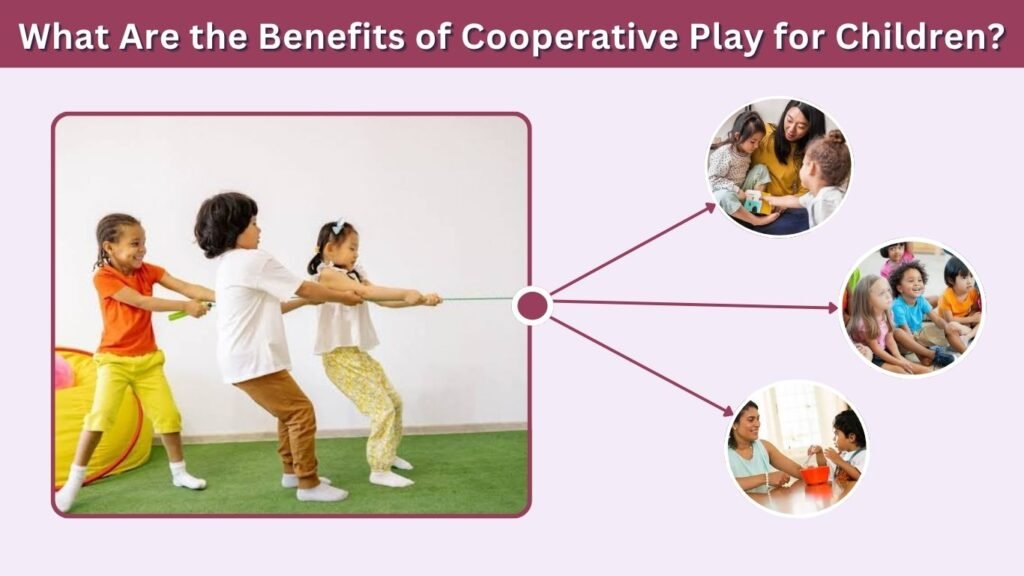
Cooperative play supports several important areas of early childhood development. Through group activities, children practice expressing ideas, understanding different perspectives, resolving disagreements, and making decisions. These experiences can also strengthen relationships and encourage confidence in social situations. Although every child’s development is different, cooperative play provides meaningful opportunities to build skills useful in preschool, school, and everyday life.
Improves Social and Communication Skills
Cooperative play helps children practice interacting with others through conversation, listening, and shared experiences.
- Encourages effective verbal communication.
- Develops active listening skills.
- Promotes sharing and turn-taking.
- Helps children understand different perspectives.
- Supports friendships and positive peer relationships.
These experiences introduce social behaviors that children can use in classrooms and other group settings.
Supports Emotional Development
Group play introduces children to situations requiring patience, flexibility, and emotional awareness.
They may experience disappointment when their ideas are not selected or excitement when the group achieves a shared objective.
With supportive guidance, these situations can help children practice managing emotions and responding respectfully to others.
Strengthens Problem-Solving and Critical Thinking
Cooperative activities often require children to make decisions and overcome challenges together.
For example, children building a bridge from blocks may discuss how to prevent it from falling.
They experiment with different solutions, explain their reasoning, and adjust their plans based on results.
Builds Confidence and Independence
Participating in group play allows children to contribute their own ideas while learning to respect others.
Successfully completing shared activities may encourage confidence and a sense of belonging.
Children also practice taking responsibility for individual roles within the group.
Examples of Cooperative Play Activities for Preschoolers
Cooperative play can take place at home, in preschool classrooms, or during outdoor activities. It does not require expensive toys or complicated equipment. Everyday games that involve shared goals, group decisions, and teamwork provide valuable learning opportunities. Parents and educators can adapt activities to children’s developmental abilities, interests, and comfort levels while encouraging enjoyable interactions.
Building Blocks and Group Construction
Children can work together to create buildings, bridges, or imaginary cities. They may divide responsibilities, discuss designs, and solve construction problems while practicing cooperation.
Pretend Play and Role-Playing Games
Imaginative activities such as playing restaurant, hospital, or grocery store encourage children to take different roles.
Participants communicate, develop stories, and coordinate their actions to maintain the shared pretend experience.
Cooperative Games and Creative Activities
Other examples include:
- Group puzzles: Children collaborate to complete a picture.
- Treasure hunts: Players follow clues and solve challenges together.
- Group painting: Children contribute to one shared artwork.
- Team building games: Participants construct structures using blocks or recycled materials.
- Cooperative ball games: Children work together to keep a ball moving toward a shared target.
These activities encourage interaction without requiring competition between participants.
Cooperative Play vs. Parallel Play and Associative Play
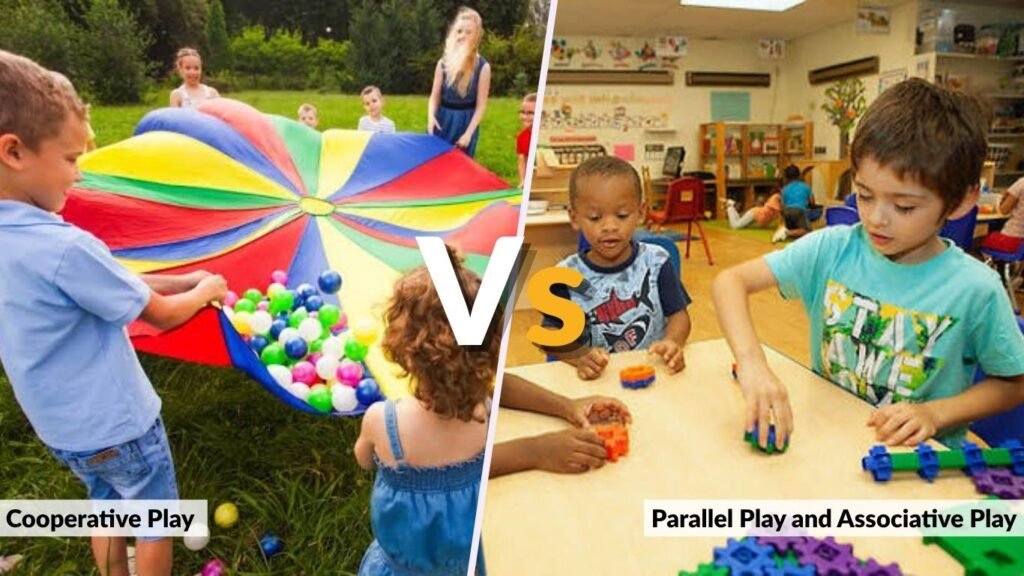
Cooperative, parallel, and associative play describe different patterns of social interaction during childhood. Understanding their differences helps adults recognize how children engage with others. Although cooperative play generally involves greater organization, all three forms of play contribute to development. Children may switch between them depending on their mood, interests, surroundings, and social confidence.
Cooperative Play vs. Parallel Play
Parallel play occurs when children participate in separate activities while playing near one another. Cooperative play involves shared goals and coordinated participation.
For example, two children independently drawing pictures demonstrate parallel play, while children creating one picture together may demonstrate cooperative play.
Cooperative Play vs. Associative Play
Associative play includes interaction, conversation, and sharing materials without organized teamwork. Cooperative play requires more coordinated actions and a common purpose.
For example, children exchanging toy cars during independent play demonstrate associative play. Children organizing a pretend car race with shared rules demonstrate cooperative play.
How to Encourage Cooperative Play in Early Childhood
Parents and educators can encourage cooperative play by creating supportive environments where children feel comfortable communicating, sharing, and participating. Providing opportunities for group activities can help children practice teamwork naturally. Adults should offer guidance when necessary without controlling every interaction. Respecting individual developmental differences is equally important because some children prefer smaller groups or need additional time to become comfortable with cooperative activities.
Provide Opportunities for Group Activities
Organize simple activities that require children to work together. Building projects, group storytelling, and collaborative artwork encourage shared participation.
Start with small groups when children are still developing confidence in social settings.
Teach Sharing, Communication, and Turn-Taking
Adults can model positive social behaviors during everyday activities.
Encourage children to:
- Ask politely before using shared materials.
- Listen when another child is speaking.
- Take turns during games.
- Express disagreements respectfully.
- Offer help when someone needs assistance.
These behaviors can be practiced naturally instead of requiring children to follow rigid social expectations.
Support Conflict Resolution
Disagreements are a normal part of cooperative play. Adults can help children identify problems, explain their feelings, and consider possible solutions.
Rather than immediately deciding every outcome, encourage age-appropriate discussions that allow children to participate in resolving conflicts.
FAQs
1. What Is Cooperative Play in Simple Terms?
Cooperative play is when children play together while working toward a shared goal. They communicate, exchange ideas, take different roles, and coordinate their actions. Examples include building a block tower together, organizing a pretend restaurant, or completing a group puzzle.
2. At What Age Does Cooperative Play Typically Start?
Cooperative play generally becomes more common between four and six years of age, although some children demonstrate cooperative behaviors earlier. Development depends on individual abilities and social experiences. Children may continue enjoying solitary, parallel, and associative play alongside cooperative activities.
3. What Is an Example of Cooperative Play?
An example of cooperative play is several preschoolers building a pretend house using blocks. One child constructs the walls, another creates the roof, and another arranges furniture. They discuss their ideas, divide responsibilities, and work together to complete their shared project.
4. Why Is Cooperative Play Important for Child Development?
Cooperative play supports communication, teamwork, emotional awareness, problem-solving, and social relationships. Through collaborative activities, children learn to express ideas, understand others, manage disagreements, and share responsibilities. These experiences provide opportunities to develop skills useful in classrooms, friendships, and everyday interactions.
5. What Is the Difference Between Cooperative and Associative Play?
Associative play occurs when children interact and share materials without organizing their activities around a common goal. Cooperative play involves coordinated teamwork, shared objectives, and defined responsibilities. Both encourage social development, but cooperative play generally requires more planning and collaboration.
