
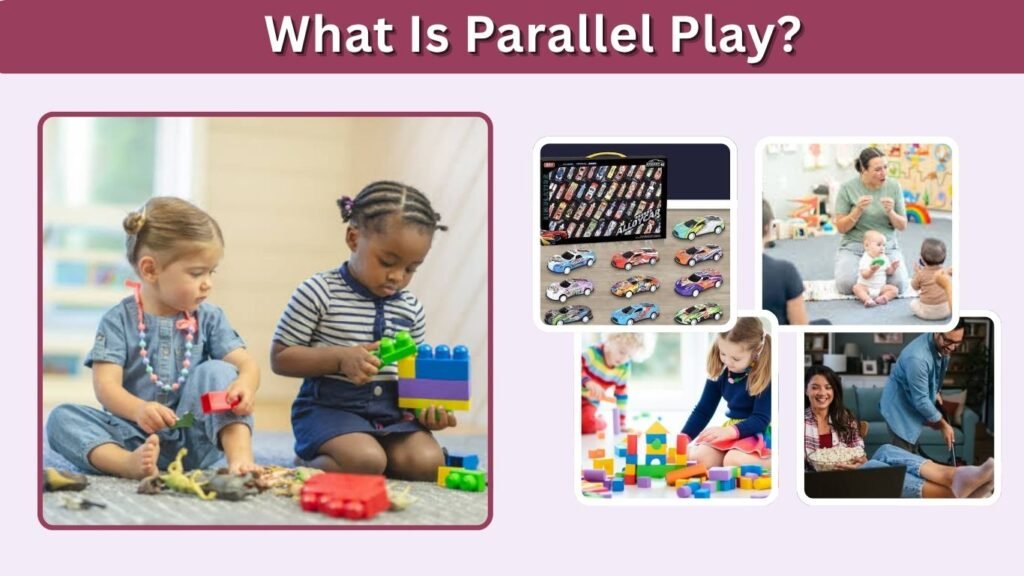
Parallel play is a stage of child development in which young children play beside one another without directly interacting or working toward the same goal. It is especially common among toddlers aged two to three, although children develop social skills at different rates. During parallel play, children may use similar toys, observe each other’s activities, or imitate simple actions while remaining focused on their own play. This behavior supports early social learning and independence. Understanding parallel play helps parents recognize typical developmental patterns and encourage healthy interactions with other children.
What Is Parallel Play in Child Development?
Parallel play occurs when two or more children engage in separate activities while remaining physically close to one another. They may notice what nearby children are doing without sharing toys or organizing a group activity. This form of play is commonly associated with early childhood social development and helps children become familiar with playing near their peers.
Parallel Play Definition
In psychology, parallel play describes children playing alongside others without directly coordinating their activities.
For example, two toddlers may sit together building separate block towers. Although they occupy the same space, each child focuses on an individual project.
Why Is Parallel Play Important?
Parallel play allows toddlers to observe others while maintaining independence.
Children may notice unfamiliar toys, imitate actions, and become increasingly comfortable around peers. These experiences can support their gradual development of social awareness and interactive play skills.
What Age Is Parallel Play Common?
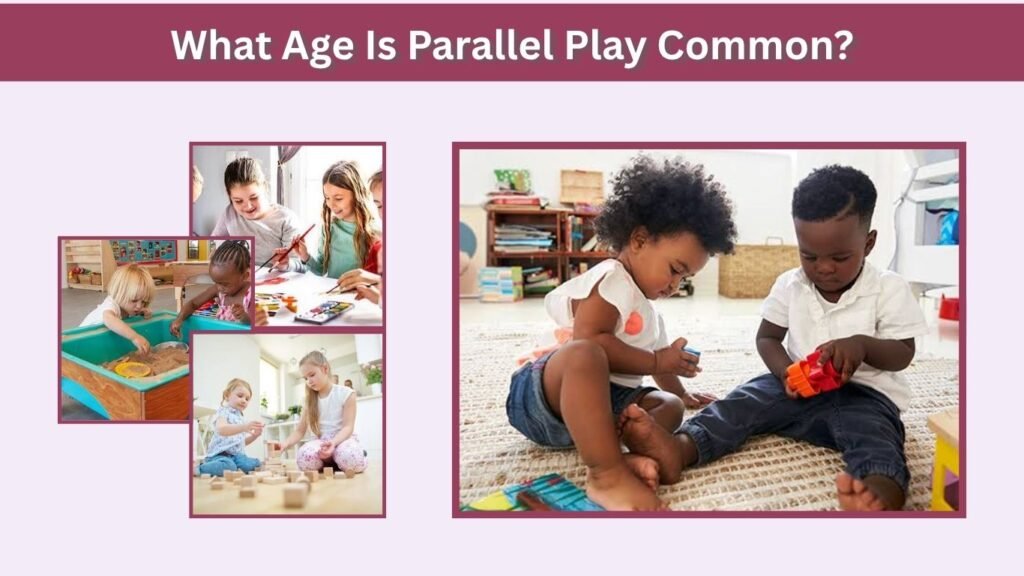
Parallel play is particularly common during the toddler years, when children are becoming interested in other children but are still developing communication and cooperation skills. Many toddlers enjoy nearby companionship without expecting direct interaction. However, developmental stages overlap, and children may demonstrate different play behaviors depending on their interests, environment, and familiarity with other children.
Parallel Play Age Range
Parallel play is commonly observed between approximately 18 months and three years, particularly around ages two to three.
Some preschoolers continue enjoying parallel activities beyond this period. Age ranges are general developmental descriptions rather than strict deadlines.
When Do Children Start Playing Together?
As children develop communication and social skills, they increasingly engage in associative and cooperative play.
Around the preschool years, many children begin exchanging toys, discussing activities, and participating in shared games. However, independent and parallel play remain valuable at older ages.
Examples of Parallel Play in Toddlers
Parallel play can occur at home, in daycare centers, at playgrounds, or during family gatherings. It often appears in ordinary activities rather than structured games. Children may use similar materials, copy one another’s movements, or simply enjoy occupying the same environment. Recognizing these everyday examples helps parents understand that meaningful social learning can occur without direct conversation.
Common Parallel Play Examples
- Building blocks: Two toddlers construct separate towers beside each other.
- Drawing: Children sit at the same table while creating individual pictures.
- Toy cars: Each child moves a toy vehicle independently.
- Sandbox activities: Two children dig separate holes near one another.
- Pretend cooking: Toddlers prepare imaginary meals using different toy utensils.
- Reading: Children look at separate picture books while sitting together.
Parallel Play at Daycare
In daycare settings, toddlers may choose the same activity area while working independently.
For example, several children might sit around a play table with separate sets of building materials. They can observe one another without needing to cooperate.
Benefits of Parallel Play for Children
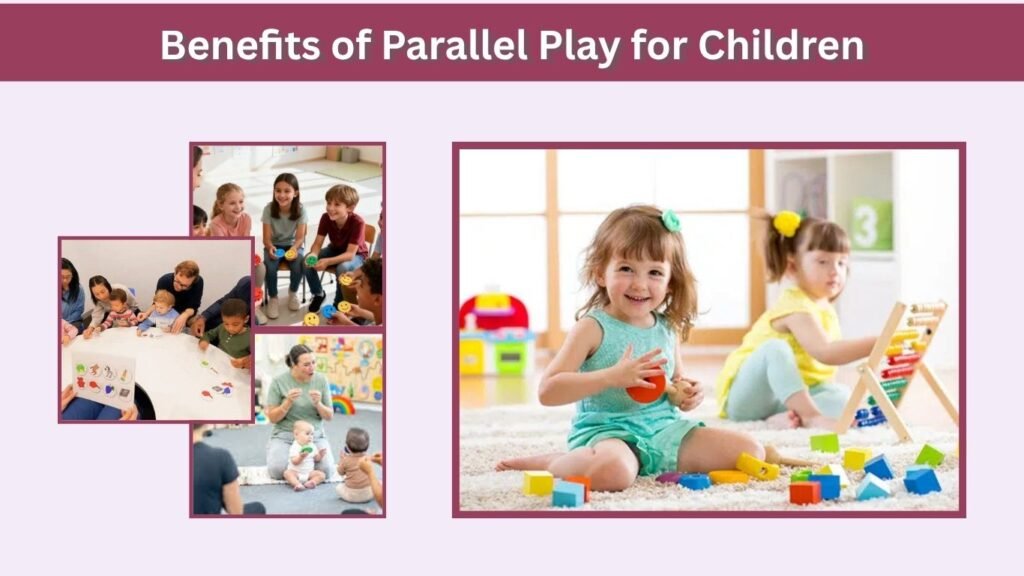
Although parallel play involves limited direct interaction, it offers valuable opportunities for early learning. Children practice exploring materials independently while becoming familiar with the presence and behavior of other children. These experiences can contribute to social confidence, observation, communication, and emotional development. Parallel play also allows toddlers to participate at a comfortable developmental pace.
Key Benefits of Parallel Play
- Social awareness: Children notice the activities and reactions of others.
- Observational learning: Watching peers introduces new ways to explore toys.
- Independence: Children practice making individual choices.
- Communication: Nearby play creates opportunities for gestures and early language.
- Imagination: Children develop personal ideas and pretend-play scenarios.
- Emotional confidence: Familiarity with peers may help children feel more comfortable socially.
How Parallel Play Supports Social Skills
Parallel play provides a low-pressure environment for becoming familiar with other children.
Watching peers, copying actions, and sharing physical space can contribute to skills later used in more interactive play. It does not require children to master sharing or cooperation immediately.
Parallel Play vs. Other Types of Play
Child-development researchers describe several forms of play that differ in social involvement. Some children prefer independent exploration, while others enjoy watching nearby activities or participating in group games. These categories help explain how social play develops, but they are not rigid steps that every child follows in the same order.
Parallel Play vs. Cooperative Play
| Type of Play | Main Characteristic | Example |
|---|---|---|
| Solitary play | Child plays independently | Building alone |
| Parallel play | Children play beside each other | Building separate towers |
| Associative play | Children interact without a shared organized goal | Sharing toys while building separate creations |
| Cooperative play | Children work toward a common goal | Building one tower together |
What Comes After Parallel Play?
Associative play is commonly described as the next form of social play.
Children begin talking, exchanging materials, or participating in related activities without necessarily following one shared plan. Cooperative play involves more organized interaction and common goals.
How to Encourage Parallel Play at Home

Parents can support parallel play by creating safe opportunities for children to spend time near peers. Activities do not need strict instructions or complicated materials. In fact, allowing toddlers to choose their own activities often makes the experience more enjoyable. The goal is to encourage comfortable social exposure while respecting each child’s developmental readiness.
Simple Activities That Encourage Parallel Play
- Provide duplicate toys: Offer similar blocks, cars, or puzzles to reduce conflicts.
- Arrange nearby play areas: Place children close enough to observe one another.
- Encourage creative activities: Offer drawing paper, crayons, or modeling dough.
- Plan short playdates: Begin with manageable visits involving one familiar child.
- Allow independent choices: Let children explore at their own pace.
- Model positive behavior: Demonstrate kindness, patience, and simple social language.
Should Parents Encourage Sharing?
Parents can gently introduce sharing and turn-taking without expecting toddlers to master these skills immediately.
Providing enough materials and modeling respectful interactions may reduce frustration. Avoid forcing constant sharing when children are still learning to play comfortably near others.
Is Parallel Play Normal in Autism?
Parallel play can occur in both autistic and non-autistic children. It is a common type of childhood play and is not, by itself, evidence of autism or another developmental condition. Children vary in how they approach peers, communicate, and participate in activities. Developmental concerns should be evaluated through a broader understanding of behavior and milestones.
When Should Parents Seek Guidance?
If a child consistently experiences difficulties with communication, social engagement, or other developmental milestones, discuss those concerns with a pediatrician.
Parallel play alone is not a reason for concern. A professional can evaluate development using multiple observations rather than a single play behavior.
What Is Parallel Play in Adults?

The term parallel play is also used informally to describe adults spending time together while pursuing separate activities. Unlike the childhood developmental concept, adult parallel play usually refers to comfortable companionship without constant conversation or shared tasks. It may occur between romantic partners, friends, roommates, or other people who enjoy being together.
Parallel Play in Relationships
Two partners might sit together while one reads and the other works on a puzzle.
They are participating in separate activities while enjoying each other’s company. The expression often emphasizes companionship that does not require continuous interaction.
Parallel Play and Body Doubling
Parallel play and body doubling can look similar, but their purposes differ.
Body doubling generally describes another person’s presence helping someone stay engaged with a task. Parallel play primarily emphasizes separate activities performed in shared company.
FAQs
Parents often have questions about whether parallel play is normal, when it begins, and how it differs from more interactive activities. Understanding these distinctions can make early childhood behavior easier to interpret. The following answers address common questions about toddler social development and the progression toward cooperative play.
1. What Is an Example of Parallel Play?
Two toddlers sitting beside each other and building separate towers with blocks demonstrate parallel play. They share the environment but do not coordinate their projects.
2. At What Age Does Parallel Play Begin?
Parallel play commonly emerges during the toddler years, often around 18–24 months, and is particularly noticeable between ages two and three.
3. Is Parallel Play Good for Child Development?
Yes. It provides opportunities for observation, independent exploration, social familiarity, and early communication experiences.
4. What Is the Difference Between Parallel and Cooperative Play?
Parallel play involves separate activities performed near others. Cooperative play involves children coordinating actions to achieve a shared goal.
5. Should I Be Worried If My Three-Year-Old Still Parallel Plays?
Not necessarily. Many three-year-olds continue enjoying parallel play while gradually developing more interactive skills. Discuss broader developmental concerns with your child’s pediatrician.
