
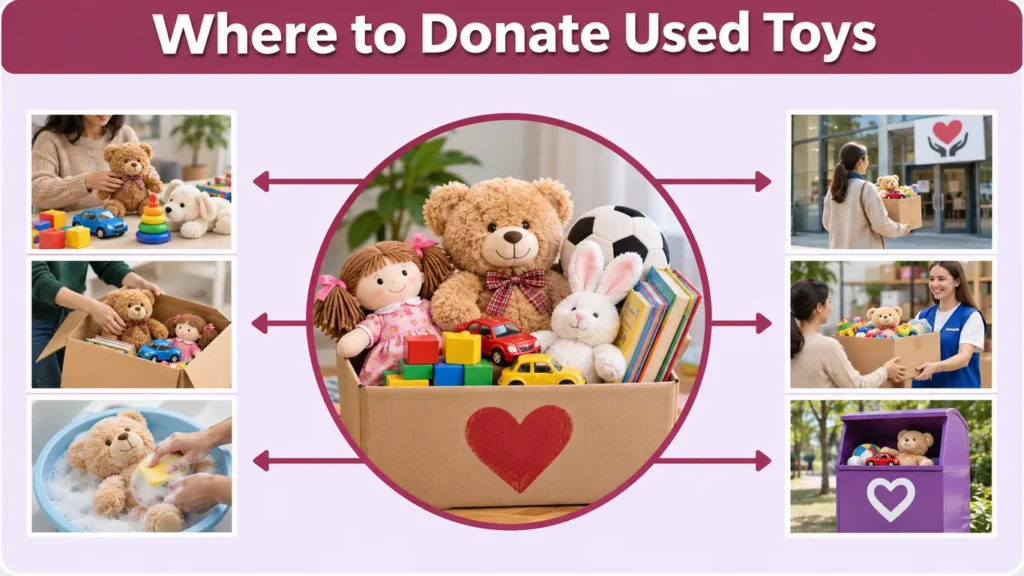
Donating used toys is a meaningful way to help children, reduce household clutter, and prevent usable items from ending up in landfills. Instead of throwing away toys your children have outgrown, you can give them to charitable organizations, community centers, shelters, and families in need.
Knowing where to donate used toys helps ensure your donations reach people who can benefit from them. From stuffed animals and educational games to building blocks and outdoor toys, many organizations welcome gently used items that are clean, safe, and functional.
Where to Donate Used Toys: 12 Best Places
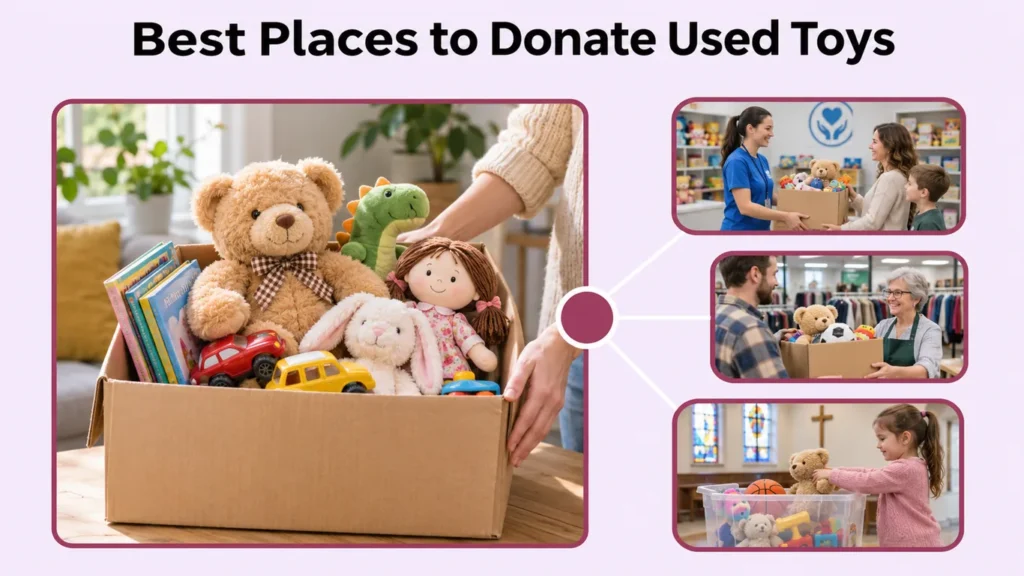
Many nonprofit organizations, charitable institutions, and community programs accept gently used toys to support children and families. Some distribute toys directly to children, while others sell donated items to fund charitable services.
Donation requirements vary depending on the organization, location, available storage, and condition of the toys. Always contact your preferred donation center before dropping off items.
1. Goodwill
Goodwill is a popular option in the United States for donating gently used toys, games, puzzles, and children’s books. Donated items are generally sold through thrift stores to support employment training and community programs.
Most toys should be clean, complete, and in working condition. Check with your local Goodwill donation center before visiting, as acceptance policies vary.
2. The Salvation Army
The Salvation Army accepts various secondhand household items, including gently used children’s toys at participating locations. Proceeds from donated goods help fund rehabilitation and other charitable programs.
You can donate dolls, board games, building blocks, and other suitable toys. Some locations also provide donation pickup services for eligible items.
3. Local Children’s Charities
Children’s charities may accept secondhand toys to support disadvantaged children and families experiencing financial difficulties. These organizations often work directly with communities to distribute essential items.
Contact local charities to determine which toys they currently need. Educational toys, puzzles, and age-appropriate games can be particularly useful.
4. Domestic Violence Shelters
Domestic violence shelters provide temporary accommodation and support to individuals and families escaping unsafe living conditions. Donated toys can help children feel more comfortable in unfamiliar environments.
Many shelters have strict privacy and donation policies. Contact their public donation coordinator rather than visiting a shelter directly.
5. Homeless Shelters
Family homeless shelters may welcome gently used toys for children experiencing housing difficulties. Toys provide opportunities for entertainment, creative expression, and social interaction.
Smaller toys, washable dolls, and educational games are often practical choices. Check the shelter’s current needs before preparing your donation.
6. Daycare Centers and Preschools
Local daycare centers and preschools may accept educational toys that support early childhood development. Building blocks, pretend-play sets, musical toys, and puzzles can help create engaging learning environments.
Contact the facility to confirm its safety and sanitation requirements. Avoid donating toys that contain broken components or inappropriate small parts.
7. Churches and Religious Organizations
Churches and other religious organizations frequently organize charitable activities to support local families. Some operate donation centers, community nurseries, or seasonal giving programs.
These organizations may accept toys throughout the year or during specific collection events. Ask whether they currently need secondhand children’s items.
8. Foster Care Organizations
Foster care support organizations may collect toys and other children’s essentials for families welcoming children into their homes. Age-appropriate toys can provide entertainment and familiarity during periods of transition.
Contact local foster care agencies or donation programs before dropping off items. Some organizations accept only new toys, while others welcome gently used donations.
9. Stuffed Animals for Emergencies (SAFE)
Stuffed Animals for Emergencies is a charitable organization that helps children experiencing difficult situations through donations of stuffed animals and other approved items.
Participating chapters may accept gently used plush toys that meet their cleanliness and condition requirements. Check your nearest chapter’s guidelines before sending donations.
10. Community Centers
Community centers often provide recreational activities, after-school programs, and family support services. Donated toys may help these facilities expand their available play resources.
Board games, activity sets, sports equipment, and educational toys can be useful additions. However, acceptance depends on the center’s facilities and current requirements.
11. Online Freecycling Groups
Online platforms such as Freecycle, Buy Nothing groups, and local Facebook community groups allow you to give used toys directly to interested families.
Include clear photographs and accurate descriptions when listing your toys. Arrange a safe collection method and disclose any signs of wear or missing accessories.
12. Animal Shelters
Some animal shelters accept suitable stuffed toys for rescued animals. Donating unwanted plush toys can provide comfort and enrichment for animals awaiting adoption.
However, not every children’s toy is safe for pets. Ask the shelter whether it accepts plush toys and avoid items containing hazardous fillings, loose plastic parts, or electronic components.
What Types of Used Toys Can You Donate?
Most donation organizations prefer toys that remain safe, functional, and suitable for continued use. Gently used toys should be free from significant damage, unpleasant odors, stains, and potentially dangerous components.
Understanding which toys are commonly accepted makes sorting and preparing donations easier. Always consider whether the item is something another family would comfortably give to their child.
Commonly Accepted Toys
- Stuffed animals: Clean teddy bears, plush animals, and soft dolls.
- Building toys: Complete building blocks and construction sets.
- Educational toys: Alphabet boards, counting games, and learning materials.
- Board games: Games containing all necessary pieces and instructions.
- Puzzles: Complete jigsaw puzzles and wooden puzzles.
- Action figures: Undamaged figures and character toys.
- Pretend-play toys: Play kitchens, toy vehicles, and doctor playsets.
- Outdoor toys: Suitable balls, sports equipment, and outdoor play items.
- Electronic toys: Fully functional battery-operated learning toys.
What Used Toys Should You Avoid Donating?
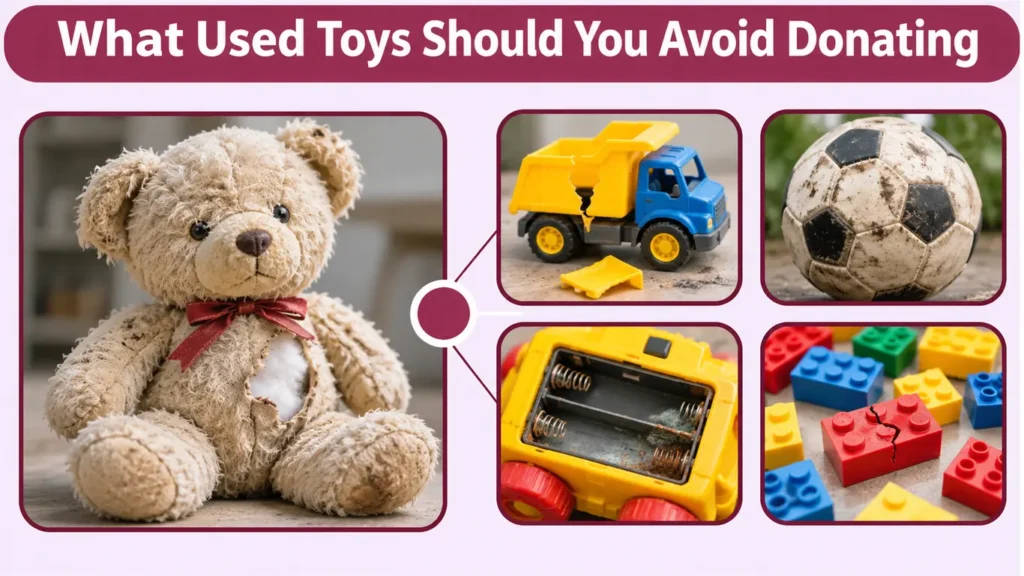
Although donating toys helps reduce waste, some items are unsuitable because of safety, hygiene, or functionality concerns. Charitable organizations may refuse damaged toys or products that could pose health risks to children.
Carefully inspect every item before including it in your donation. Unsafe toys should be disposed of or recycled according to local waste management guidelines rather than passed to another family.
Toys That Are Usually Not Accepted
- Broken toys with sharp edges or damaged components.
- Stuffed animals containing mold, stains, or unpleasant odors.
- Toys with leaking batteries or damaged electrical wiring.
- Recalled toys that present safety hazards.
- Games and puzzles missing essential pieces.
- Toys contaminated by insects or pests.
- Products with loose magnets or accessible button batteries.
- Toys that cannot be adequately cleaned.
How to Prepare Used Toys for Donation
Preparing toys properly helps organizations distribute or resell them more efficiently. Clean, organized, and functional donations are generally easier for volunteers to process and more appealing to receiving families.
Before packing your toys, inspect their condition and follow the manufacturer’s cleaning instructions. Spending a little time preparing donations can improve their usefulness and reduce unnecessary waste.
Steps to Prepare Your Toys
- Sort your toys: Separate usable toys from damaged or unsafe items.
- Clean thoroughly: Wash or wipe toys using appropriate cleaning methods.
- Dry completely: Remove moisture to prevent mold and unpleasant odors.
- Check functionality: Test moving parts, buttons, and electronic features.
- Organize accessories: Keep game pieces and removable components together.
- Check for recalls: Confirm the toys have no unresolved safety recalls.
- Pack securely: Use clean boxes or bags to protect the items.
- Contact the organization: Confirm donation requirements and opening hours.
Where to Donate Used Toys Near Me
Finding nearby toy donation centers can save time and transportation costs while helping families in your community. Local charities, thrift stores, community organizations, and online neighborhood groups are useful starting points.
Some organizations operate permanent donation centers, while others collect toys during seasonal events. Checking their official websites or contacting their representatives helps confirm availability and avoid unnecessary trips.
Use Online Search Tools
Search for phrases such as “used toy donation centers near me” or “charities accepting used toys near me.” Online maps and charity directories can help identify nearby donation opportunities.
Contact Local Organizations
Reach out to community centers, family shelters, childcare facilities, and charitable organizations directly. Explain the types, quantities, and condition of the toys you want to donate.
Can You Donate Used Toys to Children’s Hospitals?
Children’s hospitals use toys to provide entertainment, comfort, and positive experiences for young patients. However, most hospitals maintain strict infection prevention policies and do not accept previously used toys.
Many facilities require brand-new items in their original packaging. If your toys are secondhand, consider alternative organizations unless the hospital specifically confirms that it accepts used donations.
Benefits of Donating Used Toys
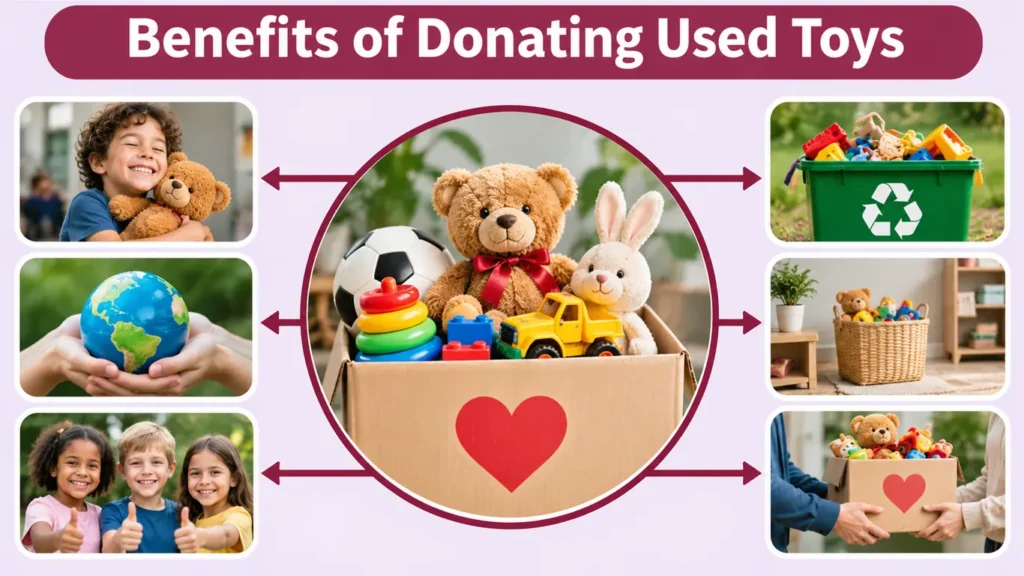
Donating used toys provides social, environmental, and practical benefits. It extends the useful life of children’s products while helping families access recreational and educational resources at little or no cost.
Toy donations also create opportunities to teach children about generosity and responsible consumption. Encouraging children to participate in choosing donation items can help them understand the value of sharing.
Supports Families in Need
Donated toys help families access play materials without additional financial pressure. They can provide children with opportunities for learning, entertainment, and creative development.
Reduces Environmental Waste
Reusing toys helps prevent usable plastic, fabric, and wooden products from entering landfills. It also encourages responsible consumption by extending the lifespan of existing products.
FAQs
1. Where is the best place to donate used toys?
Goodwill, The Salvation Army, local children’s charities, and community centers are popular options for donating used toys. The best location depends on the type and condition of your toys and the organization’s current donation requirements.
2. Can I donate used stuffed animals?
Yes, some charities, thrift stores, and community organizations accept gently used stuffed animals. Plush toys should be clean, dry, and free from damage, stains, and odors. Always confirm whether the organization accepts secondhand stuffed animals.
3. Does Goodwill accept used toys?
Many Goodwill locations accept gently used toys, puzzles, dolls, and games in good working condition. However, donation policies vary between regional organizations, so contact your local Goodwill center before dropping off your items.
4. Who picks up used toys for donation?
Some Salvation Army locations, local charities, and nonprofit thrift stores offer donation pickup services. Availability depends on your location, donation quantity, and item types. Contact the organization to confirm its pickup requirements and scheduling options.
5. Can I donate used toys without their original packaging?
Many charities accept secondhand toys without their original packaging, provided they are clean, complete, functional, and safe. Keep loose accessories together and include instructions when available. Hospitals and certain special donation programs may require unopened packaging.
